Loading...
Authari vs Ferdinand I of Leon
Ferdinand I of Leon leads by 12.8 pts · 2 figures compared
…
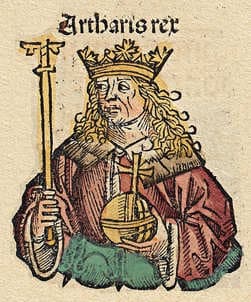
Authari
Emperor · Medieval
46.4Total
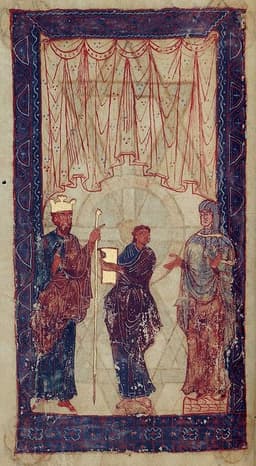
Ferdinand I of Leon
Emperor · Medieval
59.2Total
Basic Information
Born
540
1015
Died
590
1065
Era
Medieval
Medieval
Nationality
Lombards
Leon
Occupation
Emperor
Emperor
Civilization
Western
Western
Score Comparison
Military (10%)
10.0
70.0
Political (20%)
39.4
68.0
Influence (20%)
56.4
56.4
Legacy (20%)
45.0
49.2
Leadership (15%)
64.5
66.0
Strategy (15%)
45.0
57.5
TOTAL
46.4
59.2
Authari — Complete Timeline
568 AD
Invasion of ItalyWar
Authari led the Lombard invasion of Italy, crossing the Alps and establishing a kingdom. This conquest seized large parts of the Italian peninsula from Byzantine control, founding the Lombard Kingdom in Italy.
Lombard InvasionConquestItaly
Impact: regionaldestructive
572 AD
Establishment of the Lombard KingdomPolitical Action◆ Major
Authari established Pavia as the capital of the Lombard Kingdom, consolidating Lombard rule over northern and central Italy. He organized the kingdom into duchies, creating a stable political structure that lasted for centuries.
State FormationCapitalLombard Kingdom
Impact: regionalconstructive
589 AD
Marriage to TheudelindaPolitical Action
Authari married Theudelinda, a Bavarian princess, to strengthen alliances with the Bavarians and promote Catholic conversion among the Lombards. The marriage produced no heir, but Theudelinda later became a key figure in Lombard politics.
Marriage AllianceDynastic PoliticsCatholic Conversion
Impact: nationalconstructive
Ferdinand I of Leon — Complete Timeline
1029 AD
Inheritance of the County of CastilePolitical Action◆ Major
Ferdinand I inherited the County of Castile from his father Sancho III of Navarre. He later expanded his territory through conquest and marriage, laying the foundation for the Kingdom of Castile.
Impact: regionalconstructive
1037 AD
Conquest of LeónWar◆ Major
Ferdinand I defeated and killed King Bermudo III of Le
Impact: regional
1056 AD
First Emperor of SpainPolitical Action◆ Major
Ferdinand I was crowned 'Imperator totius Hispaniae' (Emperor of all Spain) in 1056, claiming suzerainty over all Christian and Muslim rulers in Iberia. This title reflected his military dominance and political ambition.
Impact: regional
1065 AD
Division of the kingdomPolitical Action◆ Major
Upon his death, Ferdinand I divided his kingdom among his sons: Sancho II received Castile, Alfonso VI received Le
Impact: regionaldestructive
Expert Analysis
Ferdinand I of Leon vs Authari
The Crown and the Spear
In the year 1056, a Christian king knelt before an altar in León, receiving a crown that no one had worn for centuries—*Imperator totius Hispaniae*, Emperor of all Spain. Thirty-two years earlier, in 572, a pagan warrior had watched from the walls of Pavia as his Lombard chieftains burned the last vestiges of Roman order in Italy. Ferdinand I of León and Authari of the Lombards both claimed the title of emperor, yet their paths could not have diverged more sharply. One sought to unite a fractured Christian kingdom through inheritance and tribute; the other carved a realm from the corpse of an empire with iron and fire. What drove these two medieval sovereigns to such different fates? The answer lies not merely in their circumstances, but in the very nature of power itself.
Origins
Ferdinand I was born into the high politics of Christian Spain in 1015. His father, Sancho III of Navarre, had masterfully woven the northern kingdoms into a fragile tapestry of alliances, and young Ferdinand inherited not a sword but a county—Castile, in 1029. He was a prince of the blood, raised in courts where Latin chroniclers recorded royal genealogies and bishops anointed kings. The Reconquista was not yet a crusade, but a slow, grinding war of tribute and raid, where Christian and Muslim rulers traded embassies and hostages as often as they traded blows. Ferdinand’s world was one of law, lineage, and the careful balance of power.
Authari, born around 540, emerged from a very different crucible. The Lombards were a Germanic people who had wandered the edges of the Roman world for generations—semi-nomadic, fiercely pagan, and armed with long spears. Authari’s father, King Cleph, had been assassinated, and the Lombard dukes ruled without a king for a decade before raising Authari to the throne. He had no inheritance of land, no network of Christian bishops to legitimize him. His authority rested on the loyalty of war bands and the promise of plunder. Where Ferdinand was a prince by birth, Authari was a warlord by necessity.
Rise to Power
Ferdinand’s ascent was a masterpiece of dynastic calculation. In 1037, he met King Bermudo III of León at the Battle of Tamarón. Bermudo was not a foreign invader but a rival Christian king, and Ferdinand killed him in personal combat. Then, instead of burning León to the ground, Ferdinand claimed the kingdom through his wife, Sancha, Bermudo’s sister. He did not conquer León—he inherited it, by blood and by marriage. This was a king who understood that legitimacy was stronger than any sword.
Authari’s rise was the opposite. In 568, he led the Lombard invasion of Italy, crossing the Alps with a horde of warriors, women, and children. They seized the Po Valley not through diplomatic marriages but through sheer violence, sacking cities and driving Byzantine garrisons into the marshes. Authari did not claim a throne—he built one, on the ruins of Roman aqueducts and the ashes of Roman villas. By 572, he had established Pavia as his capital, not because it held any symbolic power, but because it was defensible and rich. His kingdom was a conquest, not a legacy.
Leadership & Governance
Ferdinand’s reign reveals a ruler who governed through law as much as war. He imposed *parias*—tribute payments—on the Moorish taifa kingdoms of Toledo, Seville, and Zaragoza, bleeding them dry without constant warfare. This was strategic genius: the Moors paid him gold to stay away, and Ferdinand used that gold to build churches, patronize monasteries, and strengthen his administrative grip. In 1056, when he crowned himself Emperor of Spain, he was asserting a legal and spiritual claim over all Christian Iberia, a title that would echo through the centuries.
Authari governed differently. The Lombard kingdom was a patchwork of dukes who owed him nominal loyalty but often acted independently. Authari’s solution was not law but terror—he crushed rebellious dukes, executed rivals, and kept his warriors constantly moving, lest they settle and forget their allegiance to him. His marriage in 589 to Theudelinda, a Bavarian princess, was a rare political move: it secured an alliance with the Bavarians and nudged the Lombards toward Catholicism. But Authari never built lasting institutions. His kingdom was held together by his personal authority, and that authority depended on his spear.
Triumph & Tragedy
Ferdinand’s greatest moment was his coronation as emperor—a triumph of ambition and patience. He had unified León, Castile, and Galicia under one crown, and his tribute system made him the richest king in Christendom. But his tragedy came after his death in 1065. He divided his kingdom among his three sons, as if it were a personal estate, not a nation. The result was civil war: Sancho II, Alfonso VI, and García tore each other apart, and the dream of a united Spain shattered. Ferdinand’s wisdom in life became his folly in death.
Authari’s triumph was the Lombard kingdom itself. He had taken a wandering tribe and planted it in the heart of Italy, where it would survive for two centuries. His tragedy was more personal. He died in 590, possibly poisoned, leaving a kingdom that was still fragile, still pagan, still dependent on the strength of one man. His son Adaloald was an infant, and the Lombard dukes soon fell into chaos. Authari had built a kingdom, but he had not built a dynasty.
Character & Destiny
Ferdinand was a man of calculation. His military score of 60.1 and strategy of 45.7 suggest he was no great commander—he won wars through politics, not tactics. His political score of 72.0 and leadership of 78.0 reveal a king who understood that power flows from legitimacy, from alliances, from the careful marriage of blood and land. He was cautious, patient, and deeply aware of history. He wanted to be remembered as an emperor, not a conqueror.
Authari was a man of action. His military score of 61.0 and leadership of 72.8 show a king who led from the front, who inspired loyalty through courage. His political score of 54.6 and strategy of 39.5 reveal his weakness: he could take a city, but he could not build a state. He was a product of his time—a time when the Roman world was crumbling, and only the strong survived. He did not want to be remembered. He wanted to rule.
Legacy
Ferdinand I is remembered as the first Emperor of Spain, a title that would later be claimed by his grandson, Alfonso VI, and eventually by the Catholic Monarchs. His division of the kingdom is seen as a tragic mistake, but his vision of a unified Christian Iberia survived him. His influence score of 74.9 and legacy of 65.2 reflect a king who shaped the future, even if he could not control it.
Authari is remembered as the founder of the Lombard kingdom, a name that still echoes in the region of Lombardy. But his legacy is more ambiguous. The Lombards were eventually absorbed into the Frankish empire, and Authari’s pagan kingdom became a footnote in the story of Catholic Europe. His influence score of 74.9 matches Ferdinand’s, but his legacy of 59.5 is lower. He built a kingdom, but he did not build a memory.
Conclusion
Two emperors, two worlds. Ferdinand I of León and Authari of the Lombards both claimed a crown, but they understood power in fundamentally different ways. Ferdinand saw power as a contract—a bond between king, church, and land. Authari saw power as a weapon—something to be wielded, and then passed on. One built a legacy that would outlast his mistakes; the other built a kingdom that crumbled without his hand. In the end, the difference between them is the difference between a dynasty and a war band, between a crown and a spear. History remembers the crown.
Rankings
🥇
Ferdinand I of LeonLeader
Mil: 70.0Pol: 68.0Inf: 56.4
59.2
🥈
Authari
Mil: 10.0Pol: 39.4Inf: 56.4
46.4
+12.8 behind
How This Comparison Works
Algorithm
Each figure is scored on 6 dimensions (0—100 scale) based on structured historical data: Military (10%), Political (20%), Influence (20%), Legacy (20%), Leadership (15%), Strategy (15%). The weighted total produces the final ranking.
Data Sources
Scores are computed from structured sub-indicators in the database. Scale factors adjust for era (Ancient ×0.85, Modern ×1.0) and civilization size (Eastern ×1.05, Other ×0.80) to account for differences in population and military scale.
Maximum 3 Figures
Comparisons are limited to 2—3 figures to ensure readability and statistical meaningfulness.
Error Margins
±5 points per dimension — Sub-scores are derived from historical records with inherent uncertainty. Two figures within 5 points on a dimension should be considered roughly equivalent in that area.
Total Score Accuracy
±3 points overall — The weighted combination of 6 dimensions produces a total score with approximately ±3 points of uncertainty. Differences of less than 3 points are not statistically significant— the figures are effectively tied.
Known Limitations
- Historical records are incomplete and uneven across civilizations
- Figures from oral-tradition societies may be underrepresented
- Occupation labels can misclassify multi-role figures
- Scores measure capability and impact, not moral character
- Quantitative scoring is a comparison tool, not absolute truth
Capability Radar
Military (10%) — Battles & Warfare
Battles
35
55
Win Rate
40
60
Expansion
45
60
Political (20%) — Governance & Reform
Reform
30
50
Diplomacy
35
55
Economy
25
45
Influence (20%) — Cultural & Global Reach
Cultural
30
40
Global
20
30
Legacy (20%) — Historical Impact
Historical
35
45
Longevity
25
40
Leadership (15%) — Power & Stability
Tenure
40
65
Stability
30
50
Strategy (15%) — Tactics & Innovation
Strategy
35
55
Tactics
30
50
Reform
25
40
Similar Comparisons
Comments & Discussion
**LanceBreaker476/16/2026
**Ferdinand was an administrator dressed as an emperor; Authari was a warlord who actually earned the title. Ferdinand inherited Castile, played tribute games with Taifa kings, and called himself "Imperator" because his chroniclers wrote flattery in Latin. Authari marched through Pavia, watched Romans flee, and made his empire with blood on the snow. One was a bureaucrat with a crown; the other was a king who made the crown matter. You tell me who history remembers.
**数据铁锤6/16/2026
**这个比较把两个完全不同时代和背景的统治者硬凑在一起,简直是历史界的强行配对。Ferdinand生活在1056年的基督教西班牙,继承制、教会、外交都用上了;Authari在540年代用蛮力砸开意大利。拿他们比"皇帝头衔",就像把电脑工程师和铁匠比谁造房子更快。数据分析需要context变量,这个比较没控制任何变量,纯属编故事。
**ScriptoriaSage6/16/2026
**As a classicist, I see the real fault line not in their titles but in their relationship with time. Ferdinand crowned himself *Imperator* in 1056, invoking Roman memory filtered through Visigothic law and Isidore of Seville. Authari, illiterate and pagan, burned Roman order before he could read it. Ferdinand was a bookend on the Library of Alexandria's memory; Authari was a fire set to unread pages. Both claimed empire, but only Ferdinand knew he was quoting a dead language.
**火药桶批评家6/16/2026
**我拒绝接受把这两个人放在同一道德天平上。Ferdinand I是个有宗教信仰的统治者,至少他试图用基督教伦理约束自己的扩张,给了摩尔人投降和纳税的出路。而Authari?这个蛮族头目纯粹是部落暴力机制的产物,他让伦巴第人烧杀抢掠,没有任何文明理想的影子。拿他比较Ferdinand,是对中世纪西班牙统一努力的侮辱。
**CoinsAndConquests6/16/2026
**I study coinage, not chronicles, and here's the truth: Authari never minted a single coin with his own imperial title. Ferdinand did—gold solidi struck in Leon calling him "Imperator Hispaniae." That's power visible in every merchant's hand. Authari's empire died with his breath, barely recorded. Ferdinand's title survived for centuries in Castilian law. The crown isn't just worn; it's stamped, traded, and remembered. Authari had the spear; Ferdinand had the mint.