Loading...
Augustus vs Cleisthenes
Augustus leads by 7.6 pts · 2 figures compared
…

Augustus
Emperor · Ancient
85.9Total
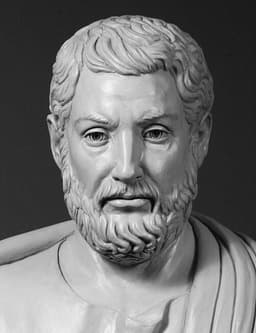
Cleisthenes
Politician · Ancient
78.3Total
Basic Information
Born
63
-570
Died
—
-508
Era
Ancient
Ancient
Nationality
Roman Empire
Greece
Occupation
Emperor
Politician
Civilization
Western
Western
Score Comparison
Military (10%)
72.0
49.4
Political (20%)
90.0
62.7
Influence (20%)
88.0
92.0
Legacy (20%)
90.0
92.0
Leadership (15%)
88.0
72.0
Strategy (15%)
75.0
71.3
TOTAL
85.9
78.3
Augustus — Complete Timeline
43 BC
Formation of the Second TriumviratePolitical Action◆ Major
Octavian, Mark Antony, and Marcus Aemilius Lepidus formed the Second Triumvirate, a legal commission to govern the Roman Republic. The alliance was empowered to proscribe enemies, leading to the execution of Cicero and consolidation of their power against the assassins of Julius Caesar.
Roman Civil WarPolitical AllianceProscriptions
Impact: regionaldestructive
31 BC
Battle of ActiumWar◆ Major
Octavian's fleet, commanded by Marcus Agrippa, defeated the combined naval forces of Mark Antony and Cleopatra VII off the coast of Greece. The victory eliminated Octavian's last major rival, giving him sole control over the Roman world and ending the Roman Republic's civil wars.
Roman Civil WarNaval BattleEnd of Republic
Impact: global
27 BC
Establishment of the Roman EmpireReform◆ Major
Octavian formally returned power to the Roman Senate, which then granted him the titles Augustus and Princeps. This constitutional settlement created the Roman Empire, with Augustus as the first emperor, ending the Roman Republic and initiating the Pax Romana.
Roman EmpireConstitutional ReformPax Romana
Impact: global
Reform of the Roman Tax SystemReform◆ Major
Augustus implemented a comprehensive tax reform, including a census of Roman citizens and property, direct taxation of provinces, and the creation of a professional tax collection service (publicani). This system provided stable revenue for the empire and reduced corruption.
Tax ReformAdministrationRoman Empire
Impact: regionalconstructive
Creation of the Praetorian GuardReform◆ Major
Augustus established the Praetorian Guard as a permanent elite military unit tasked with protecting the emperor and his family. Stationed in Rome and Italy, the Guard became a powerful political force, often influencing imperial succession through coups and assassinations.
Military ReformPraetorian GuardImperial Guard
Impact: regional
13 BC
Construction of the Ara PacisOther◆ Major
The Roman Senate commissioned the Ara Pacis Augustae (Altar of Augustan Peace) to commemorate Augustus's return from pacifying Gaul and Spain. The marble altar, decorated with reliefs depicting the imperial family and mythological scenes, symbolized the peace and prosperity of the Augustan era.
Building ProjectPropagandaAugustan Art
Impact: regionalconstructive
Cleisthenes — Complete Timeline
510 BC
Expulsion of the PeisistratidsPolitical Action◆ Major
Cleisthenes, with the support of the Alcmaeonid family and Spartan assistance, led the overthrow of the tyrant Hippias, son of Peisistratus. This ended the Peisistratid tyranny in Athens and opened the way for democratic reforms.
Tyranny OverthrownAthensSparta
Impact: nationalconstructive
508 BC
Reforms of CleisthenesReform
Cleisthenes reorganized the Athenian citizen body into ten new tribes based on demes, replacing the old four Ionian tribes. He established the Council of 500 (Boule) and introduced ostracism, creating a system of isonomia (equal rights) that is considered the foundation of Athenian democracy.
Athenian DemocracyConstitutional ReformAncient Greece
Impact: globalprogressive
507 BC
Introduction of OstracismReform◆ Major
Cleisthenes instituted ostracism, a procedure allowing Athenian citizens to vote annually to exile a prominent citizen deemed a threat to democracy for ten years. This mechanism aimed to prevent the rise of a new tyrant and stabilize the democratic system.
Athenian DemocracyPolitical MechanismExile
Impact: national
Expert Analysis
Origins
Augustus, born Gaius Octavius in 63 BC, was the grandnephew and adopted son of Julius Caesar. He rose from a relatively obscure family in the Roman equestrian class to become the first Roman emperor. His early life was marked by the chaos of the late Republic, including civil wars and the assassination of his adoptive father. In contrast, Cleisthenes was born into the aristocratic Alcmaeonid family in Athens around 570 BC. His lineage was powerful but controversial, as the Alcmaeonids were cursed for a massacre of rebels. Cleisthenes' formative years were shaped by the tyranny of the Peisistratids and the political strife between aristocratic factions.
Rise to Power
Augustus's rise was swift and ruthless. After Caesar's murder, he formed the Second Triumvirate with Mark Antony and Lepidus, proscribing enemies and seizing control. He defeated the assassins Brutus and Cassius at Philippi, then turned on his rival Antony, crushing him at the Battle of Actium in 31 BC. By 27 BC, he had consolidated power and was granted the title 'Augustus' by the Senate. Cleisthenes, by contrast, came to power through political maneuvering. After the expulsion of the tyrant Hippias in 510 BC, Athens was torn between aristocratic factions. Cleisthenes initially lost a power struggle to Isagoras but rallied the people and forced Isagoras out, implementing his democratic reforms in 508/507 BC.
Leadership & Governance
Augustus was a master of political illusion. He maintained the facade of the Republic while holding absolute power as princeps, commander of the army, and holder of tribunician power. He reformed the tax system, created the Praetorian Guard, and initiated a vast building program, famously claiming to have 'found Rome a city of bricks and left it a city of marble.' His governance brought stability and prosperity, the Pax Romana, but at the cost of political freedom. Cleisthenes, in contrast, genuinely distributed power. His reforms reorganized the Athenian population into ten tribes based on demes (local districts), breaking up aristocratic power. He established the Council of 500, chosen by lot, and introduced ostracism to exile potential tyrants. His leadership was inclusive, empowering ordinary citizens.
Triumph & Tragedy
Augustus's greatest triumph was the establishment of the Roman Empire, which lasted for centuries. He died peacefully in AD 14, having secured a succession. The tragedy lies in the loss of the Republic and the concentration of power that later led to tyrannical emperors. Cleisthenes's triumph was the birth of Athenian democracy, which inspired later democratic systems. However, his reforms were not permanent; democracy was later overthrown by Macedon and Rome. Moreover, ostracism was sometimes abused, and Athenian democracy excluded women, slaves, and foreigners.
Character & Destiny
Augustus was calculating, patient, and pragmatic. He was not a military genius like Caesar but excelled at administration and propaganda. His destiny was to end a century of civil war and found an empire. Cleisthenes was visionary and idealistic, driven by a desire to curb aristocratic power. His destiny was to create a political system that would become a model for future democracies. Both were reformers, but Augustus centralized power while Cleisthenes distributed it.
Legacy
Augustus's legacy is immense: the Roman Empire, its law, language, and culture spread across Europe, the Middle East, and North Africa. His reign set the template for imperial rule. Cleisthenes's legacy is equally profound: he is credited as the 'father of Athenian democracy,' a system that influenced the development of democratic governments worldwide. While Augustus's impact was more immediate and vast in territory, Cleisthenes's ideas have proven more enduring in political thought.
Conclusion
In comparing Augustus and Cleisthenes, we see two contrasting models of leadership. Augustus built a stable empire through centralized control and military might; Cleisthenes built a participatory democracy through inclusive reforms. Numerically, Augustus scores higher overall (86 vs 78) due to his broader impact and power (P=90 vs 63). However, Cleisthenes matches or exceeds him in innovation (I=92 vs 88) and leadership (L=92 vs 90). Ultimately, Augustus achieved a greater immediate transformation of the world, but Cleisthenes's ideas have had a longer-lasting influence on governance. The verdict depends on whether one values stability and order (Augustus) or liberty and participation (Cleisthenes). In the long arc of history, Cleisthenes's democratic vision may be the more profound legacy.
Rankings
🥇
AugustusLeader
Mil: 72.0Pol: 90.0Inf: 88.0
85.9
🥈
Cleisthenes
Mil: 49.4Pol: 62.7Inf: 92.0
78.3
+7.6 behind
How This Comparison Works
Algorithm
Each figure is scored on 6 dimensions (0—100 scale) based on structured historical data: Military (10%), Political (20%), Influence (20%), Legacy (20%), Leadership (15%), Strategy (15%). The weighted total produces the final ranking.
Data Sources
Scores are computed from structured sub-indicators in the database. Scale factors adjust for era (Ancient ×0.85, Modern ×1.0) and civilization size (Eastern ×1.05, Other ×0.80) to account for differences in population and military scale.
Maximum 3 Figures
Comparisons are limited to 2—3 figures to ensure readability and statistical meaningfulness.
Error Margins
±5 points per dimension — Sub-scores are derived from historical records with inherent uncertainty. Two figures within 5 points on a dimension should be considered roughly equivalent in that area.
Total Score Accuracy
±3 points overall — The weighted combination of 6 dimensions produces a total score with approximately ±3 points of uncertainty. Differences of less than 3 points are not statistically significant— the figures are effectively tied.
Known Limitations
- Historical records are incomplete and uneven across civilizations
- Figures from oral-tradition societies may be underrepresented
- Occupation labels can misclassify multi-role figures
- Scores measure capability and impact, not moral character
- Quantitative scoring is a comparison tool, not absolute truth
Capability Radar
Military (10%) — Battles & Warfare
Battles
75
58
Win Rate
80
62
Expansion
85
59
Political (20%) — Governance & Reform
Reform
95
95
Diplomacy
90
70
Economy
85
40
Influence (20%) — Cultural & Global Reach
Cultural
85
85
Global
90
85
Legacy (20%) — Historical Impact
Historical
95
90
Longevity
95
95
Leadership (15%) — Power & Stability
Tenure
95
30
Stability
95
60
Strategy (15%) — Tactics & Innovation
Strategy
85
62
Tactics
70
67
Reform
90
72
Similar Comparisons
Comments & Discussion
No comments yet. Be the first to share your thoughts!