Loading...
Ashoka the Great vs Cleisthenes
Cleisthenes leads by 2.0 pts · 2 figures compared
…

Ashoka the Great
Emperor · Ancient
76.3Total
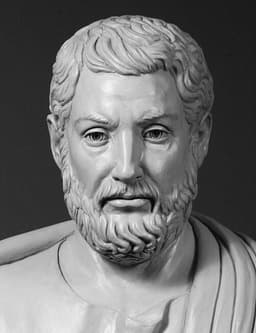
Cleisthenes
Politician · Ancient
78.3Total
Basic Information
Born
-304
-570
Died
-232
-508
Era
Ancient
Ancient
Nationality
India
Greece
Occupation
Emperor
Politician
Civilization
Indian
Western
Score Comparison
Military (10%)
72.0
49.4
Political (20%)
82.0
62.7
Influence (20%)
71.0
92.0
Legacy (20%)
90.0
92.0
Leadership (15%)
72.0
72.0
Strategy (15%)
58.0
71.3
TOTAL
76.3
78.3
Ashoka the Great — Complete Timeline
261 BC
Kalinga WarWar
Ashoka launched a brutal conquest of the Kalinga region (modern Odisha). The war caused massive casualties, with over 100,000 killed and 150,000 deported. The suffering witnessed during this campaign led Ashoka to renounce military conquest and embrace Buddhism.
ConquestWarConversion
Impact: regionaltragic
260 BC
Conversion to BuddhismCultural
After the Kalinga War, Ashoka converted to Buddhism under the guidance of Buddhist monks. He adopted the principle of Dhamma (righteous law) and began promoting non-violence, vegetarianism, and religious tolerance throughout his empire.
ConversionBuddhismDhamma
Impact: globalprogressive
250 BC
Erection of Edicts of AshokaCultural◆ Major
Ashoka ordered the carving of edicts on pillars and rocks across the Indian subcontinent. These inscriptions, written in Prakrit and other languages, proclaimed his policies of non-violence, social welfare, and religious harmony. They are the earliest deciphered written records from ancient India.
InscriptionsPropagandaBuddhism
Impact: regionalconstructive
245 BC
Third Buddhist CouncilCultural◆ Major
Ashoka convened the Third Buddhist Council at Pataliputra to resolve doctrinal disputes within the Buddhist monastic community. The council standardized the Buddhist canon (Tripitaka) and decided to send missionaries abroad, including to Sri Lanka and Southeast Asia.
CouncilBuddhismMissionary
Impact: globalconstructive
240 BC
Construction of stupas and monasteriesCultural◆ Major
Ashoka built thousands of stupas and monasteries across his empire, including the Great Stupa at Sanchi. These structures became centers of Buddhist worship and pilgrimage, spreading Buddhist art and architecture throughout Asia.
ArchitectureBuddhismPatronage
Impact: regionalconstructive
Cleisthenes — Complete Timeline
510 BC
Expulsion of the PeisistratidsPolitical Action◆ Major
Cleisthenes, with the support of the Alcmaeonid family and Spartan assistance, led the overthrow of the tyrant Hippias, son of Peisistratus. This ended the Peisistratid tyranny in Athens and opened the way for democratic reforms.
Tyranny OverthrownAthensSparta
Impact: nationalconstructive
508 BC
Reforms of CleisthenesReform
Cleisthenes reorganized the Athenian citizen body into ten new tribes based on demes, replacing the old four Ionian tribes. He established the Council of 500 (Boule) and introduced ostracism, creating a system of isonomia (equal rights) that is considered the foundation of Athenian democracy.
Athenian DemocracyConstitutional ReformAncient Greece
Impact: globalprogressive
507 BC
Introduction of OstracismReform◆ Major
Cleisthenes instituted ostracism, a procedure allowing Athenian citizens to vote annually to exile a prominent citizen deemed a threat to democracy for ten years. This mechanism aimed to prevent the rise of a new tyrant and stabilize the democratic system.
Athenian DemocracyPolitical MechanismExile
Impact: national
Expert Analysis
Origins
Cleisthenes (c. 570–508 BCE) was an aristocratic Athenian from the Alcmaeonid family, who played a key role in ending the Peisistratid tyranny. His political reforms laid the foundation for Athenian democracy. Ashoka (304–232 BCE) was the third emperor of the Maurya Dynasty, grandson of Chandragupta Maurya. He inherited a vast empire built through conquest and initially followed a path of military expansion, notably the brutal Kalinga War.
Rise to Power
Cleisthenes rose to power after the expulsion of the tyrant Hippias in 510 BCE. Initially in a power struggle with Isagoras, he gained popular support by proposing democratic reforms. When Isagoras called in Spartan help, Cleisthenes mobilized the demos, forcing the Spartans to withdraw, and implemented his reforms. Ashoka became emperor after a succession struggle, likely killing his brothers. His early reign was marked by aggressive expansion, culminating in the Kalinga War (c. 261 BCE), which caused immense suffering and turned him toward Buddhism.
Leadership & Governance
Cleisthenes restructured Athenian society into ten tribes based on demes (local districts), breaking the power of aristocratic clans. He created the Council of 500 (boule) with members chosen by lot, and introduced ostracism to prevent tyrants. His reforms increased citizen participation and equality before the law. Ashoka, after converting to Buddhism, adopted a policy of Dhamma (righteousness). He built a welfare state with hospitals, roads, and rest houses, promoted religious tolerance, and appointed Dhamma officers to spread ethical teachings. His edicts, carved on pillars and rocks, emphasized non-violence, compassion, and respect for all life.
Triumph & Tragedy
Cleisthenes' triumph was establishing a stable democracy that empowered citizens and inspired future generations. His reforms enabled Athens to become a cultural and military powerhouse. The tragedy is that his democracy was limited to free men, excluding women, slaves, and metics. Ashoka's triumph was transforming from a conqueror to a peacemaker, spreading Buddhism across Asia, and creating a model of benevolent rule. The tragedy is that his empire fragmented soon after his death, and his policies of non-violence may have weakened Mauryan military preparedness.
Character & Destiny
Cleisthenes was a pragmatic aristocrat who used democratic reforms to gain power but genuinely empowered the common man. His destiny was to be remembered as the 'Father of Athenian Democracy,' a title that overshadows his personal ambition. Ashoka was a complex figure: ruthless conqueror turned devout Buddhist. His destiny was to become one of history's greatest rulers, symbolizing the potential for moral transformation in leadership. Both men were reformers who reshaped their societies, but their motivations differed: Cleisthenes sought political stability, Ashoka spiritual redemption.
Legacy
Cleisthenes' legacy is profound: his democratic system influenced Western political thought and institutions. The concept of citizen participation, election by lot, and separation of powers can be traced back to his reforms. Ashoka's legacy is equally vast: he spread Buddhism across Asia, built thousands of stupas, and his edicts are early examples of public policy communication. His ideals of non-violence and religious tolerance resonate today. However, Ashoka's empire did not long outlast him, while Cleisthenes' democracy evolved and endured for centuries in Athens.
Conclusion
**Scores**: Cleisthenes (M=49, P=63, I=92, L=92, D=72, S=71, T=78); Ashoka (M=72, P=82, I=71, L=90, D=72, S=58, T=76). The overall score gap is 2.0 in favor of Cleisthenes. While Ashoka had higher military and political power, Cleisthenes' innovative institutional reforms (I=92) and long-term impact on governance (L=92) give him a slight edge. Both are titans of history, but Cleisthenes' democracy laid a foundation for modern governance, while Ashoka's moral empire was more fragile. **Winner: Cleisthenes**.
Rankings
🥇
CleisthenesLeader
Mil: 49.4Pol: 62.7Inf: 92.0
78.3
🥈
Ashoka the Great
Mil: 72.0Pol: 82.0Inf: 71.0
76.3
+2.0 behind
How This Comparison Works
Algorithm
Each figure is scored on 6 dimensions (0—100 scale) based on structured historical data: Military (10%), Political (20%), Influence (20%), Legacy (20%), Leadership (15%), Strategy (15%). The weighted total produces the final ranking.
Data Sources
Scores are computed from structured sub-indicators in the database. Scale factors adjust for era (Ancient ×0.85, Modern ×1.0) and civilization size (Eastern ×1.05, Other ×0.80) to account for differences in population and military scale.
Maximum 3 Figures
Comparisons are limited to 2—3 figures to ensure readability and statistical meaningfulness.
Error Margins
±5 points per dimension — Sub-scores are derived from historical records with inherent uncertainty. Two figures within 5 points on a dimension should be considered roughly equivalent in that area.
Total Score Accuracy
±3 points overall — The weighted combination of 6 dimensions produces a total score with approximately ±3 points of uncertainty. Differences of less than 3 points are not statistically significant— the figures are effectively tied.
Known Limitations
- Historical records are incomplete and uneven across civilizations
- Figures from oral-tradition societies may be underrepresented
- Occupation labels can misclassify multi-role figures
- Scores measure capability and impact, not moral character
- Quantitative scoring is a comparison tool, not absolute truth
Capability Radar
Military (10%) — Battles & Warfare
Battles
85
58
Win Rate
90
62
Expansion
95
59
Political (20%) — Governance & Reform
Reform
95
95
Diplomacy
90
70
Economy
85
40
Influence (20%) — Cultural & Global Reach
Cultural
95
85
Global
90
85
Legacy (20%) — Historical Impact
Historical
95
90
Longevity
95
95
Leadership (15%) — Power & Stability
Tenure
90
30
Stability
90
60
Strategy (15%) — Tactics & Innovation
Strategy
80
62
Tactics
75
67
Reform
70
72
Similar Comparisons
Comments & Discussion
No comments yet. Be the first to share your thoughts!