Loading...
This comparison has not been analyzed yet.
One-time AI generation (~1 minute). Scores and timeline are already available below.
Arduin of Ivrea vs Conrad I of Germany
Arduin of Ivrea leads by 4.2 pts · 2 figures compared
…

Arduin of Ivrea
Emperor · Medieval
41.9Total
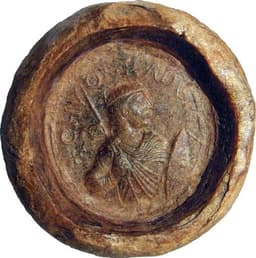
Conrad I of Germany
Emperor · Medieval
37.7Total
Basic Information
Born
955
881
Died
1015
918
Era
Medieval
Medieval
Nationality
Italy
East Francia
Occupation
Emperor
Emperor
Civilization
Western
Western
Score Comparison
Military (10%)
50.0
21.2
Political (20%)
33.6
26.4
Influence (20%)
47.1
47.1
Legacy (20%)
35.8
40.8
Leadership (15%)
49.9
38.1
Strategy (15%)
36.8
39.6
TOTAL
41.9
37.7
Arduin of Ivrea — Complete Timeline
1002 AD
Proclaimed King of ItalyPolitical Action◆ Major
After the death of Emperor Otto III, Arduin of Ivrea was proclaimed King of Italy by the Lombard nobility in Pavia. This act challenged the authority of the German king Henry II, who claimed the Italian throne.
CoronationItalyRivalry
Impact: regional
1004 AD
Defeated by Henry II at the Battle of the Po RiverWar◆ Major
Arduin was defeated by Henry II's forces near the Po River. This military loss forced Arduin to retreat to his margraviate of Ivrea, effectively ending his claim to the Italian throne and allowing Henry II to be crowned King of Italy.
BattleHenry IIDefeat
Impact: regionaltragic
1014 AD
Excommunication by Pope Benedict VIIIPolitical Action
Arduin was excommunicated by Pope Benedict VIII for his continued resistance against Henry II. This ecclesiastical condemnation isolated Arduin politically and religiously, contributing to his eventual surrender and retirement.
ExcommunicationPapacyConflict
Impact: regionaldestructive
1015 AD
Retirement to a MonasteryOther
After years of failed resistance, Arduin retired to the Abbey of Fruttuaria, where he died as a monk. His retirement marked the end of the last major Italian challenge to German rule in the early 11th century.
RetirementItalyEnd of Resistance
Impact: regional
Conrad I of Germany — Complete Timeline
911 AD
Election as King of East FranciaPolitical Action
Following the death of Louis the Child, the East Frankish nobility elected Conrad, Duke of Franconia, as king. This was the first non-Carolingian election, establishing the principle of elective monarchy in East Francia.
ElectionElective Monarchy
Impact: nationalconstructive
915 AD
Conflict with Henry of SaxonyWar◆ Major
Conrad I fought a prolonged war against Henry, Duke of Saxony (later Henry the Fowler). The conflict weakened royal authority and ended with Conrad recognizing Henry's autonomy in Saxony.
Civil WarDucal Rebellion
Impact: nationaldestructive
918 AD
Deathbed Designation of Henry of SaxonyPolitical Action
On his deathbed, Conrad I advised his brother Eberhard to offer the crown to Henry of Saxony, his former rival. This act ensured a peaceful succession and strengthened the monarchy under the Ottonian dynasty.
SuccessionOttonian Dynasty
Impact: nationalconstructive
This comparison has not been analyzed yet.
One-time AI generation (~1 minute). Scores and timeline are already available below.
Rankings
🥇
Arduin of IvreaLeader
Mil: 50.0Pol: 33.6Inf: 47.1
41.9
🥈
Conrad I of Germany
Mil: 21.2Pol: 26.4Inf: 47.1
37.7
+4.2 behind
How This Comparison Works
Algorithm
Each figure is scored on 6 dimensions (0—100 scale) based on structured historical data: Military (10%), Political (20%), Influence (20%), Legacy (20%), Leadership (15%), Strategy (15%). The weighted total produces the final ranking.
Data Sources
Scores are computed from structured sub-indicators in the database. Scale factors adjust for era (Ancient ×0.85, Modern ×1.0) and civilization size (Eastern ×1.05, Other ×0.80) to account for differences in population and military scale.
Maximum 3 Figures
Comparisons are limited to 2—3 figures to ensure readability and statistical meaningfulness.
Error Margins
±5 points per dimension — Sub-scores are derived from historical records with inherent uncertainty. Two figures within 5 points on a dimension should be considered roughly equivalent in that area.
Total Score Accuracy
±3 points overall — The weighted combination of 6 dimensions produces a total score with approximately ±3 points of uncertainty. Differences of less than 3 points are not statistically significant— the figures are effectively tied.
Known Limitations
- Historical records are incomplete and uneven across civilizations
- Figures from oral-tradition societies may be underrepresented
- Occupation labels can misclassify multi-role figures
- Scores measure capability and impact, not moral character
- Quantitative scoring is a comparison tool, not absolute truth
Capability Radar
Military (10%) — Battles & Warfare
Battles
15
15
Win Rate
20
10
Expansion
10
5
Political (20%) — Governance & Reform
Reform
5
20
Diplomacy
15
25
Economy
5
15
Influence (20%) — Cultural & Global Reach
Cultural
5
10
Global
5
10
Legacy (20%) — Historical Impact
Historical
10
25
Longevity
5
20
Leadership (15%) — Power & Stability
Tenure
10
30
Stability
5
15
Strategy (15%) — Tactics & Innovation
Strategy
10
10
Tactics
15
10
Reform
5
5
Similar Comparisons
Comments & Discussion
No comments yet. Be the first to share your thoughts!