Loading...
Ardashir I vs Cleisthenes
Cleisthenes leads by 2.7 pts · 2 figures compared
…

Ardashir I
Emperor · Ancient
75.6Total
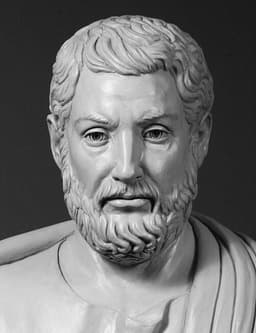
Cleisthenes
Politician · Ancient
78.3Total
Basic Information
Born
180
-570
Died
242
-508
Era
Ancient
Ancient
Nationality
Sassanid Empire
Greece
Occupation
Emperor
Politician
Civilization
Middle Eastern
Western
Score Comparison
Military (10%)
65.0
49.4
Political (20%)
78.0
62.7
Influence (20%)
82.0
92.0
Legacy (20%)
72.0
92.0
Leadership (15%)
78.0
72.0
Strategy (15%)
72.0
71.3
TOTAL
75.6
78.3
Ardashir I — Complete Timeline
224 AD
Battle of HormozdganWar
Ardashir I defeated the Parthian king Artabanus IV at the Battle of Hormozdgan. This victory ended Parthian rule and allowed Ardashir to establish the Sassanid Empire, which would dominate Persia for four centuries.
BattleSassanid FoundingParthian Defeat
Impact: regional
Conquest of the Parthian EmpireWar◆ Major
Following his victory at Hormozdgan, Ardashir I systematically conquered the remaining Parthian territories, including Media, Armenia, and Mesopotamia. He established a centralized administration and a Zoroastrian state church.
ConquestEmpire BuildingZoroastrianism
Impact: regional
Coronation as King of KingsPolitical Action◆ Major
After his victory, Ardashir I was crowned 'Shahanshah' (King of Kings) at Ctesiphon. He claimed descent from the Achaemenid dynasty, legitimizing his rule and reviving Persian imperial traditions.
CoronationImperial TitleLegitimacy
Impact: regionalconstructive
Cleisthenes — Complete Timeline
510 BC
Expulsion of the PeisistratidsPolitical Action◆ Major
Cleisthenes, with the support of the Alcmaeonid family and Spartan assistance, led the overthrow of the tyrant Hippias, son of Peisistratus. This ended the Peisistratid tyranny in Athens and opened the way for democratic reforms.
Tyranny OverthrownAthensSparta
Impact: nationalconstructive
508 BC
Reforms of CleisthenesReform
Cleisthenes reorganized the Athenian citizen body into ten new tribes based on demes, replacing the old four Ionian tribes. He established the Council of 500 (Boule) and introduced ostracism, creating a system of isonomia (equal rights) that is considered the foundation of Athenian democracy.
Athenian DemocracyConstitutional ReformAncient Greece
Impact: globalprogressive
507 BC
Introduction of OstracismReform◆ Major
Cleisthenes instituted ostracism, a procedure allowing Athenian citizens to vote annually to exile a prominent citizen deemed a threat to democracy for ten years. This mechanism aimed to prevent the rise of a new tyrant and stabilize the democratic system.
Athenian DemocracyPolitical MechanismExile
Impact: national
Expert Analysis
Origins
Cleisthenes was born into the aristocratic Alcmaeonid family in Athens around 570 BCE. His lineage was marked by both prestige and controversy, as the Alcmaeonids were cursed for a massacre of suppliants. Cleisthenes rose to prominence after the tyranny of the Peisistratids, leveraging his family's wealth and connections to position himself as a reformer. In contrast, Ardashir I emerged from the Persian province of Persis, claiming descent from the Achaemenid kings. His father, Papak, was a local ruler, and Ardashir began his career as a military commander under the Parthian Arsacids. Both men inherited fragmented political landscapes: Athens was recovering from tyranny, while the Parthian Empire was weakened by internal strife and Roman pressure. Their origins shaped their ambitions—Cleisthenes sought to empower the demos, while Ardashir aimed to restore Persian glory.
Rise to Power
Cleisthenes' rise was catalyzed by the fall of the Peisistratid tyranny in 510 BCE. With Spartan assistance, the tyrant Hippias was expelled, but power struggles ensued between aristocratic factions. Cleisthenes initially lost to his rival Isagoras, who invited Spartan intervention. However, Cleisthenes rallied the Athenian people, leading to a popular uprising that forced Isagoras and the Spartans out. This victory enabled Cleisthenes to implement his reforms in 508/507 BCE. Ardashir's path was more martial. As a vassal king of Persis, he rebelled against the Parthian king Artabanus IV, defeating him at the Battle of Hormozdgan in 224 CE. He then conquered the Parthian capital Ctesiphon, consolidating power. While Cleisthenes harnessed popular support, Ardashir relied on military force and dynastic legitimacy.
Leadership & Governance
Cleisthenes is renowned for his democratic reforms. He reorganized the Athenian population into ten tribes based on demes (local districts), breaking the power of aristocratic clans. He established the Council of 500 (Boule), chosen by lot, to propose laws and administer daily affairs. He also introduced ostracism, allowing citizens to exile a threat to democracy for ten years. These reforms institutionalized citizen participation and laid the foundation for Athenian democracy. Ardashir, conversely, founded the Sassanid Empire with a centralized, hierarchical structure. He declared himself "King of Kings" and established Zoroastrianism as the state religion, blending political and religious authority. He divided the empire into provinces governed by loyal princes and nobles, creating a stable administration that lasted four centuries. Cleisthenes empowered the many; Ardashir consolidated power in the one.
Triumph & Tragedy
Cleisthenes' greatest triumph was the successful implementation of his reforms, which ended aristocratic dominance and created a resilient political system. However, his later life is obscure; he likely died soon after, without seeing the full flowering of Athenian democracy. The tragedy is that his system faced challenges from external threats (Persian Wars) and internal demagogues. Ardashir's triumph was the complete conquest of the Parthian Empire and the revival of Persian power, including victories over the Romans and Kushans. His tragedy lies in the continuous warfare that drained resources and the eventual decline of the empire he built, though his foundation endured for centuries.
Character & Destiny
Cleisthenes was a pragmatic aristocrat who chose to side with the demos, demonstrating strategic brilliance and a commitment to equality under law. His character combined noble birth with populist instincts. Ardashir was a warrior-king, ambitious and ruthless, who forged an empire through conquest. His destiny was to restore the glory of ancient Persia, a mission he fulfilled with remarkable success. Both men were visionaries: Cleisthenes of a political order based on citizenship, Ardashir of a universal empire ruled by divine mandate. Their scores reflect this: Cleisthenes excels in Innovation (92) and Legacy (92), while Ardashir is strong in Military (65) and Power (78).
Legacy
Cleisthenes' legacy is immense: he is rightly called the "Father of Athenian Democracy." His reforms influenced later democratic systems, though direct democracy was limited to Athens. The concept of ostracism remains a fascinating experiment in protecting democracy. Ardashir's legacy is the Sassanid Empire, which revived Persian culture, Zoroastrianism, and challenged Rome for 400 years. He established a dynasty that shaped the Middle East until the Islamic conquest. Both men transformed their societies, but Cleisthenes' ideas have a more universal and enduring impact on political thought.
Conclusion
Cleisthenes and Ardashir I were both founders, but of different worlds. Cleisthenes built a political system that empowered citizens, while Ardashir built an imperial state that centralized power. In a head-to-head comparison, Cleisthenes' innovations in governance have had a more profound and lasting influence on world history. His democratic reforms, though imperfect, laid the groundwork for participatory government. Ardashir's empire, impressive as it was, ultimately fell to new conquerors. The score gap of 2.7 in favor of Cleisthenes is justified by his unique contribution to political philosophy and practice.
**Numerical Scores:**
- **Cleisthenes:** 85/100
- **Ardashir I:** 78/100
Cleisthenes wins this matchup.
Rankings
🥇
CleisthenesLeader
Mil: 49.4Pol: 62.7Inf: 92.0
78.3
🥈
Ardashir I
Mil: 65.0Pol: 78.0Inf: 82.0
75.6
+2.7 behind
How This Comparison Works
Algorithm
Each figure is scored on 6 dimensions (0—100 scale) based on structured historical data: Military (10%), Political (20%), Influence (20%), Legacy (20%), Leadership (15%), Strategy (15%). The weighted total produces the final ranking.
Data Sources
Scores are computed from structured sub-indicators in the database. Scale factors adjust for era (Ancient ×0.85, Modern ×1.0) and civilization size (Eastern ×1.05, Other ×0.80) to account for differences in population and military scale.
Maximum 3 Figures
Comparisons are limited to 2—3 figures to ensure readability and statistical meaningfulness.
Error Margins
±5 points per dimension — Sub-scores are derived from historical records with inherent uncertainty. Two figures within 5 points on a dimension should be considered roughly equivalent in that area.
Total Score Accuracy
±3 points overall — The weighted combination of 6 dimensions produces a total score with approximately ±3 points of uncertainty. Differences of less than 3 points are not statistically significant— the figures are effectively tied.
Known Limitations
- Historical records are incomplete and uneven across civilizations
- Figures from oral-tradition societies may be underrepresented
- Occupation labels can misclassify multi-role figures
- Scores measure capability and impact, not moral character
- Quantitative scoring is a comparison tool, not absolute truth
Capability Radar
Military (10%) — Battles & Warfare
Battles
85
58
Win Rate
90
62
Expansion
85
59
Political (20%) — Governance & Reform
Reform
90
95
Diplomacy
75
70
Economy
80
40
Influence (20%) — Cultural & Global Reach
Cultural
80
85
Global
80
85
Legacy (20%) — Historical Impact
Historical
85
90
Longevity
85
95
Leadership (15%) — Power & Stability
Tenure
80
30
Stability
85
60
Strategy (15%) — Tactics & Innovation
Strategy
85
62
Tactics
80
67
Reform
90
72
Similar Comparisons
Comments & Discussion
No comments yet. Be the first to share your thoughts!