Loading...
This comparison has not been analyzed yet.
One-time AI generation (~1 minute). Scores and timeline are already available below.
Apolinario Mabini vs Henry Pelham
Henry Pelham leads by 4.6 pts · 2 figures compared
…

Apolinario Mabini
Politician · Modern
53.6Total
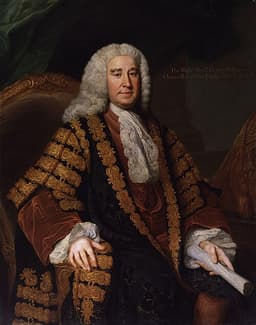
Henry Pelham
Politician · Modern
58.2Total
Basic Information
Born
1864
1694
Died
1903
1754
Era
Modern
Modern
Nationality
Philippines
Great Britain
Occupation
Politician
Politician
Civilization
Eastern
Western
Score Comparison
Military (10%)
18.4
49.9
Political (20%)
68.0
70.0
Influence (20%)
58.3
57.2
Legacy (20%)
58.0
49.2
Leadership (15%)
62.2
78.0
Strategy (15%)
31.3
43.9
TOTAL
53.6
58.2
Apolinario Mabini — Complete Timeline
1898 AD
Authored the Constitutional Program of the Philippine RepublicPolitical Action◆ Major
Mabini wrote the 'Constitutional Program of the Philippine Republic' in 1898, outlining the principles of the revolutionary government. His writings influenced the Malolos Constitution and the establishment of the First Philippine Republic.
Philippine HistoryConstitutionRevolution
Impact: nationalconstructive
1899 AD
Appointed as Prime Minister of the First Philippine RepublicPolitical Action◆ Major
Apolinario Mabini was appointed as the first Prime Minister of the First Philippine Republic on January 2, 1899, by President Emilio Aguinaldo. He served as the de facto head of government during the Philippine-American War.
Philippine HistoryFirst RepublicGovernment
Impact: nationalconstructive
1901 AD
Captured by American Forces and ExiledPolitical Action◆ Major
Mabini was captured by American forces on December 10, 1901, and exiled to Guam. He refused to swear allegiance to the United States, remaining a symbol of resistance. He was allowed to return to the Philippines in 1903.
Philippine HistoryExileResistance
Impact: nationaltragic
1903 AD
Died of Cholera Shortly After ReturnOther◆ Major
Apolinario Mabini died of cholera on May 13, 1903, shortly after returning from exile in Guam. His death at age 38 cut short his political career, but he is remembered as the 'Sublime Paralytic' and a key intellectual of the Philippine Revolution.
Philippine HistoryDeathRevolutionary
Impact: nationaltragic
Henry Pelham — Complete Timeline
1744 AD
Management of the War of the Austrian SuccessionWar◆ Major
As Prime Minister, Pelham directed British military and financial support for the Pragmatic Sanction, funding campaigns in Europe and North America. The war ended with the Treaty of Aix-la-Chapelle in 1748, which returned Louisbourg to France, a decision criticized in Britain.
WarDiplomacyTreaty
Impact: global
1749 AD
Consolidation of the British National DebtReform◆ Major
As Prime Minister, Pelham oversaw the reduction of the interest rate on the British national debt from 4% to 3%, saving the government
FinanceDebt ManagementEconomic Reform
Impact: nationalconstructive
1753 AD
Passage of the Jew Bill of 1753Political Action
Pelham's government passed the Jewish Naturalization Act, allowing foreign-born Jews to become British subjects. Widespread public opposition forced its repeal the following year, damaging Pelham's political standing.
LegislationReligious ToleranceRepeal
Impact: nationalprogressive
This comparison has not been analyzed yet.
One-time AI generation (~1 minute). Scores and timeline are already available below.
Rankings
🥇
Henry PelhamLeader
Mil: 49.9Pol: 70.0Inf: 57.2
58.2
🥈
Apolinario Mabini
Mil: 18.4Pol: 68.0Inf: 58.3
53.6
+4.6 behind
How This Comparison Works
Algorithm
Each figure is scored on 6 dimensions (0—100 scale) based on structured historical data: Military (10%), Political (20%), Influence (20%), Legacy (20%), Leadership (15%), Strategy (15%). The weighted total produces the final ranking.
Data Sources
Scores are computed from structured sub-indicators in the database. Scale factors adjust for era (Ancient ×0.85, Modern ×1.0) and civilization size (Eastern ×1.05, Other ×0.80) to account for differences in population and military scale.
Maximum 3 Figures
Comparisons are limited to 2—3 figures to ensure readability and statistical meaningfulness.
Error Margins
±5 points per dimension — Sub-scores are derived from historical records with inherent uncertainty. Two figures within 5 points on a dimension should be considered roughly equivalent in that area.
Total Score Accuracy
±3 points overall — The weighted combination of 6 dimensions produces a total score with approximately ±3 points of uncertainty. Differences of less than 3 points are not statistically significant— the figures are effectively tied.
Known Limitations
- Historical records are incomplete and uneven across civilizations
- Figures from oral-tradition societies may be underrepresented
- Occupation labels can misclassify multi-role figures
- Scores measure capability and impact, not moral character
- Quantitative scoring is a comparison tool, not absolute truth
Capability Radar
Military (10%) — Battles & Warfare
Battles
12
29
Win Rate
16
34
Expansion
19
32
Political (20%) — Governance & Reform
Reform
60
70
Diplomacy
55
60
Economy
30
85
Influence (20%) — Cultural & Global Reach
Cultural
65
30
Global
45
45
Legacy (20%) — Historical Impact
Historical
70
55
Longevity
55
40
Leadership (15%) — Power & Stability
Tenure
40
65
Stability
20
75
Strategy (15%) — Tactics & Innovation
Strategy
22
39
Tactics
27
42
Reform
30
46
Similar Comparisons
Comments & Discussion
No comments yet. Be the first to share your thoughts!