Loading...
Apolinario Mabini vs Napoleon Bonaparte
Napoleon Bonaparte leads by 17.3 pts · 2 figures compared
…
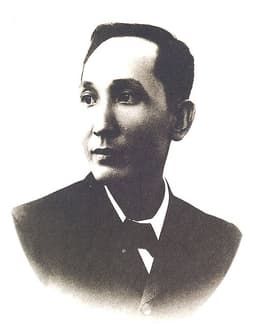
Apolinario Mabini
Politician · Modern
53.6Total

Napoleon Bonaparte
General · Modern
70.9Total
Basic Information
Born
1864
1769
Died
1903
1821
Era
Modern
Modern
Nationality
Philippines
France
Occupation
Politician
General
Civilization
Eastern
Western
Score Comparison
Military (10%)
18.4
94.0
Political (20%)
68.0
72.0
Influence (20%)
58.3
40.0
Legacy (20%)
58.0
80.0
Leadership (15%)
62.2
78.0
Strategy (15%)
31.3
90.0
TOTAL
53.6
70.9
Apolinario Mabini — Complete Timeline
1898 AD
Authored the Constitutional Program of the Philippine RepublicPolitical Action◆ Major
Mabini wrote the 'Constitutional Program of the Philippine Republic' in 1898, outlining the principles of the revolutionary government. His writings influenced the Malolos Constitution and the establishment of the First Philippine Republic.
Philippine HistoryConstitutionRevolution
Impact: nationalconstructive
1899 AD
Appointed as Prime Minister of the First Philippine RepublicPolitical Action◆ Major
Apolinario Mabini was appointed as the first Prime Minister of the First Philippine Republic on January 2, 1899, by President Emilio Aguinaldo. He served as the de facto head of government during the Philippine-American War.
Philippine HistoryFirst RepublicGovernment
Impact: nationalconstructive
1901 AD
Captured by American Forces and ExiledPolitical Action◆ Major
Mabini was captured by American forces on December 10, 1901, and exiled to Guam. He refused to swear allegiance to the United States, remaining a symbol of resistance. He was allowed to return to the Philippines in 1903.
Philippine HistoryExileResistance
Impact: nationaltragic
1903 AD
Died of Cholera Shortly After ReturnOther◆ Major
Apolinario Mabini died of cholera on May 13, 1903, shortly after returning from exile in Guam. His death at age 38 cut short his political career, but he is remembered as the 'Sublime Paralytic' and a key intellectual of the Philippine Revolution.
Philippine HistoryDeathRevolutionary
Impact: nationaltragic
Napoleon Bonaparte — Complete Timeline
1799 AD
Coup of 18 BrumaireOther◆ Major
Napoleon Bonaparte, with support from his brother Lucien and key political figures, overthrew the Directory in a bloodless coup. He established the Consulate with himself as First Consul, effectively becoming the ruler of France. This event ended the French Revolution's most unstable period.
French RevolutionCoupRise to Power
Impact: regional
1804 AD
Promulgation of the Napoleonic CodeOther◆ Major
Napoleon enacted the Civil Code of the French, known as the Napoleonic Code, a comprehensive set of laws that replaced the fragmented feudal legal systems. The code established legal equality, protected property rights, and secularized law. It became the basis for legal systems in many European and world countries.
Legal ReformNapoleonic CodeCivil Law
Impact: globalconstructive
1805 AD
Battle of AusterlitzWar◆ Major
Napoleon's Grande Arm
Napoleonic WarsBattleDecisive Victory
Impact: global
1812 AD
Invasion of RussiaWar◆ Major
Napoleon led the Grande Arm
Napoleonic WarsInvasionDisaster
Impact: globaldestructive
1815 AD
Battle of WaterlooWar◆ Major
Napoleon's French army was defeated by the combined forces of the Duke of Wellington's Anglo-Allied army and Gebhard Leberecht von Bl
Napoleonic WarsBattleFinal Defeat
Impact: globaldestructive
Expert Analysis
Origins
Apolinario Mabini was born on July 23, 1864, in Tanauan, Batangas, Philippines, to a poor peasant family. His father, Inocencio Mabini, was a farmer, and his mother, Dionisia Maranan, was a market vendor. Despite poverty, Mabini excelled academically, earning a scholarship to the College of San Juan de Letran and later a law degree from the University of Santo Tomas in 1894. His physical disability—polio left him paralyzed from the waist down from 1896—shaped his reliance on intellect.
Napoleon Bonaparte was born on August 15, 1769, in Ajaccio, Corsica, to a minor noble family. His father, Carlo Buonaparte, was a lawyer and diplomat, and his mother, Letizia Ramolino, was strict. Napoleon attended military schools in Brienne and Paris, graduating in 1785 as a second lieutenant in artillery. Corsica's recent annexation by France influenced his early nationalism.
Rise to Power
Mabini's rise came through his writings and legal expertise. In 1898, he became chief adviser to Emilio Aguinaldo, drafting decrees and the Constitutional Program of the Philippine Republic. On January 2, 1899, he was appointed Prime Minister of the First Philippine Republic, shaping the revolutionary government's policies. His influence stemmed from his intellect, not military force.
Napoleon's rise was meteoric. In 1793, he drove British forces from Toulon, earning promotion to brigadier general. After suppressing a royalist uprising in 1795, he became commander of the Army of Italy. His 1796 Italian campaign defeated Austria, making him a national hero. On November 9, 1799 (18 Brumaire), he overthrew the Directory in a coup, becoming First Consul. By 1804, he crowned himself Emperor.
Leadership & Governance
Mabini led through ideas and legal frameworks. He authored the Constitutional Program, advocating for a strong central government, separation of church and state, and social reforms. As Prime Minister, he faced the Philippine-American War, prioritizing diplomatic solutions but accepting armed resistance. His governance was hampered by Aguinaldo's military focus and limited resources.
Napoleon ruled with authoritarian efficiency. He centralized the French state, established the Napoleonic Code (1804), reformed education with lycées, and created the Banque de France. His leadership was top-down, with a meritocratic bureaucracy. He scored 72.0 in political skill versus Mabini's 63.7, reflecting his ability to implement and enforce reforms across a continent.
Triumph & Tragedy
Mabini's greatest triumph was his intellectual contribution to Philippine independence. His writings, like "The True Decalogue," inspired revolutionaries. His tragedy was his capture by American forces on December 10, 1901, and exile to Guam. He refused to swear allegiance to the United States, dying of cholera on May 13, 1903, at age 38, shortly after returning.
Napoleon's triumphs include the Battle of Austerlitz (1805), where he crushed the Russian and Austrian armies, and the Napoleonic Code, which influenced legal systems worldwide. His tragedies were the disastrous Invasion of Russia (1812), losing over 500,000 men, and his final defeat at Waterloo (1815), leading to exile on Saint Helena. His military score of 94.0 contrasts with Mabini's 22.8, but his influence score of 40.0 is lower than Mabini's 67.0.
Character & Destiny
Mabini was pragmatic, stoic, and principled. His paralysis forced reliance on reason; he was called the "Sublime Paralytic." He consistently prioritized national sovereignty over personal gain, refusing American amnesty. His character led to a short, impactful life but limited direct power.
Napoleon was ambitious, charismatic, and ruthless. His decision-making was aggressive and strategic, but overreach led to downfall. His personality drove him to conquer Europe but also to alienate allies. Historical assessments note his genius for organization and his fatal hubris. His leadership score of 78.0 exceeds Mabini's 53.4.
Legacy
Mabini's legacy is ideological. He is revered as the "Brain of the Revolution" in the Philippines, his writings foundational to Filipino nationalism. His refusal to compromise symbolizes anti-colonial resistance. However, his direct political impact was brief.
Napoleon's legacy is vast. The Napoleonic Code shaped civil law in Europe and beyond. He redrew national borders, spread nationalism, and influenced military tactics. His total score of 70.9 is higher than Mabini's 59.8, but his influence score is lower (40.0 vs 67.0), reflecting a more negative global perception.
Conclusion
Napoleon Bonaparte had greater historical impact due to his military conquests and legal reforms that reshaped Europe. His overall score of 70.9 surpasses Mabini's 59.8, driven by superior military (94.0 vs 22.8) and leadership (78.0 vs 53.4). However, Mabini's influence score of 67.0 exceeds Napoleon's 40.0, indicating deeper symbolic power in anti-colonial contexts. Napoleon changed the course of world history; Mabini inspired a nation. The data supports Napoleon as more impactful globally, but Mabini's legacy endures regionally.
Rankings
🥇
Napoleon BonaparteLeader
Mil: 94.0Pol: 72.0Inf: 40.0
70.9
🥈
Apolinario Mabini
Mil: 18.4Pol: 68.0Inf: 58.3
53.6
+17.3 behind
How This Comparison Works
Algorithm
Each figure is scored on 6 dimensions (0—100 scale) based on structured historical data: Military (10%), Political (20%), Influence (20%), Legacy (20%), Leadership (15%), Strategy (15%). The weighted total produces the final ranking.
Data Sources
Scores are computed from structured sub-indicators in the database. Scale factors adjust for era (Ancient ×0.85, Modern ×1.0) and civilization size (Eastern ×1.05, Other ×0.80) to account for differences in population and military scale.
Maximum 3 Figures
Comparisons are limited to 2—3 figures to ensure readability and statistical meaningfulness.
Error Margins
±5 points per dimension — Sub-scores are derived from historical records with inherent uncertainty. Two figures within 5 points on a dimension should be considered roughly equivalent in that area.
Total Score Accuracy
±3 points overall — The weighted combination of 6 dimensions produces a total score with approximately ±3 points of uncertainty. Differences of less than 3 points are not statistically significant— the figures are effectively tied.
Known Limitations
- Historical records are incomplete and uneven across civilizations
- Figures from oral-tradition societies may be underrepresented
- Occupation labels can misclassify multi-role figures
- Scores measure capability and impact, not moral character
- Quantitative scoring is a comparison tool, not absolute truth
Capability Radar
Military (10%) — Battles & Warfare
Battles
12
95
Win Rate
16
90
Expansion
19
95
Political (20%) — Governance & Reform
Reform
60
95
Diplomacy
55
80
Economy
30
85
Influence (20%) — Cultural & Global Reach
Cultural
65
85
Global
45
90
Legacy (20%) — Historical Impact
Historical
70
95
Longevity
55
90
Leadership (15%) — Power & Stability
Tenure
40
85
Stability
20
70
Strategy (15%) — Tactics & Innovation
Strategy
22
95
Tactics
27
98
Reform
30
92
Similar Comparisons
Comments & Discussion
No comments yet. Be the first to share your thoughts!