Loading...
Andreas Papandreou vs Apolinario Mabini
Andreas Papandreou leads by 10.3 pts · 2 figures compared
…
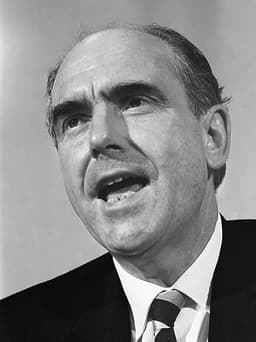
Andreas Papandreou
Politician · Modern
63.9Total
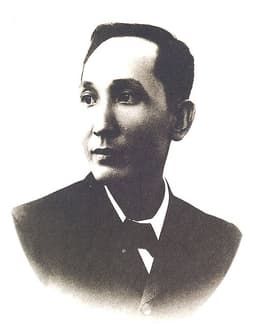
Apolinario Mabini
Politician · Modern
53.6Total
Basic Information
Born
1919
1864
Died
1996
1903
Era
Modern
Modern
Nationality
Greece
Philippines
Occupation
Politician
Politician
Civilization
Western
Eastern
Score Comparison
Military (10%)
50.0
18.4
Political (20%)
65.0
68.0
Influence (20%)
82.0
58.3
Legacy (20%)
56.0
58.0
Leadership (15%)
68.0
62.2
Strategy (15%)
44.0
31.3
TOTAL
63.9
53.6
Andreas Papandreou — Complete Timeline
1974 AD
Founded the Panhellenic Socialist Movement (PASOK)Political Action◆ Major
Andreas Papandreou founded PASOK, a socialist political party that advocated for national independence, social justice, and democratic reforms. The party quickly became a major force in Greek politics, challenging the conservative establishment.
Political PartySocialismThird Way
Impact: nationalconstructive
1981 AD
Elected Prime Minister of GreecePolitical Action◆ Major
Papandreou led PASOK to a landslide victory in the 1981 elections, becoming the first socialist Prime Minister of Greece. His government implemented sweeping reforms, including the establishment of the National Health System and the legalization of civil marriage.
ElectionSocial ReformWelfare State
Impact: nationalconstructive
1982 AD
Legalized Civil MarriageReform◆ Major
Papandreou's government passed Law 1250/1982, which legalized civil marriage in Greece, ending the monopoly of the Orthodox Church over marriage. The reform was part of a broader secularization agenda that also included divorce reform.
SecularizationSocial ReformChurch-State Relations
Impact: nationalconstructive
1983 AD
Introduced the National Health System (ESY)Reform◆ Major
Papandreou's government established the National Health System (ESY), providing universal healthcare to all Greek citizens. The reform was a cornerstone of PASOK's social policy, significantly improving access to medical services.
HealthcareSocial PolicyReform
Impact: nationalconstructive
1985 AD
Economic Crisis and Austerity MeasuresPolitical Action◆ Major
Facing economic crisis, Papandreou's government implemented austerity measures, including wage freezes and currency devaluation. The policies caused internal party dissent and led to a decline in PASOK's popularity, though they stabilized the economy temporarily.
Economic PolicyAusterityCrisis
Impact: nationaldestructive
1989 AD
Imprisonment and Acquittal in Koskotas ScandalPolitical Action◆ Major
Papandreou was implicated in the Koskotas financial scandal, involving embezzlement and bribery. He was tried and acquitted in 1992, but the scandal damaged his reputation and contributed to PASOK's electoral defeat in 1989.
ScandalCorruptionTrial
Impact: nationaldestructive
Apolinario Mabini — Complete Timeline
1898 AD
Authored the Constitutional Program of the Philippine RepublicPolitical Action◆ Major
Mabini wrote the 'Constitutional Program of the Philippine Republic' in 1898, outlining the principles of the revolutionary government. His writings influenced the Malolos Constitution and the establishment of the First Philippine Republic.
Philippine HistoryConstitutionRevolution
Impact: nationalconstructive
1899 AD
Appointed as Prime Minister of the First Philippine RepublicPolitical Action◆ Major
Apolinario Mabini was appointed as the first Prime Minister of the First Philippine Republic on January 2, 1899, by President Emilio Aguinaldo. He served as the de facto head of government during the Philippine-American War.
Philippine HistoryFirst RepublicGovernment
Impact: nationalconstructive
1901 AD
Captured by American Forces and ExiledPolitical Action◆ Major
Mabini was captured by American forces on December 10, 1901, and exiled to Guam. He refused to swear allegiance to the United States, remaining a symbol of resistance. He was allowed to return to the Philippines in 1903.
Philippine HistoryExileResistance
Impact: nationaltragic
1903 AD
Died of Cholera Shortly After ReturnOther◆ Major
Apolinario Mabini died of cholera on May 13, 1903, shortly after returning from exile in Guam. His death at age 38 cut short his political career, but he is remembered as the 'Sublime Paralytic' and a key intellectual of the Philippine Revolution.
Philippine HistoryDeathRevolutionary
Impact: nationaltragic
Expert Analysis
Origins
Andreas Papandreou was born on February 5, 1919, in Chios, Greece, into a prominent political family. His father, Georgios Papandreou, was a three-time Prime Minister of Greece. Andreas studied at the University of Athens and later earned a PhD in economics from Harvard University. He served in the US Navy during World War II and became a US citizen, but returned to Greece in 1961 to enter politics.
Apolinario Mabini was born on July 23, 1864, in Tanauan, Batangas, Philippines, into a poor peasant family. Despite his humble origins, he excelled academically, earning a law degree from the University of Santo Tomas in 1894. He contracted polio in 1896, which paralyzed his legs, but he continued his intellectual work. His disability did not deter him from becoming a key figure in the Philippine Revolution.
Rise to Power
Papandreou entered Greek politics in 1964, elected as a member of parliament for his father's party. He founded the Panhellenic Socialist Movement (PASOK) on September 3, 1974, shortly after the fall of the Greek military junta. PASOK's platform of national independence, social justice, and democratic reforms resonated with voters. In the 1981 elections, PASOK won 48% of the vote, and Papandreou became Prime Minister on October 21, 1981.
Mabini rose to prominence through his writings. In 1898, he authored the 'Constitutional Program of the Philippine Republic,' which outlined the principles for a revolutionary government. He became the chief adviser to President Emilio Aguinaldo. On January 2, 1899, Mabini was appointed as the first Prime Minister of the First Philippine Republic. He served until May 7, 1899, when he resigned due to disagreements with Aguinaldo over the conduct of the war against the United States.
Leadership & Governance
As Prime Minister, Papandreou implemented sweeping reforms. His government established the National Health System (ESY) in 1983, providing universal healthcare. Law 1250/1982 legalized civil marriage, ending the Orthodox Church's monopoly. He also granted amnesty to political exiles and recognized the leftist resistance against the junta. However, his economic policies led to inflation and debt. By 1985, facing crisis, he imposed austerity measures, including wage freezes and currency devaluation.
Mabini's governance was focused on state-building during wartime. He drafted decrees on taxation, local government, and military organization. He advocated for a strong executive but also for civil liberties. His 'Constitutional Program' was a blueprint for a democratic republic. However, his tenure was short and dominated by the Philippine-American War. He opposed Aguinaldo's decision to shift to guerrilla warfare, favoring a diplomatic solution.
Triumph & Tragedy
Papandreou's greatest triumph was founding PASOK and leading Greece into a new era of social democracy. The ESY and civil marriage were lasting achievements. His tragedy was the economic mismanagement that led to stagnation and eventual bailouts. His later years were marred by corruption scandals and health issues, and he died on June 23, 1996.
Mabini's triumph was his intellectual contribution to the Philippine Republic. His writings and principles inspired future generations. His tragedy was his capture by American forces on December 10, 1901, and exile to Guam. He died of cholera on May 13, 1903, shortly after returning to the Philippines, at age 38, leaving his vision unfulfilled.
Character & Destiny
Papandreou was charismatic and populist, skilled at mobilizing public support. He had a strategic mind but was sometimes impulsive. His decision to implement austerity after promising the opposite damaged his credibility. His character combined idealism with pragmatism, but his destiny was tied to the cyclical crises of Greek politics.
Mabini was known for his intellect and unwavering principles. Despite his paralysis, he was called the 'Sublime Paralytic.' He refused to swear allegiance to the United States, even under duress. His moral clarity shaped his destiny as a martyr for Philippine independence.
Legacy
Papandreou's legacy is mixed. PASOK dominated Greek politics for decades, and his social reforms endure. However, his economic policies contributed to the debt crisis. He scored 56.0 in legacy. Mabini is revered as a national hero in the Philippines. His writings are studied, and his image appears on currency. His legacy score is 58.0, slightly higher than Papandreou's, reflecting his symbolic importance.
Conclusion
Andreas Papandreou had a greater impact on his country's development, with a total score of 63.9 compared to Mabini's 53.6. Papandreou's reforms reshaped Greek society and politics, while Mabini's influence was cut short by death. Papandreou's higher political (65.0 vs 68.0) and influence (82.0 vs 58.3) scores reflect his longer tenure and broader reach. However, Mabini's legacy as a symbol of resistance is significant. Ultimately, Papandreou's concrete achievements in governance give him the edge.
Rankings
🥇
Andreas PapandreouLeader
Mil: 50.0Pol: 65.0Inf: 82.0
63.9
🥈
Apolinario Mabini
Mil: 18.4Pol: 68.0Inf: 58.3
53.6
+10.3 behind
How This Comparison Works
Algorithm
Each figure is scored on 6 dimensions (0—100 scale) based on structured historical data: Military (10%), Political (20%), Influence (20%), Legacy (20%), Leadership (15%), Strategy (15%). The weighted total produces the final ranking.
Data Sources
Scores are computed from structured sub-indicators in the database. Scale factors adjust for era (Ancient ×0.85, Modern ×1.0) and civilization size (Eastern ×1.05, Other ×0.80) to account for differences in population and military scale.
Maximum 3 Figures
Comparisons are limited to 2—3 figures to ensure readability and statistical meaningfulness.
Error Margins
±5 points per dimension — Sub-scores are derived from historical records with inherent uncertainty. Two figures within 5 points on a dimension should be considered roughly equivalent in that area.
Total Score Accuracy
±3 points overall — The weighted combination of 6 dimensions produces a total score with approximately ±3 points of uncertainty. Differences of less than 3 points are not statistically significant— the figures are effectively tied.
Known Limitations
- Historical records are incomplete and uneven across civilizations
- Figures from oral-tradition societies may be underrepresented
- Occupation labels can misclassify multi-role figures
- Scores measure capability and impact, not moral character
- Quantitative scoring is a comparison tool, not absolute truth
Capability Radar
Military (10%) — Battles & Warfare
Battles
26
12
Win Rate
32
16
Expansion
32
19
Political (20%) — Governance & Reform
Reform
75
60
Diplomacy
70
55
Economy
60
30
Influence (20%) — Cultural & Global Reach
Cultural
55
65
Global
55
45
Legacy (20%) — Historical Impact
Historical
60
70
Longevity
50
55
Leadership (15%) — Power & Stability
Tenure
65
40
Stability
40
20
Strategy (15%) — Tactics & Innovation
Strategy
41
22
Tactics
40
27
Reform
47
30
Similar Comparisons
Comments & Discussion
No comments yet. Be the first to share your thoughts!