Loading...
Andreas Papandreou vs Julius Caesar
Julius Caesar leads by 18.9 pts · 2 figures compared
…
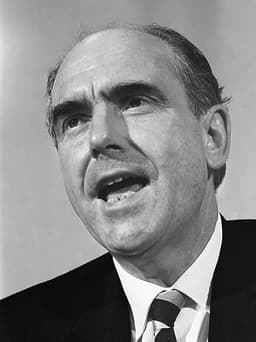
Andreas Papandreou
Politician · Modern
63.9Total

Julius Caesar
General · Ancient
82.8Total
Basic Information
Born
1919
-100
Died
1996
-44
Era
Modern
Ancient
Nationality
Greece
Roman Republic
Occupation
Politician
General
Civilization
Western
Western
Score Comparison
Military (10%)
50.0
88.0
Political (20%)
65.0
78.0
Influence (20%)
82.0
85.0
Legacy (20%)
56.0
82.0
Leadership (15%)
68.0
80.0
Strategy (15%)
44.0
85.0
TOTAL
63.9
82.8
Andreas Papandreou — Complete Timeline
1974 AD
Founded the Panhellenic Socialist Movement (PASOK)Political Action◆ Major
Andreas Papandreou founded PASOK, a socialist political party that advocated for national independence, social justice, and democratic reforms. The party quickly became a major force in Greek politics, challenging the conservative establishment.
Political PartySocialismThird Way
Impact: nationalconstructive
1981 AD
Elected Prime Minister of GreecePolitical Action◆ Major
Papandreou led PASOK to a landslide victory in the 1981 elections, becoming the first socialist Prime Minister of Greece. His government implemented sweeping reforms, including the establishment of the National Health System and the legalization of civil marriage.
ElectionSocial ReformWelfare State
Impact: nationalconstructive
1982 AD
Legalized Civil MarriageReform◆ Major
Papandreou's government passed Law 1250/1982, which legalized civil marriage in Greece, ending the monopoly of the Orthodox Church over marriage. The reform was part of a broader secularization agenda that also included divorce reform.
SecularizationSocial ReformChurch-State Relations
Impact: nationalconstructive
1983 AD
Introduced the National Health System (ESY)Reform◆ Major
Papandreou's government established the National Health System (ESY), providing universal healthcare to all Greek citizens. The reform was a cornerstone of PASOK's social policy, significantly improving access to medical services.
HealthcareSocial PolicyReform
Impact: nationalconstructive
1985 AD
Economic Crisis and Austerity MeasuresPolitical Action◆ Major
Facing economic crisis, Papandreou's government implemented austerity measures, including wage freezes and currency devaluation. The policies caused internal party dissent and led to a decline in PASOK's popularity, though they stabilized the economy temporarily.
Economic PolicyAusterityCrisis
Impact: nationaldestructive
1989 AD
Imprisonment and Acquittal in Koskotas ScandalPolitical Action◆ Major
Papandreou was implicated in the Koskotas financial scandal, involving embezzlement and bribery. He was tried and acquitted in 1992, but the scandal damaged his reputation and contributed to PASOK's electoral defeat in 1989.
ScandalCorruptionTrial
Impact: nationaldestructive
Julius Caesar — Complete Timeline
58 BC
Gallic WarsWar◆ Major
Caesar, as proconsul of Gaul, launched a series of campaigns that conquered all of Gaul (modern France, Belgium, and parts of Switzerland). He fought numerous battles, including against the Helvetii, the Belgae, and the Gallic chieftain Vercingetorix. The wars brought immense wealth and a loyal army to Caesar.
Gallic WarsConquestRoman Expansion
Impact: regional
49 BC
Crossing the RubiconPolitical Action◆ Major
Caesar led Legio XIII across the Rubicon River into Italy, defying the Roman Senate's order to disband his army. This act triggered a civil war against Pompey and the Optimates, ultimately leading to Caesar's dictatorship and the end of the Roman Republic.
Roman Civil WarEnd of RepublicPower Struggle
Impact: global
48 BC
Battle of PharsalusWar◆ Major
Caesar's outnumbered army defeated the larger forces of Pompey the Great at Pharsalus in Greece. Caesar's tactical use of a reserve line to counter Pompey's cavalry charge proved decisive. Pompey fled to Egypt, where he was assassinated, leaving Caesar as the undisputed master of the Roman world.
Roman Civil WarBattleDecisive Victory
Impact: regional
44 BC
Appointment as Dictator for LifePolitical Action◆ Major
The Roman Senate appointed Caesar dictator perpetuo (dictator for life), granting him unprecedented personal power. This move concentrated military, legislative, and judicial authority in one person, effectively ending the Roman Republic's traditional system of checks and balances and alarming many senators.
DictatorshipEnd of RepublicPower Consolidation
Impact: regionaldestructive
Assassination on the Ides of MarchPolitical Action◆ Major
A group of Roman senators, led by Marcus Junius Brutus and Gaius Cassius Longinus, stabbed Caesar to death at a meeting of the Senate in the Theatre of Pompey. The assassination was intended to restore the Republic, but instead triggered another civil war that led to the rise of the Roman Empire.
AssassinationRoman PoliticsEnd of Republic
Impact: globaldestructive
Expert Analysis
andreas-papandreou-vs-julius-caesar
# The Republic and the Orator: Two Paths of Power
On a March morning in 44 BCE, the Roman Senate gathered in the Theatre of Pompey, unaware that history was about to turn on a knife's edge. Sixty conspirators surrounded Gaius Julius Caesar, and as their blades struck, the dictator who had reshaped the known world fell dead at the base of Pompey's statue. Nearly two thousand years later, in 1989, another leader—Andreas Papandreou—faced a different kind of destruction. Not daggers, but accusations of embezzlement and bribery. He was imprisoned, tried, and then acquitted, walking free to reclaim power four years later. Two men, two eras, two fates: one ended by assassination, the other by scandal and resurrection. What drove these divergent outcomes, and what do they reveal about power itself?
Origins
Julius Caesar was born into the patrician Julian clan, a family that traced its lineage to the goddess Venus, yet one that had fallen from political prominence. His Rome was a Republic in crisis—corrupt senators, landless veterans, and a restless urban mob. Caesar’s youth was marked by ambition and danger: he fled the dictator Sulla’s proscriptions, was captured by pirates (whom he later crucified), and learned that survival required both charm and ruthlessness. The world he inherited was one of iron discipline and bloody expansion, where a man’s worth was measured by legions conquered and provinces subdued.
Andreas Papandreou grew up in a very different world. Born in 1919 on the island of Chios, he was the son of Georgios Papandreou, a three-time prime minister of Greece. Andreas studied economics in the United States, earning a PhD from Harvard, and taught at the University of Minnesota and the University of California, Berkeley. His Greece was a nation scarred by Nazi occupation, civil war, and military dictatorship. Where Caesar was forged in the crucible of Roman conquest, Papandreou was shaped by exile, academic theory, and the cold calculus of Cold War politics. The difference in their origins was not just of time, but of temperament: Caesar learned to command men; Papandreou learned to persuade them.
Rise to Power
Caesar’s rise was a masterclass in strategic audacity. He climbed the *cursus honorum*—the ladder of Roman offices—with calculated speed, forming the First Triumvirate with Pompey and Crassus in 60 BCE. But it was his conquest of Gaul (58–50 BCE) that made him. With an army of loyal veterans, he defeated hundreds of tribes, crossed the Rhine into Germany, and invaded Britain. His military score of 88 and strategy score of 88 reflect a genius who wrote his own legend in the *Commentaries*. The Rubicon River, crossed in 49 BCE, was not just a geographic boundary—it was a point of no return. By marching on Rome, Caesar chose civil war over submission, and won.
Papandreou’s path was slower, more intellectual, and born of resistance. During the 1967–1974 Greek junta, he was arrested and later exiled. From abroad, he became the voice of democratic opposition. When the junta fell in 1974, he returned to found the Panhellenic Socialist Movement (PASOK). His political score of 81 reflects a man who understood the power of words and symbols. Where Caesar seized power with legions, Papandreou seized it with ballots. His 1981 landslide victory—the first socialist government in Greek history—was a peaceful revolution, not a military coup. The difference is stark: one man conquered his way to power; the other was elected into it.
Leadership & Governance
Caesar governed as a reformer and autocrat. As dictator, he overhauled the Roman calendar (the Julian calendar we still use), granted citizenship to Gauls, initiated public works, and reformed debt laws. But his leadership was a paradox: he championed the common people while concentrating all power in his own hands. His military genius was undeniable—88 out of 100—but his political wisdom was brittle. He pardoned enemies, only to be stabbed by them. He centralized authority, only to be resented for it. The Senate, stripped of its power, saw him not as a savior but a tyrant.
Papandreou governed as a populist and modernizer. His PASOK government legalized civil marriage in 1982, breaking the Orthodox Church’s monopoly over marriage. In 1983, it introduced the National Health System (ESY), providing universal healthcare to all Greek citizens. These were transformative reforms for a country still emerging from dictatorship. Yet his political score of 78 and leadership score of 78 reveal a leader who was brilliant at winning elections but less adept at managing economies. By 1985, Greece faced a severe economic crisis, and Papandreou was forced to impose austerity—wage freezes and currency devaluation—that betrayed his socialist promises. His governance was a story of bold beginnings and compromised endings.
Triumph & Tragedy
Caesar’s greatest triumph was his defeat of Pompey at Pharsalus in 48 BCE, followed by his consolidation of Roman power from Spain to Egypt. His tragedy was the Ides of March: assassinated at 55, at the peak of his power, by men he had trusted. His last words, according to tradition, were “*Et tu, Brute?*”—a cry of betrayal that echoes through history.
Papandreou’s triumph was winning the 1981 election and reshaping Greek society. His tragedy was the Koskotas scandal, a financial affair involving embezzlement and bribery that led to his imprisonment in 1989. Though acquitted, the scandal tarnished his image. His legacy score of 66.4 reflects this mixed record: a founder of modern Greek socialism, but also a cautionary tale of hubris. Where Caesar’s tragedy was sudden and violent, Papandreou’s was slow and humiliating—a death by a thousand headlines.
Character & Destiny
Caesar was audacious, calculating, and relentlessly ambitious. He believed in his own destiny, even claiming descent from Venus. His personality—charming to allies, merciless to enemies—shaped his decisions. He pardoned Brutus and Cassius, believing his generosity would win loyalty. It did not. His character drove him to cross the Rubicon, but also to ignore the warnings of his wife Calpurnia’s dreams. Destiny, for Caesar, was something he forged with his own hands—and that ultimately crushed him.
Papandreou was charismatic, intellectual, and stubborn. He thrived in opposition but struggled in governance. His American education gave him a global perspective, but his populist instincts often clashed with economic reality. Where Caesar trusted only himself, Papandreou trusted a circle of advisors—some of whom led him into scandal. His character was a blend of idealism and pragmatism, but the pragmatism often won. Destiny, for him, was not a single dramatic moment, but a long, winding arc of triumphs and failures.
Legacy
Caesar’s legacy is monumental. His military campaigns and political reforms paved the way for the Roman Empire, and his name became synonymous with dictatorship—from “Kaiser” to “Tsar.” His writings remain studied in military academies. His influence score of 85 and legacy score of 82 reflect a man who changed the course of Western civilization.
Papandreou’s legacy is more ambiguous. He is remembered as the founder of PASOK, which dominated Greek politics for decades. The ESY and civil marriage remain pillars of modern Greece. Yet the economic crises that followed his policies—and the scandals that shadowed his later years—dim his reputation. He is a hero to some, a cautionary tale to others. His influence score of 80 shows his lasting impact on Greek society, but his legacy score of 66.4 reveals the cracks in that foundation.
Conclusion
Two men, separated by two millennia, yet both shaped by the same fundamental forces: ambition, power, and the fragility of human institutions. Caesar’s Rome fell into empire; Papandreou’s Greece fell into debt. One died by the sword; the other by the slow erosion of trust. Their stories remind us that power is never permanent—whether you hold it by legions or by votes, it can be taken away in an instant. And in the end, both the Republic and the Orator learned the same lesson: history remembers not just what you built, but how you fell.
Rankings
🥇
Julius CaesarLeader
Mil: 88.0Pol: 78.0Inf: 85.0
82.8
🥈
Andreas Papandreou
Mil: 50.0Pol: 65.0Inf: 82.0
63.9
+18.9 behind
How This Comparison Works
Algorithm
Each figure is scored on 6 dimensions (0—100 scale) based on structured historical data: Military (10%), Political (20%), Influence (20%), Legacy (20%), Leadership (15%), Strategy (15%). The weighted total produces the final ranking.
Data Sources
Scores are computed from structured sub-indicators in the database. Scale factors adjust for era (Ancient ×0.85, Modern ×1.0) and civilization size (Eastern ×1.05, Other ×0.80) to account for differences in population and military scale.
Maximum 3 Figures
Comparisons are limited to 2—3 figures to ensure readability and statistical meaningfulness.
Error Margins
±5 points per dimension — Sub-scores are derived from historical records with inherent uncertainty. Two figures within 5 points on a dimension should be considered roughly equivalent in that area.
Total Score Accuracy
±3 points overall — The weighted combination of 6 dimensions produces a total score with approximately ±3 points of uncertainty. Differences of less than 3 points are not statistically significant— the figures are effectively tied.
Known Limitations
- Historical records are incomplete and uneven across civilizations
- Figures from oral-tradition societies may be underrepresented
- Occupation labels can misclassify multi-role figures
- Scores measure capability and impact, not moral character
- Quantitative scoring is a comparison tool, not absolute truth
Capability Radar
Military (10%) — Battles & Warfare
Battles
26
95
Win Rate
32
92
Expansion
32
97
Political (20%) — Governance & Reform
Reform
75
90
Diplomacy
70
85
Economy
60
82
Influence (20%) — Cultural & Global Reach
Cultural
55
88
Global
55
94
Legacy (20%) — Historical Impact
Historical
60
95
Longevity
50
96
Leadership (15%) — Power & Stability
Tenure
65
75
Stability
40
60
Strategy (15%) — Tactics & Innovation
Strategy
41
94
Tactics
40
96
Reform
47
88
Similar Comparisons
Comments & Discussion
No comments yet. Be the first to share your thoughts!