Loading...
Andreas Papandreou vs Napoleon Bonaparte
Napoleon Bonaparte leads by 7.0 pts · 2 figures compared
…
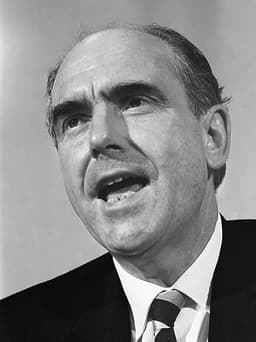
Andreas Papandreou
Politician · Modern
63.9Total

Napoleon Bonaparte
General · Modern
70.9Total
Basic Information
Born
1919
1769
Died
1996
1821
Era
Modern
Modern
Nationality
Greece
France
Occupation
Politician
General
Civilization
Western
Western
Score Comparison
Military (10%)
50.0
94.0
Political (20%)
65.0
72.0
Influence (20%)
82.0
40.0
Legacy (20%)
56.0
80.0
Leadership (15%)
68.0
78.0
Strategy (15%)
44.0
90.0
TOTAL
63.9
70.9
Andreas Papandreou — Complete Timeline
1974 AD
Founded the Panhellenic Socialist Movement (PASOK)Political Action◆ Major
Andreas Papandreou founded PASOK, a socialist political party that advocated for national independence, social justice, and democratic reforms. The party quickly became a major force in Greek politics, challenging the conservative establishment.
Political PartySocialismThird Way
Impact: nationalconstructive
1981 AD
Elected Prime Minister of GreecePolitical Action◆ Major
Papandreou led PASOK to a landslide victory in the 1981 elections, becoming the first socialist Prime Minister of Greece. His government implemented sweeping reforms, including the establishment of the National Health System and the legalization of civil marriage.
ElectionSocial ReformWelfare State
Impact: nationalconstructive
1982 AD
Legalized Civil MarriageReform◆ Major
Papandreou's government passed Law 1250/1982, which legalized civil marriage in Greece, ending the monopoly of the Orthodox Church over marriage. The reform was part of a broader secularization agenda that also included divorce reform.
SecularizationSocial ReformChurch-State Relations
Impact: nationalconstructive
1983 AD
Introduced the National Health System (ESY)Reform◆ Major
Papandreou's government established the National Health System (ESY), providing universal healthcare to all Greek citizens. The reform was a cornerstone of PASOK's social policy, significantly improving access to medical services.
HealthcareSocial PolicyReform
Impact: nationalconstructive
1985 AD
Economic Crisis and Austerity MeasuresPolitical Action◆ Major
Facing economic crisis, Papandreou's government implemented austerity measures, including wage freezes and currency devaluation. The policies caused internal party dissent and led to a decline in PASOK's popularity, though they stabilized the economy temporarily.
Economic PolicyAusterityCrisis
Impact: nationaldestructive
1989 AD
Imprisonment and Acquittal in Koskotas ScandalPolitical Action◆ Major
Papandreou was implicated in the Koskotas financial scandal, involving embezzlement and bribery. He was tried and acquitted in 1992, but the scandal damaged his reputation and contributed to PASOK's electoral defeat in 1989.
ScandalCorruptionTrial
Impact: nationaldestructive
Napoleon Bonaparte — Complete Timeline
1799 AD
Coup of 18 BrumaireOther◆ Major
Napoleon Bonaparte, with support from his brother Lucien and key political figures, overthrew the Directory in a bloodless coup. He established the Consulate with himself as First Consul, effectively becoming the ruler of France. This event ended the French Revolution's most unstable period.
French RevolutionCoupRise to Power
Impact: regional
1804 AD
Promulgation of the Napoleonic CodeOther◆ Major
Napoleon enacted the Civil Code of the French, known as the Napoleonic Code, a comprehensive set of laws that replaced the fragmented feudal legal systems. The code established legal equality, protected property rights, and secularized law. It became the basis for legal systems in many European and world countries.
Legal ReformNapoleonic CodeCivil Law
Impact: globalconstructive
1805 AD
Battle of AusterlitzWar◆ Major
Napoleon's Grande Arm
Napoleonic WarsBattleDecisive Victory
Impact: global
1812 AD
Invasion of RussiaWar◆ Major
Napoleon led the Grande Arm
Napoleonic WarsInvasionDisaster
Impact: globaldestructive
1815 AD
Battle of WaterlooWar◆ Major
Napoleon's French army was defeated by the combined forces of the Duke of Wellington's Anglo-Allied army and Gebhard Leberecht von Bl
Napoleonic WarsBattleFinal Defeat
Impact: globaldestructive
Expert Analysis
andreas-papandreou-vs-napoleon-bonaparte
### The Emperor and the Firebrand: Napoleon and Andreas Papandreou
Imagine two men, both titans of their age, both consumed by ambition. One stands on a windswept battlefield, the smoke of cannon fire clearing to reveal a continent reshaped by his will. The other stands before a roaring crowd in Athens, his voice a thunderclap promising a new Greece. One built an empire of steel and law; the other, a political movement of hope and upheaval. They are Napoleon Bonaparte and Andreas Papandreou, separated by a century and a half, yet bound by a shared hunger for power and a destiny to remake their worlds. How did a Corsican artillery officer and a Greek academic both rise to such heights, and why did their paths diverge so violently?
### Origins
Napoleon was born in 1769 on the island of Corsica, a place of fierce independence recently annexed by France. His family was minor nobility, but their poverty was real. He spoke Italian before French, a perpetual outsider in the halls of French military academies. This early sense of marginalization forged a core of iron: he had to prove himself, constantly, against a system that looked down on him. His era was the French Revolution, a crucible that vaporized old hierarchies and offered a young genius a ladder to the stars. The chaos of the Revolution was his raw material.
Andreas Papandreou, born in 1919 on the island of Chios, was the son of a prime minister, George Papandreou. He was an insider from birth, but an insider in a country defined by its fragility. Greece was a poor, scarred nation, emerging from wars and still haunted by its ancient glory. Andreas’s era was the Cold War, a world of ideological battle lines drawn in blood. He studied in America, became a professor of economics, and absorbed the radical currents of the 1960s. When a military junta seized Greece in 1967, he was exiled. This exile was his crucible, transforming the academic into a revolutionary. Napoleon was forged by revolution; Papandreou was forged by the struggle against dictatorship.
### Rise to Power
Napoleon’s ascent was a masterpiece of audacity. He was a young artillery officer who, in 1793, crushed a royalist uprising in Toulon with brilliant cannon placement. He was just 24. The Directory, France’s corrupt government, gave him command of an army. In 1796, he led a ragged force into Italy and, against all odds, dismantled the Austrian Empire’s armies. He sent home chests of loot and news of impossible victories. His rise was military, a series of gambles that paid off. He was not a politician who became a general; he was a general who became a politician, seizing power in a 1799 coup.
Papandreou’s rise was political, a slow burn of exile and organizing. In 1974, after the junta collapsed, he returned to Greece and founded the Panhellenic Socialist Movement (PASOK). He was 55. His party was not an army but an idea: a socialist, anti-American, nationalist Greece. He spoke of “change” and “the people,” and his voice electrified the disenfranchised. In 1981, he won a landslide victory, becoming the first socialist prime minister of Greece. His power came not from conquest, but from the ballot box and the force of his oratory.
### Leadership & Governance
Napoleon governed with a sword and a code. He was a military genius—his 94.0 score in military acumen is no accident. His campaigns, from Austerlitz in 1805 to the disastrous invasion of Russia in 1812, were masterclasses in speed, deception, and decisive battle. But he was also a reformer. He created the Napoleonic Code, a legal system that enshrined equality before the law and property rights, sweeping away feudal remnants. His rule was efficient, centralized, and authoritarian. He built roads, standardized education, and minted money. But his genius was his curse: he could not stop conquering.
Papandreou governed with a speech and a promise. He had no military genius (a score of 37.5), but his political skill was formidable (81.0). He legalized civil marriage in 1982, breaking the Orthodox Church’s monopoly. He created the National Health System (ESY) in 1983, offering universal healthcare. He expanded welfare and raised wages. But his governance was erratic. By 1985, economic crisis forced him into austerity—wage freezes and currency devaluation—betraying his own promises. His leadership was charismatic but chaotic, a rollercoaster of bold reforms and sudden retreats.
### Triumph & Tragedy
Napoleon’s greatest moment was Austerlitz in 1805. He lured the Russian and Austrian armies into a trap and annihilated them. He was the master of Europe. His tragedy was twofold: the invasion of Russia in 1812, where 600,000 men marched and fewer than 100,000 returned, and his final defeat at Waterloo in 1815. He died in exile on Saint Helena, a prisoner of the British.
Papandreou’s triumph was his 1981 victory, a moment when Greeks believed a new era had dawned. His tragedy was the Koskotas scandal. In 1989, he was implicated in a massive financial scandal involving embezzlement and bribery. He was tried and acquitted, but his reputation was shattered. He lost power, returned briefly in 1993, and died in 1996, a diminished figure. His movement, PASOK, survived, but his dream of a socialist utopia had soured into corruption and debt.
### Character & Destiny
Napoleon was a man of relentless will. “Impossible is a word to be found only in the dictionary of fools,” he said. His ambition was boundless, but it was also his undoing. He could not share power, could not stop. His destiny was shaped by his own hubris—a classic Greek tragedy, ironically.
Papandreou was a man of fire and contradiction. He was a brilliant speaker, a master of the political game, but also a man of deep mistrust. He surrounded himself with sycophants and alienated allies. His destiny was shaped by the very system he sought to change. He was a revolutionary who became the establishment, and the establishment devoured him.
### Legacy
Napoleon’s legacy is a paradox. He is remembered as a tyrant and a reformer. His Napoleonic Code still underpins civil law in much of Europe. He reshaped the map of the continent and spread nationalism. His score of 78.0 for legacy reflects this duality. He is a figure of awe and caution.
Papandreou’s legacy is more local. He transformed Greek politics, bringing socialism into the mainstream. PASOK dominated Greek politics for decades. But he also left a legacy of populism and economic mismanagement that contributed to Greece’s debt crisis. His score of 66.4 reflects a significant but flawed impact. He is remembered as a father of modern Greece, but also a cautionary tale about the limits of charisma.
### Conclusion
Napoleon and Papandreou were both sons of revolution, but of different revolutions. Napoleon’s was a war of conquest; Papandreou’s was a war of words. One built an empire that crumbled; the other built a party that endured but decayed. Their lives remind us that power is a mirror: it reflects the man who holds it. Napoleon saw a world to be conquered; Papandreou saw a people to be freed. Both succeeded, and both failed. In the end, the question is not who was greater, but what their stories tell us about the human hunger for meaning through power. And that hunger, as history shows, is a fire that can light the world or burn it down.
Rankings
🥇
Napoleon BonaparteLeader
Mil: 94.0Pol: 72.0Inf: 40.0
70.9
🥈
Andreas Papandreou
Mil: 50.0Pol: 65.0Inf: 82.0
63.9
+7.0 behind
How This Comparison Works
Algorithm
Each figure is scored on 6 dimensions (0—100 scale) based on structured historical data: Military (10%), Political (20%), Influence (20%), Legacy (20%), Leadership (15%), Strategy (15%). The weighted total produces the final ranking.
Data Sources
Scores are computed from structured sub-indicators in the database. Scale factors adjust for era (Ancient ×0.85, Modern ×1.0) and civilization size (Eastern ×1.05, Other ×0.80) to account for differences in population and military scale.
Maximum 3 Figures
Comparisons are limited to 2—3 figures to ensure readability and statistical meaningfulness.
Error Margins
±5 points per dimension — Sub-scores are derived from historical records with inherent uncertainty. Two figures within 5 points on a dimension should be considered roughly equivalent in that area.
Total Score Accuracy
±3 points overall — The weighted combination of 6 dimensions produces a total score with approximately ±3 points of uncertainty. Differences of less than 3 points are not statistically significant— the figures are effectively tied.
Known Limitations
- Historical records are incomplete and uneven across civilizations
- Figures from oral-tradition societies may be underrepresented
- Occupation labels can misclassify multi-role figures
- Scores measure capability and impact, not moral character
- Quantitative scoring is a comparison tool, not absolute truth
Capability Radar
Military (10%) — Battles & Warfare
Battles
26
95
Win Rate
32
90
Expansion
32
95
Political (20%) — Governance & Reform
Reform
75
95
Diplomacy
70
80
Economy
60
85
Influence (20%) — Cultural & Global Reach
Cultural
55
85
Global
55
90
Legacy (20%) — Historical Impact
Historical
60
95
Longevity
50
90
Leadership (15%) — Power & Stability
Tenure
65
85
Stability
40
70
Strategy (15%) — Tactics & Innovation
Strategy
41
95
Tactics
40
98
Reform
47
92
Similar Comparisons
Comments & Discussion
No comments yet. Be the first to share your thoughts!