Loading...
Anawrahta vs Wenceslaus IV
Anawrahta leads by 20.4 pts · 2 figures compared
…
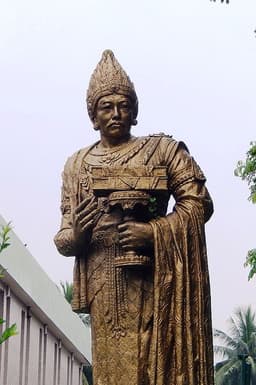
Anawrahta
Emperor · Medieval
65.2Total
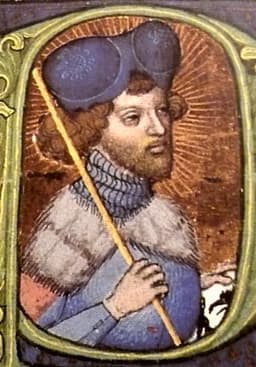
Wenceslaus IV
Emperor · Medieval
44.8Total
Basic Information
Born
1014
1361
Died
1077
1419
Era
Medieval
Medieval
Nationality
Myanmar
Holy Roman Empire
Occupation
Emperor
Emperor
Civilization
Eastern
Western
Score Comparison
Military (10%)
70.0
25.9
Political (20%)
68.0
30.8
Influence (20%)
72.0
53.3
Legacy (20%)
55.0
45.8
Leadership (15%)
72.0
58.8
Strategy (15%)
55.0
39.6
TOTAL
65.2
44.8
Anawrahta — Complete Timeline
1044 AD
Founding of the Pagan EmpirePolitical Action
Anawrahta ascended the throne and unified the Irrawaddy River valley, founding the Pagan Empire. He conquered the Mon kingdom of Thaton and other neighboring states, creating the first unified Burmese kingdom and establishing Bagan as its capital.
UnificationEmpireBagan
Impact: regionalconstructive
1056 AD
Introduction of Theravada Buddhism to PaganCultural
Anawrahta adopted Theravada Buddhism after being converted by the Mon monk Shin Arahan. He made Theravada the state religion, replacing the existing Mahayana and animist practices. This religious shift had a lasting impact on Burmese culture and politics.
BuddhismReligionConversion
Impact: regionalconstructive
1057 AD
Conquest of the Thaton KingdomWar◆ Major
Anawrahta led a military campaign against the Mon kingdom of Thaton, capturing the city and bringing back Buddhist scriptures, monks, and artisans to Bagan. This conquest enriched Pagan's culture and solidified its dominance in the region.
ConquestMonCultural Exchange
Impact: regional
Wenceslaus IV — Complete Timeline
1394 AD
Imprisonment by the Bohemian NobilityPolitical Action
A league of Bohemian nobles, led by the House of Rosenberg, captured Wenceslaus IV and held him prisoner at Wildberg Castle. The nobles demanded greater political influence and the removal of his unpopular advisors. Wenceslaus was released after several months through the intervention of his half-brother Sigismund.
Noble RevoltImprisonmentBohemia
tragic
1400 AD
Deposition as King of the RomansPolitical Action◆ Major
The four Rhenish electors deposed Wenceslaus IV as King of the Romans, citing his incompetence, drunkenness, and failure to maintain peace in the Empire. They elected Rupert of the Palatinate as his successor. Wenceslaus refused to accept the deposition but retained the title of King of Bohemia.
DepositionImperial PoliticsElectors
Impact: regionaltragic
1412 AD
Conflict with Jan HusPolitical Action◆ Major
Wenceslaus IV supported the sale of indulgences by Pope John XXIII to fund a crusade. Jan Hus publicly condemned this practice, leading to a rift between the king and the reformer. Wenceslaus initially protected Hus but later withdrew support under pressure from the clergy.
Hussite MovementReligious ConflictIndulgences
Impact: regionaldestructive
1419 AD
Defenestration of Prague (1419)Political Action
A Hussite procession led by priest Jan
Hussite WarsDefenestrationRevolt
Impact: regionaldestructive
Expert Analysis
Origins
Anawrahta was born in 1014 CE, the son of King Kunhsaw Kyaunghpyu of Pagan. After his father was deposed, Anawrahta grew up in exile but later reclaimed the throne in 1044. His early exposure to the fractured political landscape of the Irrawaddy valley shaped his ambition to unify the region. Wenceslaus IV was born in 1361, the son of Holy Roman Emperor Charles IV and Anna of Świdnica. He inherited the Bohemian crown at age 2 and received a thorough education in Prague, but his upbringing in the imperial court left him ill-prepared for the religious and political turmoil of the early 15th century.
Rise to Power
Anawrahta ascended the Pagan throne in 1044 after overthrowing his half-brother Sokkate. He quickly consolidated power by forming alliances with neighboring Shan states and launching campaigns against the Mon kingdoms. A key turning point was his conversion to Theravada Buddhism by the monk Shin Arahan in 1056. This religious shift provided ideological unity for his empire. In 1057, he conquered the Mon kingdom of Thaton, capturing its scriptures and artisans, which enriched Pagan culturally and politically. Wenceslaus IV was crowned King of Bohemia in 1363 and King of the Romans in 1376. His early reign was overshadowed by his father's influence. After Charles IV's death in 1378, Wenceslaus struggled to assert authority. He faced opposition from the Bohemian nobility and the Catholic Church. In 1400, the four Rhenish electors deposed him as King of the Romans, citing his incompetence and drunkenness. His power further eroded during the Hussite movement, which he failed to suppress.
Leadership & Governance
Anawrahta's governance combined military conquest with religious reform. He established Theravada Buddhism as the state religion, building pagodas and monasteries, and supporting the Sangha. He implemented a feudal system with loyal governors in conquered territories. His administrative reforms centralized power and promoted irrigation projects for rice cultivation. Wenceslaus IV, by contrast, was indecisive and often absent from court. He favored low-born advisors, alienating the nobility. His attempts to mediate between the Catholic Church and the Hussites were ineffective. He supported the sale of indulgences, which Jan Hus condemned, leading to Hus's excommunication and execution. Wenceslaus's leadership scores reflect this: his political score of 30.8 and military score of 25.9 indicate weak governance, while Anawrahta's political score of 68.0 and military score of 70.0 show more effective rule.
Triumph & Tragedy
Anawrahta's greatest success was founding the Pagan Empire, which unified much of modern Myanmar and established Theravada Buddhism as a dominant faith. His conquest of Thaton brought literacy and culture to Pagan. However, his expansionist campaigns overstretched resources, and after his death in 1077, the empire faced rebellions. His legacy was partially undone by later kings. Wenceslaus IV's tragedy is his inability to prevent the Hussite Wars. His support for indulgences ignited a movement that led to decades of conflict. He was imprisoned by Bohemian nobles in 1394 and again later. His deposition as King of the Romans in 1400 was a humiliating failure. However, his tolerance of Hussite preachers initially allowed the movement to grow, which eventually forced the Church to consider reforms.
Character & Destiny
Anawrahta was energetic, religiously devout, and militarily ambitious. His conversion to Theravada Buddhism was strategic and sincere. He was known for his pragmatic alliances and ability to inspire loyalty. His character drove him to build an empire that endured for centuries. Wenceslaus IV was learned but prone to alcoholism and indecisiveness. His nickname "the Drunkard" reflects his personal failings. He lacked the political will to confront the nobility or the Church effectively. His character led to his downfall, as he alienated allies and failed to act decisively during the Hussite crisis.
Legacy
Anawrahta's legacy is profound. The Pagan Empire became the foundation of Burmese culture and identity. Theravada Buddhism remains the dominant religion in Myanmar. His irrigation systems and administrative structures influenced later dynasties. He scored 72.0 in influence and 55.0 in legacy. Wenceslaus IV's legacy is more mixed. His reign is remembered for the Hussite movement, which eventually led to the Hussite Wars and later the Protestant Reformation. However, his personal failures overshadow his contributions. His influence score of 53.3 and legacy score of 45.8 reflect a less enduring impact.
Conclusion
Anawrahta had a greater impact on history than Wenceslaus IV. His total score of 65.2 versus 44.8 underscores his superior leadership, military success, and political acumen. While Wenceslaus IV's reign triggered significant religious upheaval, Anawrahta's empire-building and religious reforms created lasting institutions. Anawrahta's legacy shaped a nation, while Wenceslaus IV's failures led to chaos. The data supports Anawrahta as the more significant figure.
Rankings
🥇
AnawrahtaLeader
Mil: 70.0Pol: 68.0Inf: 72.0
65.2
🥈
Wenceslaus IV
Mil: 25.9Pol: 30.8Inf: 53.3
44.8
+20.4 behind
How This Comparison Works
Algorithm
Each figure is scored on 6 dimensions (0—100 scale) based on structured historical data: Military (10%), Political (20%), Influence (20%), Legacy (20%), Leadership (15%), Strategy (15%). The weighted total produces the final ranking.
Data Sources
Scores are computed from structured sub-indicators in the database. Scale factors adjust for era (Ancient ×0.85, Modern ×1.0) and civilization size (Eastern ×1.05, Other ×0.80) to account for differences in population and military scale.
Maximum 3 Figures
Comparisons are limited to 2—3 figures to ensure readability and statistical meaningfulness.
Error Margins
±5 points per dimension — Sub-scores are derived from historical records with inherent uncertainty. Two figures within 5 points on a dimension should be considered roughly equivalent in that area.
Total Score Accuracy
±3 points overall — The weighted combination of 6 dimensions produces a total score with approximately ±3 points of uncertainty. Differences of less than 3 points are not statistically significant— the figures are effectively tied.
Known Limitations
- Historical records are incomplete and uneven across civilizations
- Figures from oral-tradition societies may be underrepresented
- Occupation labels can misclassify multi-role figures
- Scores measure capability and impact, not moral character
- Quantitative scoring is a comparison tool, not absolute truth
Capability Radar
Military (10%) — Battles & Warfare
Battles
55
20
Win Rate
60
15
Expansion
60
5
Political (20%) — Governance & Reform
Reform
65
30
Diplomacy
60
25
Economy
55
20
Influence (20%) — Cultural & Global Reach
Cultural
70
30
Global
55
20
Legacy (20%) — Historical Impact
Historical
75
40
Longevity
70
35
Leadership (15%) — Power & Stability
Tenure
70
60
Stability
60
15
Strategy (15%) — Tactics & Innovation
Strategy
55
10
Tactics
50
10
Reform
45
5
Similar Comparisons
Comments & Discussion
No comments yet. Be the first to share your thoughts!