Loading...
Anxi Khan vs Wenceslaus IV
Wenceslaus IV leads by 4.8 pts · 2 figures compared
…
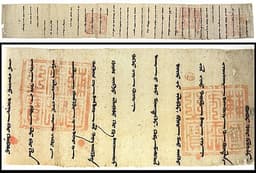
Anxi Khan
Emperor · Medieval
40.0Total

Wenceslaus IV
Emperor · Medieval
44.8Total
Basic Information
Born
832
1361
Died
847
1419
Era
Medieval
Medieval
Nationality
Uyghur Khaganate
Holy Roman Empire
Occupation
Emperor
Emperor
Civilization
Eastern
Western
Score Comparison
Military (10%)
50.0
25.9
Political (20%)
29.3
30.8
Influence (20%)
47.1
53.3
Legacy (20%)
37.5
45.8
Leadership (15%)
39.0
58.8
Strategy (15%)
35.7
39.6
TOTAL
40.0
44.8
Anxi Khan — Complete Timeline
840 AD
Collapse of the Uyghur KhaganateWar◆ Major
Anxi Khan's reign saw the final collapse of the Uyghur Khaganate after a Kyrgyz invasion. The Kyrgyz sacked the capital Ordu-Baliq and destroyed Uyghur power, forcing the Uyghurs to flee south and west, ending their empire.
CollapseKyrgyz InvasionEnd of Empire
Impact: regionaltragic
843 AD
Flight to the Tarim BasinPolitical Action◆ Major
After the fall of the Khaganate, Anxi Khan led a remnant of Uyghurs to the Tarim Basin, where they established the Kingdom of Qocho. This migration preserved Uyghur culture and led to the formation of the Uyghur states in Xinjiang.
MigrationUyghur DiasporaQocho
Impact: regional
847 AD
Death in ExileOther
Anxi Khan died in exile in the Tarim Basin, likely killed by local rivals or in a skirmish. His death marked the end of the Uyghur imperial line, though Uyghur successor states continued to exist in the region.
DeathExileEnd of Dynasty
tragic
Wenceslaus IV — Complete Timeline
1394 AD
Imprisonment by the Bohemian NobilityPolitical Action
A league of Bohemian nobles, led by the House of Rosenberg, captured Wenceslaus IV and held him prisoner at Wildberg Castle. The nobles demanded greater political influence and the removal of his unpopular advisors. Wenceslaus was released after several months through the intervention of his half-brother Sigismund.
Noble RevoltImprisonmentBohemia
tragic
1400 AD
Deposition as King of the RomansPolitical Action◆ Major
The four Rhenish electors deposed Wenceslaus IV as King of the Romans, citing his incompetence, drunkenness, and failure to maintain peace in the Empire. They elected Rupert of the Palatinate as his successor. Wenceslaus refused to accept the deposition but retained the title of King of Bohemia.
DepositionImperial PoliticsElectors
Impact: regionaltragic
1412 AD
Conflict with Jan HusPolitical Action◆ Major
Wenceslaus IV supported the sale of indulgences by Pope John XXIII to fund a crusade. Jan Hus publicly condemned this practice, leading to a rift between the king and the reformer. Wenceslaus initially protected Hus but later withdrew support under pressure from the clergy.
Hussite MovementReligious ConflictIndulgences
Impact: regionaldestructive
1419 AD
Defenestration of Prague (1419)Political Action
A Hussite procession led by priest Jan
Hussite WarsDefenestrationRevolt
Impact: regionaldestructive
Expert Analysis
Origins
Anxi Khan, the last khagan of the Uyghur Empire, was born into the ruling clan of the Uyghur Khaganate, a powerful steppe empire that had dominated Central Asia for a century. Little is known of his early life, but he ascended the throne during a period of decline, facing internal strife and external threats from the Kyrgyz. His upbringing was steeped in the nomadic traditions of the Uyghurs, who had adopted Manichaeism as a state religion and maintained a sophisticated administrative system.
Wenceslaus IV was born on February 26, 1361, in Nuremberg, as the son of Emperor Charles IV and Anna of Świdnica. He was raised in the Holy Roman Empire, receiving a thorough education in governance and the Catholic faith. His father, one of the most capable Holy Roman Emperors, ensured Wenceslaus was crowned King of Bohemia at age two and later King of the Romans in 1376. Wenceslaus inherited a vast realm but lacked his father's political acumen.
Rise to Power
Anxi Khan became khagan around 840 AD, inheriting a crumbling empire. The Uyghur Khaganate had been weakened by internal rebellions and a devastating plague. His rise was not marked by conquest but by a desperate attempt to hold the empire together. The primary threat came from the Kyrgyz, who launched a massive invasion in 840. Anxi Khan's forces were defeated, and the capital Ordu-Baliq was sacked. He fled with a remnant of his people to the Tarim Basin, where he established the Kingdom of Qocho, a rump state that preserved Uyghur culture.
Wenceslaus IV became King of Bohemia in 1363 and King of the Romans in 1376, following his father's careful planning. However, his reign was plagued by conflict with the nobility and the Church. He was deposed as King of the Romans in 1400 by the four Rhenish electors, who cited his incompetence, drunkenness, and failure to maintain peace. Despite this, he retained the Bohemian throne. The rise of the Hussite movement, inspired by Jan Hus, presented a major challenge. Wenceslaus initially supported Hus but later opposed him, leading to Hus's excommunication and execution in 1415, which ignited the Hussite Wars.
Leadership & Governance
Anxi Khan's leadership was reactive; he failed to prevent the collapse of the Uyghur Khaganate. His governance score of 39.0 reflects his inability to mobilize effective resistance against the Kyrgyz. After the fall, he led his people to the Tarim Basin, where he established a new kingdom, but his rule ended abruptly with his death in exile, likely murdered by local rivals. His political score of 29.3 indicates a lack of strategic alliances or internal consolidation.
Wenceslaus IV, with a leadership score of 58.8, was more capable but deeply flawed. He was known for his intellectual interests and support of arts, but his governance was marred by alcoholism and indecision. He attempted to balance the papacy and the reformist Hussites but ended up alienating both. His deposition as King of the Romans and imprisonment by Bohemian nobles demonstrate his political weakness. His political score of 30.8 is marginally higher than Anxi's, but still low for an emperor.
Triumph & Tragedy
Anxi Khan's greatest achievement was preserving the Uyghur identity through the establishment of the Kingdom of Qocho, which lasted for centuries and became a center of Buddhist and Manichaean culture. His tragedy was the total collapse of the empire he inherited; he scored 37.5 in legacy, primarily due to the survival of Uyghur culture in the Tarim Basin.
Wenceslaus IV's triumph was his patronage of the arts and the founding of the University of Prague, which became a hub for reformist ideas. However, his tragedy was his mishandling of the Hussite movement, which led to a devastating civil war. His legacy score of 45.8 reflects the long-term impact of the Hussite Wars on Bohemia and the broader Reformation. He was deposed and imprisoned, dying in 1419 after the Defenestration of Prague, an event that sparked the Hussite Wars.
Character & Destiny
Anxi Khan was a ruler of a dying empire, forced into exile. His character is shadowy; historical records are sparse. He likely possessed resilience to lead his people to a new homeland, but his inability to prevent the collapse suggests poor strategic judgment (strategy score 35.7). His destiny was to be the last khagan of a once-great empire, ending his life in obscurity.
Wenceslaus IV was a complex figure: intelligent but lazy, prone to drunkenness and indecision. His character directly contributed to his downfall. The electors and nobles saw him as incompetent, and his vacillation between supporting and opposing Hus worsened the crisis. His strategy score of 39.6 indicates poor political maneuvering. His fate—deposed, imprisoned, and dying as the Hussite Wars began—was a direct result of his character flaws.
Legacy
Anxi Khan's legacy is the survival of Uyghur culture; the Kingdom of Qocho preserved Uyghur language, religion, and art until the Mongol conquest. His influence score of 47.1 is moderate because the Uyghurs later played a key role in the Mongol Empire as administrators and cultural intermediaries. However, his personal impact is limited.
Wenceslaus IV's legacy is more significant. His reign saw the birth of the Hussite movement, which prefigured the Protestant Reformation. The Hussite Wars led to the first successful popular uprising against the Catholic Church, influencing later reformers like Martin Luther. His legacy score of 45.8 reflects this, but he is often remembered as a failed emperor. His influence score of 53.3 is higher than Anxi's, due to the spread of Hussite ideas.
Conclusion
Wenceslaus IV had greater impact than Anxi Khan. Despite his failures, his reign directly contributed to the Hussite movement, a precursor to the Reformation that reshaped European religion and politics. Anxi Khan, while preserving Uyghur culture, presided over the collapse of his empire and died in obscurity. Wenceslaus's total score of 44.8 vs. Anxi's 40.0 reflects this, but more importantly, his actions had consequences that echoed for centuries. Anxi Khan's legacy is more cultural than political, while Wenceslaus's failures helped spark a religious revolution. Therefore, Wenceslaus IV is the more significant historical figure.
Rankings
🥇
Wenceslaus IVLeader
Mil: 25.9Pol: 30.8Inf: 53.3
44.8
🥈
Anxi Khan
Mil: 50.0Pol: 29.3Inf: 47.1
40.0
+4.8 behind
How This Comparison Works
Algorithm
Each figure is scored on 6 dimensions (0—100 scale) based on structured historical data: Military (10%), Political (20%), Influence (20%), Legacy (20%), Leadership (15%), Strategy (15%). The weighted total produces the final ranking.
Data Sources
Scores are computed from structured sub-indicators in the database. Scale factors adjust for era (Ancient ×0.85, Modern ×1.0) and civilization size (Eastern ×1.05, Other ×0.80) to account for differences in population and military scale.
Maximum 3 Figures
Comparisons are limited to 2—3 figures to ensure readability and statistical meaningfulness.
Error Margins
±5 points per dimension — Sub-scores are derived from historical records with inherent uncertainty. Two figures within 5 points on a dimension should be considered roughly equivalent in that area.
Total Score Accuracy
±3 points overall — The weighted combination of 6 dimensions produces a total score with approximately ±3 points of uncertainty. Differences of less than 3 points are not statistically significant— the figures are effectively tied.
Known Limitations
- Historical records are incomplete and uneven across civilizations
- Figures from oral-tradition societies may be underrepresented
- Occupation labels can misclassify multi-role figures
- Scores measure capability and impact, not moral character
- Quantitative scoring is a comparison tool, not absolute truth
Capability Radar
Military (10%) — Battles & Warfare
Battles
20
20
Win Rate
15
15
Expansion
10
5
Political (20%) — Governance & Reform
Reform
10
30
Diplomacy
20
25
Economy
10
20
Influence (20%) — Cultural & Global Reach
Cultural
10
30
Global
10
20
Legacy (20%) — Historical Impact
Historical
15
40
Longevity
10
35
Leadership (15%) — Power & Stability
Tenure
15
60
Stability
10
15
Strategy (15%) — Tactics & Innovation
Strategy
15
10
Tactics
20
10
Reform
10
5
Similar Comparisons
Comments & Discussion
No comments yet. Be the first to share your thoughts!