Loading...
Martin Luther vs Wenceslaus IV
Martin Luther leads by 16.2 pts · 2 figures compared
…

Martin Luther
Religious Leader · Medieval
61.0Total
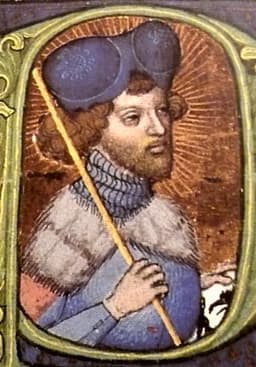
Wenceslaus IV
Emperor · Medieval
44.8Total
Basic Information
Born
1483
1361
Died
1546
1419
Era
Medieval
Medieval
Nationality
Germany
Holy Roman Empire
Occupation
Religious Leader
Emperor
Civilization
Western
Western
Score Comparison
Military (10%)
18.0
25.9
Political (20%)
35.1
30.8
Influence (20%)
85.0
53.3
Legacy (20%)
90.0
45.8
Leadership (15%)
34.6
58.8
Strategy (15%)
50.2
39.6
TOTAL
61.0
44.8
Martin Luther — Complete Timeline
1517 AD
Publication of the 95 ThesesPolitical Action
Martin Luther posted 95 theses on the door of the Wittenberg Castle Church, criticizing the sale of indulgences and papal authority. This act initiated the Protestant Reformation, leading to the fragmentation of Western Christianity and the rise of Protestant denominations.
ReformationChurchIndulgences
Impact: globalconstructive
1521 AD
Diet of WormsPolitical Action◆ Major
Luther was summoned before the Holy Roman Emperor Charles V at the Diet of Worms and ordered to recant his writings. He refused, stating 'Here I stand, I can do no other.' The Edict of Worms declared him an outlaw and heretic.
ReformationImperial DietExcommunication
Impact: regional
1522 AD
Translation of the New Testament into GermanCultural◆ Major
While in hiding at Wartburg Castle, Luther translated the New Testament from Greek into German. This translation made the Bible accessible to common people, standardized the German language, and promoted lay literacy and individual interpretation of scripture.
Bible TranslationLanguageLiteracy
Impact: regionalconstructive
1525 AD
Marriage to Katharina von BoraPolitical Action
Luther married Katharina von Bora, a former nun, publicly rejecting clerical celibacy. This marriage served as a model for Protestant clergy and challenged the Catholic Church's requirement of priestly celibacy, reshaping the social role of ministers.
MarriageClergyReformation
Impact: regionalconstructive
1530 AD
Publication of the Augsburg ConfessionPolitical Action◆ Major
Luther's colleague Philipp Melanchthon presented the Augsburg Confession to Emperor Charles V, outlining the core doctrines of the Lutheran movement. This document became the foundational confession of the Lutheran Church and defined the theological split from Catholicism.
LutheranismConfessionDoctrine
Impact: regionalconstructive
Wenceslaus IV — Complete Timeline
1394 AD
Imprisonment by the Bohemian NobilityPolitical Action
A league of Bohemian nobles, led by the House of Rosenberg, captured Wenceslaus IV and held him prisoner at Wildberg Castle. The nobles demanded greater political influence and the removal of his unpopular advisors. Wenceslaus was released after several months through the intervention of his half-brother Sigismund.
Noble RevoltImprisonmentBohemia
tragic
1400 AD
Deposition as King of the RomansPolitical Action◆ Major
The four Rhenish electors deposed Wenceslaus IV as King of the Romans, citing his incompetence, drunkenness, and failure to maintain peace in the Empire. They elected Rupert of the Palatinate as his successor. Wenceslaus refused to accept the deposition but retained the title of King of Bohemia.
DepositionImperial PoliticsElectors
Impact: regionaltragic
1412 AD
Conflict with Jan HusPolitical Action◆ Major
Wenceslaus IV supported the sale of indulgences by Pope John XXIII to fund a crusade. Jan Hus publicly condemned this practice, leading to a rift between the king and the reformer. Wenceslaus initially protected Hus but later withdrew support under pressure from the clergy.
Hussite MovementReligious ConflictIndulgences
Impact: regionaldestructive
1419 AD
Defenestration of Prague (1419)Political Action
A Hussite procession led by priest Jan
Hussite WarsDefenestrationRevolt
Impact: regionaldestructive
Expert Analysis
Origins
Martin Luther was born on November 10, 1483, in Eisleben, Saxony, to a family of modest means; his father, Hans Luther, was a copper miner. Luther studied at the University of Erfurt, earning a master's degree in 1505 before entering an Augustinian monastery. His rigorous theological training and personal struggles with salvation shaped his later critique of Church doctrine.
Wenceslaus IV was born on February 26, 1361, in Nuremberg, as the son of Holy Roman Emperor Charles IV. He was raised in the imperial court, receiving education in statecraft and governance. His father's death in 1378 left him as King of Bohemia and King of the Romans, but he lacked his father's political acumen.
Rise to Power
Luther's rise began with his academic career at the University of Wittenberg, where he earned a doctorate in theology in 1512. His pivotal act was posting the 95 Theses on October 31, 1517, criticizing the sale of indulgences. This act, amplified by the printing press, quickly spread across Germany. In 1521, at the Diet of Worms, Luther refused to recant before Emperor Charles V, leading to the Edict of Worms that declared him an outlaw. His translation of the New Testament into German (1522) solidified his influence by making scripture accessible to laypeople.
Wenceslaus IV inherited the thrones of Bohemia and Germany in 1378. His early reign was marked by conflict with the Bohemian nobility and the Church. In 1393, he supported the sale of indulgences by Pope John XXIII, which Jan Hus publicly condemned. Wenceslaus initially protected Hus but later abandoned him, leading to Hus's execution in 1415. This fueled the Hussite movement. In 1400, the four Rhenish electors deposed Wenceslaus as King of the Romans for incompetence and drunkenness. He retained the Bohemian throne but faced constant rebellions.
Leadership & Governance
Luther's leadership was intellectual and spiritual. He wrote extensively, producing pamphlets, sermons, and catechisms. His governance of the Reformation was decentralized, relying on local princes to implement reforms. He married Katharina von Bora in 1525, setting a model for clerical marriage. His approach was confrontational, as seen in his refusal to compromise at the Diet of Worms. He scored 34.6 in Leadership, reflecting his moral authority but lack of formal political power.
Wenceslaus IV's leadership was marked by weakness and vacillation. He frequently changed alliances and failed to control the nobility. His support for indulgences alienated reformers like Hus, while his indecision led to the Hussite Wars. He was imprisoned by Bohemian nobles in 1394 and again in 1402. His political score of 30.8 reflects his inability to maintain order. The Defenestration of Prague in 1419, where Hussites threw councillors from a window, triggered open rebellion shortly before his death.
Triumph & Tragedy
Luther's greatest triumph was the establishment of the Protestant Reformation. His translation of the Bible standardized the German language and empowered lay Christians. The Augsburg Confession of 1530 codified Lutheran doctrine. His tragedy was the fragmentation of Christendom; the Peasants' War of 1525, which he condemned, resulted in tens of thousands of deaths. He also faced internal divisions among reformers, such as with Ulrich Zwingli.
Wenceslaus IV's triumph was initially maintaining Bohemian autonomy against the Empire. He founded the University of Bologna for Bohemian students. However, his tragedies outweighed successes: he was deposed as King of the Romans, imprisoned by nobles, and his mishandling of the Hus affair led to the destructive Hussite Wars. He died in 1419 of a heart attack, possibly induced by stress, leaving a kingdom in chaos.
Character & Destiny
Luther was stubborn, courageous, and principled. His personality drove him to challenge the most powerful institution of his time. He scored 85.0 in Influence, reflecting his ability to inspire followers. His character shaped his destiny: his refusal to recant made him a symbol of defiance. However, his harsh rhetoric against peasants and Jews marred his legacy.
Wenceslaus IV was described as intelligent but lazy and prone to alcoholism. His indecisiveness and lack of discipline led to his downfall. He scored 58.8 in Leadership, but this was undermined by poor political judgment. His character sealed his fate: he was unable to harness the Hussite movement, which instead turned against him.
Legacy
Luther's legacy is immense. The Reformation permanently divided Western Christianity. His translation of the Bible influenced the German language and literature. The Lutheran church became a major denomination. His ideas on priesthood of all believers and sola scriptura shaped modern Protestantism. He scored 90.0 in Legacy, the highest among comparable figures.
Wenceslaus IV's legacy is more limited. He is remembered as a weak king whose failures precipitated the Hussite Wars. The Hussite movement, however, influenced later Protestant reformers, including Luther. His deposition set a precedent for electors challenging imperial authority. He scored 45.8 in Legacy, reflecting his negative impact.
Conclusion
Martin Luther had a far greater impact than Wenceslaus IV. Luther's total score of 61.0 surpasses Wenceslaus's 44.8 by 16.2 points. While Wenceslaus's failures contributed to the Hussite Wars, Luther's actions reshaped the religious and political landscape of Europe. Luther's translation of the Bible and theological writings created a lasting movement, whereas Wenceslaus's reign ended in chaos without systemic change. The Reformation initiated by Luther changed the course of Western history, making him the more consequential figure.
Rankings
🥇
Martin LutherLeader
Mil: 18.0Pol: 35.1Inf: 85.0
61.0
🥈
Wenceslaus IV
Mil: 25.9Pol: 30.8Inf: 53.3
44.8
+16.2 behind
How This Comparison Works
Algorithm
Each figure is scored on 6 dimensions (0—100 scale) based on structured historical data: Military (10%), Political (20%), Influence (20%), Legacy (20%), Leadership (15%), Strategy (15%). The weighted total produces the final ranking.
Data Sources
Scores are computed from structured sub-indicators in the database. Scale factors adjust for era (Ancient ×0.85, Modern ×1.0) and civilization size (Eastern ×1.05, Other ×0.80) to account for differences in population and military scale.
Maximum 3 Figures
Comparisons are limited to 2—3 figures to ensure readability and statistical meaningfulness.
Error Margins
±5 points per dimension — Sub-scores are derived from historical records with inherent uncertainty. Two figures within 5 points on a dimension should be considered roughly equivalent in that area.
Total Score Accuracy
±3 points overall — The weighted combination of 6 dimensions produces a total score with approximately ±3 points of uncertainty. Differences of less than 3 points are not statistically significant— the figures are effectively tied.
Known Limitations
- Historical records are incomplete and uneven across civilizations
- Figures from oral-tradition societies may be underrepresented
- Occupation labels can misclassify multi-role figures
- Scores measure capability and impact, not moral character
- Quantitative scoring is a comparison tool, not absolute truth
Capability Radar
Military (10%) — Battles & Warfare
Battles
24
20
Win Rate
26
15
Expansion
30
5
Political (20%) — Governance & Reform
Reform
90
30
Diplomacy
20
25
Economy
10
20
Influence (20%) — Cultural & Global Reach
Cultural
85
30
Global
85
20
Legacy (20%) — Historical Impact
Historical
90
40
Longevity
90
35
Leadership (15%) — Power & Stability
Tenure
0
60
Stability
10
15
Strategy (15%) — Tactics & Innovation
Strategy
32
10
Tactics
32
10
Reform
36
5
Similar Comparisons
Comments & Discussion
No comments yet. Be the first to share your thoughts!