Loading...
Anawrahta vs Baldwin I of Jerusalem
Anawrahta leads by 9.1 pts · 2 figures compared
…
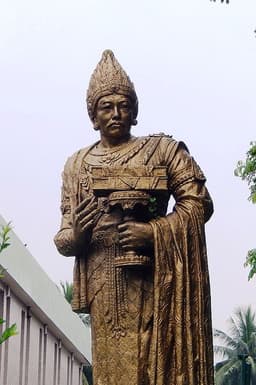
Anawrahta
Emperor · Medieval
65.2Total
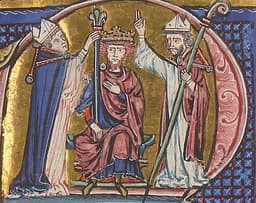
Baldwin I of Jerusalem
Emperor · Medieval
56.1Total
Basic Information
Born
1014
1058
Died
1077
1118
Era
Medieval
Medieval
Nationality
Myanmar
Jerusalem
Occupation
Emperor
Emperor
Civilization
Eastern
Western
Score Comparison
Military (10%)
70.0
72.5
Political (20%)
68.0
46.6
Influence (20%)
72.0
57.2
Legacy (20%)
55.0
50.0
Leadership (15%)
72.0
62.2
Strategy (15%)
55.0
57.5
TOTAL
65.2
56.1
Anawrahta — Complete Timeline
1044 AD
Founding of the Pagan EmpirePolitical Action
Anawrahta ascended the throne and unified the Irrawaddy River valley, founding the Pagan Empire. He conquered the Mon kingdom of Thaton and other neighboring states, creating the first unified Burmese kingdom and establishing Bagan as its capital.
UnificationEmpireBagan
Impact: regionalconstructive
1056 AD
Introduction of Theravada Buddhism to PaganCultural
Anawrahta adopted Theravada Buddhism after being converted by the Mon monk Shin Arahan. He made Theravada the state religion, replacing the existing Mahayana and animist practices. This religious shift had a lasting impact on Burmese culture and politics.
BuddhismReligionConversion
Impact: regionalconstructive
1057 AD
Conquest of the Thaton KingdomWar◆ Major
Anawrahta led a military campaign against the Mon kingdom of Thaton, capturing the city and bringing back Buddhist scriptures, monks, and artisans to Bagan. This conquest enriched Pagan's culture and solidified its dominance in the region.
ConquestMonCultural Exchange
Impact: regional
Baldwin I of Jerusalem — Complete Timeline
1100 AD
Coronation as First King of JerusalemPolitical Action
Baldwin I was crowned as the first king of Jerusalem on Christmas Day 1100, after the death of his brother Godfrey. He transformed the Crusader state from a lordship into a monarchy, centralizing power and expanding its territory.
CoronationCrusader KingdomJerusalem
Impact: regionalconstructive
1101 AD
Capture of Arsuf and CaesareaWar◆ Major
Baldwin I captured the coastal cities of Arsuf and Caesarea with the help of Genoese and Pisan fleets. These victories secured Crusader control over the Palestinian coast and provided access to Mediterranean trade routes.
ConquestCrusader KingdomCoastal Cities
Impact: regional
1104 AD
Siege of AcreWar◆ Major
Baldwin I besieged and captured the port city of Acre after a four-year blockade, with support from a Genoese fleet. Acre became the most important Crusader port and a major commercial center in the Levant.
SiegeCrusader KingdomAcre
Impact: regional
1105 AD
Defense of the Kingdom against Seljuk AttacksWar◆ Major
Baldwin I defeated a Seljuk Turkish army at the Battle of Ramla in 1105, securing the kingdom's eastern frontier. This victory prevented the Seljuks from recapturing Jerusalem and stabilized Crusader rule.
BattleSeljuksCrusader Kingdom
Impact: regional
1118 AD
Invasion of EgyptWar
Baldwin I led a campaign into Fatimid Egypt, reaching the Nile Delta. He died during the campaign near Al-Arish, possibly from illness. The invasion failed to conquer territory but demonstrated Crusader ambitions beyond the Levant.
InvasionEgyptCrusader Kingdom
Impact: regional
Expert Analysis
Origins
Anawrahta (born 1014 CE) was the son of King Kunhsaw Kyaunghpyu, who was overthrown by the usurper Sokkate. Raised in exile, Anawrahta reclaimed the throne of Pagan in 1044 after defeating Sokkate in single combat. His early life was shaped by the fragmented state of the Irrawaddy valley, where various ethnic groups practiced animism, Mahayana Buddhism, and Ari Buddhism. Baldwin I of Jerusalem (born 1058 CE) was the son of Eustace II of Boulogne and brother of Godfrey of Bouillon. Originally a cleric, he abandoned his ecclesiastical career to join the First Crusade. His early military experience came in the Crusader states of Edessa, where he ruled as count before succeeding his brother as king of Jerusalem in 1100.
Rise to Power
Anawrahta's rise began with his consolidation of the Pagan heartland. He then launched a campaign against the Mon kingdom of Thaton in 1057, capturing the city and its king, Manuha. This victory brought Buddhist scriptures, monks, and artisans to Pagan, transforming it into a religious center. By 1060, he controlled most of modern Myanmar. Baldwin I rose through the Crusader hierarchy after the First Crusade. He was elected count of Edessa in 1098, then claimed the throne of Jerusalem after Godfrey's death in 1100. His coronation on Christmas Day 1100 marked the formal establishment of the Kingdom of Jerusalem. He secured his position by defeating rival claimants and securing support from the papacy.
Leadership & Governance
Anawrahta ruled as a Buddhist monarch, promoting Theravada Buddhism as the state religion. He built the Shwezigon Pagoda and sponsored the translation of scriptures. His governance centralized power in Pagan, reducing local chieftains' authority. He also implemented irrigation projects in Kyaukse, boosting agricultural output. Baldwin I ruled as a feudal king, granting fiefs to Crusader lords. He relied heavily on Italian maritime republics for naval support, granting them trading privileges in captured ports. His administration focused on military defense and territorial expansion, with less emphasis on internal development. Baldwin's governance was more militaristic and less transformative than Anawrahta's religious and administrative reforms.
Triumph & Tragedy
Anawrahta's greatest triumph was the unification of Burma under Pagan and the establishment of Theravada Buddhism as the dominant faith. His conquest of Thaton brought literacy and art to Pagan. However, his later campaigns into the northern Shan states were less successful, and he died in 1077 during a military expedition. His empire faced rebellions after his death. Baldwin I's triumphs include the capture of Arsuf (1101), Caesarea (1101), and Acre (1104), which gave the Crusader kingdom vital ports. He also defeated a Seljuk army at Ramla in 1105. His tragedy was his death in 1118 during an invasion of Egypt, which failed to achieve lasting gains. His kingdom remained vulnerable to Muslim counterattacks.
Character & Destiny
Anawrahta was decisive and religiously devoted, but also pragmatic. His conversion to Theravada Buddhism was a strategic move to unify his kingdom under a common faith. He showed tolerance by incorporating Mon culture. His character shaped a stable, enduring empire. Baldwin I was ambitious and militarily capable, but politically less adept. He alienated some Crusader lords and relied heavily on Italian fleets. His death on campaign reflected his aggressive, expansionist mindset. Historians note that Anawrahta's legacy endured for centuries, while Baldwin's kingdom collapsed within 200 years.
Legacy
Anawrahta's legacy is the foundation of Burmese identity and Theravada Buddhism's dominance in Southeast Asia. The Pagan Empire lasted until 1287, and his religious reforms shaped Myanmar's culture. He scored 72.0 in influence and 55.0 in legacy, reflecting his long-term impact. Baldwin I's legacy is as the first king of Jerusalem, but his kingdom fell in 1291. His military achievements scored 72.5, but his political score of 46.6 shows weaker state-building. Baldwin's legacy is more limited to Crusader history, while Anawrahta's impact is still visible in modern Myanmar.
Conclusion
Anawrahta had a greater overall impact, with a total score of 65.2 compared to Baldwin's 56.1. While Baldwin was a skilled military commander (72.5), Anawrahta's political and religious reforms created a lasting civilization. Baldwin's kingdom was a transient Crusader state, whereas Anawrahta's Pagan Empire shaped Burma for centuries. Therefore, Anawrahta is the more historically significant figure.
Rankings
🥇
AnawrahtaLeader
Mil: 70.0Pol: 68.0Inf: 72.0
65.2
🥈
Baldwin I of Jerusalem
Mil: 72.5Pol: 46.6Inf: 57.2
56.1
+9.1 behind
How This Comparison Works
Algorithm
Each figure is scored on 6 dimensions (0—100 scale) based on structured historical data: Military (10%), Political (20%), Influence (20%), Legacy (20%), Leadership (15%), Strategy (15%). The weighted total produces the final ranking.
Data Sources
Scores are computed from structured sub-indicators in the database. Scale factors adjust for era (Ancient ×0.85, Modern ×1.0) and civilization size (Eastern ×1.05, Other ×0.80) to account for differences in population and military scale.
Maximum 3 Figures
Comparisons are limited to 2—3 figures to ensure readability and statistical meaningfulness.
Error Margins
±5 points per dimension — Sub-scores are derived from historical records with inherent uncertainty. Two figures within 5 points on a dimension should be considered roughly equivalent in that area.
Total Score Accuracy
±3 points overall — The weighted combination of 6 dimensions produces a total score with approximately ±3 points of uncertainty. Differences of less than 3 points are not statistically significant— the figures are effectively tied.
Known Limitations
- Historical records are incomplete and uneven across civilizations
- Figures from oral-tradition societies may be underrepresented
- Occupation labels can misclassify multi-role figures
- Scores measure capability and impact, not moral character
- Quantitative scoring is a comparison tool, not absolute truth
Capability Radar
Military (10%) — Battles & Warfare
Battles
55
55
Win Rate
60
60
Expansion
60
65
Political (20%) — Governance & Reform
Reform
65
40
Diplomacy
60
55
Economy
55
35
Influence (20%) — Cultural & Global Reach
Cultural
70
45
Global
55
40
Legacy (20%) — Historical Impact
Historical
75
55
Longevity
70
45
Leadership (15%) — Power & Stability
Tenure
70
50
Stability
60
30
Strategy (15%) — Tactics & Innovation
Strategy
55
60
Tactics
50
55
Reform
45
30
Similar Comparisons
Comments & Discussion
No comments yet. Be the first to share your thoughts!