Loading...
Amoghavarsha vs Napoleon Bonaparte
Napoleon Bonaparte leads by 10.6 pts · 2 figures compared
…
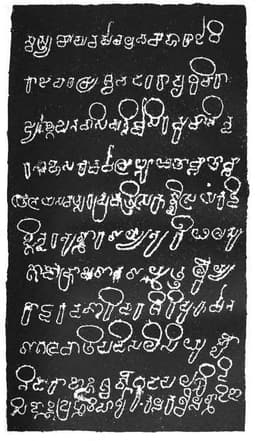
Amoghavarsha
Emperor · Medieval
60.3Total

Napoleon Bonaparte
General · Modern
70.9Total
Basic Information
Born
800
1769
Died
878
1821
Era
Medieval
Modern
Nationality
India
France
Occupation
Emperor
General
Civilization
Indian
Western
Score Comparison
Military (10%)
55.0
94.0
Political (20%)
59.3
72.0
Influence (20%)
62.0
40.0
Legacy (20%)
58.0
80.0
Leadership (15%)
78.0
78.0
Strategy (15%)
41.7
90.0
TOTAL
60.3
70.9
Amoghavarsha — Complete Timeline
820 AD
Conversion to JainismCultural◆ Major
Amoghavarsha converted from Hinduism to Jainism under the influence of the Jain acharya Jinasena. He became a devout patron of Jainism, building temples and supporting Jain monasteries. This shaped his policies of religious tolerance.
Religious ConversionJainismPatronage
Impact: nationalconstructive
850 AD
Composition of the KavirajamargaCultural◆ Major
Amoghavarsha, with assistance from the scholar Srivijaya, composed the Kavirajamarga, the earliest extant work on Kannada poetics. This text standardized Kannada literary conventions and promoted the language as a medium for high culture.
LiteratureKannada LanguagePoetics
Impact: regionalconstructive
860 AD
Construction of the Jain Basadi at ShravanabelagolaCultural
Amoghavarsha commissioned the construction of Jain temples (basadi) at Shravanabelagola, a major Jain pilgrimage site. He also erected a statue of the Jain tirthankara Mahavira. This solidified his legacy as a Jain patron.
Temple BuildingJain PilgrimageArchitecture
constructive
878 AD
Abdication and AsceticismPolitical Action◆ Major
Amoghavarsha abdicated the throne in favor of his son Krishna II. He then adopted the life of a Jain ascetic, practicing sallekhana (fasting unto death) at Shravanabelagola. This act reflected his deep religious devotion.
AbdicationAsceticismJain Practice
Impact: national
Napoleon Bonaparte — Complete Timeline
1799 AD
Coup of 18 BrumaireOther◆ Major
Napoleon Bonaparte, with support from his brother Lucien and key political figures, overthrew the Directory in a bloodless coup. He established the Consulate with himself as First Consul, effectively becoming the ruler of France. This event ended the French Revolution's most unstable period.
French RevolutionCoupRise to Power
Impact: regional
1804 AD
Promulgation of the Napoleonic CodeOther◆ Major
Napoleon enacted the Civil Code of the French, known as the Napoleonic Code, a comprehensive set of laws that replaced the fragmented feudal legal systems. The code established legal equality, protected property rights, and secularized law. It became the basis for legal systems in many European and world countries.
Legal ReformNapoleonic CodeCivil Law
Impact: globalconstructive
1805 AD
Battle of AusterlitzWar◆ Major
Napoleon's Grande Arm
Napoleonic WarsBattleDecisive Victory
Impact: global
1812 AD
Invasion of RussiaWar◆ Major
Napoleon led the Grande Arm
Napoleonic WarsInvasionDisaster
Impact: globaldestructive
1815 AD
Battle of WaterlooWar◆ Major
Napoleon's French army was defeated by the combined forces of the Duke of Wellington's Anglo-Allied army and Gebhard Leberecht von Bl
Napoleonic WarsBattleFinal Defeat
Impact: globaldestructive
Expert Analysis
amoghavarsha-vs-napoleon-bonaparte
# The Emperor and the Ascetic: Napoleon and Amoghavarsha
On a June morning in 1815, Napoleon Bonaparte stood on a muddy field near Waterloo, watching his Imperial Guard march into cannon fire for the last time. A thousand miles away and a thousand years earlier, another emperor—Amoghavarsha of the Rashtrakuta dynasty—had chosen a different path. In 878, at the height of his power, he simply walked away. He abdicated his throne, shed his royal robes, and took up the saffron cloth of a Jain ascetic, spending his final days in meditation rather than conquest. What drives one ruler to grasp for the world and another to let it go?
Origins
Napoleon was born in 1769 on the rugged island of Corsica, a place that had only recently become French. His family was minor nobility, poor enough to feel every slight, proud enough to never forget one. The French Revolution, which erupted when he was twenty, shattered the old order and opened doors that birth alone could never have unlocked. Napoleon walked through them with the hunger of a man who had grown up on the edge of greatness, always just outside the room where power was held.
Amoghavarsha was born into the opposite circumstance. He ascended the throne of the Rashtrakuta Empire in 814, inheriting a realm that stretched across the Deccan plateau of India, from the Arabian Sea to the Bay of Bengal. He was eight years old. His regents ruled for him, and when he finally took control, he found himself at the head of one of the most powerful empires in the medieval world. Where Napoleon had to fight for every scrap of authority, Amoghavarsha had it handed to him—and found it weighed more heavily than he expected.
Rise to Power
Napoleon’s ascent was a masterpiece of speed and audacity. He was a general at twenty-four, commander of the Army of Italy at twenty-six. In 1796, he led ragged, half-starved soldiers across the Alps and smashed the Austrian armies in a campaign that still makes military historians shake their heads in wonder. He was not just winning battles; he was rewriting the rules of war. He moved faster than his enemies, thought more clearly under fire, and understood something they did not: that a soldier fighting for glory will beat a soldier fighting for pay.
Amoghavarsha’s rise was quieter. He faced a rebellion early in his reign, led by a feudatory named Karka, and had to flee his capital. But he did not crush the rebellion with overwhelming force; he negotiated, he compromised, and eventually he returned to power through diplomacy rather than bloodshed. It was a pattern that would define his entire rule. Where Napoleon saw every problem as a nail to be hammered, Amoghavarsha saw a web of relationships to be carefully untangled.
Leadership and Governance
Napoleon governed as he fought: with relentless energy and a conviction that he alone knew what was best. He reformed French law with the Napoleonic Code, sweeping away feudal privileges and establishing equality before the law. He built schools, roads, and a centralized bureaucracy. He made peace with the Catholic Church while ensuring it served the state. His political genius was real, but it was always in service of his ambition. Every reform strengthened France, and every strengthening of France strengthened Napoleon.
Amoghavarsha governed with a lighter hand. His military score of 30.5 reflects a ruler who did not seek conquest; his political score of 66.7 suggests a man who understood that an empire is held together by consent, not force. In 850, he composed the *Kavirajamarga*, the earliest surviving work on Kannada literature, with the help of the scholar Srivijaya. This was not a hobby; it was a political act. By patronizing the Kannada language, he bound his diverse empire together with a shared culture rather than a shared fear. He converted to Jainism in 820 under the influence of the acharya Jinasena, and he built Jain temples at Shravanabelagola, turning a pilgrimage site into a symbol of his rule’s tolerance. His leadership score of 78.7 suggests he was respected, but his method was inclusion, not domination.
Triumph and Tragedy
Napoleon’s greatest moment was Austerlitz in 1805, where he destroyed the combined armies of Russia and Austria in a single day. His greatest failure was the invasion of Russia in 1812, a catastrophe that cost him half a million men and broke the aura of invincibility that had held his empire together. He was exiled to Elba, escaped, raised another army, and was finally defeated at Waterloo in 1815. He died on Saint Helena in 1821, a prisoner, still insisting that he had been right.
Amoghavarsha’s triumph was subtler. He ruled for sixty-four years, an extraordinarily long reign, and left his empire intact and prosperous. His tragedy, if it can be called that, is that we know so little of it. The *Kavirajamarga* survives, but the man himself remains shadowy. He abdicated in 878, handing power to his son Krishna II, and became a Jain ascetic. He died in peace, having chosen obscurity over glory.
Character and Destiny
Napoleon was driven by an insatiable hunger. “Impossible is a word to be found only in the dictionary of fools,” he once said, and he lived as if he believed it. His character was his destiny: his genius for war and organization made him master of Europe, but his inability to stop—to consolidate, to compromise, to accept limits—destroyed him. He could not sit still, and so he fell.
Amoghavarsha was driven by something else entirely. He seems to have understood that power is a burden, not a prize. His conversion to Jainism, with its emphasis on non-violence and renunciation, was not a political convenience; it was a genuine spiritual journey that ended with him giving up everything. Where Napoleon’s character pushed him toward more, Amoghavarsha’s pulled him toward less. His destiny was not conquest but contentment.
Legacy
Napoleon’s legacy is written across Europe: the Napoleonic Code, the modern bureaucracy, the very idea of the nation-state. He is remembered as a titan, a genius, a monster—but never as a small man. His scores reflect this: Military 94, Influence 82, Strategy 93. He changed the world, whether for good or ill.
Amoghavarsha’s legacy is quieter. He is remembered in Karnataka as a great patron of Kannada culture, a builder of temples, a ruler who chose peace. His scores are lower: Military 30, Political 66, Legacy 69. But perhaps that is the wrong measure. He ruled for sixty-four years and left his empire stronger than he found it. He wrote a book, built a temple, and died a monk. By his own lights, he succeeded.
Conclusion
Standing at Waterloo, Napoleon saw his world collapse. Standing at Shravanabelagola, Amoghavarsha saw his world expand—not outward, but inward. One man tried to conquer the world and lost everything. Another man renounced the world and found peace. History remembers Napoleon’s ambition and Amoghavarsha’s humility, but perhaps the real lesson is this: the measure of a ruler is not how much he takes, but what he leaves behind. Napoleon left a continent remade. Amoghavarsha left a book, a temple, and an example. Which is the greater legacy depends, as it always does, on what you value.
Rankings
🥇
Napoleon BonaparteLeader
Mil: 94.0Pol: 72.0Inf: 40.0
70.9
🥈
Amoghavarsha
Mil: 55.0Pol: 59.3Inf: 62.0
60.3
+10.6 behind
How This Comparison Works
Algorithm
Each figure is scored on 6 dimensions (0—100 scale) based on structured historical data: Military (10%), Political (20%), Influence (20%), Legacy (20%), Leadership (15%), Strategy (15%). The weighted total produces the final ranking.
Data Sources
Scores are computed from structured sub-indicators in the database. Scale factors adjust for era (Ancient ×0.85, Modern ×1.0) and civilization size (Eastern ×1.05, Other ×0.80) to account for differences in population and military scale.
Maximum 3 Figures
Comparisons are limited to 2—3 figures to ensure readability and statistical meaningfulness.
Error Margins
±5 points per dimension — Sub-scores are derived from historical records with inherent uncertainty. Two figures within 5 points on a dimension should be considered roughly equivalent in that area.
Total Score Accuracy
±3 points overall — The weighted combination of 6 dimensions produces a total score with approximately ±3 points of uncertainty. Differences of less than 3 points are not statistically significant— the figures are effectively tied.
Known Limitations
- Historical records are incomplete and uneven across civilizations
- Figures from oral-tradition societies may be underrepresented
- Occupation labels can misclassify multi-role figures
- Scores measure capability and impact, not moral character
- Quantitative scoring is a comparison tool, not absolute truth
Capability Radar
Military (10%) — Battles & Warfare
Battles
30
95
Win Rate
35
90
Expansion
25
95
Political (20%) — Governance & Reform
Reform
70
95
Diplomacy
75
80
Economy
80
85
Influence (20%) — Cultural & Global Reach
Cultural
70
85
Global
40
90
Legacy (20%) — Historical Impact
Historical
65
95
Longevity
60
90
Leadership (15%) — Power & Stability
Tenure
80
85
Stability
85
70
Strategy (15%) — Tactics & Innovation
Strategy
30
95
Tactics
25
98
Reform
20
92
Similar Comparisons
Comments & Discussion
Silver-Helm Horseman6/17/2026
As a military historian, the contrast is laughable. Napoleon fought over 60 battles, conquered Europe from Madrid to Moscow, and rewrote the rules of warfare with corps organization and mass conscription. Amoghavarsha? A kid-king who abdicated at 52 to become a monk. One reshaped the globe with blood and gunpowder; the other sat under a tree. Let’s not pretend these are comparable—one built an empire, the other gave it away.
数字幽灵6/17/2026
我是数据怀疑论者。比较样本完全不对称:拿破仑有540万平方公里国土、70万常备军和欧洲GDP数据,而阿莫伽瓦尔沙的“帝国”只有模糊的碑文和传说。咱能说多少平方公里?军力几何?连死亡年份都有争议!拿一个白纸黑字的近代军事巨头去对比一个中世纪印度石刻皇帝,这叫科学?这叫史盲浪漫。
Rusty Gupta6/17/2026
As a classics scholar specializing in South Asia, this comparison misses the real point. Amoghavarsha authored the *Kavirajamarga*, a foundational work on Kannada poetics and grammar—not just war. While Napoleon was writing the Civil Code, amending laws for his own power, Amoghavarsha was consolidating a literary renaissance that outlived his dynasty by centuries. Who actually shaped civilization more? The legist-lawyer or the poet-king?
西风断剑6/17/2026
我是历史杂学家。这组对比最搞笑的是所谓“权力观的差异”。拿破仑死前还在口述遗嘱争夺欧洲话语权,而阿莫伽瓦尔沙退位时把王权当旧鞋扔了。可深究史料——Rashtrakuta王朝靠掠夺和战争维持,这位“禅让僧”在位48年他朝廷没少搞屠杀。所谓的“宁静退位”,只是换种方式操纵宗教遗产罢了。别把佛教禅让剧本套给一个铁血军阀王朝。
Clockwork Paradox6/17/2026
A revisionist critique: this comparison fundamentally distorts both rulers by seeking a moral binary. Napoleon’s rise was a product of post-Revolutionary chaos—he consolidated reforms and spread nationalism, whether intentionally or not. Amoghavarsha’s “peaceful abdication” happened only after suppressing a rebellion by his own son, who had been waiting two decades for the throne. It wasn’t enlightenment—it was a strategic retreat. Both were pragmatic survival artists, not saints versus sinners.