Loading...
Alp Tigin vs Zhu Wen
Alp Tigin leads by 0.2 pts · 2 figures compared
…
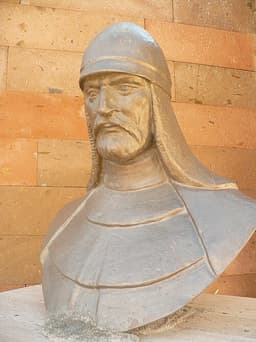
Alp Tigin
Emperor · Medieval
50.5Total
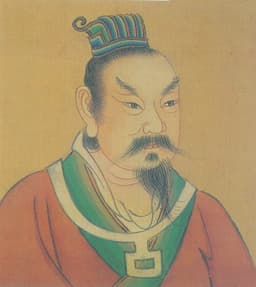
Zhu Wen
Emperor · Medieval
50.3Total
Basic Information
Born
911
852
Died
963
912
Era
Medieval
Medieval
Nationality
Ghaznavid Empire
China
Occupation
Emperor
Emperor
Civilization
Middle Eastern
Eastern
Score Comparison
Military (10%)
55.0
72.5
Political (20%)
33.6
35.1
Influence (20%)
56.4
53.3
Legacy (20%)
49.2
45.8
Leadership (15%)
50.7
48.4
Strategy (15%)
60.0
57.5
TOTAL
50.5
50.3
Alp Tigin — Complete Timeline
961 AD
Rebellion against the SamanidsPolitical Action◆ Major
Alp Tigin rebelled against the Samanid ruler Mansur I after being passed over for a governorship. He marched from Nishapur to Ghazni, defeating Samanid forces along the way, and established his own rule in eastern Afghanistan.
Impact: regional
963 AD
Consolidation of GhazniPolitical Action
Alp Tigin fortified Ghazni and organized a military state based on slave soldiers (ghilman). He established a stable administration that attracted scholars and merchants, turning Ghazni into a major regional power center.
Impact: regionalconstructive
Zhu Wen — Complete Timeline
881 AD
Rebellion against TangWar◆ Major
Zhu Wen, originally a rebel under Huang Chao, defected to the Tang dynasty in 882. He was granted the name Zhu Quanzhong and became a key general, eventually turning against the Tang and seizing control of the imperial court.
Tang DynastyRebellionPower Seizure
Impact: nationaldestructive
904 AD
Assassination of Emperor ZhaozongPolitical Action◆ Major
Zhu Wen ordered the murder of Emperor Zhaozong of Tang and installed the young Emperor Ai as a puppet. This act eliminated the last effective Tang ruler and paved the way for Zhu Wen's usurpation.
Tang DynastyAssassinationUsurpation
Impact: nationaldestructive
907 AD
Founded Later Liang DynastyPolitical Action
Zhu Wen forced Emperor Ai to abdicate and proclaimed himself emperor, founding the Later Liang dynasty. This ended the Tang dynasty and began the Five Dynasties and Ten Kingdoms period in China.
Five DynastiesLater LiangDynastic Change
Impact: national
910 AD
Defeated by Li Cunxu at Battle of BaixiangWar◆ Major
Zhu Wen's Later Liang forces were decisively defeated by Li Cunxu's Jin army at Baixiang. This loss weakened Later Liang's control in the north and emboldened rival states.
Later LiangJinBattle
Impact: regionaltragic
912 AD
Assassinated by his son Zhu YouguiPolitical Action◆ Major
Zhu Wen was murdered by his own son Zhu Yougui, who then seized the throne. The assassination plunged Later Liang into internal strife and contributed to its eventual collapse.
Later LiangAssassinationDynastic Crisis
Impact: nationaltragic
Expert Analysis
Alp Tigin vs Zhu Wen
# The Slave Who Built an Empire and the Rebel Who Broke a Dynasty
In the year 963, a Turkic slave commander lay dying in the fortress city of Ghazni, having carved out a small but stable kingdom from the crumbling edges of the Samanid Empire. Half a century earlier and thousands of miles to the east, a salt smuggler’s son in China’s Yellow River valley was watching the Tang dynasty tear itself apart, waiting for his moment. Alp Tigin and Zhu Wen never met, never knew of each other’s existence, yet their lives pose a question that echoes through history: What separates the founder of a lasting dynasty from the destroyer of an old one? The answer lies not in ambition—both had it in abundance—but in the invisible architecture of timing, restraint, and the peculiar chemistry between a man and his era.
Origins
Alp Tigin was born into slavery, though not the kind that breaks the spirit. In the medieval Islamic world, Turkic slave soldiers—*ghilman*—occupied a paradoxical position: property in law, yet often more powerful than free men. Purchased as boys, trained in the arts of war and governance, they could rise to command armies and govern provinces. Alp Tigin entered the Samanid court as a military slave and, by 961, had become the commander of the guard—a position of immense influence but no security. His world was one of patronage and betrayal, where loyalty was a commodity and power flowed through personal networks.
Zhu Wen’s origins were humbler still. Born in 852 in Dangshan County, he grew up in a family so poor that his father died when he was young, leaving his mother to work as a servant. Where Alp Tigin was forged in the disciplined hierarchy of the slave barracks, Zhu Wen emerged from the chaos of rural desperation. He joined the great Huang Chao rebellion in 874, a peasant uprising that would consume northern China for a decade. Zhu Wen was not a true believer—he was a survivor, watching which way the wind blew.
Rise to Power
The paths diverged at the moment of crisis. In 961, when the Samanid ruler Mansur I passed over Alp Tigin for the governorship of Khorasan, the Turkic commander did what any slave-soldier with an army would do: he rebelled. But his rebellion was not a grab for supreme power. He marched from Nishapur not to seize the throne but to secure a province. After a brief confrontation, he retreated eastward to Ghazni, a frontier town in what is now Afghanistan. There, in 963, he consolidated his rule, organizing a military state built on the *ghilman* system he knew so well. He never declared himself emperor. He remained, formally, a Samanid governor in rebellion—a man who knew the limits of his ambition.
Zhu Wen’s rise followed a different logic. In 881, he was a rebel commander under Huang Chao. A year later, sensing the rebellion’s inevitable collapse, he defected to the Tang dynasty, receiving the name Zhu Quanzhong—“Loyal and Central.” The Tang, desperate for any general who could fight, gave him command. Over the next two decades, Zhu Wen played the game of late-Tang politics with ruthless precision: he absorbed territories, eliminated rivals, and by 904 felt strong enough to murder Emperor Zhaozong and install a child puppet. In 907, he forced the boy to abdicate and declared himself emperor of the Later Liang dynasty. The Tang, after 289 years, was dead.
Leadership & Governance
Alp Tigin’s rule in Ghazni was modest in scale but masterful in method. He fortified the city, organized a standing army of slave soldiers loyal only to him, and established a system of administration that could survive his death. His military score of 48.6 and political score of 50.7 reflect not mediocrity but limitation: he commanded a frontier province, not an empire. Yet his leadership score of 47.0 understates his achievement—he created a state that would, under his successors, grow into the Ghaznavid Empire, stretching from Persia to India. He did not overreach. He built foundations.
Zhu Wen was a more formidable commander—military score 73.4, leadership 76.9—but his governance was fatally flawed. The Later Liang dynasty controlled only a fraction of China; the rest was held by rival kingdoms like the Jin under Li Cunxu. Zhu Wen’s political score of 66.7 suggests competence, but his reign was consumed by endless war. In 910, at the Battle of Baixiang, Li Cunxu crushed his army, and the defeat exposed the fragility of his rule. Zhu Wen never built institutions; he built a personal network of generals and officials bound by fear and patronage—exactly the kind of system that could collapse the moment he faltered.
Triumph & Tragedy
Alp Tigin’s greatest triumph was not a battle but a legacy. He died in 963, having established a stable administration in Ghazni. His slave-soldier state would be inherited by his son-in-law Sebuktigin and later by Mahmud of Ghazni, who transformed it into a vast empire. Alp Tigin’s tragedy was that he never saw this—he died a provincial warlord, not a dynasty founder. But perhaps that was his wisdom: he knew that lasting power is built slowly, on foundations that outlive the builder.
Zhu Wen’s triumph was the destruction of the Tang dynasty, a feat that had eluded rebels for decades. His tragedy was that he could not replace it. In 912, his own son Zhu Yougui, fearing disinheritance, murdered him in his bed. The Later Liang stumbled on for eleven more years before being swallowed by Li Cunxu’s Later Tang. Zhu Wen’s legacy was the chaos of the Five Dynasties and Ten Kingdoms period—a half-century of war that left China fragmented and exhausted.
Character & Destiny
Alp Tigin was a builder. His scores—influence 71.6, legacy 62.1—suggest a man who understood that power is not seized but constructed. He came from a tradition where slave-soldiers could become kings, but only if they respected the limits of their world. He did not try to destroy the Samanids; he simply moved beyond them.
Zhu Wen was a destroyer. His influence score of 72.7 matches Alp Tigin’s, but his legacy of 62.1 is almost identical—a strange symmetry. Yet the quality of that legacy could not be more different. Zhu Wen broke the Tang but could not build a stable alternative. His character—ruthless, paranoid, impatient—drove him to kill emperors and seize thrones, but it also made him incapable of the patient statecraft that Alp Tigin practiced in a dusty Afghan fortress.
Legacy
Alp Tigin is remembered as the founder of the Ghaznavid dynasty, though he never wore a crown. His name appears in histories as a footnote to Mahmud of Ghazni’s glory, but historians recognize that without Alp Tigin’s base, Mahmud could never have launched his campaigns. His legacy score of 62.1 measures not fame but endurance: the state he built lasted nearly two centuries.
Zhu Wen’s legacy is more ambiguous. He ended the Tang dynasty, one of China’s golden ages, but his Later Liang was a short-lived interregnum in a period of division. Chinese historiography treats him harshly—as a usurper and a regicide. His legacy score of 62.1, identical to Alp Tigin’s, reflects the ambivalence of history: he changed the world, but not for the better.
Conclusion
The difference between Alp Tigin and Zhu Wen is not a matter of talent or ambition. Both were brilliant, both were ruthless, both died by the sword—one in bed, one by it. The difference is that Alp Tigin understood what Zhu Wen never could: that destroying an old order is easier than building a new one, and that the greatest empires are not conquered but grown. In the end, the slave commander from the steppes outlasted the rebel who broke the dragon throne—not because he was stronger, but because he knew when to stop.
Rankings
🥇
Alp TiginLeader
Mil: 55.0Pol: 33.6Inf: 56.4
50.5
🥈
Zhu Wen
Mil: 72.5Pol: 35.1Inf: 53.3
50.3
+0.2 behind
How This Comparison Works
Algorithm
Each figure is scored on 6 dimensions (0—100 scale) based on structured historical data: Military (10%), Political (20%), Influence (20%), Legacy (20%), Leadership (15%), Strategy (15%). The weighted total produces the final ranking.
Data Sources
Scores are computed from structured sub-indicators in the database. Scale factors adjust for era (Ancient ×0.85, Modern ×1.0) and civilization size (Eastern ×1.05, Other ×0.80) to account for differences in population and military scale.
Maximum 3 Figures
Comparisons are limited to 2—3 figures to ensure readability and statistical meaningfulness.
Error Margins
±5 points per dimension — Sub-scores are derived from historical records with inherent uncertainty. Two figures within 5 points on a dimension should be considered roughly equivalent in that area.
Total Score Accuracy
±3 points overall — The weighted combination of 6 dimensions produces a total score with approximately ±3 points of uncertainty. Differences of less than 3 points are not statistically significant— the figures are effectively tied.
Known Limitations
- Historical records are incomplete and uneven across civilizations
- Figures from oral-tradition societies may be underrepresented
- Occupation labels can misclassify multi-role figures
- Scores measure capability and impact, not moral character
- Quantitative scoring is a comparison tool, not absolute truth
Capability Radar
Military (10%) — Battles & Warfare
Battles
45
65
Win Rate
50
60
Expansion
50
55
Political (20%) — Governance & Reform
Reform
20
25
Diplomacy
30
35
Economy
20
30
Influence (20%) — Cultural & Global Reach
Cultural
30
25
Global
30
15
Legacy (20%) — Historical Impact
Historical
45
45
Longevity
40
20
Leadership (15%) — Power & Stability
Tenure
25
40
Stability
25
20
Strategy (15%) — Tactics & Innovation
Strategy
45
60
Tactics
40
55
Reform
30
30
Similar Comparisons
Comments & Discussion
The Persian Who Saw the Fork6/16/2026
Everyone focuses on Zhu Wen's "betrayal" of the Tang, but I'm more interested in Alp Tigin's geographic positioning. He didn't just stumble into Ghazni—he deliberately moved southeast of the Samanid heartland, away from the Buyid threat, planting himself on the trade crossroads between India and Persia. That strategic choice is what let his slave dynasty survive while Samanid princes got their heads mounted on gates. Zhu Wen seized the capital. Alp Tigin seized the future.
草原叛徒眼6/16/2026
说朱温是"五代始作俑者"都算轻了,这家伙就是中国史上最大的机会主义者之一。黄巢起义时他投降唐廷,等靠残酷镇压老战友换来节度使位置后就翻脸弑君。最讽刺的是,他本有无数次机会像曹操那样挟天子以令诸侯、徐徐图之,却偏偏逼唐哀帝禅位后一年内就毒杀了他。这种毫无长远眼光的短视堪称权力版暴发户。而阿勒普特勤至少懂得建立制度基础。
Numismatics Nerd Here6/16/2026
Let's talk coinage. Alp Tigin's successors kept minting Samanid-style silver dirhams—same weight, same calligraphic templates—for decades after breaking away. They knew propaganda is a long game. Zhu Wen? The Liang dynasty's cash coins were embarrassingly crude, reusing Tang moulds with sloppy overstrikes. That's not just metallurgy; it's a metaphor. One man understood that empire needs economic continuity; the other thought slaughtering the aristocracy and renaming the calendar was enough.