Loading...
Alp Tigin vs Charles de Gaulle
Charles de Gaulle leads by 17.7 pts · 2 figures compared
…
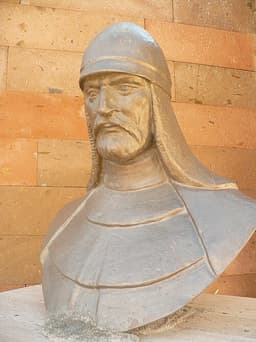
Alp Tigin
Emperor · Medieval
50.5Total
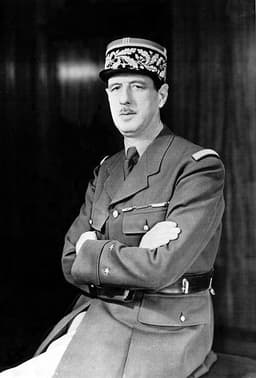
Charles de Gaulle
Politician · Modern
68.2Total
Basic Information
Born
911
1890
Died
963
1970
Era
Medieval
Modern
Nationality
Ghaznavid Empire
France
Occupation
Emperor
Politician
Civilization
Middle Eastern
Western
Score Comparison
Military (10%)
55.0
55.0
Political (20%)
33.6
75.0
Influence (20%)
56.4
65.0
Legacy (20%)
49.2
68.0
Leadership (15%)
50.7
78.0
Strategy (15%)
60.0
65.0
TOTAL
50.5
68.2
Alp Tigin — Complete Timeline
961 AD
Rebellion against the SamanidsPolitical Action◆ Major
Alp Tigin rebelled against the Samanid ruler Mansur I after being passed over for a governorship. He marched from Nishapur to Ghazni, defeating Samanid forces along the way, and established his own rule in eastern Afghanistan.
Impact: regional
963 AD
Consolidation of GhazniPolitical Action
Alp Tigin fortified Ghazni and organized a military state based on slave soldiers (ghilman). He established a stable administration that attracted scholars and merchants, turning Ghazni into a major regional power center.
Impact: regionalconstructive
Charles de Gaulle — Complete Timeline
1940 AD
Appeal of 18 June 1940Political Action
From London, de Gaulle broadcast a radio appeal urging French resistance against Nazi occupation. He called on French soldiers and citizens to continue the fight, founding the Free French Forces and becoming the symbol of French defiance.
World War IIResistanceLeadership
Impact: nationalconstructive
1958 AD
Founding of the Fifth RepublicPolitical Action
De Gaulle returned to power during the Algerian crisis and oversaw the drafting of a new constitution. The Fifth Republic established a strong executive presidency, replacing the unstable parliamentary system of the Fourth Republic.
ConstitutionGovernment ReformPolitical System
Impact: nationalconstructive
1962 AD
End of the Algerian WarPolitical Action◆ Major
De Gaulle negotiated the
DecolonizationPeace TreatyAlgeria
Impact: regionalconstructive
1968 AD
May 1968 CrisisPolitical Action◆ Major
Mass student protests and general strikes paralyzed France, challenging de Gaulle's government. De Gaulle briefly fled to Germany, then returned to dissolve the National Assembly and call elections, which his party won, but his authority was weakened.
ProtestPolitical CrisisSocial Unrest
Impact: nationaldestructive
1969 AD
Resignation as PresidentPolitical Action
De Gaulle resigned after losing a referendum on regional reform and Senate restructuring. The defeat marked the end of his political career, as he withdrew from public life and died the following year.
ResignationPolitical DefeatReferendum
Impact: nationaltragic
Expert Analysis
Charles de Gaulle vs Alp Tigin
# The General and the Slave: Two Paths to Power
In the summer of 1940, a tall, awkward French general stood before a BBC microphone in London and spoke to a nation that had just surrendered. Across the Channel, France lay prostrate under Nazi boots. Charles de Gaulle, almost alone, declared that the war was not over. A thousand years earlier, in the dusty plains of Central Asia, a Turkic slave commander named Alp Tigin faced his own moment of defiance: passed over for a governorship he believed was his due, he gathered his loyal soldiers and marched away from his Samanid masters, toward an uncertain future in the mountains of what is now Afghanistan. One man would found a republic; the other, a dynasty. Both began as outsiders, but their stories reveal how character, context, and sheer historical accident shape the difference between a world-historical figure and a regional footnote.
Origins
Charles de Gaulle was born into the Catholic, patriotic bourgeoisie of Lille in 1890. His father taught philosophy and history, and young Charles grew up on tales of French glory and defeat—especially the humiliation of 1870, when Prussia crushed France. He entered the military academy of Saint-Cyr, where his aloof intelligence and towering height (six foot five) set him apart. His era was one of industrial warfare, mass politics, and the collapse of empires. De Gaulle absorbed the lessons of his time: he wrote presciently about tank warfare and mobile armies, ideas that his superiors ignored.
Alp Tigin came from nowhere. Born around 911, he was a Turkic slave, probably captured as a child from the steppes north of the Oxus River. In the medieval Islamic world, such slaves—ghilman—could rise through military service to become generals, governors, and even kings. Alp Tigin entered the service of the Samanid dynasty, which ruled Persia and Central Asia. His era was one of feudal loyalties, tribal warfare, and the slow decay of a once-great empire. He learned the arts of war and court intrigue in the shadow of older, more established powers.
Rise to Power
De Gaulle’s ascent was slow, then sudden. In 1940, he was a brigadier general and undersecretary of defense—a minor figure. But when Marshal Pétain signed an armistice with Hitler, de Gaulle fled to London and, on June 18, 1940, broadcast his famous appeal: “France has lost a battle, but France has not lost the war.” It was a gamble of breathtaking audacity. He had no army, no money, no legitimacy—only his voice and his conviction. Over the next four years, he built the Free French Forces from scratch, wrestling with Allied leaders who dismissed him as a prima donna. By 1944, he had made himself the indispensable symbol of French resistance.
Alp Tigin’s rise was more conventional, yet no less dramatic. He served the Samanid ruler Abdul Malik I as a slave commander, proving his loyalty and military skill. But when Abdul Malik died in 961, his successor Mansur I passed over Alp Tigin for the governorship of Khorasan, favoring a rival. Alp Tigin rebelled. He marched his army eastward, defeated the forces sent against him, and seized the fortress city of Ghazni in 963. There, he declared himself independent, founding what would become the Ghaznavid dynasty. His rebellion was not about ideals or national salvation—it was about personal honor and ambition.
Leadership & Governance
De Gaulle governed through the force of his vision. As president of the Fifth Republic, which he founded in 1958, he centralized power in the executive, believing that France needed a strong leader to rise above partisan squabbling. He pursued a policy of national grandeur: he withdrew France from NATO’s military command, developed an independent nuclear deterrent, and vetoed British entry into the European Economic Community. His most wrenching decision was to end the Algerian War in 1962, granting independence to Algeria despite the fury of French settlers and the army. He survived assassination attempts, but his style was aloof and paternalistic. “I am France,” he once said, and many believed him.
Alp Tigin ruled through the sword and the purse. At Ghazni, he organized a military state built on slave soldiers—ghilman who owed loyalty only to him. He fortified the city, raided neighboring territories for plunder, and distributed wealth to his followers. His governance was personal and pragmatic: there were no constitutions or grand ideologies, only the reality of power. He died in 963, barely two years after taking Ghazni, and his dynasty would reach its peak under his slave-turned-successor, Sebuktigin, and the great Mahmud of Ghazni. Alp Tigin founded a state, but he did not live to see its glory.
Triumph & Tragedy
De Gaulle’s greatest triumph was the liberation of France and the restoration of its self-respect. His darkest hour came in May 1968, when student protests and general strikes paralyzed France. The old general, now 77, seemed bewildered. He briefly fled to West Germany to consult with French generals—a move that looked like panic. He returned, dissolved parliament, and called new elections, which he won. But the magic was broken. In 1969, he lost a referendum on minor reforms and resigned. He died a year later, at his home in Colombey-les-Deux-Églises, a lonely figure who had outlived his era.
Alp Tigin’s triumph was the capture of Ghazni itself, a feat that transformed him from a rebellious slave into a king. His tragedy was his early death, which left his achievements unfinished. He never saw the Ghaznavid Empire expand into India, or its capital become a center of Persian culture. He was a founder, but not a builder.
Character & Destiny
De Gaulle was cold, proud, and stubborn. He believed in destiny—his own and France’s. “Greatness is a path toward the summit,” he wrote. “The man of character knows that he must aim at great things and that he will be judged by them.” That character made him impossible to ignore, but also impossible to love. He could not compromise, which was both his strength and his weakness.
Alp Tigin was a survivor. He understood that in the brutal world of medieval Central Asia, loyalty was a commodity and power was a prize. He was not a visionary; he was a pragmatist. His character was shaped by the slave market, not the classroom. He took what he could and held it as long as he could.
Legacy
De Gaulle’s legacy is the Fifth Republic, which still governs France today. His emphasis on presidential power, national independence, and European cooperation defined French politics for decades. He is remembered as the man who said no to Hitler, no to the Americans, and no to the Algerians—and somehow made France stronger each time.
Alp Tigin’s legacy is the Ghaznavid dynasty, which ruled for nearly two hundred years. He is remembered as the founder, but his name is obscure outside of specialist history. His real achievement was proving that a slave could become a king—a story that would be repeated across the Islamic world for centuries.
Conclusion
One man rose through the power of words, the other through the power of swords. De Gaulle shaped a nation’s soul; Alp Tigin carved out a kingdom. Both were outsiders who remade the world around them, but the scale of their ambition and the nature of their times determined how far they could go. De Gaulle spoke to history; Alp Tigin made it, quietly, in the dust of Afghanistan. In the end, perhaps the difference is not in their character, but in the stage they were given. A slave in the tenth century could become a king. A general in the twentieth could become a legend. Both, in their own way, did what they had to do.
Rankings
🥇
Charles de GaulleLeader
Mil: 55.0Pol: 75.0Inf: 65.0
68.2
🥈
Alp Tigin
Mil: 55.0Pol: 33.6Inf: 56.4
50.5
+17.7 behind
How This Comparison Works
Algorithm
Each figure is scored on 6 dimensions (0—100 scale) based on structured historical data: Military (10%), Political (20%), Influence (20%), Legacy (20%), Leadership (15%), Strategy (15%). The weighted total produces the final ranking.
Data Sources
Scores are computed from structured sub-indicators in the database. Scale factors adjust for era (Ancient ×0.85, Modern ×1.0) and civilization size (Eastern ×1.05, Other ×0.80) to account for differences in population and military scale.
Maximum 3 Figures
Comparisons are limited to 2—3 figures to ensure readability and statistical meaningfulness.
Error Margins
±5 points per dimension — Sub-scores are derived from historical records with inherent uncertainty. Two figures within 5 points on a dimension should be considered roughly equivalent in that area.
Total Score Accuracy
±3 points overall — The weighted combination of 6 dimensions produces a total score with approximately ±3 points of uncertainty. Differences of less than 3 points are not statistically significant— the figures are effectively tied.
Known Limitations
- Historical records are incomplete and uneven across civilizations
- Figures from oral-tradition societies may be underrepresented
- Occupation labels can misclassify multi-role figures
- Scores measure capability and impact, not moral character
- Quantitative scoring is a comparison tool, not absolute truth
Capability Radar
Military (10%) — Battles & Warfare
Battles
45
60
Win Rate
50
55
Expansion
50
20
Political (20%) — Governance & Reform
Reform
20
95
Diplomacy
30
90
Economy
20
70
Influence (20%) — Cultural & Global Reach
Cultural
30
70
Global
30
80
Legacy (20%) — Historical Impact
Historical
45
85
Longevity
40
75
Leadership (15%) — Power & Stability
Tenure
25
85
Stability
25
75
Strategy (15%) — Tactics & Innovation
Strategy
45
85
Tactics
40
70
Reform
30
80
Similar Comparisons
Comments & Discussion
Tank Philosopher6/16/2026
De Gaulle was a visionary who understood mechanized warfare before anyone else, writing _Vers l’Armée de Métier_ in 1934 while France hid behind the Maginot Line. Alp Tigin was a runaway slave with a sword and grit. Comparing them is like comparing a chess grandmaster to a brawler—de Gaulle shaped modern military doctrine; Alp Tigin just grabbed a mountain. No contest.
突厥刀客6/16/2026
阿尔普·特勤就是个逃奴军阀,靠背叛主子起家,打下加兹尼就满足了。戴高乐呢?1940年伦敦广播讲话,一个人扛起自由法国,最后还逼着丘吉尔和罗斯福尊重他。一个流芳百世,一个只在历史角落留名,差太远了。
Data Nerd6/16/2026
The statistical gap is massive: de Gaulle’s Free French grew from a few hundred to 1.3 million soldiers by 1945, and he shaped NATO’s structure. Alp Tigin’s Ghaznavid rule lasted only a few years after his death, his dynasty flaring out by 1186. On power duration alone, de Gaulle’s Fifth Republic outlasted the Ghaznavid Empire’s peak—he’s a structural force, not a footnote.
数字猎人6/16/2026
别吹阿尔普·特勤了。他死后加兹尼王朝撑了不到两百年就完蛋,戴高乐的法兰西第五共和国到现在还在。影响力数据摆在这:戴高乐主导了欧盟雏形、核威慑独立战略,阿尔普·特勤就是个山区土皇帝,没得比。
Skeptical Stone6/16/2026
Apples and oranges, but let’s be honest: Alp Tigin’s story is only remembered because we romanticize “slave-to-king” tales. De Gaulle actually fought a global war and rewrote French law with the 1958 Constitution. One man’s legacy is a footnote in Central Asian textbooks; the other’s is a Western political template. History’s weight is uneven, and this comparison proves it.
中文硬汉6/16/2026
戴高乐站上国际舞台,1944年巴黎解放时他走在香榭丽舍大道上,全世界看见他。阿尔普·特勤呢?961年占了加兹尼,然后呢?他连个像样的首都都没建起来。一个是法兰西的救星,一个是突厥雇佣兵的小胜利,别硬凑。