Loading...
Alp Tigin vs Qin Shi Huang
Qin Shi Huang leads by 34.7 pts · 2 figures compared
…
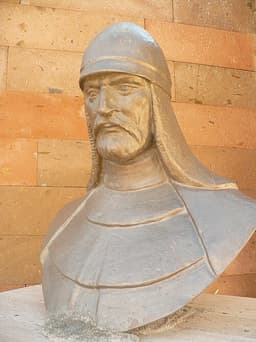
Alp Tigin
Emperor · Medieval
50.5Total
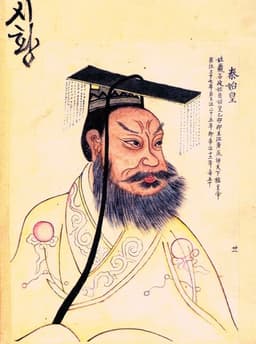
Qin Shi Huang
Emperor · Ancient
85.2Total
Basic Information
Born
911
-259
Died
963
-210
Era
Medieval
Ancient
Nationality
Ghaznavid Empire
China
Occupation
Emperor
Emperor
Civilization
Middle Eastern
Eastern
Score Comparison
Military (10%)
55.0
80.0
Political (20%)
33.6
90.0
Influence (20%)
56.4
85.0
Legacy (20%)
49.2
90.0
Leadership (15%)
50.7
78.0
Strategy (15%)
60.0
82.0
TOTAL
50.5
85.2
Alp Tigin — Complete Timeline
961 AD
Rebellion against the SamanidsPolitical Action◆ Major
Alp Tigin rebelled against the Samanid ruler Mansur I after being passed over for a governorship. He marched from Nishapur to Ghazni, defeating Samanid forces along the way, and established his own rule in eastern Afghanistan.
Impact: regional
963 AD
Consolidation of GhazniPolitical Action
Alp Tigin fortified Ghazni and organized a military state based on slave soldiers (ghilman). He established a stable administration that attracted scholars and merchants, turning Ghazni into a major regional power center.
Impact: regionalconstructive
Qin Shi Huang — Complete Timeline
246 BC
Construction of the Mausoleum and Terracotta ArmyOther◆ Major
Qin Shi Huang commissioned a vast mausoleum complex near Xi'an, guarded by thousands of life-sized terracotta soldiers, horses, and chariots. The project employed hundreds of thousands of workers and reflected his obsession with immortality and imperial power.
Impact: global
230 BC
Conquest of the Six Warring StatesWar
From 230 to 221 BCE, Ying Zheng led the Qin state in a series of campaigns that conquered the Han, Zhao, Wei, Chu, Yan, and Qi states. This unified China under a single ruler for the first time, ending the Warring States period.
Impact: global
221 BC
Standardization of Writing, Currency, and MeasurementsReform◆ Major
Qin Shi Huang ordered the standardization of Chinese script, currency, and weights and measures across the unified empire. This facilitated administration, trade, and cultural integration, laying a foundation for future dynasties.
Impact: globalconstructive
Proclamation of the Qin DynastyPolitical Action
After conquering the last independent state, Ying Zheng declared himself Shi Huangdi (First Emperor), founding the Qin Dynasty. He adopted a new title to signify his supreme authority and initiated centralized imperial rule.
Impact: global
214 BC
Initiation of the Great Wall ConstructionOther◆ Major
Qin Shi Huang ordered the connection and extension of existing northern fortifications to create a unified defensive wall against nomadic Xiongnu raids. This project involved massive conscripted labor and became the precursor to the later Great Wall.
Impact: regional
213 BC
Burning of Books and Burying of ScholarsPolitical Action◆ Major
On the advice of Li Si, Qin Shi Huang ordered the burning of historical records and philosophical texts not aligned with Legalist doctrine. He also had 460 Confucian scholars buried alive to suppress dissent and consolidate ideological control.
Impact: nationaldestructive
Expert Analysis
alp-tigin-vs-qin-shi-huang
### The First Emperor and the Slave King
History rarely offers a more stark contrast than the one between Qin Shi Huang, the unifier of China, and Alp Tigin, the founder of the Ghaznavid dynasty. One was born a king, the other a slave. One built an empire that would define a civilization for millennia; the other carved out a principality that would, for a fleeting moment, become the terror of its neighbors. What drove these two men to such different outcomes? The answer lies not just in their talents, but in the worlds that shaped them.
Origins
Qin Shi Huang, born Ying Zheng in 259 BC, was a prince of the western state of Qin during the chaotic Warring States period. His birthright was a kingdom already hardened by centuries of conflict, a land where Legalist philosophy—a brutal doctrine of centralized power and strict law—held sway. His father was a king, his mother a former concubine, and his childhood was a brutal education in court intrigue. The world he inherited was one of crumbling feudal order, where seven states fought for supremacy, and the only question was which would emerge as the final victor. He was the product of a civilization that had already produced Sun Tzu and Confucius, a world of sophisticated philosophy and endless war.
Alp Tigin, born in 911 AD, emerged from a vastly different world. He was a Turkic slave, likely captured as a child from the steppes of Central Asia. His world was the Samanid Empire, a Persianate state that had revived Persian culture after the Arab conquest. In that world, the most powerful men were often *ghilman*—military slaves who could rise to the highest offices through sheer ability. Alp Tigin was one such man. He was bought, trained, and eventually became a commander of the Samanid army. His origin was not a kingdom but a market; his inheritance was not a throne but a sword.
Rise to Power
Ying Zheng’s path to power was direct. He became King of Qin at the age of thirteen in 246 BC, and by the time he reached adulthood, he was ready to conquer. Between 230 and 221 BC, he unleashed a series of campaigns that destroyed the six rival states—Han, Zhao, Wei, Chu, Yan, and Qi—with methodical brutality. His military strategy, rated a 75, was not one of genius but of relentless, overwhelming force. He used siege engines, cavalry, and a terrifyingly efficient bureaucracy to supply his armies. The turning point came in 221 BC, when the last state fell, and Ying Zheng declared himself *Shi Huangdi*—the First Emperor.
Alp Tigin’s rise was a gamble. In 961 AD, after being passed over for the governorship of Khorasan by the Samanid ruler Mansur I, he rebelled. He marched his army east, not to conquer an empire, but to seize a fortress. He took Ghazni, a remote city in what is now Afghanistan, and fortified it. His military score of 48.6 reflects a man who was a competent commander but no Alexander. His power came not from conquest but from survival. He established a stable administration in Ghazni based on his loyal *ghilman*, and from that small base, he defied the Samanids. He did not unify a civilization; he founded a dynasty.
Leadership & Governance
Qin Shi Huang’s governance was revolutionary. With a political score of 88, he understood that conquest was meaningless without control. In 221 BC, he ordered the standardization of writing, currency, and measurements across his empire. He built roads, canals, and a massive defensive wall in 214 BC. He imposed a single legal code, a single script, and a single ideology—Legalism. His reign was a relentless campaign to erase the past and create a new, unified China. He was the architect of imperial bureaucracy, the man who gave China its administrative DNA.
Alp Tigin’s governance was pragmatic. With a political score of 50.7, he was a warlord, not a reformer. He organized Ghazni as a military state, where the army was the state. He kept the Persian administrative systems of the Samanids but staffed them with his own men. His rule was a balancing act: he had to pay his soldiers, keep the local population from rebelling, and fend off the Samanids. He did not standardize anything; he simply held on. His legacy was not a system but a dynasty that would, under his successors, become a great empire.
Triumph & Tragedy
Qin Shi Huang’s greatest moment was his unification of China in 221 BC. He had done what no one before him had achieved: he had brought the warring states under one rule. His greatest tragedy was the cost. In 213 BC, on the advice of his minister Li Si, he ordered the burning of books and the burying of scholars—a brutal purge of all philosophies but Legalism. He also commissioned a vast mausoleum guarded by the Terracotta Army, a project that consumed the labor of hundreds of thousands. When he died in 210 BC, his empire was already cracking under the weight of his own repression. The Qin Dynasty would fall within four years of his death.
Alp Tigin’s triumph was survival. He took Ghazni in 963 AD and held it until his death the same year. He had turned a rebellion into a dynasty. His tragedy was that he never saw what his foundation would become. He died a minor warlord in a remote city, his legacy uncertain. It was his son-in-law, Sabuktigin, and his grandson, Mahmud of Ghazni, who would turn Ghazni into an empire that raided deep into India.
Character & Destiny
Qin Shi Huang was a man of immense ambition and paranoia. He believed he was the Son of Heaven, the first of a dynasty that would last ten thousand generations. He sought immortality, sending expeditions for the elixir of life. His character was shaped by a belief in total control: he would not tolerate dissent, difference, or even the past. His destiny was to be the father of China, but also its first tyrant.
Alp Tigin was a survivor. He was a man who had been bought and sold, who had learned that loyalty was a commodity and power was personal. He did not dream of immortality; he dreamed of a fortress he could call his own. His character was shaped by the steppe and the slave market, where a man’s worth was measured by his sword. His destiny was to be a beginning, not an end.
Legacy
Qin Shi Huang’s legacy is monumental. His influence score of 82 and legacy score of 85 reflect a man who shaped China more than almost any other figure. The Great Wall, the Terracotta Army, the standardized script—these are his gifts to history. But his legacy is also one of tyranny. He is remembered as a builder and a burner, a unifier and a destroyer. China would never be the same after him, but it would also spend centuries trying to escape his shadow.
Alp Tigin’s legacy is smaller but significant. With an influence score of 71.6 and a legacy score of 62.1, he is remembered as the founder of the Ghaznavid dynasty, which would become the first Islamic empire to penetrate deep into India. He is a footnote in history, but a crucial one. He proved that a slave could become a king, that a fortress could become a capital, and that the steppe could conquer the sown.
Conclusion
What drove these two men to such different outcomes? The answer is not just talent or ambition, but the worlds they inherited. Qin Shi Huang was born into a civilization that had already invented the tools of empire; he only had to use them. Alp Tigin was born into a world of slaves and masters, where a man could rise only by the sword and fall by the same. One built an empire that would last, in some form, for two thousand years. The other built a dynasty that would burn bright and then fade. Both were men of their time, but their times were worlds apart. And that is the deepest truth of history: the same ambition, in different hands, can build a wall or a kingdom—or both.
Rankings
🥇
Qin Shi HuangLeader
Mil: 80.0Pol: 90.0Inf: 85.0
85.2
🥈
Alp Tigin
Mil: 55.0Pol: 33.6Inf: 56.4
50.5
+34.7 behind
How This Comparison Works
Algorithm
Each figure is scored on 6 dimensions (0—100 scale) based on structured historical data: Military (10%), Political (20%), Influence (20%), Legacy (20%), Leadership (15%), Strategy (15%). The weighted total produces the final ranking.
Data Sources
Scores are computed from structured sub-indicators in the database. Scale factors adjust for era (Ancient ×0.85, Modern ×1.0) and civilization size (Eastern ×1.05, Other ×0.80) to account for differences in population and military scale.
Maximum 3 Figures
Comparisons are limited to 2—3 figures to ensure readability and statistical meaningfulness.
Error Margins
±5 points per dimension — Sub-scores are derived from historical records with inherent uncertainty. Two figures within 5 points on a dimension should be considered roughly equivalent in that area.
Total Score Accuracy
±3 points overall — The weighted combination of 6 dimensions produces a total score with approximately ±3 points of uncertainty. Differences of less than 3 points are not statistically significant— the figures are effectively tied.
Known Limitations
- Historical records are incomplete and uneven across civilizations
- Figures from oral-tradition societies may be underrepresented
- Occupation labels can misclassify multi-role figures
- Scores measure capability and impact, not moral character
- Quantitative scoring is a comparison tool, not absolute truth
Capability Radar
Military (10%) — Battles & Warfare
Battles
45
85
Win Rate
50
90
Expansion
50
90
Political (20%) — Governance & Reform
Reform
20
95
Diplomacy
30
75
Economy
20
90
Influence (20%) — Cultural & Global Reach
Cultural
30
95
Global
30
85
Legacy (20%) — Historical Impact
Historical
45
95
Longevity
40
95
Leadership (15%) — Power & Stability
Tenure
25
70
Stability
25
65
Strategy (15%) — Tactics & Innovation
Strategy
45
85
Tactics
40
80
Reform
30
95
Similar Comparisons
Comments & Discussion
草原刀笔6/17/2026
说阿尔普特勤是“奴隶英雄”的人,怕是没见过他卖身求荣的账本。他靠刀兵起家,可在撒马尔罕当总管时照样给波斯主子舔靴子。秦始皇从王子做到皇帝,屠过邯郸,坑过儒生,但他从不装自己是草根。阿尔普特勤最可笑的地方是,他那些突厥奴隶军一打仗就跑,根本比不上秦军的虎狼之师。
大漠孤证6/17/2026
拿阿尔普特勤跟秦始皇比,就像拿沙漠里的石头比泰山上的碑。秦始皇统一文字、度量衡、车轨,那是给整个文明定调子。阿尔普特勤呢?他打下加兹尼,没两年又被萨珊余孽反扑,要不是他儿子马哈茂德接手,谁还记得他?一个靠波斯遗产活着的军阀,也配跟“千古一帝”站一起?别逗了。
Historian3356/17/2026
Here’s the data reality: Qin Shi Huang unified 7 states into 1 legal framework across 2,000,000 sq km, while Alp Tigin’s Ghaznavids peaked with maybe 600,000 sq km and collapsed within 150 years. Yes, one started as a prince, but that doesn’t diminish the engineering and legal scale of Qin’s project—checked by modern archaeology, his canals and roads outlast any Ghaznavid structure by over a millennium.
Chronicler50106/17/2026
Calling Alp Tigin a "Slave King" is romantic nonsense. He was a military opportunist who saw a power vacuum in Ghazni and exploited it like any ambitious warlord. Unlike Qin Shi Huang, who systematically centralized rule across warring states, Alp Tigin left no lasting administrative reforms—just a dynasty that burned through cities for plunder. Give me the First Emperor's standardized weights and script over slave-turned-sultan any day.
Chronicler51176/17/2026
As a classics scholar, I see this as a clash of civilizational scripts. Qin Shi Huang forced the seal-script standardization that made Chinese bureaucracy possible—an intellectual revolution. Alp Tigin’s slave-to-sultan story is a fine Persianate trope, but he borrowed Samanid bureaucracy whole cloth. The First Emperor didn’t just conquer; he programmed a writing system. That’s deeper than any battlefield win.