Loading...
Alp Tigin vs Yuwen Yong
Yuwen Yong leads by 16.7 pts · 2 figures compared
…
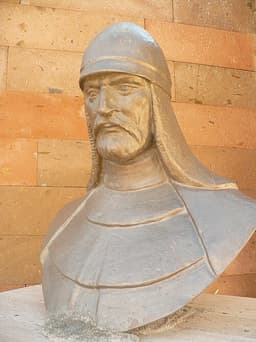
Alp Tigin
Emperor · Medieval
50.5Total
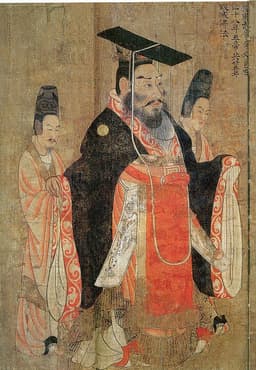
Yuwen Yong
Emperor · Medieval
67.2Total
Basic Information
Born
911
543
Died
963
578
Era
Medieval
Medieval
Nationality
Ghaznavid Empire
China
Occupation
Emperor
Emperor
Civilization
Middle Eastern
Eastern
Score Comparison
Military (10%)
55.0
78.0
Political (20%)
33.6
78.0
Influence (20%)
56.4
58.0
Legacy (20%)
49.2
54.0
Leadership (15%)
50.7
85.0
Strategy (15%)
60.0
69.1
TOTAL
50.5
67.2
Alp Tigin — Complete Timeline
961 AD
Rebellion against the SamanidsPolitical Action◆ Major
Alp Tigin rebelled against the Samanid ruler Mansur I after being passed over for a governorship. He marched from Nishapur to Ghazni, defeating Samanid forces along the way, and established his own rule in eastern Afghanistan.
Impact: regional
963 AD
Consolidation of GhazniPolitical Action
Alp Tigin fortified Ghazni and organized a military state based on slave soldiers (ghilman). He established a stable administration that attracted scholars and merchants, turning Ghazni into a major regional power center.
Impact: regionalconstructive
Yuwen Yong — Complete Timeline
574 AD
Suppression of Buddhism in Northern ZhouReform◆ Major
Emperor Wu of Northern Zhou (Yuwen Yong) ordered the suppression of Buddhism, confiscating monastic lands, forcing monks and nuns to return to lay life, and destroying temples. He aimed to increase state revenue and military manpower, strengthening the state.
Northern ZhouBuddhist PersecutionReform
Impact: nationaldestructive
577 AD
Conquest of Northern QiWar
Emperor Wu led a successful campaign against the rival Northern Qi dynasty, conquering its territory and unifying northern China under Northern Zhou. This victory ended the division of the north and set the stage for the Sui dynasty's unification of all China.
Northern ZhouUnificationNorthern Qi
Impact: regionalconstructive
578 AD
Death during campaign against the TurksWar◆ Major
Emperor Wu died of illness while leading a campaign against the G
Northern ZhouMilitary CampaignDeath
Impact: regionaltragic
Expert Analysis
Alp Tigin vs Yuwen Yong
### The Slave Who Built an Empire and the Emperor Who Broke a Faith
In the year 963, two men died on opposite ends of Asia, leaving behind legacies as different as the worlds they ruled. One was a Turkic slave who, through sheer audacity, carved a kingdom from the ruins of a decaying empire. The other was a Chinese emperor who, with iron discipline, unified a fractured north and then dared to challenge the heavens themselves. Alp Tigin, the founder of the Ghaznavid dynasty, and Yuwen Yong, Emperor Wu of Northern Zhou, never met. Yet their lives pose a haunting question: What separates a brilliant opportunist from a true architect of history?
**Origins**
Alp Tigin entered the world in 911, a Turkic boy born into the steppe traditions of Central Asia, but his path was not that of a chieftain’s son. He was a slave—a *ghulam*, purchased and trained for war in the Samanid Empire. His rise was a testament to the brutal meritocracy of the Islamic world, where a man with no lineage could become a commander if he wielded a sword well enough. By the 950s, he was a general in Nishapur, a powerful figure in a court rife with intrigue.
Yuwen Yong, born in 543, was a prince of the Xianbei-led Northern Zhou dynasty, a state born from the chaos of the Sixteen Kingdoms. His father and brother had both been emperors, but their family’s rule was a precarious perch above a sea of rival generals and Buddhist monasteries that hoarded wealth and men. Where Alp Tigin clawed his way upward from nothing, Yuwen Yong was handed a throne—but one balanced on a knife’s edge.
**Rise to Power**
In 961, Alp Tigin’s world broke. The Samanid ruler Mansur I passed him over for the governorship of Khorasan, a slight that could have meant exile or death. Instead, Alp Tigin rebelled. He marched from Nishapur with his loyal slave soldiers, a force bound not by blood but by contract and loyalty. When his rebellion failed to topple the Samanids, he did not flee into obscurity. He retreated east to the fortress city of Ghazni, in modern Afghanistan. There, in 963, he consolidated power, fortifying the city and organizing a military state built entirely on *ghilman*—slave soldiers who owed him everything. It was a kingdom forged from a defeat, a gambler’s last roll of the dice.
Yuwen Yong’s rise was slower, more deliberate. He became emperor of Northern Zhou in 560, but real power eluded him for years, held by his cousin Yuwen Hu, a regent who had murdered his brothers. For a decade, Wu played the patient, deferential puppet. Then, in 572, he struck. In a carefully planned coup, he killed Yuwen Hu and seized full control. Where Alp Tigin’s path was a dramatic break, Yuwen Yong’s was a silent, calculated severing of a rotten branch.
**Leadership & Governance**
Alp Tigin’s rule was a masterclass in improvisation. He had no grand ideology, no mandate from heaven. His Ghazni was a fortress state, a machine for war and extraction. He relied on his slave soldiers, men who had no local ties and thus no reason to betray him. His political wisdom was pragmatic: he paid tribute to the Samanids when necessary, raided their neighbors when possible. His military genius was in mobility and loyalty, not grand strategy. The historian’s scores reflect this: a middling 48.6 for military, 50.7 for politics. He was a survivor, not a conqueror.
Yuwen Yong was something else entirely. With a military score of 74.6 and a strategy rating of 81.8, he was a systematic thinker. In 574, he issued an edict that shook China: the suppression of Buddhism. He confiscated monastic lands, forced monks back into lay life, and melted down statues for coin. It was not mere bigotry; it was state-building. Buddhism had become a parallel economy, draining tax revenue and manpower. By breaking its power, he centralized the state and filled his treasury. Then, in 577, he launched a campaign against the rival Northern Qi dynasty. He conquered it in a single, decisive year, unifying northern China under Northern Zhou’s banner. His leadership score of 76.9 reflects a man who commanded respect, not just fear.
**Triumph & Tragedy**
Alp Tigin’s greatest triumph was Ghazni itself—a kingdom born from a rebellion that should have ended him. He died in 963, still in his fortress, his dynasty secure enough to pass to his son. But his tragedy was that he built only a shell. His state depended entirely on him; without a grander vision, it would later be eclipsed by the great Mahmud of Ghazni, his more famous successor. Alp Tigin’s legacy score of 62.1 is a testament to a foundation, not a monument.
Yuwen Yong’s triumph was the conquest of Northern Qi in 577, a campaign that showcased his strategic brilliance. He personally led his armies, sharing their hardships, and his victory was total. But his tragedy came in 578, when he died of illness while campaigning against the Göktürks. He was only 35. His death cut short Northern Zhou’s expansion, and within three years, his dynasty fell to a usurper who founded the Sui dynasty, which would finally unify all of China. Yuwen Yong’s legacy score of 68.6 reflects a man who achieved greatness but never saw its fruit.
**Character & Destiny**
Alp Tigin was a pragmatist, a man who adapted to circumstance. His personality was shaped by the precariousness of his rise—he trusted only his soldiers, hoarded power, and thought in terms of survival. Destiny, for him, was a gamble he won. Yuwen Yong was a visionary, a reformer who saw the grand arc of history and tried to bend it. His suppression of Buddhism and unification of the north were acts of will, not desperation. But his early death was a cruel reminder that even the most brilliant plans can be undone by a fever.
**Legacy**
Alp Tigin left behind a dynasty, but one that would be remembered for its later, greater rulers. He is a footnote in Ghaznavid history, a slave who made himself a king. Yuwen Yong, by contrast, is a pivotal figure in Chinese history—the man who broke Buddhism’s power, unified the north, and paved the way for the Sui and Tang dynasties. Yet he is often overshadowed by the emperors who followed.
**Conclusion**
Standing at the edge of their worlds, Alp Tigin and Yuwen Yong embody two paths to power. One was a slave who seized a chance; the other was an emperor who seized a destiny. Their differences are not just in their scores—56.5 versus 74.0—but in the scale of their ambition. Alp Tigin built a fortress; Yuwen Yong built a foundation for an empire. One died in his bed, his kingdom intact; the other died on campaign, his vision incomplete. In the end, history rewards not just survival, but the audacity to remake the world. And that, perhaps, is the truest measure of a ruler.
Rankings
🥇
Yuwen YongLeader
Mil: 78.0Pol: 78.0Inf: 58.0
67.2
🥈
Alp Tigin
Mil: 55.0Pol: 33.6Inf: 56.4
50.5
+16.7 behind
How This Comparison Works
Algorithm
Each figure is scored on 6 dimensions (0—100 scale) based on structured historical data: Military (10%), Political (20%), Influence (20%), Legacy (20%), Leadership (15%), Strategy (15%). The weighted total produces the final ranking.
Data Sources
Scores are computed from structured sub-indicators in the database. Scale factors adjust for era (Ancient ×0.85, Modern ×1.0) and civilization size (Eastern ×1.05, Other ×0.80) to account for differences in population and military scale.
Maximum 3 Figures
Comparisons are limited to 2—3 figures to ensure readability and statistical meaningfulness.
Error Margins
±5 points per dimension — Sub-scores are derived from historical records with inherent uncertainty. Two figures within 5 points on a dimension should be considered roughly equivalent in that area.
Total Score Accuracy
±3 points overall — The weighted combination of 6 dimensions produces a total score with approximately ±3 points of uncertainty. Differences of less than 3 points are not statistically significant— the figures are effectively tied.
Known Limitations
- Historical records are incomplete and uneven across civilizations
- Figures from oral-tradition societies may be underrepresented
- Occupation labels can misclassify multi-role figures
- Scores measure capability and impact, not moral character
- Quantitative scoring is a comparison tool, not absolute truth
Capability Radar
Military (10%) — Battles & Warfare
Battles
45
75
Win Rate
50
80
Expansion
50
80
Political (20%) — Governance & Reform
Reform
20
85
Diplomacy
30
70
Economy
20
75
Influence (20%) — Cultural & Global Reach
Cultural
30
40
Global
30
40
Legacy (20%) — Historical Impact
Historical
45
65
Longevity
40
50
Leadership (15%) — Power & Stability
Tenure
25
60
Stability
25
70
Strategy (15%) — Tactics & Innovation
Strategy
45
75
Tactics
40
70
Reform
30
85
Similar Comparisons
Comments & Discussion
GHAZNAVI_GUERRILLA6/16/2026
Alp Tigin wasn't an architect of history, just a lucky warlord. He fled west after failing in the Samanid court, bribed a few tribes, and plundered Ghazni—a backwater. Empires don't fall from slave revolts without vision; the Ghaznavids only mattered later under Mahmud. Compare that to Yuwen Yong’s dismantling of Buddhism in 574: he confiscated monastery lands, conscripted 30,000 monks into armies, and tightened control over the north. That’s systemic power, not desert banditry.
六合铁腕6/16/2026
宇文邕禁佛不是宗教迫害,是务实到极致的治国手术。北周府兵制需要人口和土地,而寺庙却在掠占免税田产、窝藏壮丁。574年他下令还俗三百万僧尼,把寺产充公,这是铁腕改革,背后是七百年的经济策略。反观阿尔普特勤,所谓建立帝国不过是篡位后狼狈逃窜,靠收买游牧部落苟延残喘。一个剁肉改制,一个抢滩混圈,差别在胆识和制度。
MERITOCRACY_MADMAN6/16/2026
Call Alp Tigin a slave? That demeans the era’s grit. The \*ghulam\* system wasn't pity—it was a pipeline for talent. By 962, he took Ghazni with 1,700 cavalry, not by luck but by outfoxing Samanid rivals. Records don't confirm him seizing the throne by force; his son founded the dynasty proper. Yuwen Yong, though, purged 40% of state monks in 574, starving the clergy to feed his armies. Which is more impressive: a desperate escape or a calculated economic coup? I’ll take the slave who gambled on
西域刀客6/16/2026
别把阿尔普特勤捧成英雄,他在撒马尔罕的政变失败,才逃到阿富汗打游击。而宇文邕在577年攻灭北齐,统一北方时,手下府兵不过五万,却靠着禁佛后整合的十郡资源打出闪电战。史上一条铁律:开国之君不是靠卖惨起家,就是靠削宗固权。伽色尼王朝的本质是军阀割据,北周却是改革帝国的模板。别被‘奴隶建帝国’的鸡汤骗了。
CLASSICS_CONTRAST6/16/2026
The comparison fails on historical weight. Yuwen Yong’s reputation as a scholar-emperor is built on his meticulous \*Zhoushu\* records: he studied Confucian classics, reformed the calendar in 565, and banned extravagant Buddhist funerals to curb corruption. Alp Tigin’s legacy is a \*t