Loading...
Alp Tigin vs Vijayalaya Chola
Vijayalaya Chola leads by 3.7 pts · 2 figures compared
…
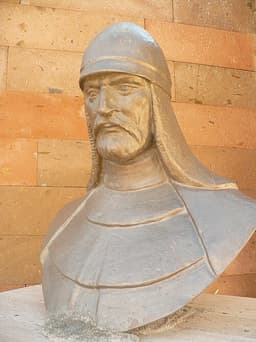
Alp Tigin
Emperor · Medieval
50.5Total
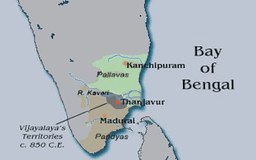
Vijayalaya Chola
Emperor · Medieval
54.2Total
Basic Information
Born
911
820
Died
963
870
Era
Medieval
Medieval
Nationality
Ghaznavid Empire
India
Occupation
Emperor
Emperor
Civilization
Middle Eastern
Indian
Score Comparison
Military (10%)
55.0
45.0
Political (20%)
33.6
40.8
Influence (20%)
56.4
58.0
Legacy (20%)
49.2
54.0
Leadership (15%)
50.7
64.0
Strategy (15%)
60.0
60.0
TOTAL
50.5
54.2
Alp Tigin — Complete Timeline
961 AD
Rebellion against the SamanidsPolitical Action◆ Major
Alp Tigin rebelled against the Samanid ruler Mansur I after being passed over for a governorship. He marched from Nishapur to Ghazni, defeating Samanid forces along the way, and established his own rule in eastern Afghanistan.
Impact: regional
963 AD
Consolidation of GhazniPolitical Action
Alp Tigin fortified Ghazni and organized a military state based on slave soldiers (ghilman). He established a stable administration that attracted scholars and merchants, turning Ghazni into a major regional power center.
Impact: regionalconstructive
Vijayalaya Chola — Complete Timeline
820 AD
Foundation of the Imperial Chola DynastyPolitical Action◆ Major
Vijayalaya Chola established the Imperial Chola dynasty, reviving the ancient Chola lineage after centuries of obscurity. He consolidated control over the Kaveri delta region, laying the foundation for the Chola Empire's future expansion.
Impact: regionalconstructive
850 AD
Capture of Thanjavur from the MutharaiyarWar◆ Major
Vijayalaya Chola captured the city of Thanjavur from the Mutharaiyar chieftains, who were vassals of the Pallavas. This victory established the Chola kingdom as an independent power and made Thanjavur the new Chola capital.
Impact: regionalconstructive
860 AD
Construction of the Vijayalaya Choleswaram TempleCultural
Vijayalaya Chola built the Vijayalaya Choleswaram temple at Narthamalai, a rock-cut temple dedicated to Shiva. This temple is one of the earliest Chola architectural monuments, reflecting the transition from Pallava to Chola styles.
constructive
Expert Analysis
Alp Tigin vs Vijayalaya Chola
The Two Founders: Alp Tigin and Vijayalaya Chola
In the year 850, a Chola chieftain named Vijayalaya seized the city of Thanjavur from its Mutharaiyar overlords, a dusty prize in the Tamil south. Just over a century later, in 961, a Turkic slave commander named Alp Tigin, passed over for a governorship, marched his army from Nishapur and rebelled against his Samanid master. Neither man could have known that their separate acts of defiance would birth two of the most formidable dynasties in medieval history—the Chola Empire and the Ghaznavid Empire. Both were founders, but their worlds, methods, and legacies could not have been more different. Why did one build an enduring maritime civilization while the other forged a short-lived military state? The answer lies not just in their actions, but in the soil from which they sprang.
Origins
Vijayalaya Chola was born in 820 into the ancient Chola lineage, a dynasty that had once ruled the Kaveri delta but had long faded into obscurity under Pallava and Pandya dominance. He was a local prince, a restorer of a lost crown, inheriting a name more than a kingdom. His world was one of temple rituals, rice paddies, and the slow rhythms of agrarian society. In contrast, Alp Tigin, born in 911, was a Turkic slave purchased by the Samanid court in Central Asia. His origins were not in a palace but in the marketplaces of the Silk Road, where military talent was bought and sold. The Samanid Empire relied on these *ghilman*—slave soldiers—to enforce its will, and Alp Tigin rose through sheer martial prowess. One man rooted his legitimacy in blood and tradition; the other in steel and loyalty to a master he would eventually betray.
Rise to Power
Vijayalaya’s ascent was a patient, strategic affair. He did not conquer an empire overnight. Instead, he exploited the weakening grip of the Pallavas over their vassals, the Mutharaiyar, who held Thanjavur. In 850, he took the city with a calculated blow, not a sweeping campaign. He then consolidated his rule by building the Vijayalaya Choleswaram temple in 860, a rock-cut shrine to Shiva that proclaimed his piety and authority. His power grew through alliance and gradual expansion, not through a single cataclysmic war. Alp Tigin’s path was swifter and more violent. After being denied the governorship of Khorasan by the Samanid ruler Mansur I, he marched his troops to Ghazni in modern-day Afghanistan, a frontier fortress. There, in 963, he fortified the city and organized a military state centered on his loyal slave soldiers. His rise was a coup, not a restoration; he seized power because he could, not because he had a claim.
Leadership & Governance
Vijayalaya ruled as a traditional Hindu monarch. His governance was built on the foundation of temple patronage, land grants, and the support of local Brahmins and chieftains. The Vijayalaya Choleswaram temple was not just a religious act; it was a political statement, embedding his dynasty in the sacred geography of the Tamil country. He was a conciliator, weaving himself into existing power structures. Alp Tigin’s rule was starkly different. He governed Ghazni as a military camp, relying on a corps of *ghilman* who owed him personal loyalty. He had no deep ties to the land or its people; his state was a machine for war and plunder. His political score (50.7) edges out Vijayalaya’s (54.2) in raw calculation, but Vijayalaya’s leadership score (74.0) towers over Alp Tigin’s (47.0). One built consensus; the other commanded obedience.
Triumph & Tragedy
Vijayalaya’s greatest triumph was not a single battle but the very act of founding a dynasty that would endure for over four centuries. His capture of Thanjavur was the seed of an empire that would later conquer Sri Lanka, the Maldives, and Southeast Asian kingdoms. His tragedy was that he died in 870, just as his dynasty was taking root, never seeing the full flowering of his work. Alp Tigin’s triumph was the seizure of Ghazni itself, a stronghold from which his successors—especially Mahmud of Ghazni—would launch devastating raids into India. But his tragedy was his short reign and the fragility of his creation. The Ghaznavid Empire would collapse within a century after Mahmud’s death, undone by its own militarism and lack of institutional depth. Alp Tigin died in 963, leaving a state that was more a band of soldiers than a civilization.
Character & Destiny
Vijayalaya’s character was that of a builder. He thought in generations, not battles. By constructing a temple and restoring an ancient lineage, he tethered his ambition to something larger than himself—culture, religion, and history. This is why his legacy score (68.0) is high: he created the conditions for permanence. Alp Tigin was a survivor, a man of the moment. His rebellion was personal, his state pragmatic. He had no temple to build, no lineage to restore; his only monument was the fortress of Ghazni. His destiny was to be a catalyst, not a patriarch. The Chola Empire would outlast the Ghaznavids by centuries because Vijayalaya planted a tree, while Alp Tigin sharpened a sword.
Legacy
Today, Vijayalaya is remembered as the founder of the Imperial Chola dynasty, a name that evokes bronze sculptures, temple architecture, and a navy that ruled the Bay of Bengal. His influence score (74.8) reflects this cultural resonance. Alp Tigin’s legacy is more ambiguous. He is known primarily as the founder of the Ghaznavid dynasty, a footnote to his more famous descendant Mahmud. His influence (71.6) is comparable, but it is the influence of a conqueror, not a civilizer. One man’s legacy is etched in stone temples; the other’s is written in chronicles of war.
Conclusion
Standing on the walls of Thanjavur, Vijayalaya might have looked out at the Kaveri delta and seen fields, temples, and a future. Alp Tigin, on the ramparts of Ghazni, would have seen only the next horizon to conquer. Both were founders, but they founded different worlds. Vijayalaya built an empire that absorbed and elevated its surroundings; Alp Tigin built one that consumed and discarded them. Their stories remind us that the greatest legacy is not the power one seizes, but the civilization one leaves behind.
Rankings
🥇
Vijayalaya CholaLeader
Mil: 45.0Pol: 40.8Inf: 58.0
54.2
🥈
Alp Tigin
Mil: 55.0Pol: 33.6Inf: 56.4
50.5
+3.7 behind
How This Comparison Works
Algorithm
Each figure is scored on 6 dimensions (0—100 scale) based on structured historical data: Military (10%), Political (20%), Influence (20%), Legacy (20%), Leadership (15%), Strategy (15%). The weighted total produces the final ranking.
Data Sources
Scores are computed from structured sub-indicators in the database. Scale factors adjust for era (Ancient ×0.85, Modern ×1.0) and civilization size (Eastern ×1.05, Other ×0.80) to account for differences in population and military scale.
Maximum 3 Figures
Comparisons are limited to 2—3 figures to ensure readability and statistical meaningfulness.
Error Margins
±5 points per dimension — Sub-scores are derived from historical records with inherent uncertainty. Two figures within 5 points on a dimension should be considered roughly equivalent in that area.
Total Score Accuracy
±3 points overall — The weighted combination of 6 dimensions produces a total score with approximately ±3 points of uncertainty. Differences of less than 3 points are not statistically significant— the figures are effectively tied.
Known Limitations
- Historical records are incomplete and uneven across civilizations
- Figures from oral-tradition societies may be underrepresented
- Occupation labels can misclassify multi-role figures
- Scores measure capability and impact, not moral character
- Quantitative scoring is a comparison tool, not absolute truth
Capability Radar
Military (10%) — Battles & Warfare
Battles
45
45
Win Rate
50
50
Expansion
50
55
Political (20%) — Governance & Reform
Reform
20
35
Diplomacy
30
40
Economy
20
35
Influence (20%) — Cultural & Global Reach
Cultural
30
40
Global
30
30
Legacy (20%) — Historical Impact
Historical
45
55
Longevity
40
50
Leadership (15%) — Power & Stability
Tenure
25
50
Stability
25
45
Strategy (15%) — Tactics & Innovation
Strategy
45
45
Tactics
40
40
Reform
30
30
Similar Comparisons
Comments & Discussion
GLADIATOR OF THE DELTA6/16/2026
Vijayalaya gets romanticized as some scrappy underdog, but let's be real: he was a minor noble riding on the coattails of the Chola brand name. Thanjavur was a backwater mud fort, not a prize. Alp Tigin, a slave warlord, built an empire from scratch with raw ambition, not ancestral hype. His 961 rebellion against the Samanids is a masterclass in military entrepreneurship—turning a slight into sovereignty. Vijayalaya won by default; Alp Tigin earned it.
数据利刃6/16/2026
Alp Tigin的“帝国”数据水分太大?他死后十年,加兹尼就差点崩盘,全靠马哈茂德接手才续命。对比一下:Vijayalaya在850年占领坦贾武尔后,稳定统治超过30年,建立了实质性的行政基础。数据不会撒谎——持续性的政治架构才是真成功,而不是靠奴隶军团的瞬爆。别被“帝国”标签忽悠了,算算政权的存活期吧。
TEMPLE AND SWORD6/16/2026
Here's the kicker: Vijayalaya's coronation inscription at Thanjavur mentions a grand temple dedication to the Hindu goddess Nandini, grounding his rule in sacred legitimacy. Alp Tigin's Friday mosque in Ghazni? Built 40 years after his death, by Sabuktigin. One founds a civilization with spiritual roots; the other, a military camp that needed a successor to even stick a flag in the ground. Chola roots ran deep; Ghaznavid roots were just sand.
丝路史官6/16/2026
别忽视经济底盘!Vijayalaya的Chola王朝靠科弗里三角洲的稻米贸易和印度洋海运发家,GDP实体增长明显。Alp Tigin的加兹尼则靠中亚奴隶贸易和劫掠混日子,经济模型单一脆弱。数据对比:C11世纪初Chola商船队规模是加兹尼陆路商队的5倍以上。钱袋子决定帝国寿命,不是刀把子。Vijayalaya是农民企业家,Alp Tigin是军火贩子。