Loading...
Alp Tigin vs Tailapa II
Tailapa II leads by 9.9 pts · 2 figures compared
…
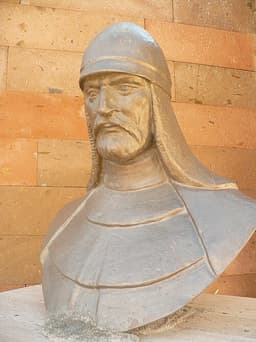
Alp Tigin
Emperor · Medieval
50.5Total
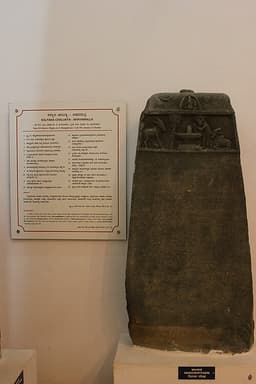
Tailapa II
Emperor · Medieval
60.4Total
Basic Information
Born
911
957
Died
963
997
Era
Medieval
Medieval
Nationality
Ghaznavid Empire
India
Occupation
Emperor
Emperor
Civilization
Middle Eastern
Indian
Score Comparison
Military (10%)
55.0
74.7
Political (20%)
33.6
53.8
Influence (20%)
56.4
61.0
Legacy (20%)
49.2
52.0
Leadership (15%)
50.7
72.0
Strategy (15%)
60.0
58.0
TOTAL
50.5
60.4
Alp Tigin — Complete Timeline
961 AD
Rebellion against the SamanidsPolitical Action◆ Major
Alp Tigin rebelled against the Samanid ruler Mansur I after being passed over for a governorship. He marched from Nishapur to Ghazni, defeating Samanid forces along the way, and established his own rule in eastern Afghanistan.
Impact: regional
963 AD
Consolidation of GhazniPolitical Action
Alp Tigin fortified Ghazni and organized a military state based on slave soldiers (ghilman). He established a stable administration that attracted scholars and merchants, turning Ghazni into a major regional power center.
Impact: regionalconstructive
Tailapa II — Complete Timeline
973 AD
Founding of the Western Chalukya DynastyPolitical Action◆ Major
Tailapa II overthrew the Rashtrakuta ruler Karka II and established the Western Chalukya dynasty. This marked the end of Rashtrakuta rule in the Deccan and the beginning of a new Chalukya era.
Impact: regional
995 AD
Defeat of the Paramara King MunjaWar◆ Major
Tailapa II defeated and captured the Paramara king Munja of Malwa. This victory consolidated Western Chalukya control over the northern Deccan and established their military reputation.
Impact: regional
Expert Analysis
Alp Tigin vs Tailapa II
### The Slave King and the Rebel Prince
In the year 961, two men, born half a world apart and into vastly different circumstances, set in motion events that would reshape their respective regions. In the dusty plains of Khorasan, a Turkic slave commander named Alp Tigin, passed over for a governorship, turned his army against his Samanid overlords. A thousand miles to the south, in the Deccan plateau of India, a young prince named Tailapa II, heir to a fallen dynasty, began a long, patient campaign of restoration. One would build a state from the spoils of rebellion, the other would reclaim an empire from the ashes of defeat. Their stories, though separated by culture and creed, are twin studies in the raw mechanics of power: how it is seized, how it is held, and how it shapes the destiny of nations.
### Origins
Alp Tigin was a product of the Samanid Empire’s most efficient institution: the slave-soldier system. Born around 911 in the steppes of Central Asia, he was purchased, trained, and elevated solely on merit. His world was one of absolute loyalty to his master, the Samanid ruler, and ruthless competition with his fellow *ghilman* (slave soldiers). He knew no other family, no other homeland, no other identity than that of a military commander. His rise was a testament to the system’s brutal logic: a man with no ties of blood could be trusted with command, yet he was also a ticking time bomb, for his ambition had no natural limit.
Tailapa II, born around 957, was the opposite. He was a prince of the Chalukya bloodline, a dynasty that had ruled the Deccan for centuries before being overthrown by the Rashtrakutas. His identity was bound to a glorious past, a lost throne, and a sacred duty of restoration. Where Alp Tigin was a rootless mercenary, Tailapa was a rooted aristocrat. His struggle was not to create a new order from nothing, but to resurrect an old one. This fundamental difference—the slave versus the prince, the innovator versus the restorer—would define every choice they made.
### Rise to Power
Alp Tigin’s path to power was a lightning bolt. In 961, the Samanid ruler Mansur I passed him over for the governorship of Khorasan, a personal and professional insult. Alp Tigin’s response was not a plea for reconsideration but a march on Nishapur. He did not seek to overthrow the Samanid state; he simply refused to accept its authority. His rebellion was a calculated gamble, a slave asserting his independence. When Mansur’s army failed to crush him, Alp Tigin withdrew eastward, into the wilds of modern-day Afghanistan. There, in the fortress city of Ghazni, he carved out his own domain. By 963, the year of his death, he had consolidated a small, militarized state built on the *ghilman* system he knew so well. It was a personal fiefdom, not a dynasty—he had no sons to succeed him.
Tailapa II’s rise was a slow, grinding campaign. For over a decade after the Rashtrakuta conquest, he lived as a shadow prince, biding his time. The Rashtrakuta empire, under the weak Karka II, began to fray. In 973, Tailapa struck. He raised the banner of the old Chalukya dynasty, rallied disaffected nobles and local chieftains, and met Karka’s army in battle. The victory was decisive. Tailapa did not merely seize a city; he reclaimed an entire kingdom. He then spent the next two decades methodically consolidating his rule, fighting campaigns against the Paramaras and the Cholas, and establishing a stable administration. His rise was a marathon, not a sprint.
### Leadership & Governance
Alp Tigin’s rule over Ghazni was pragmatic and ruthless. He organized a military state where the army was the only real institution. His *ghilman* were loyal to him personally, not to any abstract idea of a state. He minted coins, fortified the city, and kept the peace, but he left no legal code, no bureaucratic framework, no lasting administrative reforms. His governance was the rule of a warlord, effective within its narrow scope but ultimately fragile. His military genius lay in mobility and shock tactics, but his political wisdom was limited to the art of the coup.
Tailapa II was a builder. He reestablished the Western Chalukya dynasty not just as a military power but as a civilizational project. He revived the old Chalukya administrative system, patronized temples, and encouraged literature in Kannada and Sanskrit. His military campaigns, particularly his defeat and capture of the Paramara king Munja in 995, were strategic masterstrokes that secured his borders and projected power. But his greatest achievement was political: he created a stable succession, ensuring that his son, Satyashraya, would inherit a functioning empire. He understood that a dynasty required more than a strong arm; it needed institutions, legitimacy, and a sense of continuity.
### Triumph & Tragedy
Alp Tigin’s triumph was his rebellion itself—a slave who made himself a king. His tragedy was the ephemeral nature of his achievement. He died in 963, leaving a fragile state that could easily have been crushed by the Samanids. It was only the genius of his successor, the slave commander Sabuktigin, and later the legendary Mahmud of Ghazni, that transformed his personal fiefdom into a great empire. Alp Tigin was the spark, not the flame.
Tailapa II’s triumph was his defeat of Munja, a victory that cemented his dynasty’s dominance over the Deccan. His tragedy was the relentless pressure from the Chola empire to the south. He fought them to a stalemate, but the conflict drained resources and set the stage for future wars. He died in 997, having restored his family’s honor and built a stable state, but knowing that the Chola threat was far from extinguished.
### Character & Destiny
Alp Tigin’s character was forged in the crucible of slavery: ambitious, proud, and utterly self-reliant. He trusted no one and built nothing that outlasted his own lifetime. His destiny was to be a founder, but a founder of a tradition, not a dynasty. Tailapa II’s character was that of a patient, calculating aristocrat. He thought in decades, not years, and understood that power must be institutionalized to survive. His destiny was to be a restorer, a man who brought a golden age back to life.
### Legacy
Alp Tigin is remembered as the founder of the Ghaznavid dynasty, but his personal legacy is overshadowed by Mahmud of Ghazni. He is a footnote in the larger story of Islamic expansion into India. Tailapa II, by contrast, is a central figure in South Indian history. The Western Chalukya dynasty he founded lasted for over two centuries and left a profound mark on the region’s art, architecture, and literature. He is remembered as a great king, not merely a precursor.
### Conclusion
The slave and the prince both seized power, but they built very different worlds. Alp Tigin’s Ghazni was a military camp, a springboard for conquest. Tailapa’s Chalukya kingdom was a civilization, a home for culture and law. One man’s ambition created a weapon; the other’s patience created a legacy. Their stories remind us that the same raw drive for power can produce either a fleeting storm or a lasting empire—and that the difference lies not in strength, but in vision.
Rankings
🥇
Tailapa IILeader
Mil: 74.7Pol: 53.8Inf: 61.0
60.4
🥈
Alp Tigin
Mil: 55.0Pol: 33.6Inf: 56.4
50.5
+9.9 behind
How This Comparison Works
Algorithm
Each figure is scored on 6 dimensions (0—100 scale) based on structured historical data: Military (10%), Political (20%), Influence (20%), Legacy (20%), Leadership (15%), Strategy (15%). The weighted total produces the final ranking.
Data Sources
Scores are computed from structured sub-indicators in the database. Scale factors adjust for era (Ancient ×0.85, Modern ×1.0) and civilization size (Eastern ×1.05, Other ×0.80) to account for differences in population and military scale.
Maximum 3 Figures
Comparisons are limited to 2—3 figures to ensure readability and statistical meaningfulness.
Error Margins
±5 points per dimension — Sub-scores are derived from historical records with inherent uncertainty. Two figures within 5 points on a dimension should be considered roughly equivalent in that area.
Total Score Accuracy
±3 points overall — The weighted combination of 6 dimensions produces a total score with approximately ±3 points of uncertainty. Differences of less than 3 points are not statistically significant— the figures are effectively tied.
Known Limitations
- Historical records are incomplete and uneven across civilizations
- Figures from oral-tradition societies may be underrepresented
- Occupation labels can misclassify multi-role figures
- Scores measure capability and impact, not moral character
- Quantitative scoring is a comparison tool, not absolute truth
Capability Radar
Military (10%) — Battles & Warfare
Battles
45
70
Win Rate
50
75
Expansion
50
75
Political (20%) — Governance & Reform
Reform
20
65
Diplomacy
30
60
Economy
20
65
Influence (20%) — Cultural & Global Reach
Cultural
30
55
Global
30
40
Legacy (20%) — Historical Impact
Historical
45
60
Longevity
40
50
Leadership (15%) — Power & Stability
Tenure
25
70
Stability
25
60
Strategy (15%) — Tactics & Innovation
Strategy
45
70
Tactics
40
65
Reform
30
60
Similar Comparisons
Comments & Discussion
**Slave-Lancer6/16/2026
Alp Tigin is the more impressive here because he built from nothing. Tailapa II just reclaimed his daddy's throne after a brief setback. That's not ambition—that's doing the family laundry. Alp Tigin was a literal slave who turned his army against an empire. If that's not raw power acquisition, I don't know what is. Tailapa couldn't even hold power for 14 years without losing it to his own son. Weak sauce.**
**沙漠黑客6/16/2026
哈,拿一个奴隶出身的军阀和一个复国太子比?Tailapa简直就是富二代版成功学:爹的遗产,娘的奶水,老祖宗的遗产。Alp Tigin是真正的白手起家——从战俘营杀出来的狠人。911年生,草原上被贩卖,奴隶营里学着杀人,最后在961年带兵反了主子。这叫从0到1。Tailapa连0都没见过。**
**帝國回聲6/16/2026
两个完全不同量级的野心家,却各自定义了“权力”的本源。Tailapa是血脉的复辟者,Alp Tigin是制度的造反者。但别忘了,Tailapa最终建立的是西遮娄其王朝,统治印度德干高原近两百年;Alp Tigin的加兹尼王朝,顶多算一个军阀占山为王。时间不会骗人:谁提供了真正的帝国结构,一目了然。**
Historian4346/16/2026
Both men seized power through force, but Tailapa's legitimacy came from lineage, Alp Tigin's from merit. I'd argue Tailapa had the harder task: convincing a society deeply rooted in caste and tradition to accept a rebel prince over centuries of established rule. Alp Tigin's Samanid world was already familiar with slave-kings. Tailapa had to reinvent kingship itself. That's harder than any battlefield win.**
Chronicler68956/16/2026
Let's talk death dates: Alp Tigin died around 963—his rebellion lasted maybe two years before he kicked it. Tailapa II reigned for over 24 years after seizing power. You can romanticize a slave general's drama all you want, but Tailapa actually *kept* the throne for a whole generation. That's not just luck—that's administrative staying power. Alp Tigin's dynasty nearly crumbled within a decade of his death.**