Loading...
Alp Tigin vs Taejo of Joseon
Taejo of Joseon leads by 19.9 pts · 2 figures compared
…
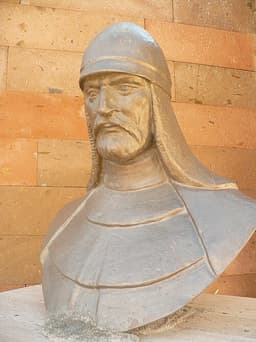
Alp Tigin
Emperor · Medieval
50.5Total
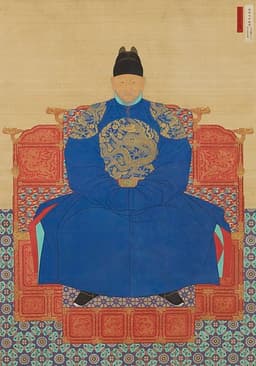
Taejo of Joseon
Emperor · Medieval
70.4Total
Basic Information
Born
911
1335
Died
963
1408
Era
Medieval
Medieval
Nationality
Ghaznavid Empire
Korea
Occupation
Emperor
Emperor
Civilization
Middle Eastern
Eastern
Score Comparison
Military (10%)
55.0
74.7
Political (20%)
33.6
65.0
Influence (20%)
56.4
65.0
Legacy (20%)
49.2
80.0
Leadership (15%)
50.7
72.0
Strategy (15%)
60.0
61.2
TOTAL
50.5
70.4
Alp Tigin — Complete Timeline
961 AD
Rebellion against the SamanidsPolitical Action◆ Major
Alp Tigin rebelled against the Samanid ruler Mansur I after being passed over for a governorship. He marched from Nishapur to Ghazni, defeating Samanid forces along the way, and established his own rule in eastern Afghanistan.
Impact: regional
963 AD
Consolidation of GhazniPolitical Action
Alp Tigin fortified Ghazni and organized a military state based on slave soldiers (ghilman). He established a stable administration that attracted scholars and merchants, turning Ghazni into a major regional power center.
Impact: regionalconstructive
Taejo of Joseon — Complete Timeline
1380 AD
Battle of HwangsanWar
General Yi Seong-gye defeated a Japanese pirate (wokou) force at Hwangsan. This victory enhanced his military reputation and demonstrated his capability as a commander.
WokouGoryeo Military
1388 AD
Wihwado RetreatPolitical Action
General Yi Seong-gye, ordered to invade the Ming dynasty's Liaodong region, turned his army back at Wihwado Island. This act of defiance against the Goryeo court led to a coup that eventually brought him to power.
CoupGoryeo-Ming RelationsPower Shift
Impact: national
1391 AD
Land Reform and the Gwajeon LawReform◆ Major
Taejo implemented the Gwajeon Law, a land reform that redistributed land from the old Goryeo aristocracy to his supporters and the state. This weakened the old elite and strengthened the new Joseon ruling class.
Land ReformSocial ChangeJoseon
Impact: nationalconstructive
1392 AD
Founding of the Joseon DynastyPolitical Action
Yi Seong-gye deposed the last Goryeo king and founded the Joseon dynasty, with its capital at Hanyang (modern Seoul). He established a new ruling class based on Confucian ideology, replacing the Buddhist-influenced Goryeo system.
Joseon DynastyConfucianismKorean History
Impact: regionalconstructive
1394 AD
Promulgation of the Gyeongguk DaejeonReform◆ Major
Taejo of Joseon ordered the compilation of the Gyeongguk Daejeon, a comprehensive legal code that established the administrative and social structure of the Joseon dynasty. This code remained in effect for centuries.
Legal CodeGovernanceConfucianism
Impact: nationalconstructive
Expert Analysis
Alp Tigin vs Taejo of Joseon
# The Rebel and the Reformer: Two Founders Who Shaped Empires
On a windswept island in the Yalu River in 1388, a Korean general made a decision that would echo through centuries. Yi Seong-gye, ordered by his king to invade Ming China, looked at his starving troops and turned them around. Half a world away and four centuries earlier, another commander, Alp Tigin, stood at the gates of Nishapur in 961, humiliated after being denied a governorship by his Samanid master. Both men were about to defy their rulers. Both would found dynasties. But only one would build a state that endured for five hundred years. What separated these two figures—one a Confucian reformer, the other a Turkic slave-soldier—was not merely luck, but a profound difference in vision, circumstance, and the very nature of power in their worlds.
Origins
Yi Seong-gye was born in 1335 into a military family that had served the Goryeo dynasty for generations. His father was a minor official, his mother from a respected clan. Korea in the late 14th century was a kingdom in crisis: Mongol influence had weakened the central government, Japanese pirates ravaged the coasts, and the old aristocracy hoarded land while peasants starved. Yi grew up in this chaos, learning archery and swordsmanship on the frontier, where survival depended on competence, not birthright. He was a practical man, shaped by the battlefield rather than the court.
Alp Tigin, born in 911, came from the steppes of Central Asia. He was a Turkic slave—a *mamluk*—purchased and trained by the Samanid dynasty of Persia. In the Islamic world of the 10th century, such slave soldiers were the backbone of military power. They had no family ties, no local loyalties; their only allegiance was to their master. Alp Tigin rose through this brutal meritocracy, becoming a commander of the Samanid army. But he was also a man of his time: a Turk in a Persian court, a soldier in a world of scholars, a foreigner in a land where legitimacy came from blood and religion.
Rise to Power
Yi Seong-gye’s ascent was gradual, built on victories. In 1380, at the Battle of Hwangsan, he crushed a massive Japanese pirate fleet, personally leading charges and earning the loyalty of his men. His military reputation became his currency. But the turning point came in 1388, when King U of Goryeo ordered him to invade Ming China’s Liaodong region. Yi knew the campaign was suicidal. His army was exhausted, the Ming were too strong, and the king was acting on bad advice. At Wihwado Island, Yi halted, held a council with his officers, and turned back. It was an act of treason—but also of political genius. He framed it as a defense of the kingdom, not a rebellion.
Alp Tigin’s path was more direct. In 961, after being passed over for the governorship of Khorasan, he marched his troops to Nishapur, seized control, and declared his independence. When the Samanid ruler Mansur I sent an army, Alp Tigin retreated east to Ghazni, a remote fortress in what is now Afghanistan. There, in 963, he fortified the city and organized a military state based on his slave soldiers, the *ghilman*. He did not claim kingship; he simply ruled as a warlord, his authority resting on the loyalty of his troops and the wealth of plunder.
Leadership & Governance
Taejo of Joseon, as Yi Seong-gye became in 1392 after deposing the last Goryeo king, was a ruler who thought beyond the sword. His first act was land reform: the Gwajeon Law of 1391 redistributed land from the old aristocracy to his supporters and the peasantry. This was not mere bribery—it was a systematic restructuring of society. By breaking the economic power of the Buddhist monasteries and noble clans, he created a new class of scholar-officials loyal to the throne. He moved the capital to Hanyang (modern Seoul), built a palace, and ordered the compilation of the Gyeongguk Daejeon, a legal code that defined the administration for centuries. His rule was Confucian in spirit: order, hierarchy, and moral education.
Alp Tigin, by contrast, governed as a military chieftain. He controlled Ghazni and the surrounding region through his slave army, rewarding loyalty with land and booty. There was no grand reform, no legal code, no attempt to build institutions. His state was personal—a network of commanders and soldiers bound to him by patronage. He did not even mint coins in his own name. His legitimacy came from his sword, not from any ideology. When he died in 963, his son inherited Ghazni, but the dynasty he founded—the Ghaznavids—would only truly flourish under his slave-turned-successor, Sabuktigin, and later Mahmud of Ghazni.
Triumph & Tragedy
Yi Seong-gye’s greatest triumph was not a battle but a system. He created a dynasty that would rule Korea for 518 years, surviving invasions, coups, and modernization. His tragedy lay in his family. He abdicated in 1398 after a bloody succession struggle between his sons, one of whom killed his own brother. The old general watched his Confucian dream of harmony collapse into fratricide.
Alp Tigin’s triumph was survival itself. A slave who carved out a kingdom in the Hindu Kush, he proved that a man without a pedigree could become a king. His tragedy was that he never fully became one. He died as he had lived—a rebel, not a ruler. His kingdom was small, his legacy uncertain until his successors built upon his foundation.
Character & Destiny
Yi Seong-gye was disciplined and pragmatic. He knew when to fight and when to retreat, when to kill and when to forgive. He surrounded himself with scholars like Jeong Do-jeon, who gave his military power a philosophical justification. His personality was that of a builder: he thought in centuries, not seasons.
Alp Tigin was a creature of the moment. He was bold, even reckless—his rebellion was a gamble that could have ended in his execution. He was also a product of the *mamluk* system, which bred loyalty but also suspicion. He trusted no one fully, and no one trusted him fully. His destiny was to be a founder, but a founder of a house, not a state.
Legacy
Taejo of Joseon is remembered as a national hero in Korea. His dynasty gave the world Hangul, the turtle ships, and a Confucian bureaucracy that lasted into the 20th century. His face is on the 10,000 won note. His capital, Seoul, is one of the world’s great cities. His legal code shaped Korean identity.
Alp Tigin is a footnote in most histories, known only to specialists. The Ghaznavid dynasty he started would later sack Hindu temples and patronize Persian poetry, but his own reign was too short to leave deep marks. His legacy is the model he created: the slave-soldier who becomes a king, a pattern repeated by the Mamluks of Egypt and the Delhi Sultanate.
Conclusion
What drove the difference? Yi Seong-gye had a civilization to build upon—Confucian Korea, with its written language, its bureaucracy, its sense of history. He could imagine a state that outlasted him. Alp Tigin had only the steppe and the sword. He could imagine power, but not institutions. One man founded a dynasty; the other, a dynasty found him. In the end, the rebel who thought like a statesman outlasted the rebel who thought only like a soldier. The lesson is not about who was braver or smarter, but about what each believed was possible. And that, perhaps, is the deepest difference of all.
Rankings
🥇
Taejo of JoseonLeader
Mil: 74.7Pol: 65.0Inf: 65.0
70.4
🥈
Alp Tigin
Mil: 55.0Pol: 33.6Inf: 56.4
50.5
+19.9 behind
How This Comparison Works
Algorithm
Each figure is scored on 6 dimensions (0—100 scale) based on structured historical data: Military (10%), Political (20%), Influence (20%), Legacy (20%), Leadership (15%), Strategy (15%). The weighted total produces the final ranking.
Data Sources
Scores are computed from structured sub-indicators in the database. Scale factors adjust for era (Ancient ×0.85, Modern ×1.0) and civilization size (Eastern ×1.05, Other ×0.80) to account for differences in population and military scale.
Maximum 3 Figures
Comparisons are limited to 2—3 figures to ensure readability and statistical meaningfulness.
Error Margins
±5 points per dimension — Sub-scores are derived from historical records with inherent uncertainty. Two figures within 5 points on a dimension should be considered roughly equivalent in that area.
Total Score Accuracy
±3 points overall — The weighted combination of 6 dimensions produces a total score with approximately ±3 points of uncertainty. Differences of less than 3 points are not statistically significant— the figures are effectively tied.
Known Limitations
- Historical records are incomplete and uneven across civilizations
- Figures from oral-tradition societies may be underrepresented
- Occupation labels can misclassify multi-role figures
- Scores measure capability and impact, not moral character
- Quantitative scoring is a comparison tool, not absolute truth
Capability Radar
Military (10%) — Battles & Warfare
Battles
45
75
Win Rate
50
80
Expansion
50
65
Political (20%) — Governance & Reform
Reform
20
85
Diplomacy
30
70
Economy
20
65
Influence (20%) — Cultural & Global Reach
Cultural
30
80
Global
30
60
Legacy (20%) — Historical Impact
Historical
45
85
Longevity
40
80
Leadership (15%) — Power & Stability
Tenure
25
70
Stability
25
75
Strategy (15%) — Tactics & Innovation
Strategy
45
75
Tactics
40
70
Reform
30
60
Similar Comparisons
Comments & Discussion
Sledgehammer Legacy6/16/2026
Yi Seong-gye didn’t just flip his army around—he flipped Korea’s entire social order. The land reforms, the Neo-Confucian bureaucracy, the dismantling of Buddhist power—this was institutional surgery, not rebellion. Alp Tigin carved out a Ghaznavid dynasty with sword and slave-soldier loyalty, but his state crumbled in two centuries without systemic roots. Yi built a governance machine that outlived him by 500 years. That’s not luck; that's statecraft.
铁血考据6/16/2026
拿阿尔普特勤跟李成桂比根本不公平。前者是萨曼王朝的突厥古拉姆造反,靠军功自立门户,本质还是草原部落那套。李成桂处于成熟儒家官僚体系里,他搞的是土地丈量和科举制度。一个朝代撑五百年靠的不是将领多能打,是制度设计。阿尔普特勤顶多算军阀改行当君主。
Numismatic Nomad6/16/2026
The real test of a founder is in the coinage. Yi Seong-gye minted the "Joseon Tongbo" within a decade, standardizing currency across his realm—a sign of economic centralization. Alp Tigin’s Ghaznavids inherited Samanid silver dirhams but never issued their own distinctive coinage until Mahmud. That tells me Yi thought like a state-builder from day one; Alp Tigin was still playing by his master’s monetary rules. One was a rebel architect, the other a rebellious subcontractor.
天道罚站6/16/2026
评论区都在吹李成桂多伟大,我就问一句:他在鸭绿江岛回师是高丽王要他去打辽东,他是抗命的人臣。阿尔普特勤在尼沙普尔被撤职,那是君主直接羞辱他。两人动机一样:被逼反。但结果差在这—李成桂推翻的腐败朝廷是他自己阶级的一部分,他懂怎么修补;阿尔普特勤是外来雇佣兵,只懂抢地盘。格局一开始就定了。