Loading...
Alp Tigin vs Rajendra Chola I
Rajendra Chola I leads by 31.7 pts · 2 figures compared
…
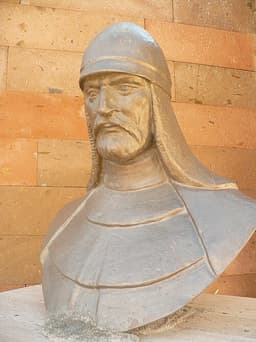
Alp Tigin
Emperor · Medieval
50.5Total
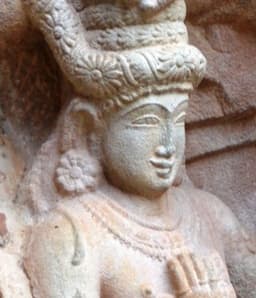
Rajendra Chola I
Emperor · Medieval
82.2Total
Basic Information
Born
911
971
Died
963
1044
Era
Medieval
Medieval
Nationality
Ghaznavid Empire
India
Occupation
Emperor
Emperor
Civilization
Middle Eastern
Indian
Score Comparison
Military (10%)
55.0
84.7
Political (20%)
33.6
82.0
Influence (20%)
56.4
84.0
Legacy (20%)
49.2
84.0
Leadership (15%)
50.7
78.0
Strategy (15%)
60.0
77.6
TOTAL
50.5
82.2
Alp Tigin — Complete Timeline
961 AD
Rebellion against the SamanidsPolitical Action◆ Major
Alp Tigin rebelled against the Samanid ruler Mansur I after being passed over for a governorship. He marched from Nishapur to Ghazni, defeating Samanid forces along the way, and established his own rule in eastern Afghanistan.
Impact: regional
963 AD
Consolidation of GhazniPolitical Action
Alp Tigin fortified Ghazni and organized a military state based on slave soldiers (ghilman). He established a stable administration that attracted scholars and merchants, turning Ghazni into a major regional power center.
Impact: regionalconstructive
Rajendra Chola I — Complete Timeline
1014 AD
Accession to the Chola ThronePolitical Action
Rajendra Chola I succeeded his father Raja Raja Chola I as emperor of the Chola Empire. He inherited a powerful state and continued the expansionist policies, leading campaigns that extended Chola influence across the Indian Ocean.
Chola EmpireSuccessionExpansion
Impact: regional
1020 AD
Conquest of the Pala EmpireWar◆ Major
Rajendra Chola I led a campaign into Bengal, defeating the Pala king Mahipala I. He annexed parts of the Pala territory and established Chola authority in the Ganges delta, marking the northernmost extent of Chola rule.
Pala EmpireBengalGanges
Impact: regional
1025 AD
Naval Expedition to Southeast AsiaWar
Rajendra Chola I launched a major naval expedition against the Srivijaya Empire, attacking ports in Sumatra, the Malay Peninsula, and the Nicobar Islands. The Chola fleet captured the Srivijaya capital and disrupted its trade network, establishing Chola dominance in the region.
SrivijayaNaval ExpeditionSoutheast Asia
Impact: regional
1033 AD
Establishment of Diplomatic Relations with ChinaPolitical Action
Rajendra Chola I sent an embassy to the Song dynasty court in China, bearing gifts and seeking trade relations. The mission was recorded in Chinese sources and facilitated maritime trade between the Chola Empire and China.
ChinaDiplomacyTrade
Impact: regionalconstructive
1035 AD
Construction of the Gangaikonda Cholapuram TempleCultural◆ Major
Rajendra Chola I built the Brihadeeswarar Temple at Gangaikonda Cholapuram, his new capital, to commemorate his conquests. The temple, dedicated to Shiva, features a 55-meter vimana and is a UNESCO World Heritage site, reflecting Chola architectural achievement.
Gangaikonda CholapuramTempleChola Architecture
Impact: regionalconstructive
Expert Analysis
Alp Tigin vs Rajendra Chola I
# The Emperor and the Slave: Two Founders of Empire in the Medieval World
In the year 1025, two vastly different men were building empires in opposite corners of Asia. One was a Hindu emperor who had inherited a throne and was about to launch the most audacious naval expedition the Indian Ocean had ever seen. The other was a Turkic slave who, six decades earlier, had seized a remote Afghan fortress and begun a dynasty that would one day sack the holy cities of India. Rajendra Chola I and Alp Tigin never met, never corresponded, and belonged to entirely different worlds. Yet both understood something essential about power: that it must be seized, held, and expanded—or it will be lost.
Origins
Rajendra Chola I was born in 971 into the purple of imperial privilege. His father, Raja Raja Chola I, had already transformed the Chola kingdom of South India into a formidable empire, and young Rajendra grew up watching campaigns and learning administration at the feet of a master. He was groomed for greatness from childhood, his education steeped in Tamil poetry, temple architecture, and the art of war. When he ascended the throne in 1014, he inherited not just a crown but a fully functioning war machine.
Alp Tigin’s beginnings could not have been more different. Born in 911, he entered history as a slave—a Turkic captive sold into the military households of the Samanid Empire in Central Asia. In the brutal meritocracy of the Islamic world, slave soldiers could rise to extraordinary heights, and Alp Tigin climbed with ruthless ambition. He became a commander, then a governor, then a kingmaker. But he was never a legitimate heir, never a prince by blood. Everything he achieved, he achieved through force and cunning.
Rise to Power
Rajendra’s path was smooth and inevitable. He was co-regent with his father from 1012, learning the levers of power before the old emperor died. When Raja Raja passed in 1014, Rajendra simply stepped into his place. There was no civil war, no coup, no crisis of succession. The Chola system had been designed for stability, and it worked.
Alp Tigin’s rise was a knife-edge drama. In 961, after years of loyal service, he was passed over for the governorship of Khorasan by the new Samanid ruler Mansur I. The slight was intolerable. Alp Tigin marched his army of slave soldiers from Nishapur toward the Samanid heartland, but he knew he could not defeat the empire in open battle. Instead, he turned east, seized the fortress of Ghazni in what is now Afghanistan, and declared himself independent. In 963, he consolidated his rule by fortifying the city and organizing a military state built entirely around his loyal ghilman—slave soldiers who owed everything to him. He had no dynasty to inherit; he had to invent one.
Leadership & Governance
Rajendra governed like a priest-king of ancient tradition. He was a builder, a patron, and a conqueror who saw empire as a sacred duty. In 1035, he constructed the Brihadeeswarar Temple at Gangaikonda Cholapuram—his new capital—a monument so vast and intricate that it still stands as one of India’s greatest architectural wonders. The temple was not just a house of worship; it was a statement of cosmic order, with Rajendra at its center as the earthly representative of Shiva. His political wisdom lay in integration: conquered territories were woven into the Chola administrative network, local elites were co-opted, and trade routes were protected.
Alp Tigin ruled like a warlord in a fortress. Ghazni was his base, his slave army his only family, and survival his only ideology. He had no interest in temples or grand urban planning. His governance was practical and harsh: tax the conquered, reward the loyal, and never show weakness. The ghilman system he perfected became the model for later Turkic dynasties, but it was brittle. Everything depended on the commander’s personal authority. When Alp Tigin died in 963, his fragile state nearly collapsed before his son-in-law Sabuktigin rebuilt it.
Triumph & Tragedy
Rajendra’s greatest moment came in 1025, when he launched a naval expedition against the Srivijaya Empire, a maritime power based in Sumatra and the Malay Peninsula. The Chola fleet crossed the Bay of Bengal, attacked Srivijayan ports, and shattered their monopoly on trade between India and China. It was a triumph of logistics and daring—a medieval Indian empire projecting power across the open ocean. In 1033, Rajendra cemented his victory by sending an embassy to the Song dynasty court in China, bearing gifts and opening diplomatic relations. He had made the Chola Empire the undisputed master of the Indian Ocean.
But Rajendra’s tragedy was that his empire was too vast. He conquered the Pala kingdom of Bengal in 1020, marching his armies across the entire subcontinent, but holding such distances proved impossible. His successors would struggle to maintain what he had won, and the Chola Empire slowly declined after his death in 1044.
Alp Tigin’s triumph was smaller but more personal: he turned a slave’s rebellion into a dynasty. He took a fortress and made it a kingdom. His tragedy was that he died too soon, in 963, leaving a state that was little more than a band of armed men holding a single city. It took the genius of his successors—Sabuktigin and especially Mahmud of Ghazni—to transform Alp Tigin’s precarious conquest into a real empire.
Character & Destiny
Rajendra was confident, cultured, and expansive. His personality reflected his upbringing: he believed he was destined to rule, and he acted accordingly. He built, conquered, and traded with the same serene assurance. His decisions were strategic and long-term, aimed at creating a permanent imperial order.
Alp Tigin was hungry, suspicious, and pragmatic. He had clawed his way out of slavery, and he never forgot that power could be taken away as easily as it had been won. His decisions were immediate and defensive. He built walls, not temples. He trusted his slave soldiers because he knew they had no other option. His character was forged in insecurity, and that insecurity drove him to seize what he could, when he could.
Legacy
Rajendra Chola I is remembered as the greatest of the Chola emperors, a figure of almost mythical stature in South Indian history. His naval expedition to Southeast Asia is still studied as a feat of medieval maritime power. The temple he built still stands. His legacy is one of grandeur and ambition—a reminder that India once ruled the waves.
Alp Tigin is a footnote to most historians, remembered only as the founder of a dynasty that would later produce Mahmud of Ghazni. But his legacy is profound: the Ghaznavid state he created became the model for Turkic rule in India, paving the way for the Delhi Sultanate and the Mughal Empire. Without the slave who seized a fortress, the history of South Asia might have been very different.
Conclusion
Two men, two empires, two fates. Rajendra Chola I inherited a throne and built an oceanic empire that dazzled the world. Alp Tigin seized a fortress and founded a dynasty that changed the course of history. One was born to rule; the other was born to serve. Yet both understood that in the medieval world, power was not a gift—it was something you took, held, and passed on. The emperor and the slave: each, in his own way, shaped the world we still inhabit.
Rankings
🥇
Rajendra Chola ILeader
Mil: 84.7Pol: 82.0Inf: 84.0
82.2
🥈
Alp Tigin
Mil: 55.0Pol: 33.6Inf: 56.4
50.5
+31.7 behind
How This Comparison Works
Algorithm
Each figure is scored on 6 dimensions (0—100 scale) based on structured historical data: Military (10%), Political (20%), Influence (20%), Legacy (20%), Leadership (15%), Strategy (15%). The weighted total produces the final ranking.
Data Sources
Scores are computed from structured sub-indicators in the database. Scale factors adjust for era (Ancient ×0.85, Modern ×1.0) and civilization size (Eastern ×1.05, Other ×0.80) to account for differences in population and military scale.
Maximum 3 Figures
Comparisons are limited to 2—3 figures to ensure readability and statistical meaningfulness.
Error Margins
±5 points per dimension — Sub-scores are derived from historical records with inherent uncertainty. Two figures within 5 points on a dimension should be considered roughly equivalent in that area.
Total Score Accuracy
±3 points overall — The weighted combination of 6 dimensions produces a total score with approximately ±3 points of uncertainty. Differences of less than 3 points are not statistically significant— the figures are effectively tied.
Known Limitations
- Historical records are incomplete and uneven across civilizations
- Figures from oral-tradition societies may be underrepresented
- Occupation labels can misclassify multi-role figures
- Scores measure capability and impact, not moral character
- Quantitative scoring is a comparison tool, not absolute truth
Capability Radar
Military (10%) — Battles & Warfare
Battles
45
95
Win Rate
50
98
Expansion
50
95
Political (20%) — Governance & Reform
Reform
20
88
Diplomacy
30
85
Economy
20
92
Influence (20%) — Cultural & Global Reach
Cultural
30
85
Global
30
85
Legacy (20%) — Historical Impact
Historical
45
88
Longevity
40
80
Leadership (15%) — Power & Stability
Tenure
25
90
Stability
25
90
Strategy (15%) — Tactics & Innovation
Strategy
45
92
Tactics
40
90
Reform
30
85
Similar Comparisons
Comments & Discussion
CURSE OF BLOOD6/16/2026
Rajendra had it laid on a silver platter—daddy's navy, daddy's gold, daddy's Tamil poets singing his name. Alp Tigin clawed his way up from a slave barracks with nothing but a sword and a grudge against the universe. Throne-born vs. self-made? Give me the man who built his empire on grit, not genealogy. Chola's temples still stand, sure, but Tigin's dynasty toppled thrones across three centuries. Legacy ain't about marble—it's about muscle.
海上枭雄6/16/2026
Alp Tigin就是个暴发户奴隶兵,抢了座破山头就当自己是皇帝了?Rajendra Chola I才是真龙天子,1014年登基时继承的是南印度最完备的战争机器,从坦贾武尔到恒河三角洲,他的舰队让孟加拉湾都颤栗。你个突厥人连蒙古草原都没摸到边,凭什么跟印度洋霸主比?数据呢?战船数量?征服面积?除了一本佚失的编年史,屁都没有。
NUMBERS DON'T LIE6/16/2026
Let's talk actual stats. Rajendra's 1025 expedition fielded an estimated 600 ships against Srivijaya—that's the first recorded amphibious assault in Indian history, spanning 1,500 miles of open ocean. Alp Tigin? His "empire" was a fortified hill in Ghazni with maybe 2,000 horsemen. He seized the fort in 962, held it for a decade, then died. That's a footnote, not a founding. Rajendra's Chola expanded across 300,000 square kilometers. We're comparing a tsunami to a puddle.
铁血逻辑6/16/2026
让我戳破这个神话:Alp Tigin根本不是"奠基者",他只是Mahmud of Ghazni的垫脚石。史料记载他962年占领Ghazni后,名义上仍臣服于Samanid帝国,直到死前都没独立称王。而Rajendra Chola I在1014-1044年间进行了至少六次大规模军事行动,海陆两栖,从斯里兰卡打到恒河。你说奴隶逆袭?呵呵,一个半独立的军阀头子,也配跟真正的帝国缔造者相提并论?证据就在那些刻着战功的铜板铭文里。
ASIAN NAVAL PUNK6/16/2026
Here's what everyone misses: Rajendra wasn't just a conqueror, he was a logistics genius. Moving thousands of troops across the Bay of Bengal in 1025 required charts, monsoon timing, and supply depots from Nagapattinam to Kedah. Alp Tigin's greatest accomplishment was climbing a mountain. The Chola king built a navy that dominated the Indian Ocean for a century—that