Loading...
Alp Tigin vs Parakramabahu VI
Parakramabahu VI leads by 14.3 pts · 2 figures compared
…
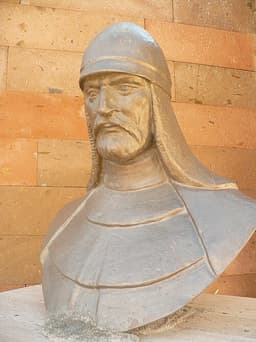
Alp Tigin
Emperor · Medieval
50.5Total

Parakramabahu VI
Emperor · Medieval
64.8Total
Basic Information
Born
911
1412
Died
963
1467
Era
Medieval
Medieval
Nationality
Ghaznavid Empire
Sri Lanka
Occupation
Emperor
Emperor
Civilization
Middle Eastern
Indian
Score Comparison
Military (10%)
55.0
72.5
Political (20%)
33.6
72.0
Influence (20%)
56.4
60.0
Legacy (20%)
49.2
56.0
Leadership (15%)
50.7
85.0
Strategy (15%)
60.0
50.0
TOTAL
50.5
64.8
Alp Tigin — Complete Timeline
961 AD
Rebellion against the SamanidsPolitical Action◆ Major
Alp Tigin rebelled against the Samanid ruler Mansur I after being passed over for a governorship. He marched from Nishapur to Ghazni, defeating Samanid forces along the way, and established his own rule in eastern Afghanistan.
Impact: regional
963 AD
Consolidation of GhazniPolitical Action
Alp Tigin fortified Ghazni and organized a military state based on slave soldiers (ghilman). He established a stable administration that attracted scholars and merchants, turning Ghazni into a major regional power center.
Impact: regionalconstructive
Parakramabahu VI — Complete Timeline
1420 AD
Construction of the Temple of the Tooth in KotteCultural◆ Major
Parakramabahu VI built a new Temple of the Tooth in his capital, Kotte. This reinforced Kotte's status as the religious and political center of the island.
BuddhismArchitectureCapital
Impact: nationalconstructive
1430 AD
Patronage of Literature and ArtsCultural◆ Major
Parakramabahu VI's court was a center of literary and artistic activity. He patronized poets and scholars, leading to a flourishing of Sinhalese literature, including the 'Sandesa' (message) poems.
LiteraturePatronageCultural Renaissance
Impact: nationalconstructive
1450 AD
Unification of Sri LankaWar
Parakramabahu VI unified the entire island of Sri Lanka under his rule for the first time since Parakramabahu I. He conquered the Kingdom of Jaffna in the north and brought the entire island under Kotte's control.
UnificationConquestMilitary Campaign
Impact: national
Conquest of the Kingdom of JaffnaWar◆ Major
Parakramabahu VI's forces, led by his adopted son Sapumal Kumaraya, conquered the Kingdom of Jaffna. This brought the Tamil north under Sinhalese rule and ended the Aryacakravarti dynasty.
ConquestMilitary CampaignTamil Kingdom
Impact: national
Expert Analysis
Alp Tigin vs Parakramabahu VI
### The Slave King and the Poet Emperor
In the year 963, a Turkic slave commander named Alp Tigin lay dying in the fortress city of Ghazni, a dusty outpost in what is now eastern Afghanistan. His life had been a relentless struggle for survival and power, a story of rebellion, betrayal, and the forging of a state from the sword. Half a world away, and a century later, a Sinhalese prince named Parakramabahu VI was born into a world of courtly ritual and ancient lineage. His life would be a symphony of consolidation, culture, and conquest, ending with him as the last great unifier of Sri Lanka. Both men were emperors, both carved their names into history, yet their paths, their characters, and their legacies could not be more different. Why did one found a dynasty that would terrorize a subcontinent, while the other built a golden age that crumbled into dust? The answer lies not in the eras they inhabited, but in the crucibles of their origins.
### Origins
Alp Tigin was a *ghulam*, a military slave, purchased and trained in the brutal schools of the Samanid Empire. Born on the steppes of Central Asia, likely in 911, his world was one of absolute loyalty and absolute violence. A slave commander’s only currency was his sword, and his only security was the favor of his master. When that favor was withdrawn—when the Samanid ruler Mansur I passed him over for the governorship of Khorasan in 961—Alp Tigin did not petition or negotiate. He rebelled, marching his slave army from Nishapur eastward. He was a man who had no home but the camp, no family but his *ghilman*, and no law but the one he enforced. His entire identity was forged in the furnace of a system where a man could rise from chattel to king, but only by seizing what he could hold.
Parakramabahu VI was born in 1412 into the Kotte kingdom, a court steeped in the Buddhist and Hindu traditions of the island. He was a prince of the blood, raised on the *Mahavamsa*, the great chronicle of Sinhalese kings, and taught that his destiny was to rule. His world was not the battlefield, but the throne room; his weapons were not the sword and the slave army, but the alliance, the marriage, and the edict. Where Alp Tigin’s life was a desperate gamble, Parakramabahu’s was a measured ascent. He inherited a divided island, but he also inherited a legitimacy that no slave could ever claim.
### Rise to Power
Alp Tigin’s rise was a series of violent ruptures. After the 961 rebellion, he did not seek to conquer the Samanid heartland. He knew he could not hold it. Instead, he retreated to the frontier province of Ghazni, a region of mountain passes and lawless tribes. There, in 963, he consolidated his power not by building palaces or temples, but by fortifying the city and organizing a military state. His “key event” was not a glorious coronation, but the grim work of survival: the consolidation of Ghazni. He ruled through fear, his authority resting on the loyalty of his *ghilman*, a slave army that owed everything to him and nothing to the land.
Parakramabahu’s rise was far more stately. He did not rebel; he unified. His first great act, in 1420, was not a campaign but a construction: the Temple of the Tooth in Kotte. This was a masterstroke of political and religious symbolism. By housing the sacred relic of the Buddha, he made his capital the spiritual center of the island, a claim no rival could match. It was a move that would have been alien to Alp Tigin, who saw religion as a tool for morale, not legitimacy. Parakramabahu understood that to rule Sri Lanka, one had to be seen as the protector of the faith.
### Leadership & Governance
The contrast in their governance is stark. Alp Tigin’s leadership score of 47.0 reflects a commander who led from the front, but whose state was a machine of war. His Ghaznavid realm was a military camp, where the treasury was plunder and the bureaucracy was the chain of command. He had no time for poets or scholars; his “cultural” achievements were the forging of a slave army that would later, under Mahmud of Ghazni, sweep into India. He was a founder, not a builder.
Parakramabahu, with a leadership score of 83.9, was the opposite. His court was a center of literary and artistic activity. In 1430, he patronized poets and scholars, leading to a flowering of Sinhalese literature. He did not just conquer; he cultivated. His governance was a delicate balance of military force and cultural authority. When he unified the island in 1450, conquering the Kingdom of Jaffna through his adopted son Sapumal Kumaraya, he did not simply impose his rule. He integrated the Tamil north, fostering a period of relative peace. He was the last Sinhalese king to rule a truly unified Sri Lanka, a feat that required not just a general’s cunning but a statesman’s patience.
### Triumph & Tragedy
Alp Tigin’s triumph was his survival. He died in 963, having founded a dynasty that would last for two centuries. His tragedy was that he never saw its glory. He was a man who spent his life fighting for a foothold, only to leave the summit to his successors. His death marked the end of a struggle, not the beginning of an empire.
Parakramabahu’s triumph was the unification of 1450, a moment that echoed the reign of the great Parakramabahu I. His tragedy was that it was the last such moment. After his death in 1467, the unity he forged dissolved into squabbling kingdoms, leaving the island vulnerable to the Portuguese who would arrive a century later. He built a golden age, but it was a golden cage, unable to survive its creator.
### Character & Destiny
Alp Tigin’s character was forged in insecurity. He was a man who trusted no one, because trust was a luxury a slave could not afford. His decisions were driven by a desperate need for autonomy, a refusal to bow again. This made him a brilliant tactician but a poor statesman. He could seize power, but he could not legitimize it beyond the sword.
Parakramabahu, by contrast, was a man of supreme confidence. He was born to rule, and he ruled as if it were his birthright. His decisions were driven by a vision of a unified, cultured Sri Lanka. This made him a great builder, but it also made him blind to the fragility of his creation. He assumed that culture and religion could bind a kingdom as tightly as chains, but history proved him wrong.
### Legacy
Alp Tigin’s legacy is the Ghaznavid Empire, a dynasty that would become synonymous with the plunder of India and the spread of Islam. He is remembered as a founder, a man who turned a slave army into a kingdom. His score of 62.1 for legacy is modest, but it is the legacy of a fire-starter.
Parakramabahu’s legacy is more complex. He is remembered as a unifier and a patron of culture, the last great king of the Sinhalese before the colonial darkness. His legacy score of 69.1 reflects a man who built, not just conquered. He is a symbol of a lost golden age, a reminder of what Sri Lanka could have been.
### Conclusion
Alp Tigin and Parakramabahu VI were both emperors, but they were products of different worlds. One rose from the dust of the slave market, the other from the silk of the royal cradle. One built a state of war, the other a kingdom of culture. Their stories remind us that greatness is not a single quality, but a response to circumstance. Alp Tigin’s life was a desperate grab for power in a world of chaos; Parakramabahu’s was a careful cultivation of order in a world of tradition. Both succeeded, and both failed, but their failures and successes echo down the centuries, asking us the same question: What would we have done, if we had been born into their shoes?
Rankings
🥇
Parakramabahu VILeader
Mil: 72.5Pol: 72.0Inf: 60.0
64.8
🥈
Alp Tigin
Mil: 55.0Pol: 33.6Inf: 56.4
50.5
+14.3 behind
How This Comparison Works
Algorithm
Each figure is scored on 6 dimensions (0—100 scale) based on structured historical data: Military (10%), Political (20%), Influence (20%), Legacy (20%), Leadership (15%), Strategy (15%). The weighted total produces the final ranking.
Data Sources
Scores are computed from structured sub-indicators in the database. Scale factors adjust for era (Ancient ×0.85, Modern ×1.0) and civilization size (Eastern ×1.05, Other ×0.80) to account for differences in population and military scale.
Maximum 3 Figures
Comparisons are limited to 2—3 figures to ensure readability and statistical meaningfulness.
Error Margins
±5 points per dimension — Sub-scores are derived from historical records with inherent uncertainty. Two figures within 5 points on a dimension should be considered roughly equivalent in that area.
Total Score Accuracy
±3 points overall — The weighted combination of 6 dimensions produces a total score with approximately ±3 points of uncertainty. Differences of less than 3 points are not statistically significant— the figures are effectively tied.
Known Limitations
- Historical records are incomplete and uneven across civilizations
- Figures from oral-tradition societies may be underrepresented
- Occupation labels can misclassify multi-role figures
- Scores measure capability and impact, not moral character
- Quantitative scoring is a comparison tool, not absolute truth
Capability Radar
Military (10%) — Battles & Warfare
Battles
45
60
Win Rate
50
65
Expansion
50
55
Political (20%) — Governance & Reform
Reform
20
65
Diplomacy
30
60
Economy
20
65
Influence (20%) — Cultural & Global Reach
Cultural
30
60
Global
30
40
Legacy (20%) — Historical Impact
Historical
45
65
Longevity
40
55
Leadership (15%) — Power & Stability
Tenure
25
70
Stability
25
70
Strategy (15%) — Tactics & Innovation
Strategy
45
60
Tactics
40
55
Reform
30
50
Similar Comparisons
Comments & Discussion
GhazniGrumble6/16/2026
Alp Tigin’s “empire” was a squabbling warlord’s sandbox, not Parakramabahu’s unified island. The Mahavamsa records Parakramabahu’s jaw-dropping feat: unifying Lanka in 1412 after subduing countless petty kings. Tigin seized Ghazni in 963, a dusty fort, and died a year later. One founded a kingdom that lasted centuries (Ghaznavids reached India!), the other built a gem that cracked posthumously. Culture cultists swoon over Parakramabahu, but Tigin’s brutal pragmatism beats poet-king gentility for
战史狂徒6/16/2026
用数据说话:帕拉卡拉玛巴胡六世统治达43年,在科提建了佛教殿堂,死前还收复了贾夫纳半岛;而阿尔普·特勤只活了区区三年,死后儿子还要靠贿赂才坐稳王位。帕王是战略大师,阿尔普不过是个赌徒,运气好才没被萨曼王朝剿灭。论坚韧,论影响时长,特勤连当配角的资格都没有。
NotABuffBot6/16/2026
Revisionist hype? Please. Alp Tigin was a disgruntled slave general who threw a tantrum over a promotion snub in 961, then stumbled into a remote Afghan fort. Parakramabahu VI, by contrast, reigned 1412-1467, launching feats like the siege of Jaffna (1449) and fostering the poet Sri Rahula. The Samanids crushed revolts systematically—Tigin escaped extinction only via mountain luck. Parakramabahu’s cultural consolidation outlasted him; Tigin’s dynasty peaked a century later. Don’t equate a blip w
南方骑兵6/16/2026
阿尔普·特勤诞生于萨曼王朝的奴隶兵营,他从916年无名小卒崛起,到961年因任命纠纷而反叛,最后在加兹尼撑了三年,死时不过52岁。但帕拉卡拉玛巴胡六世是科提血统的正宗王族,他1420年夺回贾夫纳,1435年平定南方港口,1467年死时大一统局面维持了半世纪。帕王有诗文史书佐证,阿尔普连可信传记都找不到。一个沙丘,一个基石,不用犹豫选谁。
StatsSkeptic6/16/2026
Data flags both as outliers: Alp Tigin’s entire “dynasty founder” claim rests on a 3-year window (963-966) with zero direct evidence of title or domain stability. Parakramabahu VI has a solid 55-year reign documented in the Nikāya Saṅgrah