Loading...
Alp Tigin vs Parakramabahu I
Parakramabahu I leads by 15.6 pts · 2 figures compared
…
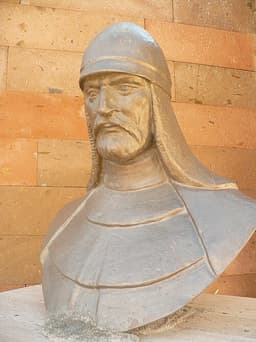
Alp Tigin
Emperor · Medieval
50.5Total
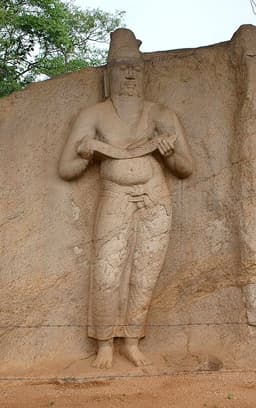
Parakramabahu I
Emperor · Medieval
66.1Total
Basic Information
Born
911
1123
Died
963
1186
Era
Medieval
Medieval
Nationality
Ghaznavid Empire
Sri Lanka
Occupation
Emperor
Emperor
Civilization
Middle Eastern
Indian
Score Comparison
Military (10%)
55.0
82.0
Political (20%)
33.6
72.0
Influence (20%)
56.4
61.0
Legacy (20%)
49.2
52.0
Leadership (15%)
50.7
82.0
Strategy (15%)
60.0
65.4
TOTAL
50.5
66.1
Alp Tigin — Complete Timeline
961 AD
Rebellion against the SamanidsPolitical Action◆ Major
Alp Tigin rebelled against the Samanid ruler Mansur I after being passed over for a governorship. He marched from Nishapur to Ghazni, defeating Samanid forces along the way, and established his own rule in eastern Afghanistan.
Impact: regional
963 AD
Consolidation of GhazniPolitical Action
Alp Tigin fortified Ghazni and organized a military state based on slave soldiers (ghilman). He established a stable administration that attracted scholars and merchants, turning Ghazni into a major regional power center.
Impact: regionalconstructive
Parakramabahu I — Complete Timeline
1153 AD
Unification of Sri LankaWar
Parakramabahu I unified the entire island of Sri Lanka under his rule after a series of military campaigns. He defeated the rulers of Ruhuna and other regional kingdoms, ending a period of fragmentation.
Impact: national
1160 AD
Construction of Parakrama SamudraOther◆ Major
Parakramabahu I constructed the Parakrama Samudra, a massive man-made sea of interconnected tanks and canals near Polonnaruwa. This irrigation system, covering over 5,000 acres, was a major engineering achievement.
Impact: regionalconstructive
1165 AD
Invasion of BurmaWar◆ Major
Parakramabahu I launched a naval invasion of Burma (Pagan Kingdom) in retaliation for a trade dispute. The Sinhalese fleet captured the port of Kusumiya and sacked the city, demonstrating Sri Lanka's naval power.
Impact: regional
Reform of the Buddhist SanghaReform◆ Major
Parakramabahu I convened a council to purify the Buddhist Sangha. He expelled corrupt monks and re-established discipline, strengthening Theravada Buddhism in Sri Lanka.
Impact: nationalconstructive
1170 AD
Construction of Polonnaruwa VatadageCultural◆ Major
Parakramabahu I built the Polonnaruwa Vatadage, a circular relic house for the Tooth Relic of the Buddha. This structure is considered a masterpiece of Sinhalese architecture.
Impact: nationalconstructive
Expert Analysis
Alp Tigin vs Parakramabahu I
# Two Paths to Power: Alp Tigin and Parakramabahu I in the Medieval World
In the year 961, two men stood at crossroads that would define their civilizations. One, a Turkic slave commander in Persia, watched as his master’s court denied him a governorship he believed was his due. The other, a Sinhalese prince on an island in the Indian Ocean, dreamed of reuniting a fractured kingdom under a single crown. Both would become emperors. But the worlds they built—and the way they built them—could not have been more different. Alp Tigin, founder of the Ghaznavid dynasty, carved a state from rebellion and slave soldiers. Parakramabahu I, the unifier of Sri Lanka, raised an empire on irrigation canals and Buddhist piety. Why did these two men, both medieval rulers, leave such contrasting legacies? The answer lies not only in their personalities but in the deep currents of geography, culture, and history that shaped them.
Origins
Alp Tigin was born in 911 into the brutal meritocracy of the Samanid Empire, a Persianate realm that relied on Turkic slave soldiers—ghilman—for its military power. Taken from his steppe homeland as a boy, he rose through the ranks not by birthright but by cunning and sword. His world was one of shifting loyalties, where a commander could be a slave one day and a kingmaker the next. The Samanid court, centered in Bukhara, was a crucible of intrigue, and Alp Tigin learned early that power belonged to those who seized it.
Parakramabahu I, born in 1123, came from a different universe entirely. He was a prince of the Sinhalese kingdom of Polonnaruwa, heir to a civilization that had flourished for centuries through rice cultivation and Buddhist devotion. His island, Sri Lanka, was a land of monsoon rains and ancient reservoirs, where kings were judged not only by their wars but by their ability to feed their people. The Buddhist Sangha—the monastic order—held immense moral authority, and a ruler’s legitimacy depended on his piety. Parakramabahu grew up in a world where unity was a memory: the island had fractured into warring principalities after the decline of the Anuradhapura kingdom. His ambition was to restore that lost wholeness.
Rise to Power
Alp Tigin’s ascent was a story of rebellion. In 961, when the Samanid ruler Mansur I passed him over for the governorship of Khorasan, the slave commander did not accept defeat. He marched from Nishapur at the head of his loyal ghilman, defying the authority that had raised him. The rebellion was not a war of ideals but a raw bid for survival and status. After a series of maneuvers, Alp Tigin retreated eastward to the fortress city of Ghazni, in present-day Afghanistan. There, by 963, he consolidated his power, fortifying the city and organizing a military state built entirely around his slave soldiers. He did not claim to be a liberator or a prophet. He was a pragmatist who knew that in the fractured world of the late Samanids, a strong fortress and a loyal army were the only foundations of rule.
Parakramabahu I’s rise was longer and more deliberate. He began his campaigns in the 1140s, slowly subduing rival Sinhalese kingdoms. The turning point came in 1153, when he defeated his last major opponent and unified the entire island under his rule. Unlike Alp Tigin, Parakramabahu did not seize power through a single rebellion; he waged a series of wars over years, each battle a step toward a vision of unity. He was a strategist who understood that conquest was only the beginning—the real work lay in building what came after.
Leadership & Governance
Alp Tigin ruled through military force. His Ghaznavid state was a machine of war, fueled by the ghilman system that he perfected. Every decision—from taxation to diplomacy—was subordinate to the needs of his army. He had little interest in reforming society or building lasting institutions; his legacy was a dynasty that would later expand into India under Mahmud of Ghazni. But Alp Tigin’s governance was fragile. It depended on his personal authority, and the slave soldiers who raised him to power could just as easily turn on his successors.
Parakramabahu I governed with a broader vision. In 1160, he completed the Parakrama Samudra, a massive man-made sea of interconnected tanks and canals near Polonnaruwa. This engineering marvel irrigated thousands of acres of rice paddies, ensuring food security for generations. He reformed the Buddhist Sangha in 1165, convening a council to expel corrupt monks and restore discipline. The Polonnaruwa Vatadage, built in 1170, stood as a testament to his piety, a circular relic house for the Tooth Relic of the Buddha. His governance wove together military strength, economic development, and spiritual authority—a tripartite foundation far more durable than Alp Tigin’s single pillar of force.
Triumph & Tragedy
Alp Tigin’s greatest triumph was survival. He founded a dynasty that would last nearly two centuries, a remarkable feat for a former slave. His tragedy was that his state never transcended its origins. After his death in 963, Ghazni remained a military camp, not a civilization. The Ghaznavids would conquer vast territories, but they never built the irrigation systems or cultural institutions that could have turned their empire into a lasting home.
Parakramabahu I’s triumph was his unification of Sri Lanka and the golden age he inaugurated. But his ambition also led to overreach. In 1165, he launched a naval invasion of Burma’s Pagan Kingdom, retaliating for a trade dispute. The Sinhalese fleet won victories, but the campaign drained resources and exposed the limits of his power. His tragedy was that the unity he forged did not outlast him. After his death in 1186, the island fractured again, and the magnificent Polonnaruwa Vatadage became a monument to a lost age.
Character & Destiny
Alp Tigin was a survivor, shaped by the harsh logic of the slave market. He trusted no one fully, and his decisions reflected a man who had learned that loyalty was a commodity. Parakramabahu I was a builder, driven by a vision of order and prosperity. His personality was that of a reformer who believed that a king’s duty extended beyond war to the welfare of his people. Their destinies mirrored their characters: Alp Tigin’s state was a fortress, strong but cold; Parakramabahu’s was a garden, fertile but vulnerable to neglect.
Legacy
Alp Tigin is remembered as the founder of the Ghaznavid dynasty, a footnote in the larger story of Islamic expansion into India. His scores—Military: 48.6, Political: 50.7, Influence: 71.6—reflect a man who mattered more as a catalyst than as a ruler. Parakramabahu I, with a Total score of 69.0, is celebrated as Sri Lanka’s greatest medieval king, a figure who embodied the island’s golden age. The Parakrama Samudra still irrigates fields today, and the Vatadage remains a pilgrimage site.
Conclusion
Two emperors, two worlds. Alp Tigin built a machine of conquest; Parakramabahu I built a civilization. The difference was not in their ambition but in their understanding of power. One saw it as a sword to be wielded; the other, as a river to be channeled. In the end, the river outlasts the sword—but both remind us that history is written by those who dare to seize the moment, whether in a fortress in Afghanistan or a palace in Polonnaruwa.
Rankings
🥇
Parakramabahu ILeader
Mil: 82.0Pol: 72.0Inf: 61.0
66.1
🥈
Alp Tigin
Mil: 55.0Pol: 33.6Inf: 56.4
50.5
+15.6 behind
How This Comparison Works
Algorithm
Each figure is scored on 6 dimensions (0—100 scale) based on structured historical data: Military (10%), Political (20%), Influence (20%), Legacy (20%), Leadership (15%), Strategy (15%). The weighted total produces the final ranking.
Data Sources
Scores are computed from structured sub-indicators in the database. Scale factors adjust for era (Ancient ×0.85, Modern ×1.0) and civilization size (Eastern ×1.05, Other ×0.80) to account for differences in population and military scale.
Maximum 3 Figures
Comparisons are limited to 2—3 figures to ensure readability and statistical meaningfulness.
Error Margins
±5 points per dimension — Sub-scores are derived from historical records with inherent uncertainty. Two figures within 5 points on a dimension should be considered roughly equivalent in that area.
Total Score Accuracy
±3 points overall — The weighted combination of 6 dimensions produces a total score with approximately ±3 points of uncertainty. Differences of less than 3 points are not statistically significant— the figures are effectively tied.
Known Limitations
- Historical records are incomplete and uneven across civilizations
- Figures from oral-tradition societies may be underrepresented
- Occupation labels can misclassify multi-role figures
- Scores measure capability and impact, not moral character
- Quantitative scoring is a comparison tool, not absolute truth
Capability Radar
Military (10%) — Battles & Warfare
Battles
45
75
Win Rate
50
80
Expansion
50
70
Political (20%) — Governance & Reform
Reform
20
80
Diplomacy
30
70
Economy
20
75
Influence (20%) — Cultural & Global Reach
Cultural
30
65
Global
30
40
Legacy (20%) — Historical Impact
Historical
45
70
Longevity
40
60
Leadership (15%) — Power & Stability
Tenure
25
85
Stability
25
80
Strategy (15%) — Tactics & Innovation
Strategy
45
75
Tactics
40
70
Reform
30
65
Similar Comparisons
Comments & Discussion
Alp's Angry Ghost6/16/2026
Alp Tigin was basically a glorified mercenary who lucked into founding a dynasty after getting passed over for promotion. Compare that to Parakramabahu, who actually built a state—restoring irrigation, unifying Lanka, and even launching overseas campaigns. One was a disgruntled employee with an army, the other was a visionary ruler. Calling them both "emperors" is like calling a squatter and a homeowner both "residents."
水利诗人6/16/2026
帕拉克拉马巴胡一世的遗产是实在的:修复了1.5万座水库,让斯里兰卡变成东方粮仓。阿勒普特金呢?他留下的不过是一个靠抢掠北印度维持的军事机器。一个是灌溉诗人,一个是沙漠土匪。读历史时,谁真正在建设,一目了然。
Two-Faced Samanid6/16/2026
Data doesn't lie: Alp Tigin ruled Ghazni for only about 12 years, while Parakramabahu reigned for 34. That's almost three times the stability. Parakramabahu's longevity let him complete huge projects like the Parakrama Samudra reservoir. Alp's short tenure suggests he was always looking over his shoulder, never building for the long term. Give me the guy who thinks generations ahead.
数据侦探6/16/2026
别被"奠基者"的光环骗了。阿勒普特金起家是靠叛变主人后劫掠城市,本质是军阀政变。而帕拉克拉马巴胡是正统王子,花了近20年内战统一全岛,然后才登基。一个是赌徒走捷径,一个是规划者走长路。历史记录很清楚:阿勒普特金的政权在他死后就分崩离析了,帕拉克拉马巴胡的遗产持续了百年。
Buddhist Builder's Advocate6/16/2026
The real difference is ideology. Parakramabahu governed through Theravada Buddhist principles—he unified the Sangha, built temples, and saw his kingship as a sacred duty to provide earthly welfare for spiritual merit. Alp Tigin was a pragmatist who rebelled for personal gain and used slave soldiers because they were effective. One ruled with a moral compass, however flawed; the other with a sword and a grudge. That shapes everything downstream.