Loading...
Alp Tigin vs Oduduwa
Oduduwa leads by 9.2 pts · 2 figures compared
…
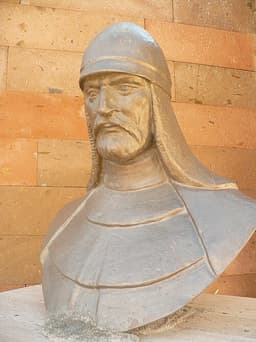
Alp Tigin
Emperor · Medieval
50.5Total
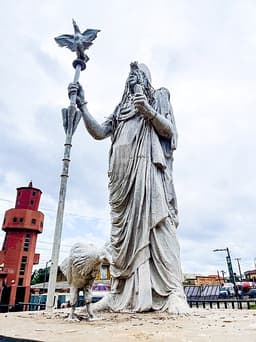
Oduduwa
Emperor · Medieval
59.7Total
Basic Information
Born
911
950
Died
963
1020
Era
Medieval
Medieval
Nationality
Ghaznavid Empire
Ife
Occupation
Emperor
Emperor
Civilization
Middle Eastern
Other
Score Comparison
Military (10%)
55.0
50.0
Political (20%)
33.6
46.6
Influence (20%)
56.4
68.0
Legacy (20%)
49.2
68.0
Leadership (15%)
50.7
67.0
Strategy (15%)
60.0
36.8
TOTAL
50.5
59.7
Alp Tigin — Complete Timeline
961 AD
Rebellion against the SamanidsPolitical Action◆ Major
Alp Tigin rebelled against the Samanid ruler Mansur I after being passed over for a governorship. He marched from Nishapur to Ghazni, defeating Samanid forces along the way, and established his own rule in eastern Afghanistan.
Impact: regional
963 AD
Consolidation of GhazniPolitical Action
Alp Tigin fortified Ghazni and organized a military state based on slave soldiers (ghilman). He established a stable administration that attracted scholars and merchants, turning Ghazni into a major regional power center.
Impact: regionalconstructive
Oduduwa — Complete Timeline
1000 AD
Foundation of the Yoruba civilization at Ile-IfeCultural
According to Yoruba oral tradition, Oduduwa descended from heaven at Ile-Ife and founded the Yoruba civilization. He is credited with establishing the first Yoruba kingdom and the sacred city of Ile-Ife, which became the spiritual and cultural heartland of the Yoruba people.
Impact: regionalconstructive
1010 AD
Establishment of the Yoruba royal dynastiesPolitical Action◆ Major
Oduduwa is said to have sent his sons and grandsons to found the various Yoruba kingdoms, including Oyo, Benin, and Ketu. This act established the royal lineages that ruled these states for centuries, creating a network of related kingdoms under the spiritual authority of the Ooni of Ife.
Impact: regionalconstructive
Expert Analysis
Alp Tigin vs Oduduwa
# The Slave Who Built an Empire and the Prince Who Descended from Heaven
In the harsh mountains of eastern Afghanistan, a Turkic slave commander stood before the gates of Ghazni in 963, his sword still wet from battle. Half a world away, in the sacred groves of West Africa, a legendary figure was said to have lowered a chain from heaven to establish the first Yoruba kingdom at Ile-Ife. One man clawed his way to power through blood and betrayal; the other claimed his throne by divine mandate. Alp Tigin and Oduduwa never met, never knew of each other's existence—yet their parallel careers in the tenth and eleventh centuries shaped the destinies of millions. Why did one empire crumble within decades while the other's royal lineage endures to this day? The answer lies not in their achievements, but in the soil from which they grew.
Origins
Alp Tigin was born into a world of chains. As a Turkic slave purchased by the Samanid court in Persia, his body was property before it was a person. The Samanid Empire, like many Islamic states of the era, relied on *ghilman*—military slaves who could be promoted based on merit rather than blood. Alp Tigin's intelligence and ferocity caught the eye of his masters, and he rose from stable boy to commander of the royal guard. Every promotion was a gamble, every victory a temporary reprieve from the executioner's sword. His world was one of shifting alliances, where a man's worth was measured in the gold he could seize and the soldiers he could command.
Oduduwa's origins belong to myth, not history. According to Yoruba oral tradition, he descended from the sky on an iron chain, carrying a rooster, some soil, and a palm nut. The supreme god Olodumare had sent him to create dry land from the primordial waters. Landing at Ile-Ife, Oduduwa became the first *Ooni*—the spiritual and political father of the Yoruba people. Whether a real historical figure or a divine archetype, Oduduwa embodied a different kind of legitimacy: bloodline sanctioned by heaven. In Yoruba cosmology, kingship was not seized; it was inherited from the gods themselves.
Rise to Power
Alp Tigin's ascent was a masterclass in opportunism. In 961, when the Samanid ruler Mansur I assumed the throne, Alp Tigin expected to be appointed governor of Khurasan—the empire's richest province. Instead, Mansur gave the post to a rival. Alp Tigin's response was swift and brutal. He marched his army from Nishapur, declared open rebellion, and after a series of bloody skirmishes, withdrew to the remote fortress city of Ghazni in what is now Afghanistan. There, he murdered the local governor, seized the treasury, and declared himself independent. His rise was not a coronation; it was a coup d'état dressed in military uniform.
Oduduwa's path was radically different. After founding Ile-Ife, he did not conquer kingdoms—he created them. According to tradition, he had sixteen sons and grandsons, each of whom he sent out to establish new cities. One son became the first *Alaafin* of Oyo; another founded the kingdom of Benin; others established Ketu, Ijesha, and Egba. Where Alp Tigin consolidated power through fear, Oduduwa distributed it through kinship. His empire grew not by the sword, but by the family tree.
Leadership & Governance
Alp Tigin ruled Ghazni like a warlord. He fortified the city, built a professional army of slave soldiers loyal only to him, and established a system where military merit trumped noble birth. His governance was practical but brittle: the state functioned only as long as Alp Tigin could pay his soldiers and crush his rivals. When he died in 963, his son Abu Ishaq Ibrahim held power for barely a year before being overthrown. The Ghaznavid dynasty would eventually rise again under Sebuktigin and Mahmud of Ghazni, but Alp Tigin's personal empire was a house of cards.
Oduduwa's governance was built on something more enduring: ritual and lineage. He established the *Ogboni* council of elders, created the coronation protocols that would define Yoruba kingship for centuries, and embedded the *Ooni* of Ife as the supreme spiritual authority. His sons did not rule as conquerors but as custodians of a sacred trust. The Yoruba kingdoms would fight among themselves, rebel, and fracture, but they never forgot that their kings derived legitimacy from Oduduwa's blood. Political score 72.0 versus Alp Tigin's 50.7 tells the story: Oduduwa understood that power flows from belief, not bullets.
Triumph & Tragedy
Alp Tigin's greatest triumph was survival itself. A slave who defied an empire, seized a fortress, and died in his own bed—this was no small feat in the violent tenth century. His tragedy was that he built nothing that outlasted his own breath. The Ghaznavid Empire would reach its zenith under Mahmud of Ghazni half a century later, but Alp Tigin's personal contribution was merely the seizure of a single city. His military score of 48.6 and strategy of 51.1 reflect a competent commander, not a visionary.
Oduduwa's triumph was creation. He founded a civilization that still speaks its own language, worships its own gods, and crowns its own kings. His tragedy is that we cannot separate the man from the myth. Was Oduduwa a real king who arrived from the savannah, or a divine figure who descended from heaven? The historical record is silent. But perhaps that is the point: his legacy is so immense that history itself became legend.
Character & Destiny
Alp Tigin was a man of his time—brutal, pragmatic, and utterly alone. He trusted no one because trust was a luxury slaves could not afford. His rebellion against Mansur I was not ideological; it was personal. He wanted the governorship he had been denied, and when politics failed, he took it by force. This transactional approach to power made him effective but ephemeral. He could seize a city, but he could not build a dynasty.
Oduduwa, whether real or imagined, embodied a different archetype: the patriarch. His power came not from his army but from his children. Where Alp Tigin saw rivals, Oduduwa saw heirs. Where Alp Tigin built walls, Oduduwa built families. The Yoruba say *"Omo ol'ola ni a fi n'le Ife"* —"It is with honorable children that Ife is built." Oduduwa understood that the most durable empire is one made of blood and memory.
Legacy
Alp Tigin's name is known only to specialists. The Ghaznavid dynasty he founded would produce Mahmud of Ghazni, one of the greatest conquerors of the Islamic world, but Alp Tigin himself remains a footnote—a slave who briefly held a mountain fortress. His legacy score of 62.1 reflects his role as a precursor, not a founder.
Oduduwa's legacy is alive. Every *Oba* in Yorubaland traces his lineage to Ile-Ife. Every *Ooni* is considered Oduduwa's direct descendant. The Yoruba diaspora in the Americas—Cuba's Santería, Brazil's Candomblé, Trinidad's Orisha faith—still invoke his name. His legacy score of 69.9 understates his impact because it cannot measure the souls who still pray to his memory.
Conclusion
Alp Tigin and Oduduwa represent two poles of human ambition: the self-made man and the heaven-sent king. One climbed from slavery to sovereignty through violence and will. The other claimed his throne by divine right and peopled a civilization. Both succeeded; both failed. Alp Tigin's empire crumbled because it was built on sand—on the loyalty of paid soldiers and the fear of conquered enemies. Oduduwa's kingdom endured because it was built on blood—on the love of children and the faith of generations. In the end, the slave commander who conquered a city is remembered only in dusty archives, while the prince who descended from heaven still rules in the hearts of millions. Perhaps that is the truest measure of power: not how many you command in life, but how many remember you in death.
Rankings
🥇
OduduwaLeader
Mil: 50.0Pol: 46.6Inf: 68.0
59.7
🥈
Alp Tigin
Mil: 55.0Pol: 33.6Inf: 56.4
50.5
+9.2 behind
How This Comparison Works
Algorithm
Each figure is scored on 6 dimensions (0—100 scale) based on structured historical data: Military (10%), Political (20%), Influence (20%), Legacy (20%), Leadership (15%), Strategy (15%). The weighted total produces the final ranking.
Data Sources
Scores are computed from structured sub-indicators in the database. Scale factors adjust for era (Ancient ×0.85, Modern ×1.0) and civilization size (Eastern ×1.05, Other ×0.80) to account for differences in population and military scale.
Maximum 3 Figures
Comparisons are limited to 2—3 figures to ensure readability and statistical meaningfulness.
Error Margins
±5 points per dimension — Sub-scores are derived from historical records with inherent uncertainty. Two figures within 5 points on a dimension should be considered roughly equivalent in that area.
Total Score Accuracy
±3 points overall — The weighted combination of 6 dimensions produces a total score with approximately ±3 points of uncertainty. Differences of less than 3 points are not statistically significant— the figures are effectively tied.
Known Limitations
- Historical records are incomplete and uneven across civilizations
- Figures from oral-tradition societies may be underrepresented
- Occupation labels can misclassify multi-role figures
- Scores measure capability and impact, not moral character
- Quantitative scoring is a comparison tool, not absolute truth
Capability Radar
Military (10%) — Battles & Warfare
Battles
45
10
Win Rate
50
10
Expansion
50
30
Political (20%) — Governance & Reform
Reform
20
50
Diplomacy
30
40
Economy
20
40
Influence (20%) — Cultural & Global Reach
Cultural
30
80
Global
30
70
Legacy (20%) — Historical Impact
Historical
45
80
Longevity
40
80
Leadership (15%) — Power & Stability
Tenure
25
40
Stability
25
50
Strategy (15%) — Tactics & Innovation
Strategy
45
10
Tactics
40
10
Reform
30
10
Similar Comparisons
Comments & Discussion
THE_GHILMAN_GRIND6/16/2026
Alp Tigin's a textbook case of military slavery working as intended—meritocracy in chains. The Samanids perfected the ghulam system because bought commanders were loyal to the state, not their bloodline. Oduduwa's just a founding myth dressed up in golden chains: "descended from heaven" equals "we don't know where he came from." Alp Tigin actually built a kingdom with his own two hands, with sword and siege, not a magic ladder. That's why Ghaznavids fell—they forgot the slave ethic and got soft.
天庭捕奴6/16/2026
奥杜杜瓦的后代把家谱当皇冠戴,阿尔普·特勤的子孙却把祖先当过奴隶的事实当勋章藏着掖着。同样是外来者的故事,一个靠着神权自抬身价,一个靠着军功改写命运。前者传承千年是制度成功,但后者建立帝国才是个人真本事——当奴隶不是耻辱,耻辱的是靠神话装点门面。