Loading...
Alp Tigin vs Moctezuma I
Moctezuma I leads by 8.4 pts · 2 figures compared
…
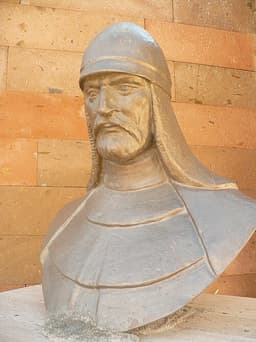
Alp Tigin
Emperor · Medieval
50.5Total

Moctezuma I
Emperor · Medieval
58.9Total
Basic Information
Born
911
1398
Died
963
1469
Era
Medieval
Medieval
Nationality
Ghaznavid Empire
Aztec Empire
Occupation
Emperor
Emperor
Civilization
Middle Eastern
Other
Score Comparison
Military (10%)
55.0
82.0
Political (20%)
33.6
45.0
Influence (20%)
56.4
58.3
Legacy (20%)
49.2
56.0
Leadership (15%)
50.7
66.0
Strategy (15%)
60.0
55.0
TOTAL
50.5
58.9
Alp Tigin — Complete Timeline
961 AD
Rebellion against the SamanidsPolitical Action◆ Major
Alp Tigin rebelled against the Samanid ruler Mansur I after being passed over for a governorship. He marched from Nishapur to Ghazni, defeating Samanid forces along the way, and established his own rule in eastern Afghanistan.
Impact: regional
963 AD
Consolidation of GhazniPolitical Action
Alp Tigin fortified Ghazni and organized a military state based on slave soldiers (ghilman). He established a stable administration that attracted scholars and merchants, turning Ghazni into a major regional power center.
Impact: regionalconstructive
Moctezuma I — Complete Timeline
1428 AD
Conquest of the TepanecsWar◆ Major
Itzcoatl led the Triple Alliance forces in a war against the Tepanecs of Azcapotzalco, the dominant power in the region. The victory broke Tepanec hegemony and established Tenochtitlan as the leading city-state in central Mexico.
WarTepanec WarAztec Expansion
Impact: regional
Formed the Triple AlliancePolitical Action
Itzcoatl, as tlatoani of Tenochtitlan, formed the Triple Alliance with Texcoco and Tlacopan. This military and political pact created the Aztec Empire, enabling coordinated conquests and the subjugation of neighboring city-states in the Valley of Mexico.
Aztec EmpireAlliancePolitical Foundation
Impact: regional
1430 AD
Burned Historical CodicesCultural◆ Major
Itzcoatl ordered the burning of historical codices from conquered peoples, rewriting Aztec history to legitimize his rule and the empire's divine origins. This act destroyed pre-Aztec records and reshaped Mesoamerican historical memory.
Cultural DestructionHistorical RevisionAztec Ideology
Impact: regionaldestructive
Expert Analysis
Alp Tigin vs Moctezuma I
# The Emperor and the Slave: Two Paths to Power in the Medieval World
In the autumn of 1428, as Moctezuma I stood beside his uncle Itzcoatl on the great pyramid of Tenochtitlan, he watched the smoke rise from the conquered city of Azcapotzalco. Half a world away, in 963, an aging Turkic slave commander named Alp Tigin looked out from the walls of Ghazni, a fortress he had seized through years of patient rebellion. Both men stood at the threshold of empire—yet their journeys could not have been more different. One inherited a throne through blood and prophecy; the other carved his kingdom from the ashes of defeat.
Origins
Moctezuma I, born in 1398, emerged into a world of shifting alliances and constant warfare. The Aztec people were latecomers to the Valley of Mexico, a warrior tribe who had learned that survival meant forging bonds of fear and loyalty. His uncle Itzcoatl, a shrewd politician, recognized in young Moctezuma a mind suited for both war and administration. The Aztecs had no concept of a "gentle birth" in the European sense—nobility was earned through bloodshed and sacrifice. Moctezuma absorbed this ethos from childhood, learning that the gods demanded human hearts and that the emperor's duty was to provide them.
Alp Tigin, born in 911, knew no such certainties. A Turkic slave purchased in the markets of Central Asia, he entered the Samanid court as property. In the Islamic world of the 10th century, slave soldiers—the *ghilman*—could rise to astonishing heights, but only through ruthless ambition and military skill. Alp Tigin had no lineage to claim, no gods to appease, only the sword and the favor of his masters. Where Moctezuma's world was one of ritual and hierarchy, Alp Tigin's was a brutal meritocracy where a man's past meant nothing and his future meant everything.
Rise to Power
The year 1428 changed everything for Moctezuma. Itzcoatl, as tlatoani of Tenochtitlan, formed the Triple Alliance with the city-states of Texcoco and Tlacopan—a military and political pact that would reshape Mesoamerica. Moctezuma, then a young warrior, fought alongside his uncle in the war against the Tepanecs of Azcapotzalco, the region's dominant power. The victory was total. But Itzcoatl understood that military conquest alone could not secure their rule. In 1430, he ordered the burning of historical codices from conquered peoples, rewriting Aztec history to legitimize his dynasty. Moctezuma watched and learned: power was not just won—it was invented.
Alp Tigin's path was lonelier. In 961, after decades of loyal service, he was passed over for the governorship of Khorasan by the Samanid ruler Mansur I. The insult was deliberate, a signal that the slave had risen too high. Alp Tigin chose rebellion. Marching from Nishapur with a small band of followers, he retreated eastward to the remote fortress of Ghazni. There, over two years, he fortified the city and organized a military state based entirely on his slave soldiers—men who, like him, had no ties to local nobility and owed everything to their commander. By 963, when he died, Alp Tigin had not merely survived—he had founded a dynasty.
Leadership & Governance
Moctezuma I ruled as a living god, but his governance was surprisingly pragmatic. His military score of 73.2 and political score of 85.7 reflect a leader who understood that conquest required administration as much as courage. He expanded the empire through systematic campaigns, but he also built aqueducts, codified laws, and institutionalized the tribute system that would make Tenochtitlan one of the world's great cities. His leadership was collective—the Triple Alliance required constant negotiation with allied kings. His strategy score of 59.7, however, suggests that his genius lay more in consolidation than in battlefield brilliance.
Alp Tigin governed with a different logic. His military and political scores—48.6 and 50.7—are modest, but his influence score of 71.6 reveals a man who understood institutional power. He created a state where the army was the government, and the slave soldier was the ideal citizen. This was not tyranny for its own sake—it was a survival mechanism. In a region torn by tribal loyalties and dynastic feuds, the *ghilman* system offered stability. Alp Tigin's Ghazni was a fortress state, lean and efficient, built to endure rather than to dazzle.
Triumph & Tragedy
Moctezuma's greatest triumph was the Triple Alliance itself—a structure so resilient that it would outlast his death and enable the Aztec Empire to dominate Mesoamerica for another half century. His tragedy came later, in the shadow of his namesake, Moctezuma II, who would face the Spanish. The first Moctezuma could not have imagined that his system of tribute and sacrifice, so carefully constructed, would one day make enemies of every conquered people—and that those enemies would welcome Cortés.
Alp Tigin's triumph was Ghazni itself—a city he transformed from a provincial outpost into the capital of a dynasty that would, under his successors, conquer much of northern India. His tragedy was that he did not live to see it. He died in 963, just as his creation was taking shape, leaving his son and later his slave-turned-son-in-law Mahmud to reap the glory. He was, in the end, a founder who never ruled an empire.
Character & Destiny
Moctezuma I was shaped by a worldview that demanded expansion. The Aztec gods required human sacrifice, and sacrifice required prisoners, and prisoners required war. This was not cruelty for its own sake—it was a theological imperative. Moctezuma's destiny was to feed the sun. Alp Tigin, by contrast, was shaped by the cold logic of the slave market. He had no gods to serve, only ambition. His destiny was to prove that a man born with nothing could leave a dynasty.
Both men understood that legitimacy was a fiction. Moctezuma burned codices; Alp Tigin built a state on loyalty to himself alone. Neither could afford sentimentality.
Legacy
Moctezuma I is remembered today as a builder-emperor, the architect of Aztec greatness. His legacy score of 67.4 reflects the shadow that fell over his civilization—the Spanish conquest erased much of what he built. Yet in Mexican national memory, he remains a figure of profound ambivalence: the emperor who expanded an empire that would be destroyed.
Alp Tigin's legacy is more ambiguous. His influence score of 71.6 points to the Ghaznavid dynasty that followed, but his name is little known outside specialist circles. He is remembered as a footnote—the slave who started an empire. And perhaps that is fitting. For Moctezuma, history was a story of gods and kings. For Alp Tigin, history was a story of what a man could make of himself when he had nothing left to lose.
Conclusion
Standing at their respective heights of power, Moctezuma I and Alp Tigin represent two poles of medieval leadership: the inheritor and the self-made, the priest-king and the soldier-slave. One ruled by blood and prophecy; the other by steel and survival. Their worlds never touched, but their question is eternal: What makes a ruler legitimate? Moctezuma answered with codices and sacrifices; Alp Tigin answered with slave armies and fortress walls. Both answers worked—until they didn't. And that, perhaps, is the only lesson history ever truly teaches.
Rankings
🥇
Moctezuma ILeader
Mil: 82.0Pol: 45.0Inf: 58.3
58.9
🥈
Alp Tigin
Mil: 55.0Pol: 33.6Inf: 56.4
50.5
+8.4 behind
How This Comparison Works
Algorithm
Each figure is scored on 6 dimensions (0—100 scale) based on structured historical data: Military (10%), Political (20%), Influence (20%), Legacy (20%), Leadership (15%), Strategy (15%). The weighted total produces the final ranking.
Data Sources
Scores are computed from structured sub-indicators in the database. Scale factors adjust for era (Ancient ×0.85, Modern ×1.0) and civilization size (Eastern ×1.05, Other ×0.80) to account for differences in population and military scale.
Maximum 3 Figures
Comparisons are limited to 2—3 figures to ensure readability and statistical meaningfulness.
Error Margins
±5 points per dimension — Sub-scores are derived from historical records with inherent uncertainty. Two figures within 5 points on a dimension should be considered roughly equivalent in that area.
Total Score Accuracy
±3 points overall — The weighted combination of 6 dimensions produces a total score with approximately ±3 points of uncertainty. Differences of less than 3 points are not statistically significant— the figures are effectively tied.
Known Limitations
- Historical records are incomplete and uneven across civilizations
- Figures from oral-tradition societies may be underrepresented
- Occupation labels can misclassify multi-role figures
- Scores measure capability and impact, not moral character
- Quantitative scoring is a comparison tool, not absolute truth
Capability Radar
Military (10%) — Battles & Warfare
Battles
45
65
Win Rate
50
70
Expansion
50
80
Political (20%) — Governance & Reform
Reform
20
60
Diplomacy
30
65
Economy
20
70
Influence (20%) — Cultural & Global Reach
Cultural
30
60
Global
30
50
Legacy (20%) — Historical Impact
Historical
45
65
Longevity
40
55
Leadership (15%) — Power & Stability
Tenure
25
70
Stability
25
65
Strategy (15%) — Tactics & Innovation
Strategy
45
75
Tactics
40
60
Reform
30
55
Similar Comparisons
Comments & Discussion
SLAVE-SWORD-SCEPTIC6/16/2026
Alp Tigin’s rise proves that slave soldier systems weren’t just brutal; they were rational power engines. A Turkic ghulam bought in Bukhara ends up crushing Samanid armies and founding the Ghaznavid dynasty—that’s not luck, that’s institutionalized meritocracy. Moctezuma I? He’s a product of nepotism with a blood altar. Glad he kept Tenochtitlan fed, but give me a self-forged warlord any day. Tigin never inherited a throne; he took one by sword, smarts, and patience.
墨镜史官6/16/2026
别拿Moctezuma I跟Alp Tigin比,一个靠神明背书,一个靠战马翻身。Moctezuma继承的是Itzcoatl军功积累的班子,天时地利人和全占;Alp Tigin呢?孤儿奴隶出身,连族谱都没有,靠波斯宫廷政变和军队哗变抢下加兹尼。你给Moctezuma换个老爹试试,他立马变路人。真正硬核的是从底层杀穿的,不是靠舅舅扶持的祭司国王。
DATA_DRILL6/16/2026
The comparison ignores the numbers. Moctezuma I ruled a triple alliance with up to 300,000 tributary subjects; Alp Tigin’s Ghazni was a garrison city with maybe 30,000 mouths. One administered a continental grain-and-blood economy, the other ran a frontier fort. Controlling human sacrifice logistics across an empire of millions is a bigger administrative feat than a slave general grabbing a provincial citadel. We need to scale these histories properly. Moctezuma’s rise is structurally more impre
紫禁城挖墙人6/16/2026
Moctezuma I那套神权体系根本撑不住长期统治,他自己都清楚:遇到旱灾就得人造暴雨。Alp Tigin务实多了,打下加兹尼后立刻娶当地贵族寡妇,搞联姻,打通贸易路,还给士兵分地。反观墨西加帝国,年年献祭上万俘虏,人力资源如此浪费,迟早崩盘。莫说历史选择,光资源管理一项,Tigin就赢三条街。奴隶出身不是弱项,是他最强的简历。