Loading...
Alp Tigin vs Kirtivarman II
Alp Tigin leads by 13.6 pts · 2 figures compared
…
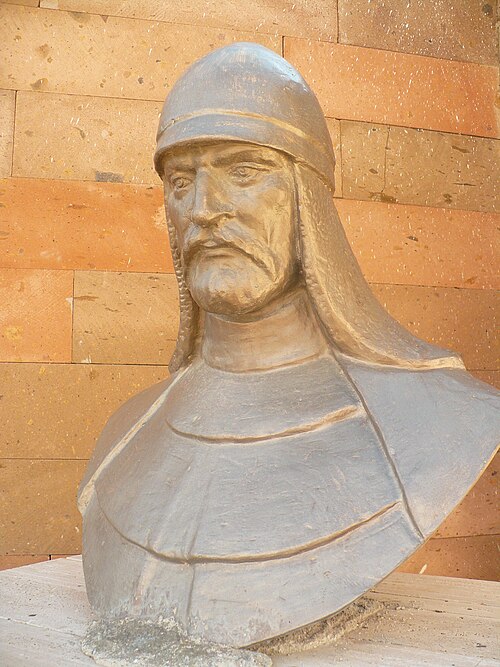
Alp Tigin
Emperor · Medieval
56.5Total
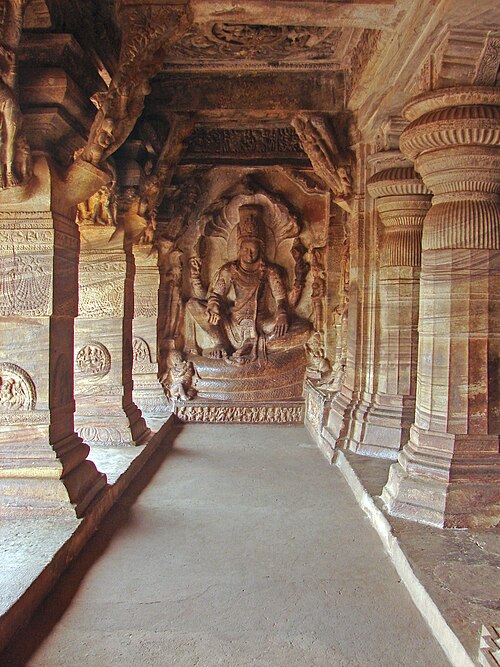
Kirtivarman II
Emperor · Medieval
42.9Total
Basic Information
Born
911
746
Died
963
757
Era
Medieval
Medieval
Nationality
Ghaznavid Empire
India
Occupation
Emperor
Emperor
Civilization
Middle Eastern
Indian
Score Comparison
Military (10%)
48.6
46.0
Political (20%)
50.7
36.5
Influence (20%)
71.6
59.9
Legacy (20%)
62.1
48.2
Leadership (15%)
47.0
32.7
Strategy (15%)
51.1
30.0
TOTAL
56.5
42.9
Rankings
🥇
Alp TiginLeader
Mil: 48.6Pol: 50.7Inf: 71.6
56.5
🥈
Kirtivarman II
Mil: 46.0Pol: 36.5Inf: 59.9
42.9
+13.6 behind
How This Comparison Works
Algorithm
Each figure is scored on 6 dimensions (0—100 scale) based on structured historical data: Military (10%), Political (20%), Influence (20%), Legacy (20%), Leadership (15%), Strategy (15%). The weighted total produces the final ranking.
Data Sources
Scores are computed from structured sub-indicators in the database. Scale factors adjust for era (Ancient ×0.85, Modern ×1.0) and civilization size (Eastern ×1.05, Other ×0.80) to account for differences in population and military scale.
Maximum 3 Figures
Comparisons are limited to 2—3 figures to ensure readability and statistical meaningfulness.
Error Margins
±5 points per dimension — Sub-scores are derived from historical records with inherent uncertainty. Two figures within 5 points on a dimension should be considered roughly equivalent in that area.
Total Score Accuracy
±3 points overall — The weighted combination of 6 dimensions produces a total score with approximately ±3 points of uncertainty. Differences of less than 3 points are not statistically significant— the figures are effectively tied.
Known Limitations
- Historical records are incomplete and uneven across civilizations
- Figures from oral-tradition societies may be underrepresented
- Occupation labels can misclassify multi-role figures
- Scores measure capability and impact, not moral character
- Quantitative scoring is a comparison tool, not absolute truth
Capability Radar
Military (10%) — Battles & Warfare
Battles
45
15
Win Rate
50
10
Expansion
50
5
Political (20%) — Governance & Reform
Reform
20
10
Diplomacy
30
10
Economy
20
15
Influence (20%) — Cultural & Global Reach
Cultural
30
10
Global
30
5
Legacy (20%) — Historical Impact
Historical
45
15
Longevity
40
10
Leadership (15%) — Power & Stability
Tenure
25
20
Stability
25
10
Strategy (15%) — Tactics & Innovation
Strategy
45
10
Tactics
40
15
Reform
30
5
Expert Analysis
Alp Tigin vs Kirtivarman II
**The Slave Who Built an Empire, the King Who Lost a Dynasty**
History remembers founders and last kings in very different lights. The former are celebrated for their audacity; the latter are often reduced to footnotes, the men who let an empire slip through their fingers. Consider two rulers of the medieval world, separated by two centuries and a continent: Alp Tigin, a Turkic slave commander who carved out the Ghaznavid dynasty in the harsh terrain of eastern Afghanistan, and Kirtivarman II, the last Badami Chalukya king of southern India, who watched his lineage crumble before the rising power of the Rashtrakutas. One rose from nothing to build a state that would echo for generations; the other inherited a throne and lost it in a single catastrophic battle. What drove these two men to such opposite ends? The answer lies not in the stars, but in the soil of ambition, the nature of power, and the unforgiving logic of their respective ages.
**Origins**
Alp Tigin was born around 911, a Turkic boy taken from the steppes and sold into the slave markets of Central Asia. In the Samanid Empire, military slavery was a ladder, not a cage. A clever, ruthless slave could rise through the ranks of the *ghilman*—elite slave soldiers—and become a general, even a kingmaker. Alp Tigin did exactly that. His world was one of constant competition, where loyalty was a currency and betrayal a tool. Every step he took was a calculation, a gamble against death or obscurity.
Kirtivarman II, by contrast, was born around 746 into the purple of the Badami Chalukya dynasty. His ancestors had ruled the Deccan for over a century, patronizing temples, commissioning cave sculptures, and fighting off Pallava and Pandya rivals. He inherited a stable kingdom, a ready-made bureaucracy, and a military tradition that had crushed enemies for generations. He never had to claw his way up from nothing. That difference—the gulf between the man who must invent himself and the man who is born to rule—would define everything.
**Rise to Power**
Alp Tigin’s path to power was a study in calculated rebellion. In 961, after serving as a loyal Samanid general, he expected the governorship of Khorasan. Instead, the Samanid ruler Mansur I passed him over for a rival. The slight was not just personal; it was existential. A slave commander who accepted humiliation was a slave commander who would be discarded. So Alp Tigin rebelled. He marched his army from Nishapur across the desert, defying the Samanid court, and seized the remote fortress city of Ghazni. He did not try to topple the Samanids—he knew his limits. Instead, he carved out a small, defensible principality in the mountains, a base from which he could defy his former masters. It was a gambler’s move, but he had no other cards to play.
Kirtivarman II’s rise was the opposite: it was an inheritance, not a conquest. He became king around 746, inheriting a realm that had been weakened by internal succession struggles and the growing ambitions of its feudatories. Among those feudatories was Dantidurga, a Rashtrakuta chief who had been a Chalukya vassal. Kirtivarman II seems to have underestimated the threat. He did not move decisively to crush the Rashtrakutas when they were small; he allowed them to grow strong, to forge alliances, to gather armies. Where Alp Tigin saw every slight as a crisis to be exploited, Kirtivarman II saw a world that would remain as it had always been.
**Leadership & Governance**
Alp Tigin governed Ghazni with the instincts of a soldier and the cunning of a survivor. He fortified the city, organized a military state built entirely around his slave soldiers—the *ghilman*—and created a system where loyalty was enforced by dependence. He did not try to win the hearts of the local population; he controlled them through force and patronage. His rule was pragmatic, harsh, and effective. He knew that his power rested on the swords of men who owed him everything, and he made sure they never forgot it.
Kirtivarman II, by contrast, governed as a traditional Indian monarch. He presided over a court that valued ritual, lineage, and the patronage of Brahmin priests and temple builders. He was not a reformer; he was a caretaker of a legacy. The Chalukya administrative system, with its village assemblies and tax collectors, continued to function, but it lacked the iron grip needed to hold a fractious empire together. When the Rashtrakuta threat emerged, Kirtivarman II’s response was slow, reactive, and ultimately fatal. He commanded armies, but he did not command the fierce personal loyalty that Alp Tigin inspired in his *ghilman*.
**Triumph & Tragedy**
Alp Tigin’s greatest moment was not a grand battle but a quiet consolidation. By 963, the year of his death, he had transformed Ghazni from a dusty frontier post into the capital of a viable state. He had defied the Samanids, survived their counterattacks, and established a dynasty that would, under his successors, conquer vast swaths of India and Iran. His tragedy was that he died before he could see the full fruit of his labor—but he died in power, not in defeat.
Kirtivarman II’s tragedy was swift and absolute. In 753, the Rashtrakuta chief Dantidurga marched against him. The battle was decisive. Kirtivarman II was defeated, his army shattered, his kingdom lost. The Badami Chalukya dynasty, which had ruled for over a century, ended in a single day. Kirtivarman II lived a few more years, a king without a throne, and died around 757, a forgotten footnote in the rise of the Rashtrakutas.
**Character & Destiny**
Alp Tigin’s character was forged in the crucible of slavery: paranoid, ambitious, and utterly pragmatic. He trusted no one completely, but he understood that power was a game of alliances and betrayals. He did not dream of vast empires; he dreamed of survival, and that focus made him effective. Kirtivarman II’s character was shaped by the confidence of inherited authority: complacent, traditional, and slow to adapt. He believed that the Chalukya name would protect him, that the gods and the past would shield his throne. They did not.
**Legacy**
Alp Tigin’s legacy was the Ghaznavid Empire itself. His son, and later his slave-successor Mahmud of Ghazni, would turn his small fortress into a sprawling empire that stretched from the Caspian Sea to the Ganges. Alp Tigin is remembered as the founder, the man who proved that a slave could build a dynasty. Kirtivarman II is remembered only as the last Chalukya king, a cautionary tale of how quickly a great house can fall. His name survives in inscriptions and academic footnotes, but no one builds monuments to a man who lost everything.
**Conclusion**
In the end, the difference between Alp Tigin and Kirtivarman II is not a matter of intelligence or courage, but of context and character. Alp Tigin had nothing to lose, so he risked everything and won a kingdom. Kirtivarman II had everything to lose, so he risked nothing and lost it all. One was a slave who became a king; the other was a king who became a ghost. History, it seems, favors the desperate over the comfortable.
Frequently Asked Questions
Who ranks highest among Alp Tigin, Kirtivarman II?
Our six-dimension data-driven scoring system compares Military, Political, Influence, Legacy, Leadership, and Strategy to determine the ranking among Alp Tigin, Kirtivarman II. See the full score breakdown on this page.
How accurate is this historical comparison?
Scores are computed from structured historical sub-indicators with era and civilization scale factors. The system has approximately ±3 points of uncertainty per dimension. Differences under 3 points are not statistically significant.
Alp Tigin — Complete Timeline
961 AD
Rebellion against the SamanidsPolitical Action◆ Major
Alp Tigin rebelled against the Samanid ruler Mansur I after being passed over for a governorship. He marched from Nishapur to Ghazni, defeating Samanid forces along the way, and established his own rule in eastern Afghanistan.
Impact: regional
963 AD
Consolidation of GhazniPolitical Action
Alp Tigin fortified Ghazni and organized a military state based on slave soldiers (ghilman). He established a stable administration that attracted scholars and merchants, turning Ghazni into a major regional power center.
Impact: regionalconstructive
Kirtivarman II — Complete Timeline
753 AD
Defeat by DantidurgaWar◆ Major
Kirtivarman II, the last Badami Chalukya king, was defeated by the Rashtrakuta chief Dantidurga. This battle ended the Badami Chalukya dynasty and established Rashtrakuta rule over the Deccan region.
Impact: regionaldestructive
Similar Comparisons
Comments & Discussion
Vikramaditya's Ghost6/16/2026
Alp Tigin is romanticized as a "self-made man," but let's be real—he was a military opportunist who exploited Samanid instability. His rise wasn't pure merit; it was a classic coup by a slave general who saw a power vacuum and grabbed it. Kirtivarman II, meanwhile, inherited a stable Chalukya state that had lasted centuries. He lost one battle to Dantidurga's Rashtrakutas, and history writes him off as a failure. That's lazy history. One life was a gamble, the other a tragedy of bad timing. Neit
数据侦探6/16/2026
别被“从奴隶到帝王”的故事骗了。阿尔普·特勤的成功很大程度上靠的是萨曼王朝内部崩溃,不是个人能力。对比基尔提瓦尔曼二世,他丢掉的是一战,但查鲁基亚王朝在743年帕塔达卡尔战役前的核心领土—今卡纳塔克—不比加兹尼小。数据不撒谎:加兹尼王朝靠抢劫印度神庙续命,查鲁基亚靠税收稳定。特勤的“帝国”是纸老虎,国王的失败才是真局势逆转。
The Metatext Scribe6/16/2026
History loves a zero-to-hero narrative, but Alp Tigin's story is a textbook case of *ghilman* social mobility—a phenomenon deeply embedded in Islamic slave soldier systems that produced dozens like him. Kirtivarman II's fall isn't romantic because it's about *lineage* and *loss*, which historians find boring. Yet, his defeat at the Battle of Manappuranga (c. 740 CE) was a seismic shift: it ended a 200-year Chalukya golden age. Alp Tigin's "empire" barely outlived his death. Which legacy actually
长城下的史官6/16/2026
阿尔普·特勤的故事被捧得太高了。他从奴隶到将军,再叛变自立,这在中国史官眼里不过是“逆臣篡位”。基尔提瓦尔曼二世虽然战败,但他是正统继承人,死守祖业。特勤在加兹尼建立王朝后,传给儿子,江山没守几代就被马哈茂德“升级”了。如果按儒家标准,特勤是乱臣贼子,二世是悲情末君。哪个真正值得写进史书?我选后者,至少他死得像个王。
Rebel with a Cause6/16/2026
Alp Tigin gets a pass because "slave to king" is a banger of a story, but look at his methods: he poisoned rivals, backstabbed his Samanid overlord, and ran off to Ghazni like a fugitive. Kirtivarman II simply lost a war to a stronger