Loading...
Abu Jafar al-Mansur vs Kirtivarman II
Abu Jafar al-Mansur leads by 29.1 pts · 2 figures compared
…
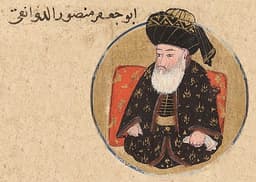
Abu Jafar al-Mansur
Emperor · Medieval
65.5Total
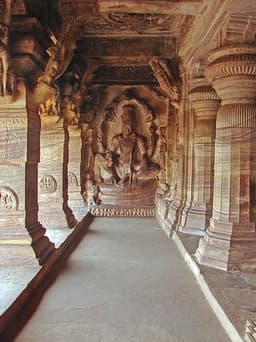
Kirtivarman II
Emperor · Medieval
36.4Total
Basic Information
Born
714
746
Died
775
757
Era
Medieval
Medieval
Nationality
Abbasid Caliphate
India
Occupation
Emperor
Emperor
Civilization
Middle Eastern
Indian
Score Comparison
Military (10%)
65.0
21.2
Political (20%)
75.0
30.7
Influence (20%)
40.0
46.3
Legacy (20%)
80.0
37.5
Leadership (15%)
82.0
33.6
Strategy (15%)
55.0
36.8
TOTAL
65.5
36.4
Abu Jafar al-Mansur — Complete Timeline
754 AD
Consolidated Abbasid Power After the RevolutionPolitical Action◆ Major
Al-Mansur eliminated rivals including his uncle Abd Allah ibn Ali and the Barmakids, securing Abbasid control. He established a centralized bureaucracy and suppressed rebellions, including the Rawandiyya uprising.
Impact: global
762 AD
Founded the City of BaghdadPolitical Action
Abu Jafar al-Mansur founded the city of Baghdad as the new capital of the Abbasid Caliphate. The Round City was designed as a center of administration and culture, becoming one of the largest cities in the world.
Impact: globalconstructive
770 AD
Patronized Translation of Greek WorksCultural◆ Major
Al-Mansur supported the translation of Greek philosophical and scientific texts into Arabic. This initiative laid the foundation for the Abbasid translation movement, which preserved and expanded classical knowledge.
Impact: globalconstructive
Kirtivarman II — Complete Timeline
753 AD
Defeat by DantidurgaWar◆ Major
Kirtivarman II, the last Badami Chalukya king, was defeated by the Rashtrakuta chief Dantidurga. This battle ended the Badami Chalukya dynasty and established Rashtrakuta rule over the Deccan region.
Impact: regionaldestructive
Expert Analysis
Abu Jafar al-Mansur vs Kirtivarman II
### The Builder and the Broken
On a dusty battlefield in 753, the last king of the Badami Chalukyas watched his world collapse. Kirtivarman II, a ruler whose bloodline had once commanded the Deccan for two centuries, saw his army shatter before the forces of Dantidurga, a Rashtrakuta chief. Nine years later, in 762, a very different emperor stood on the banks of the Tigris River, drawing a circle in the sand. Abu Jafar al-Mansur, the second Abbasid caliph, was sketching the plan for a city that would become the intellectual heart of the world: Baghdad. One man ended a dynasty; another began a civilization. What drove such opposite outcomes?
### Origins
Kirtivarman II was born into twilight. The Chalukya dynasty, which had once humbled the Pallavas and patronized the great cave temples of Badami, was exhausted by the time he inherited the throne in 746. His ancestors had spent their power in endless wars, leaving a kingdom drained of resources and loyalty. The boy-king grew up in a court where the old stories of glory were already fading into legend—a prince trained to preserve, not to conquer.
Al-Mansur, by contrast, was forged in revolution. Born in 714 in Humeima, Jordan, he was the grandson of a slave who had become a rebel leader. His family had spent decades secretly organizing the overthrow of the Umayyad Caliphate, and al-Mansur learned statecraft in the shadows of conspiracy. His older brother, as-Saffah, became the first Abbasid caliph, but it was al-Mansur who had managed the networks of spies and allies that made the revolution possible. He came to power not as an heir to stability, but as an architect of change.
### Rise to Power
Kirtivarman II never truly rose—he merely inherited. His father had already lost key territories to the rising Rashtrakutas, and the young king spent his reign trying to hold a crumbling house together. When Dantidurga finally marched, Kirtivarman’s response was defensive and desperate. He had no grand strategy, no alliances to call upon, no vision beyond survival. The battle of 753 was not a contest between equals; it was a collapse waiting to happen.
Al-Mansur’s ascent was a masterclass in political murder. In 754, after his brother’s death, he faced a revolt from his uncle Abd Allah ibn Ali, a popular general who had led the Abbasid armies. Al-Mansur did not meet him in open battle. Instead, he used negotiation, bribery, and betrayal—promising his uncle peace, then executing him. He systematically eliminated the Barmakids, the Persian family that had helped his dynasty rise, once they grew too powerful. Every rival, every ally who might become a threat, was crushed. Power for al-Mansur was not a throne to sit on; it was a weapon to wield.
### Leadership & Governance
Kirtivarman II governed as his ancestors had, by tradition. He maintained the Chalukya administrative system, patronized Hindu temples, and issued copper-plate grants to Brahmins. These were not bad policies, but they were policies for a stable age, not a dying one. He lacked the ruthlessness to purge disloyal vassals or the imagination to forge new alliances. His military was competent but uninspired—a defensive force that could not adapt to the Rashtrakuta cavalry tactics. His political score of 36.5 reflects a ruler who managed decline rather than reversing it.
Al-Mansur governed with cold precision. He founded Baghdad in 762 not as a capital, but as a machine: the Round City was designed with four gates, each leading to a different province, each gate controlled by a different army division. He centralized tax collection, created a postal intelligence system, and personally reviewed every major appointment. His patronage of the translation movement—commissioning Greek philosophical works into Arabic—was not mere cultural vanity. It was a deliberate strategy: by making Baghdad the center of knowledge, he made it indispensable. Every scholar who came to his court became a hostage to the caliphate’s glory. His leadership score of 79.4 reflects a man who understood that power is built, not inherited.
### Triumph & Tragedy
Kirtivarman II’s tragedy is that he had no triumph. His entire reign was a slow defeat, culminating in the battle of 753 where he lost not just a war but his dynasty’s existence. After his defeat, he vanishes from history—no dramatic death, no last stand, just the quiet extinction of a royal line. His legacy score of 48.2 is the arithmetic of oblivion.
Al-Mansur’s triumph was Baghdad itself, a city that would house the House of Wisdom and preserve the works of Aristotle and Galen while Europe slept through its Dark Ages. But his tragedy was the price of that creation. He became paranoid, isolating himself in his palace, suspicious of his own sons. He once said, “I am the sword of God, and the people are the sheath; if the sheath is too tight, it must be broken.” He broke many sheaths, and in doing so, created a state that depended entirely on his iron will. When he died in 775, his son inherited a machine that only a tyrant could operate.
### Character & Destiny
Kirtivarman II was a man born into the wrong century. He was pious, traditional, and honorable—qualities that might have made him a beloved king in 700, but were fatal in 750. His personality was shaped by a dynasty that had already peaked; he could only slow the fall, not stop it. His military score of 46.0 and strategy of 30.0 show a man who fought with his ancestors’ tactics against enemies who had learned new ones.
Al-Mansur was a man who made his own century. He was cold, calculating, and visionary—qualities that made him feared and hated, but also made him the founder of the Abbasid golden age. His personality was forged in conspiracy and betrayal; he trusted no one, and therefore no one could betray him. His strategy score of 57.0 understates his genius, because his real genius was not on the battlefield but in the architecture of power itself.
### Legacy
Kirtivarman II is remembered only as a footnote: the last Chalukya, the one who lost it all. His temples still stand at Pattadakal, but few visitors know the name of the king who built them. He represents the tragedy of dynastic decay—the moment when a great house becomes a hollow shell, waiting for a conqueror.
Al-Mansur’s legacy is Baghdad, a city that survived his death by centuries and became the symbol of Islamic civilization’s golden age. But his legacy is also a warning: the city he built was a fortress of centralized power, and when that power weakened, the fortress fell. The Mongols who sacked Baghdad in 1258 were not so different from the Rashtrakutas who ended Kirtivarman’s line—they were just the final symptom of a deeper rot.
### Conclusion
Standing at the ruins of the Round City today, or among the silent temples of Badami, one feels the same weight of time. Kirtivarman II and al-Mansur were both kings who faced the same fundamental question: how do you keep a dynasty alive? One answered with tradition, and failed. The other answered with terror and vision, and succeeded—for a while. Their stories remind us that history does not reward the good or the bad, but the necessary. Al-Mansur was necessary for his age; Kirtivarman was not. And that, as much as any battle or city, is the difference between building a civilization and ending one.
Rankings
🥇
Abu Jafar al-MansurLeader
Mil: 65.0Pol: 75.0Inf: 40.0
65.5
🥈
Kirtivarman II
Mil: 21.2Pol: 30.7Inf: 46.3
36.4
+29.1 behind
How This Comparison Works
Algorithm
Each figure is scored on 6 dimensions (0—100 scale) based on structured historical data: Military (10%), Political (20%), Influence (20%), Legacy (20%), Leadership (15%), Strategy (15%). The weighted total produces the final ranking.
Data Sources
Scores are computed from structured sub-indicators in the database. Scale factors adjust for era (Ancient ×0.85, Modern ×1.0) and civilization size (Eastern ×1.05, Other ×0.80) to account for differences in population and military scale.
Maximum 3 Figures
Comparisons are limited to 2—3 figures to ensure readability and statistical meaningfulness.
Error Margins
±5 points per dimension — Sub-scores are derived from historical records with inherent uncertainty. Two figures within 5 points on a dimension should be considered roughly equivalent in that area.
Total Score Accuracy
±3 points overall — The weighted combination of 6 dimensions produces a total score with approximately ±3 points of uncertainty. Differences of less than 3 points are not statistically significant— the figures are effectively tied.
Known Limitations
- Historical records are incomplete and uneven across civilizations
- Figures from oral-tradition societies may be underrepresented
- Occupation labels can misclassify multi-role figures
- Scores measure capability and impact, not moral character
- Quantitative scoring is a comparison tool, not absolute truth
Capability Radar
Military (10%) — Battles & Warfare
Battles
60
15
Win Rate
65
10
Expansion
70
5
Political (20%) — Governance & Reform
Reform
90
10
Diplomacy
80
10
Economy
85
15
Influence (20%) — Cultural & Global Reach
Cultural
85
10
Global
80
5
Legacy (20%) — Historical Impact
Historical
90
15
Longevity
85
10
Leadership (15%) — Power & Stability
Tenure
85
20
Stability
75
10
Strategy (15%) — Tactics & Innovation
Strategy
70
10
Tactics
55
15
Reform
75
5
Similar Comparisons
Comments & Discussion
MansurTheBuilder6/16/2026
Al-Mansur didn't just build a city; he engineered a civilization. Baghdad's Round City was a masterpiece of administrative geometry. While Kirtivarman inherited a crumbling dynasty and watched it dissolve, Mansur founded the House of Wisdom, attracting scholars from Persia, India, and Greece. One guy was a glorified caretaker; the other, a visionary architect of knowledge. Kirtivarman's legacy? A footnote. Mansur's? The intellectual bedrock of the Golden Age.
数据拆穿师6/16/2026
夸大其词!巴格达的圆周城市在762年动工,但曼苏尔在754年继位,头八年都在镇压叛乱。他的神化是事后吹嘘。对比下,基尔提跋摩二世在753年战败,但查鲁克亚王朝的影响延续到巴达米石窟,至今联合国教科文组织认证。曼苏尔的一个城市vs查鲁克亚的两百年文化输出?别被阿拉伯宣传洗脑了,建筑不等于文明。
ClassicsSkeptic6/16/2026
Mansur waxes poetic, but his Baghdad was built on slave labor and dusty loyalty. Kirtivarman II's failure? At least he didn't betray his heritage—he fought a losing battle against the Rashtrakutas, a worthy foe. Mansur, the backstabbing pragmatist, crushed his own uncle Abdullah al-Mahdi and then pretended to be a philosopher-king. Give me a tragic king over a calculating bureaucrat any day. Heritage over hubris.
墨守成规者6/16/2026
基尔提跋摩二世输得不冤,但查鲁克亚的衰落不是他一个人的锅。祖父维克拉玛迪亚二世欺负帕拉瓦时已经透支国力,他接班时只有空钱袋和旧传说。曼苏尔呢?他在754年处决了英雄阿布·穆斯林,这种忘恩负义才叫衰败的开端。一个是被时代压垮,另一个是自我膨胀——我觉得输家比伪君子更值得同情。
EmpireHistorian6/16/2026
事实是,基尔提跋摩二世在748年接过的是一个火药桶:查鲁克亚与罗湿陀罗拘陀的边境摩擦早在他父亲时就激化。但曼苏尔在754年继承的哈里发国正处巅峰,幅员从西班牙到印度。关键在于资源不对等:曼苏尔有阿拔斯革命的红利,基尔提跋摩只有债务和仇恨。比较统治时长?曼苏尔活了20年,基尔提跋摩8年就被推翻,这就是实力差距。