Loading...
Henry the Fowler vs Kirtivarman II
Henry the Fowler leads by 24.5 pts · 2 figures compared
…
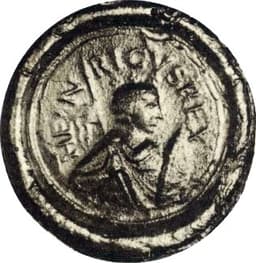
Henry the Fowler
Emperor · Medieval
60.9Total

Kirtivarman II
Emperor · Medieval
36.4Total
Basic Information
Born
876
746
Died
936
757
Era
Medieval
Medieval
Nationality
East Francia
India
Occupation
Emperor
Emperor
Civilization
Western
Indian
Score Comparison
Military (10%)
70.0
21.2
Political (20%)
59.3
30.7
Influence (20%)
55.0
46.3
Legacy (20%)
52.0
37.5
Leadership (15%)
85.0
33.6
Strategy (15%)
55.0
36.8
TOTAL
60.9
36.4
Henry the Fowler — Complete Timeline
919 AD
Election as King of East FranciaPolitical Action
Henry the Fowler was elected King of East Francia by the Saxon and Frankish nobles at Fritzlar on May 6, 919. He was the first Saxon king, marking the transition from Carolingian to Ottonian rule. His election was contested by other dukes but he prevailed.
ElectionAccessionOttonian Dynasty
Impact: regionalconstructive
921 AD
Treaty of Bonn (921)Political Action◆ Major
Henry the Fowler signed the Treaty of Bonn with Charles the Simple of West Francia, recognizing each other's royal titles and establishing peaceful relations. This treaty ended Carolingian claims over East Francia and solidified Henry's legitimacy as an independent king.
TreatyRecognitionDiplomacy
Impact: regionalconstructive
924 AD
Nine-Year Truce with the MagyarsPolitical Action◆ Major
Henry the Fowler negotiated a nine-year truce with the Magyars, agreeing to pay tribute in exchange for a halt to their raids. He used this period to fortify towns, reorganize the army, and train cavalry. This strategic pause was crucial for his later military reforms.
TruceMagyarsMilitary Reform
Impact: regionalconstructive
929 AD
Battle of Lenzen (929)War◆ Major
Henry the Fowler's forces defeated a Slavic army at the Battle of Lenzen, securing the eastern frontier of East Francia. This victory allowed Henry to consolidate control over the Elbe region and establish the March of Brandenburg, a key step in German eastward expansion.
BattleSlavic WarsEastern Expansion
Impact: regionalconstructive
933 AD
Battle of Riade (933)War
After the truce with the Magyars expired, Henry the Fowler led a German army to victory at the Battle of Riade (near Merseburg). The defeat of the Magyar cavalry ended their raids into East Francia for a generation and established Henry's reputation as a defender of Christendom.
BattleMagyarsVictory
Impact: regionalconstructive
936 AD
Death of Henry the FowlerOther◆ Major
Henry the Fowler died on July 2, 936, at Memleben. He was succeeded by his son, Otto I, who would become Holy Roman Emperor. Henry's reign laid the foundations for the Ottonian dynasty and the medieval German kingdom.
DeathSuccessionOttonian
Impact: regional
Kirtivarman II — Complete Timeline
753 AD
Defeat by DantidurgaWar◆ Major
Kirtivarman II, the last Badami Chalukya king, was defeated by the Rashtrakuta chief Dantidurga. This battle ended the Badami Chalukya dynasty and established Rashtrakuta rule over the Deccan region.
Impact: regionaldestructive
Expert Analysis
Henry the Fowler vs Kirtivarman II
### The King Who Built a Dynasty and the Emperor Who Lost an Empire
In the year 919, two men stood at the precipice of power, but their fates could not have been more different. On a May morning in Fritzlar, a Saxon duke named Henry accepted a crown from nobles weary of chaos, laying the foundation for a dynasty that would shape Europe for centuries. Half a century earlier, in the Deccan plateau of India, a young prince named Kirtivarman II inherited an empire his ancestors had built with blood and stone—only to watch it crumble into dust within a decade. What separates a founder from a failure? The answer lies not in luck, but in the choices forged by character, circumstance, and a ruthless understanding of power.
### Origins
Henry the Fowler was born in 876 into a world of fractured kingdoms. The Carolingian Empire had collapsed, and East Francia was a patchwork of duchies—Saxony, Bavaria, Swabia, Franconia—each ruled by proud, independent dukes. Henry’s father, Otto the Illustrious, was Duke of Saxony, a man who knew that survival meant balancing ambition with pragmatism. Henry grew up in the shadow of Viking raids and Magyar horsemen who swept out of the east like a plague. He learned to fight, to negotiate, and to wait. When his father died in 912, Henry inherited a duchy but not a crown. He was a regional lord in a world that had no emperor.
Kirtivarman II was born in 746, the scion of the Badami Chalukyas, a dynasty that had ruled the Deccan for over two centuries. His ancestors had carved temples from living rock at Badami and Aihole, and their armies had marched from the Krishna River to the Narmada. By the time Kirtivarman was a child, the empire was showing cracks: rebellious feudatories, a rising Rashtrakuta clan, and the slow decay that comes from too many years of unchallenged power. He was raised in a palace, surrounded by priests and poets, taught that his blood was divine. He never learned that empires are not inherited—they are earned.
### Rise to Power
Henry’s path to the throne was a masterclass in political patience. In 919, the German nobles gathered at Fritzlar to elect a king. The Franconian duke, Conrad I, had died, and the realm was in chaos. Conrad, on his deathbed, had urged his brother to offer the crown to Henry—a rare act of selfless statesmanship. On May 6, 919, the Saxon and Frankish nobles elected Henry as King of East Francia. But he was not crowned by a pope, nor did he claim the title of emperor. He was simply *rex*—a king among dukes, his authority dependent on their consent.
Kirtivarman II’s rise was simpler: he was born into the right family. In 746, he became the last Chalukya king, inheriting an empire that had already begun to hemorrhage territory. The Rashtrakuta chief Dantidurga, a former vassal, had been building power in the western Deccan, forging alliances with neighboring kingdoms. Kirtivarman, perhaps blinded by pride, did not see the storm gathering. He sent armies, but they were the armies of a dying age—stiff, ritualistic, and slow. In 753, Dantidurga struck. At a battle whose exact location is lost to history, the Chalukya forces were shattered. Kirtivarman survived, but his empire did not.
### Leadership & Governance
Henry the Fowler governed with the wisdom of a man who knew his limits. He did not try to conquer all of Germany; he built a confederation. In 921, he signed the Treaty of Bonn with Charles the Simple of West Francia, a quiet acknowledgment that two kings could coexist. His greatest diplomatic triumph came in 924, when he negotiated a nine-year truce with the Magyars, the nomadic terror that had burned German villages for decades. He agreed to pay tribute—a humiliating but necessary price for time. And he used that time well. He fortified towns, trained a new cavalry, and built a network of strongholds that would turn Germany into a fortress. When the truce expired in 933, he was ready. At the Battle of Riade, he led his army against the Magyars and won a decisive victory, breaking their aura of invincibility.
Kirtivarman II, by contrast, seems to have governed through inertia. The Chalukya administration was a masterpiece of bureaucracy—tax collectors, land grants, temple endowments—but it was a machine that ran on momentum, not innovation. When the Rashtrakutas rose, Kirtivarman responded with the reflexes of a man who had never been tested. He did not forge alliances; he assumed loyalty. He did not reform his army; he relied on outdated tactics. The battle of 753 was not just a defeat; it was a revelation. The Rashtrakutas were not rebels; they were a new dynasty, and Kirtivarman was a relic.
### Triumph & Tragedy
Henry’s greatest moment came on the fields of Riade in 933. The Magyars, expecting the same tribute-paying Germans they had bullied for years, instead faced a disciplined army that had spent a decade preparing. The victory was total, and it was personal—Henry had led his men from the front, earning their love and their loyalty. The tragedy of his life was that he never saw the full fruit of his labor. He died on July 2, 936, at Memleben, leaving his son Otto a stable kingdom that would become the Holy Roman Empire.
Kirtivarman’s tragedy was that he never had a triumph. His defeat in 753 was not a battle; it was an ending. The Chalukya dynasty, which had built the cave temples of Badami and inspired poets, vanished from history. Kirtivarman himself disappears from the record after 757, a forgotten king in a forgotten war. He did not die in battle; he simply ceased to matter.
### Character & Destiny
Henry the Fowler was a man of iron patience and cold calculation. He could pay tribute without shame, wait nine years for revenge, and build a kingdom brick by brick. He understood that power was not a birthright but a negotiation—with dukes, with the Church, with time itself. His nickname, “the Fowler,” is said to come from his love of hunting birds, but it also captures his nature: he was a stalker, a strategist, a man who set traps and waited.
Kirtivarman II was a man of inherited certainty. He was raised to believe that his throne was eternal, that the gods favored his bloodline. When that certainty was shattered, he had no reserves of cunning or resilience to fall back on. He was not a bad king; he was simply a king born too late, in a world that had already moved on.
### Legacy
Henry’s legacy is the Ottonian dynasty, which would produce Holy Roman Emperors and shape medieval Europe. His son Otto I would be crowned emperor in 962, fulfilling a dream Henry had never dared to voice. Today, Henry is remembered as a founder, a unifier, a man who turned chaos into order.
Kirtivarman’s legacy is the end of a line. The Rashtrakutas would build their own empire, and the Chalukyas would fade into the footnotes of Indian history. He is remembered, if at all, as the last of his kind, a warning that even the greatest dynasties can fall when their leaders lack the will to change.
### Conclusion
History is not kind to kings who fail, nor is it generous to those who succeed. Henry the Fowler and Kirtivarman II were both products of their time, but one understood that time is a river that must be navigated, while the other believed it was a palace that would stand forever. In the end, the difference between a founder and a failure is not brilliance or bravery—it is the humility to know that power must be earned anew every day. Henry learned that lesson. Kirtivarman did not. And that is why one built an empire, while the other lost one.
Rankings
🥇
Henry the FowlerLeader
Mil: 70.0Pol: 59.3Inf: 55.0
60.9
🥈
Kirtivarman II
Mil: 21.2Pol: 30.7Inf: 46.3
36.4
+24.5 behind
How This Comparison Works
Algorithm
Each figure is scored on 6 dimensions (0—100 scale) based on structured historical data: Military (10%), Political (20%), Influence (20%), Legacy (20%), Leadership (15%), Strategy (15%). The weighted total produces the final ranking.
Data Sources
Scores are computed from structured sub-indicators in the database. Scale factors adjust for era (Ancient ×0.85, Modern ×1.0) and civilization size (Eastern ×1.05, Other ×0.80) to account for differences in population and military scale.
Maximum 3 Figures
Comparisons are limited to 2—3 figures to ensure readability and statistical meaningfulness.
Error Margins
±5 points per dimension — Sub-scores are derived from historical records with inherent uncertainty. Two figures within 5 points on a dimension should be considered roughly equivalent in that area.
Total Score Accuracy
±3 points overall — The weighted combination of 6 dimensions produces a total score with approximately ±3 points of uncertainty. Differences of less than 3 points are not statistically significant— the figures are effectively tied.
Known Limitations
- Historical records are incomplete and uneven across civilizations
- Figures from oral-tradition societies may be underrepresented
- Occupation labels can misclassify multi-role figures
- Scores measure capability and impact, not moral character
- Quantitative scoring is a comparison tool, not absolute truth
Capability Radar
Military (10%) — Battles & Warfare
Battles
55
15
Win Rate
60
10
Expansion
60
5
Political (20%) — Governance & Reform
Reform
75
10
Diplomacy
70
10
Economy
65
15
Influence (20%) — Cultural & Global Reach
Cultural
55
10
Global
40
5
Legacy (20%) — Historical Impact
Historical
65
15
Longevity
60
10
Leadership (15%) — Power & Stability
Tenure
70
20
Stability
70
10
Strategy (15%) — Tactics & Innovation
Strategy
65
10
Tactics
50
15
Reform
70
5
Similar Comparisons
Comments & Discussion
城墙与石碑6/16/2026
亨利·捕鸟者明白,权力不是靠血统,而是靠城墙和粮食。他建城堡、设守军、搞屯田,把萨克森的边镇连成防线。而讫哩底跋摩二世守着祖父的时代,以为石头神庙能保江山。结果呢?罗湿陀罗拘陀人打来时,要塞一战即溃。你有没有想过,一个修路建堡的君主,为什么就这么看不起后勤?
德干之殇6/16/2026
我翻过《曼吉拉本纪》的片段,讫哩底跋摩二世不是没用过心。他在742年试图重建与帕拉瓦人的盟约,但晚了十年。丹蒂杜尔迦已经拉拢了西恒伽和卡兰杜,而他自己还陷在宫廷派系里。亨利·捕鸟者呢?他先签九年停战协议麻痺马扎尔人,时间一到,腾出手来一锅端。战略节奏——这才是一流与三流的差距。
历史铁律6/16/2026
你们总喜欢谈王朝命运,但我只信地缘政治的冷逻辑。亨利的势力核心在萨克森和法兰克尼亚,控制莱茵河与易北河两条动脉。他的邻国要么分裂要么虚弱,他有时间整合。讫哩底跋摩二世守的是德干中部,南有帕拉瓦,北有罗湿陀罗拘陀,西海还有阿拉伯商人虎视眈眈。他的失败不是个人错误,是盒子里没有牌了。认清现实,比吹嘘血统重要一万倍。
Historian7426/16/2026
Henry the Fowler understood something Kirtivarman never did: power projection. That 933 Battle of Riade? Not just a win—it was a strategy shift. Henry built fortified towns (burgs), trained heavy cavalry, and starved out Magyar raids systematically. Meanwhile, Kirtivarman was defending a dying structure, relying on old alliances while the Rashtrakutas were already undermining his frontiers. The difference? Henry adapted; Kirtivarman just inherited.
Historian1716/16/2026
Let's talk attrition: Henry ruled 919–936, consolidating five duchies into a German kingdom with effective tax and military reforms. He faced external threats but won decisive battles. Kirtivarman II lasted 746–753 (seven years tops), losing core territory like the Konkan coast to Dantidurga. The math is brutal—Henry built a legacy that lasted Ottonian centuries; Kirtivarman's "empire" was a footnote. That's not bad luck, it's incompetence.