Loading...
Julius Caesar vs Kirtivarman II
Julius Caesar leads by 46.4 pts · 2 figures compared
…

Julius Caesar
General · Ancient
82.8Total
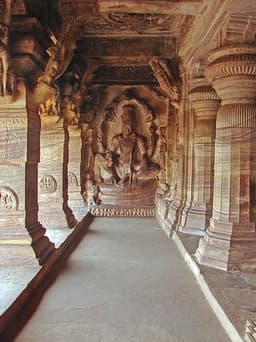
Kirtivarman II
Emperor · Medieval
36.4Total
Basic Information
Born
-100
746
Died
-44
757
Era
Ancient
Medieval
Nationality
Roman Republic
India
Occupation
General
Emperor
Civilization
Western
Indian
Score Comparison
Military (10%)
88.0
21.2
Political (20%)
78.0
30.7
Influence (20%)
85.0
46.3
Legacy (20%)
82.0
37.5
Leadership (15%)
80.0
33.6
Strategy (15%)
85.0
36.8
TOTAL
82.8
36.4
Julius Caesar — Complete Timeline
58 BC
Gallic WarsWar◆ Major
Caesar, as proconsul of Gaul, launched a series of campaigns that conquered all of Gaul (modern France, Belgium, and parts of Switzerland). He fought numerous battles, including against the Helvetii, the Belgae, and the Gallic chieftain Vercingetorix. The wars brought immense wealth and a loyal army to Caesar.
Gallic WarsConquestRoman Expansion
Impact: regional
49 BC
Crossing the RubiconPolitical Action◆ Major
Caesar led Legio XIII across the Rubicon River into Italy, defying the Roman Senate's order to disband his army. This act triggered a civil war against Pompey and the Optimates, ultimately leading to Caesar's dictatorship and the end of the Roman Republic.
Roman Civil WarEnd of RepublicPower Struggle
Impact: global
48 BC
Battle of PharsalusWar◆ Major
Caesar's outnumbered army defeated the larger forces of Pompey the Great at Pharsalus in Greece. Caesar's tactical use of a reserve line to counter Pompey's cavalry charge proved decisive. Pompey fled to Egypt, where he was assassinated, leaving Caesar as the undisputed master of the Roman world.
Roman Civil WarBattleDecisive Victory
Impact: regional
44 BC
Appointment as Dictator for LifePolitical Action◆ Major
The Roman Senate appointed Caesar dictator perpetuo (dictator for life), granting him unprecedented personal power. This move concentrated military, legislative, and judicial authority in one person, effectively ending the Roman Republic's traditional system of checks and balances and alarming many senators.
DictatorshipEnd of RepublicPower Consolidation
Impact: regionaldestructive
Assassination on the Ides of MarchPolitical Action◆ Major
A group of Roman senators, led by Marcus Junius Brutus and Gaius Cassius Longinus, stabbed Caesar to death at a meeting of the Senate in the Theatre of Pompey. The assassination was intended to restore the Republic, but instead triggered another civil war that led to the rise of the Roman Empire.
AssassinationRoman PoliticsEnd of Republic
Impact: globaldestructive
Kirtivarman II — Complete Timeline
753 AD
Defeat by DantidurgaWar◆ Major
Kirtivarman II, the last Badami Chalukya king, was defeated by the Rashtrakuta chief Dantidurga. This battle ended the Badami Chalukya dynasty and established Rashtrakuta rule over the Deccan region.
Impact: regionaldestructive
Expert Analysis
Julius Caesar vs Kirtivarman II
# The Edge of Empire: Julius Caesar and Kirtivarman II
On a spring morning in 44 BCE, a Roman dictator fell to twenty-three dagger blows in the Senate chamber, his blood pooling at the base of Pompey's statue. Half a world away and eight centuries later, another ruler watched his kingdom dissolve into dust, defeated by a rebellious chief who would found a new dynasty. Julius Caesar and Kirtivarman II never met, never exchanged a word, yet their fates are bound by a single thread: the moment when a civilization’s fate hangs on a single man’s decision. Why did one become a legend, the other a footnote?
Origins
Caesar was born into the patrician Julian clan, a family claiming descent from the goddess Venus. Yet his Rome was a republic in crisis—senatorial corruption, street violence, and generals vying for power. His father died when Caesar was sixteen, thrusting him into a world where survival meant cunning, charm, and ruthlessness. He learned early that in Rome, reputation was currency, and debt was a tool.
Kirtivarman II inherited a different world. The Badami Chalukyas had ruled the Deccan for two centuries, building temples, patronizing art, and holding back northern invaders. By 746 CE, when Kirtivarman ascended the throne, the dynasty was already fraying. His father, Vikramaditya II, had won great victories, but the empire’s strength lay in fragile alliances with feudatory clans like the Rashtrakutas. Kirtivarman was born into a golden age—but gold tarnishes fast.
Rise to Power
Caesar’s path was a masterclass in ambition. He fled Sulla’s proscriptions, won the Civic Crown at Mytilene, and climbed the political ladder as quaestor, aedile, and pontifex maximus. His genius lay in borrowing: he spent fortunes on games and bribes, then recouped them through conquest. The Gallic Wars (58–50 BCE) were his masterpiece—a decade of brutal campaigns that made him rich, feared, and adored by his legions.
Kirtivarman’s rise was quieter. He inherited a throne, not a battlefield. The Chalukya chronicles record no youthful adventures, no desperate escapes. He was a king by birthright, surrounded by ministers and priests who expected continuity. Where Caesar forged his own path through war, Kirtivarman walked a road already paved—and crumbling beneath his feet.
Leadership & Governance
Caesar governed like a storm. He reformed the calendar, granted citizenship to provincials, and redistributed land to veterans. His military genius was tactical: at Alesia (52 BCE), he built a double ring of fortifications to trap Vercingetorix’s army while holding off a relief force—a feat of engineering and nerve that still stuns historians. He led from the front, sharing rations and wounds with his men, earning a loyalty that no senator could match.
Kirtivarman governed like a caretaker. The Chalukya administrative system was sophisticated—village councils, tax records, irrigation networks—but it required a firm hand at the center. He lacked Caesar’s charisma and his willingness to break rules. When the Rashtrakuta chief Dantidurga began swallowing neighboring territories, Kirtivarman responded with traditional diplomacy, not preemptive war. He trusted in treaties and marriage alliances, forgetting that empires are built on steel, not silk.
Triumph & Tragedy
Caesar’s greatest moment was also his most fateful: crossing the Rubicon River in 49 BCE. “The die is cast,” he reportedly said, plunging the Republic into civil war. He defeated Pompey at Pharsalus, crushed the remnants of the senatorial forces, and returned to Rome as dictator. His triumph was absolute—and brief. The tragedy came on the Ides of March, when his closest allies turned assassins. He fell, but his name became a title: Caesar.
Kirtivarman’s tragedy was quieter but complete. In 753 CE, Dantidurga’s army met the Chalukya forces in battle. The details are lost—no Cicero recorded the speeches, no Plutarch wrote the biography. But the result is clear: Kirtivarman was defeated, his dynasty extinguished. He vanishes from history after that year, leaving only a name in inscriptions. The Rashtrakutas built an empire on his ruins.
Character & Destiny
Caesar was a gambler who calculated every risk. His clemency toward former enemies was political genius—it disarmed opposition and built a new elite loyal to him alone. But his arrogance blinded him to the conspiracy forming in his shadow. He dismissed the soothsayer’s warning to “beware the Ides of March,” and paid for it with his life.
Kirtivarman was a conservative in a revolutionary age. He played by the old rules—honor, tradition, hierarchy—while Dantidurga rewrote them. The Chalukya king’s character was not flawed by vice but by passivity. He lacked the fire to adapt, the ruthlessness to strike first. In a medieval world where power flowed to the bold, he remained still, and was swept away.
Legacy
Caesar’s legacy is everywhere. His name means emperor in German (Kaiser) and Russian (Tsar). His military writings are still studied at West Point. His assassination ended the Republic and birthed the Empire, a transformation that shaped Western history for two millennia. He is remembered as a tyrant, a liberator, a genius—but never forgotten.
Kirtivarman II is remembered only by specialists. His dynasty’s temples at Aihole and Pattadakal still stand, but his name is a footnote in the Rashtrakuta story. He represents a truth that history rarely records: most rulers fail. His defeat was not a tragedy of Shakespearean proportions but a quiet erasure, a dynasty that ended not with a bang but a whimper.
Conclusion
Caesar and Kirtivarman faced the same test—a world in flux, enemies at the gates, a system straining at its seams. One seized the moment and remade history. The other let the moment pass and became history’s casualty. Their stories remind us that leadership is not about birth or circumstance but about choice. The Rubicon is always there, waiting to be crossed. Some men step forward. Others step back. And the difference between an empire and an epitaph is measured in a single, irreversible stride.
Rankings
🥇
Julius CaesarLeader
Mil: 88.0Pol: 78.0Inf: 85.0
82.8
🥈
Kirtivarman II
Mil: 21.2Pol: 30.7Inf: 46.3
36.4
+46.4 behind
How This Comparison Works
Algorithm
Each figure is scored on 6 dimensions (0—100 scale) based on structured historical data: Military (10%), Political (20%), Influence (20%), Legacy (20%), Leadership (15%), Strategy (15%). The weighted total produces the final ranking.
Data Sources
Scores are computed from structured sub-indicators in the database. Scale factors adjust for era (Ancient ×0.85, Modern ×1.0) and civilization size (Eastern ×1.05, Other ×0.80) to account for differences in population and military scale.
Maximum 3 Figures
Comparisons are limited to 2—3 figures to ensure readability and statistical meaningfulness.
Error Margins
±5 points per dimension — Sub-scores are derived from historical records with inherent uncertainty. Two figures within 5 points on a dimension should be considered roughly equivalent in that area.
Total Score Accuracy
±3 points overall — The weighted combination of 6 dimensions produces a total score with approximately ±3 points of uncertainty. Differences of less than 3 points are not statistically significant— the figures are effectively tied.
Known Limitations
- Historical records are incomplete and uneven across civilizations
- Figures from oral-tradition societies may be underrepresented
- Occupation labels can misclassify multi-role figures
- Scores measure capability and impact, not moral character
- Quantitative scoring is a comparison tool, not absolute truth
Capability Radar
Military (10%) — Battles & Warfare
Battles
95
15
Win Rate
92
10
Expansion
97
5
Political (20%) — Governance & Reform
Reform
90
10
Diplomacy
85
10
Economy
82
15
Influence (20%) — Cultural & Global Reach
Cultural
88
10
Global
94
5
Legacy (20%) — Historical Impact
Historical
95
15
Longevity
96
10
Leadership (15%) — Power & Stability
Tenure
75
20
Stability
60
10
Strategy (15%) — Tactics & Innovation
Strategy
94
10
Tactics
96
15
Reform
88
5
Similar Comparisons
Comments & Discussion
古典学卫兵6/16/2026
凯撒在《高卢战记》中详细记载了阿莱西亚围攻战,用双重防线困住维钦托利,这是军事工程的巅峰。而Kirtivarman II连自己的宫廷文献都没留下几篇。历史是胜利者书写的,凯撒懂这个道理,所以他写书留给后人;后者连个传记都没混到。文化影响力和实际战绩,凯撒完胜。
The Gaul-Slayer6/16/2026
Caesar's military genius was unmatched - he conquered Gaul, invaded Britain, and won civil wars with tactical brilliance. Kirtivarman II lost his kingdom to a single rebellion. Caesar defeated 300,000 Helvetii at Bibracte; Kirtivarman couldn't hold off Dantidurga's Rashtrakutas. One built an empire, the other lost one. Easy choice for any military historian.
Crunch the Numbers6/16/2026
Let's look at battlefield ratios: Caesar faced 8 million Gauls and subjugated them with ~50,000 legionaries, a 160:1 ratio. Kirtivarman II had superior numbers against the Rashtrakutas but still lost. Math doesn't lie - Caesar's efficiency in conquest vs. Kirtivarman's mismanagement shows clear superiority.
考据癖6/16/2026
只看硬数据:凯撒统治了罗马20年,影响跨越欧亚非;Kirtivarman II只在德干称王9年,死时帝国就崩了。凯撒的遗产催生了奥古斯都和罗马帝国,而Kirtivarman死了他的朝代直接换姓。影响力跨度对比:2000年 vs 200年,这还不说明谁更牛?用可靠史料说话。
Chronicler87126/16/2026
Everyone glorifies Caesar but forgets he caused Rome's fall. He destroyed the Republic with his ambition, leading to centuries of tyranny. Kirtivarman II ruled peacefully in the Deccan, promoting temple architecture like the Virupaksha Temple. Caesar was a butcher who killed 1 million Gauls; Kirtivarman died defending his kingdom. The "legend" is just propaganda from Augustus's regime.