Loading...
Baybars vs Kirtivarman II
Baybars leads by 27.4 pts · 2 figures compared
…
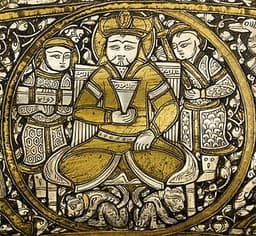
Baybars
Emperor · Medieval
63.8Total

Kirtivarman II
Emperor · Medieval
36.4Total
Basic Information
Born
1223
746
Died
1277
757
Era
Medieval
Medieval
Nationality
Egypt
India
Occupation
Emperor
Emperor
Civilization
Middle Eastern
Indian
Score Comparison
Military (10%)
85.0
21.2
Political (20%)
70.0
30.7
Influence (20%)
55.0
46.3
Legacy (20%)
52.0
37.5
Leadership (15%)
72.0
33.6
Strategy (15%)
72.0
36.8
TOTAL
63.8
36.4
Baybars — Complete Timeline
1260 AD
Battle of Ain Jalut (1260)War◆ Major
Baybars served as a key commander under Qutuz at the Battle of Ain Jalut. He led the vanguard and played a crucial role in the Mamluk victory over the Mongols. This battle established his reputation as a military leader.
Mongol InvasionBattleMamluk Victory
Impact: globalconstructive
Accession as Sultan (1260)Political Action◆ Major
After assassinating Qutuz, Baybars proclaimed himself Sultan of Egypt. He was accepted by the Mamluk commanders and the Abbasid Caliph. His reign began a period of Mamluk dominance in the Middle East, lasting for decades.
SuccessionMamluk SultanateAssassination
Impact: regional
1265 AD
Campaigns against the Crusader States (1260s-1270s)War◆ Major
Baybars launched a series of campaigns against the remaining Crusader states in the Levant. He captured key fortresses including Arsuf (1265), Safed (1266), Jaffa (1268), and Antioch (1268). These victories reduced Crusader territory to a few coastal enclaves.
Crusader WarsConquestMamluk Expansion
Impact: regionaldestructive
1277 AD
Defeat of the Mongols at Elbistan (1277)War◆ Major
Baybars defeated a Mongol army at the Battle of Elbistan in Anatolia. He invaded the Seljuk Sultanate of Rum, which was under Mongol suzerainty. Although a tactical victory, Baybars could not hold Anatolia and returned to Syria.
Mongol WarsBattleAnatolia
Impact: regionalconstructive
Death of Baybars (1277)Other◆ Major
Baybars died in Damascus, possibly from poisoning or illness. His death was kept secret for a time to prevent unrest. He was succeeded by his son Al-Said Barakah. Baybars' reign is considered the peak of the early Mamluk Sultanate.
DeathSuccessionMamluk Sultanate
Impact: regionaltragic
Kirtivarman II — Complete Timeline
753 AD
Defeat by DantidurgaWar◆ Major
Kirtivarman II, the last Badami Chalukya king, was defeated by the Rashtrakuta chief Dantidurga. This battle ended the Badami Chalukya dynasty and established Rashtrakuta rule over the Deccan region.
Impact: regionaldestructive
Expert Analysis
Baybars vs Kirtivarman II
# The Last Kings: Why One Emperor Fell and Another Rose
In the year 753, two men faced each other across a battlefield in what is now Karnataka, India. One was Kirtivarman II, the last emperor of the Badami Chalukya dynasty, a line that had ruled for over two centuries. The other was Dantidurga, a Rashtrakuta chieftain who had once been his vassal. By sunset, an empire had died. Just over five centuries later, in 1260, another battlefield in Palestine witnessed a different kind of turning point: a Mamluk commander named Baybars led the vanguard at Ain Jalut, smashing the myth of Mongol invincibility. Within months, he would seize the sultanate himself. Both men were warriors. Both seized their moment. Yet one was crushed by history, while the other bent it to his will.
Origins
Kirtivarman II inherited a throne that was already cracking. The Badami Chalukyas had dominated the Deccan since the mid-sixth century, but by the time he was born in 746, their power had been eroding for generations. His father had fought constant wars against the Pallavas to the south and the rising Rashtrakutas to the north. Kirtivarman was born into a world of diminishing returns—a prince who learned statecraft in a court that was losing its grip.
Baybars, by contrast, began with nothing. Born around 1223 in the Crimean steppes, he was a Kipchak Turk captured and sold into slavery. He was bought by the Ayyubid sultan of Egypt, trained as a Mamluk—a military slave—and rose through sheer ability. The Mongol invasions that devastated his homeland had also scattered him into the path of opportunity. Where Kirtivarman was born to rule but inherited weakness, Baybars was born to serve but forged strength.
Rise to Power
Kirtivarman’s path to power was straightforward: he was the legitimate heir. He became emperor around 746, probably in his late teens or early twenties, and spent the next seven years trying to hold together a kingdom that was bleeding provinces. His rise was not a story of ambition but of duty—a young man placed on a throne that was already surrounded by enemies.
Baybars’s rise was a study in violent pragmatism. He first distinguished himself as a commander under Sultan Qutuz during the Mongol crisis of 1260. At Ain Jalut, he led the vanguard that lured the Mongol army into a trap, then executed a devastating flanking maneuver. But when Qutuz refused to reward him with the governorship of Aleppo, Baybars did what no Chalukya prince could have imagined: he murdered his own sultan on a hunting trip. Within days, he had proclaimed himself Sultan of Egypt. The Mamluk commanders accepted him not because of bloodline, but because he had proven he could win.
Leadership & Governance
Kirtivarman II governed as his ancestors had: through ritual, alliance, and the slow machinery of a feudal court. His military strategy was defensive and reactive. When Dantidurga marched against him in 753, Kirtivarman met him in open battle—and lost. The Chalukya army, once the terror of the Deccan, had grown stale. There is no record of Kirtivarman attempting diplomatic countermoves, strategic retreats, or political consolidation. He fought one battle, lost it, and his dynasty vanished.
Baybars governed like a man who knew that power was earned every day. He reformed the Mamluk military into a professional slave-soldier machine, creating a system where loyalty was purchased through merit and reward. He fought the Crusaders not in one climactic battle but in a decade-long campaign of sieges, capturing fortresses like Arsuf, Caesarea, and Safed through methodical pressure. He fought the Mongols again at Elbistan in 1277, invading Anatolia to strike at their Seljuk vassals. He was not a conqueror of a single great victory; he was a strategist who understood that empires are lost through attrition and won through patience.
Triumph & Tragedy
Kirtivarman’s tragedy was that he had no triumph. His reign was a slow decline punctuated by a single catastrophic defeat. The Battle of 753 was not a glorious last stand but a rout. After it, the Chalukya line simply ended. The Rashtrakutas took everything.
Baybars’s triumph was Ain Jalut, but his tragedy was that he could never rest. He spent seventeen years fighting on multiple fronts—Mongols from the east, Crusaders from the coast, internal conspiracies from within. He died in Damascus in 1277, possibly poisoned, possibly from illness. His death was kept secret for weeks to prevent rebellion. Even in death, he could not afford to be weak.
Character & Destiny
Kirtivarman II was a man of his time—a traditional monarch who believed that legitimacy came from birth and that battles were decided by fate. He fought honorably but inflexibly. When the world changed, he could not change with it. His character was that of a caretaker, not a builder.
Baybars was a man who had been broken and remade by slavery. He trusted no one completely, rewarded competence ruthlessly, and understood that power was a weapon that had to be sharpened daily. His assassination of Qutuz was not just ambition—it was a cold calculation that the man who saved Egypt from the Mongols was more valuable than the man who had been its sultan. His character was forged in the crucible of survival.
Legacy
Kirtivarman II is remembered today only as a footnote—the last Chalukya, the one who lost it all. His total score of 42.9 reflects a ruler who was competent enough to inherit a throne but not strong enough to keep it. He is a cautionary tale for dynasties that mistake tradition for strength.
Baybars left a deeper mark. His military score of 67.8 and leadership of 80.2 reflect a commander who transformed the Mamluk state into the dominant power of the eastern Mediterranean. He broke the Mongol wave, crushed the Crusader kingdoms, and created a system of slave-soldiers that would rule Egypt for centuries. He is remembered as the greatest Mamluk sultan—a man who rose from the slave market to become the terror of both Christendom and the steppe.
Conclusion
What separates a ruler who falls from one who rises? Kirtivarman II and Baybars both faced existential threats—the first from a rebellious vassal, the second from the Mongol horde. One fought a single battle and lost everything. The other fought for seventeen years and built an empire. The difference was not luck, or birth, or even intelligence. It was the willingness to break the rules of the game. Kirtivarman played by the old rules and died. Baybars wrote new ones and lived. In the end, history does not remember those who defended thrones—it remembers those who built them.
Rankings
🥇
BaybarsLeader
Mil: 85.0Pol: 70.0Inf: 55.0
63.8
🥈
Kirtivarman II
Mil: 21.2Pol: 30.7Inf: 46.3
36.4
+27.4 behind
How This Comparison Works
Algorithm
Each figure is scored on 6 dimensions (0—100 scale) based on structured historical data: Military (10%), Political (20%), Influence (20%), Legacy (20%), Leadership (15%), Strategy (15%). The weighted total produces the final ranking.
Data Sources
Scores are computed from structured sub-indicators in the database. Scale factors adjust for era (Ancient ×0.85, Modern ×1.0) and civilization size (Eastern ×1.05, Other ×0.80) to account for differences in population and military scale.
Maximum 3 Figures
Comparisons are limited to 2—3 figures to ensure readability and statistical meaningfulness.
Error Margins
±5 points per dimension — Sub-scores are derived from historical records with inherent uncertainty. Two figures within 5 points on a dimension should be considered roughly equivalent in that area.
Total Score Accuracy
±3 points overall — The weighted combination of 6 dimensions produces a total score with approximately ±3 points of uncertainty. Differences of less than 3 points are not statistically significant— the figures are effectively tied.
Known Limitations
- Historical records are incomplete and uneven across civilizations
- Figures from oral-tradition societies may be underrepresented
- Occupation labels can misclassify multi-role figures
- Scores measure capability and impact, not moral character
- Quantitative scoring is a comparison tool, not absolute truth
Capability Radar
Military (10%) — Battles & Warfare
Battles
85
15
Win Rate
90
10
Expansion
80
5
Political (20%) — Governance & Reform
Reform
80
10
Diplomacy
78
10
Economy
72
15
Influence (20%) — Cultural & Global Reach
Cultural
65
10
Global
65
5
Legacy (20%) — Historical Impact
Historical
75
15
Longevity
60
10
Leadership (15%) — Power & Stability
Tenure
75
20
Stability
70
10
Strategy (15%) — Tactics & Innovation
Strategy
85
10
Tactics
88
15
Reform
82
5
Similar Comparisons
Comments & Discussion
IronCenturion6/16/2026
Baybars was the superior military architect because he mastered the art of asymmetric warfare against the Mongols. Kirtivarman II fought a conventional dynastic war, predictable and doomed. Baybars used feigned retreats and poisoned wells at Ain Jalut, turning Mongol tactics against them. Kirtivarman tried to repeat his father’s strategies against Dantidurga, which had already failed. Baybars innovated; Kirtivarman recycled. That difference decides empires.
铠帝6/16/2026
Kirtivarman II根本不是在打仗,他是在守灵。Badami Chalukya王朝早在他登基前就已经内部分裂,他的军队里充斥着心怀不满的封臣。Dantidurga曾是Kirtivarman的封臣,这个叛变本身就是统治失效的铁证。Baybars从奴隶登顶,他用十年的清洗和重建巩固了权力。Kirtivarman连自己的宫廷都控制不了,却幻想能守住疆土。
CipherSultan6/16/2026
Kirtivarman's defeat isn't a mystery—it's basic mathematical failure. The Badami Chalukya tax base had shrunk by at least 30% under his father's reign, as documented in copper-plate grants. Smaller revenue means fewer soldiers, weaker logistics. Dantidurga, as a former vassal, knew exactly where the kingdom's resources were concentrated. Baybars built his power on controlling Egypt's grain wealth and Nile trade. One man managed decline; the other engineered growth. The result was inevitable.
沙丘学士6/16/2026
历史对Kirtivarman太苛刻。他其实做了所有正确的事:加固了Pattadakal的城墙,巩固了与Kalachuri的联盟。问题在于Dantidurga不是一个普通的叛将,他得到了阿拉伯商人资助的骆驼骑兵,速度优势碾压了Chalukya的战象和步兵。Baybars在Ain Jalut的成功恰恰是因为他意识到骑兵机动性比传统方阵更重要。Kirtivarman输给了时代变革,Baybars驾驭了它。
RevisionistSword6/16/2026
Stop romanticizing Baybars—he inherited a functioning Mamluk military machine from Qutuz, who actually planned the Ain Jalut ambush. Baybars was a successful captain, not a visionary founder. Kirtivarman inherited a fractured court with no buffer against internal betrayal. Their outcomes had less to do with personal brilliance and everything to do with structural factors: the Mamluks had institutional continuity, the Chalukyas had institutional collapse. Baybars didn't bend history; he just happ