Loading...
Alp Tigin vs John II of Avesnes
Alp Tigin leads by 5.6 pts · 2 figures compared
…
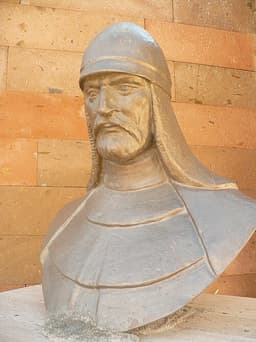
Alp Tigin
Emperor · Medieval
50.5Total
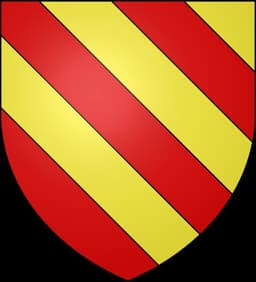
John II of Avesnes
Emperor · Medieval
44.9Total
Basic Information
Born
911
1248
Died
963
1304
Era
Medieval
Medieval
Nationality
Ghaznavid Empire
Hainaut
Occupation
Emperor
Emperor
Civilization
Middle Eastern
Western
Score Comparison
Military (10%)
55.0
45.0
Political (20%)
33.6
35.1
Influence (20%)
56.4
51.0
Legacy (20%)
49.2
40.8
Leadership (15%)
50.7
55.3
Strategy (15%)
60.0
38.6
TOTAL
50.5
44.9
Alp Tigin — Complete Timeline
961 AD
Rebellion against the SamanidsPolitical Action◆ Major
Alp Tigin rebelled against the Samanid ruler Mansur I after being passed over for a governorship. He marched from Nishapur to Ghazni, defeating Samanid forces along the way, and established his own rule in eastern Afghanistan.
Impact: regional
963 AD
Consolidation of GhazniPolitical Action
Alp Tigin fortified Ghazni and organized a military state based on slave soldiers (ghilman). He established a stable administration that attracted scholars and merchants, turning Ghazni into a major regional power center.
Impact: regionalconstructive
John II of Avesnes — Complete Timeline
1280 AD
Inherited County of Hainaut and HollandPolitical Action◆ Major
John II of Avesnes inherited the County of Hainaut from his mother Margaret II of Flanders, and later the County of Holland from his father John I of Avesnes. This united the two counties under the Avesnes dynasty.
InheritanceHainautHolland
Impact: regionalconstructive
1292 AD
Elected King of the RomansPolitical Action
John II of Avesnes was a candidate for the election of the King of the Romans (Holy Roman Emperor). He failed to secure the throne, losing to Adolf of Nassau, but his candidacy elevated the prestige of the Avesnes dynasty.
ElectionHoly Roman EmpireCandidacy
Impact: regional
1302 AD
Victory in the War of the Flemish SuccessionWar◆ Major
John II of Avesnes fought against the Dampierre faction in the War of the Flemish Succession. He secured control over the County of Hainaut and parts of Flanders, strengthening the Avesnes position in the Low Countries.
WarFlandersAvesnes
Impact: regionalconstructive
Expert Analysis
Alp Tigin vs John II of Avesnes
### The Slave Who Built a Kingdom and the Count Who Almost Wore a Crown
In the year 963, a former Turkic slave named Alp Tigin lay dying in the fortress city of Ghazni, his body worn not by age—he was just fifty-two—but by the relentless strain of carving a kingdom from the ruins of a crumbling empire. Half a world away and three centuries later, in 1304, John II of Avesnes, Count of Hainaut and Holland, also breathed his last, surrounded by the quiet, damp fields of the Low Countries. One man had risen from the lowest rung of society to found a dynasty that would shake the Indian subcontinent. The other, born a count, had spent his life clawing for a crown he never quite grasped. What drove these two medieval rulers down such different paths? The answer lies not in the stars, but in the soil from which they were torn.
### Origins
Alp Tigin was born into a world where a man’s worth was measured in swords, not bloodlines. A Turkic slave purchased in the markets of Central Asia, he entered the service of the Samanid Empire, a Persianate state that had grown dependent on Turkic military slaves—*ghilman*—to enforce its will. For a man like Alp Tigin, the path to power was brutal: absolute loyalty to a master, ruthless competence in battle, and a readiness to betray the moment the master faltered. His era was one of crumbling caliphates and rising warlords, where a severed head could be worth more than a royal pedigree.
John II of Avesnes, born in 1248, inherited a very different world. He was the son of Margaret II, Countess of Flanders, and a member of the Avesnes family, locked in a bitter, generations-long feud with the Dampierre clan over the inheritance of Flanders and Hainaut. His Europe was a chessboard of popes, emperors, and kings, where legitimacy was everything—and where a man could win a war but still lose a crown if the pope refused to recognize him. John’s birthright was a tangle of legal claims, not a sword.
### Rise to Power
Alp Tigin’s ascent was a study in calculated violence. By 961, he had risen to become the governor of the key city of Nishapur, commanding the Samanid army’s most loyal slave regiments. But when the old ruler Abd al-Malik I died and his son Mansur I took the throne, the new emir passed over Alp Tigin for a more trusted governor. The slave commander did not accept this slight quietly. He rebelled, marching his army from Nishapur eastward into the rugged mountains of what is now Afghanistan. There, in the fortress of Ghazni, he declared himself independent, buying his new kingdom with the blood of his former masters.
John II’s rise was slower, more procedural, and far less dramatic. He inherited Hainaut from his mother in 1280, and later the County of Holland through marriage and political maneuvering. His great ambition was the crown of the Holy Roman Empire. In 1292, he stood as a candidate for election as King of the Romans, the title that preceded the imperial throne. He failed. The electors chose Adolf of Nassau instead. John spent the next decade fighting for influence, not with a single, decisive rebellion, but through a grinding war of succession against the Dampierre faction in Flanders. His victory at the Battle of the Golden Spurs in 1302 was not his own—it was a Flemish infantry triumph—but he skillfully leveraged it to secure his grip on the disputed territories.
### Leadership & Governance
Alp Tigin ruled Ghazni as a military state. His authority rested on two pillars: the *ghilman*—slave soldiers who owed him absolute loyalty because he had bought them—and the spoils of constant raiding. He fortified the city, built a treasury, and organized a system where every able-bodied man was either a soldier or fed one. His governance was personal, direct, and harsh. There were no parliaments, no charters, no negotiations with burghers. Alp Tigin was the law, and the law was a sword.
John II governed through the complex machinery of feudal contract. As Count of Hainaut and Holland, he presided over courts, granted charters to towns, and bargained with nobles for taxes and troops. His political score—62.4—reflects a man who understood the art of compromise and coalition-building. He was a patron of the arts and a builder of alliances, but his power was always conditional. He could not simply command; he had to persuade, bribe, and threaten. The Low Countries were a patchwork of competing interests, and John spent as much energy managing his vassals as he did fighting his enemies.
### Triumph & Tragedy
Alp Tigin’s greatest moment was his rebellion itself. In 961, when he turned his back on the Samanids and marched into the unknown, he did what few slaves dared: he bet everything on his own sword. He won. Ghazni became the seed of an empire that, under his successors, would stretch from the Caspian to the Ganges. His tragedy was that he died before seeing it bloom. His son and grandson would be murdered, and the dynasty he founded would be taken over by his own slave commander, Sabuktigin, whose son Mahmud would become the legendary conqueror of India. Alp Tigin built a house, but he could not live in it.
John II’s triumph was survival. He inherited a contested claim, fought a long war, and secured control over Hainaut and Holland. He almost became emperor. His tragedy was that “almost.” To be a candidate for the highest throne in Christendom and to fall short is a peculiar kind of failure—the failure of the nearly-man. He died a count, not a king, and his dynasty would never produce an emperor. The Avesnes line faded into the background of European history.
### Character & Destiny
Alp Tigin was a man of iron will and narrow vision. He saw the world as a chain of command: you obey, you command, or you die. His personality was forged in the slave market, where trust was a luxury no one could afford. This made him ruthless, but it also made him unable to build institutions that outlasted his own ambition. He ruled through fear, and fear dies with the man.
John II was a diplomat in armor. He understood that power in the West was a matter of recognition—by the pope, by the emperor, by the estates of the realm. He played the game of politics with patience and skill, but he lacked the raw audacity to seize what he wanted. He was a good count, but he wanted to be a great king. His caution, born of a world where legitimacy mattered more than brute force, held him back.
### Legacy
Alp Tigin’s legacy is the Ghaznavid Empire, though he is often forgotten in its shadow. His real contribution was a model of state-building: a slave-soldier dynasty that would be imitated across the Islamic world for centuries. He proved that a man with no lineage could found a kingdom, and that the sword could rewrite the map. His influence score of 71.6 reflects this.
John II left behind a stable county, a dynasty that married into the royal houses of Europe, and a lesson in the limits of medieval ambition. He is remembered by historians as a competent ruler in a turbulent time, but not as a transformative figure. His legacy score of 53.9 is modest—a reminder that in the great game of thrones, second place is often forgotten.
### Conclusion
Standing at the edge of the Hindu Kush or walking the wet fields of Holland, these two men faced the same fundamental question: how does a ruler hold power in a world that wants to tear it from his hands? Alp Tigin answered with the blade, John II with the charter. One founded an empire that would be remembered for a thousand years; the other secured a county that would be absorbed into the great states of modern Europe. Their differences were not accidents of character, but products of their worlds. A slave in a collapsing caliphate and a count in a feudal patchwork could not have traded places. History gave each the tools he needed—and each used them as well as he could. The measure of a ruler is not the crown he wears, but the world he leaves behind.
Rankings
🥇
Alp TiginLeader
Mil: 55.0Pol: 33.6Inf: 56.4
50.5
🥈
John II of Avesnes
Mil: 45.0Pol: 35.1Inf: 51.0
44.9
+5.6 behind
How This Comparison Works
Algorithm
Each figure is scored on 6 dimensions (0—100 scale) based on structured historical data: Military (10%), Political (20%), Influence (20%), Legacy (20%), Leadership (15%), Strategy (15%). The weighted total produces the final ranking.
Data Sources
Scores are computed from structured sub-indicators in the database. Scale factors adjust for era (Ancient ×0.85, Modern ×1.0) and civilization size (Eastern ×1.05, Other ×0.80) to account for differences in population and military scale.
Maximum 3 Figures
Comparisons are limited to 2—3 figures to ensure readability and statistical meaningfulness.
Error Margins
±5 points per dimension — Sub-scores are derived from historical records with inherent uncertainty. Two figures within 5 points on a dimension should be considered roughly equivalent in that area.
Total Score Accuracy
±3 points overall — The weighted combination of 6 dimensions produces a total score with approximately ±3 points of uncertainty. Differences of less than 3 points are not statistically significant— the figures are effectively tied.
Known Limitations
- Historical records are incomplete and uneven across civilizations
- Figures from oral-tradition societies may be underrepresented
- Occupation labels can misclassify multi-role figures
- Scores measure capability and impact, not moral character
- Quantitative scoring is a comparison tool, not absolute truth
Capability Radar
Military (10%) — Battles & Warfare
Battles
45
25
Win Rate
50
30
Expansion
50
30
Political (20%) — Governance & Reform
Reform
20
25
Diplomacy
30
35
Economy
20
30
Influence (20%) — Cultural & Global Reach
Cultural
30
20
Global
30
15
Legacy (20%) — Historical Impact
Historical
45
25
Longevity
40
20
Leadership (15%) — Power & Stability
Tenure
25
40
Stability
25
30
Strategy (15%) — Tactics & Innovation
Strategy
45
25
Tactics
40
20
Reform
30
15
Similar Comparisons
Comments & Discussion
GLADIATOR'S GHOST6/16/2026
Alp Tigin’s success proves that meritocracy in medieval warfare trumped birthright every time. A slave who could swing a sword better than a prince? That’s the raw edge of history. John II was a noble playing court politics—he never commanded armies through sheer guts. Alp Tigin’s Ghaznavid campaign in 963 showed tactical brilliance: he seized Ghazni with a handful of loyal ghulams, not a dynastic claim. John just inherited titles and whined about the crown. Give me the slave who earned his thro