Loading...
Alp Tigin vs Henry II of Champagne
Alp Tigin leads by 12.5 pts · 2 figures compared
…
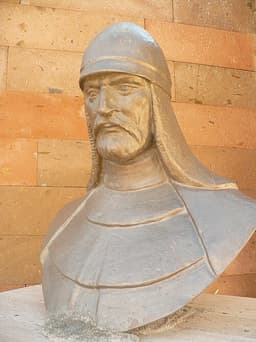
Alp Tigin
Emperor · Medieval
50.5Total
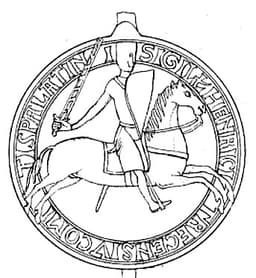
Henry II of Champagne
Emperor · Medieval
38.0Total
Basic Information
Born
911
1166
Died
963
1197
Era
Medieval
Medieval
Nationality
Ghaznavid Empire
Kingdom of Jerusalem
Occupation
Emperor
Emperor
Civilization
Middle Eastern
Western
Score Comparison
Military (10%)
55.0
10.2
Political (20%)
33.6
33.6
Influence (20%)
56.4
49.4
Legacy (20%)
49.2
37.5
Leadership (15%)
50.7
41.5
Strategy (15%)
60.0
39.6
TOTAL
50.5
38.0
Alp Tigin — Complete Timeline
961 AD
Rebellion against the SamanidsPolitical Action◆ Major
Alp Tigin rebelled against the Samanid ruler Mansur I after being passed over for a governorship. He marched from Nishapur to Ghazni, defeating Samanid forces along the way, and established his own rule in eastern Afghanistan.
Impact: regional
963 AD
Consolidation of GhazniPolitical Action
Alp Tigin fortified Ghazni and organized a military state based on slave soldiers (ghilman). He established a stable administration that attracted scholars and merchants, turning Ghazni into a major regional power center.
Impact: regionalconstructive
Henry II of Champagne — Complete Timeline
1192 AD
Marriage to Isabella of JerusalemPolitical Action◆ Major
Henry II married Isabella I of Jerusalem, becoming king-consort of the Kingdom of Jerusalem. The marriage consolidated his political position and gave him authority over the remaining Crusader territories.
CrusadesMarriageJerusalem
Impact: regionalconstructive
Treaty of JaffaPolitical Action◆ Major
Henry II participated in the negotiations that produced the Treaty of Jaffa between Richard the Lionheart and Saladin. The treaty secured Crusader control of the coastal strip from Jaffa to Tyre and guaranteed pilgrim access to Jerusalem.
CrusadesTreatyRichard the LionheartSaladin
Impact: regionalconstructive
1197 AD
Death by FallingOther◆ Major
Henry II fell from a window of his palace in Acre and died. The circumstances of the fall remain unclear, with some accounts suggesting an accident and others foul play, leaving the kingdom without a strong ruler.
CrusadesDeathAccident
Impact: regionaltragic
Expert Analysis
Alp Tigin vs Henry II of Champagne
### The Slave King and the Fallen Count: Two Paths to Power in the Medieval World
On a dusty road in Persia in 961, a Turkic slave commander named Alp Tigin made a decision that would echo across centuries. He had just been passed over for a governorship by his Samanid overlord, Mansur I, and rather than accept the insult, he turned his army around and marched toward rebellion. Half a world away, in the sun-baked port of Acre in 1197, a French nobleman named Henry II of Champagne stepped onto a window ledge of his palace—and fell to his death. One man founded an empire; the other left a mystery. What drove these two medieval rulers to such divergent fates? The answer lies not just in their choices, but in the worlds that shaped them.
### Origins
Alp Tigin was born around 911 into a world where slavery was not a mark of shame but a ladder to power. As a Turkic slave in the Samanid Empire, he was purchased, trained, and elevated through the *ghilman* system—a military caste of enslaved soldiers who often became generals and governors. His rise was a product of his era: the Abbasid Caliphate’s decline had created a vacuum where ambitious slaves could climb higher than freeborn nobles. For Alp Tigin, every chain was a step toward command.
Henry II of Champagne, born in 1166, inherited a different legacy. He was a count of Champagne, a wealthy region in France, and his bloodline tied him to the Crusader states. His world was one of feudal loyalty, chivalric codes, and the intoxicating dream of reclaiming Jerusalem. Where Alp Tigin’s identity was forged in the crucible of military slavery, Henry’s was defined by birthright and the precarious politics of the Latin East. One man had everything to gain; the other, everything to lose.
### Rise to Power
Alp Tigin’s path to power was forged in rebellion. In 961, when Mansur I denied him the governorship of Khorasan, he did not bow. Instead, he marched from Nishapur with his loyal *ghilman*, seizing the city of Ghazni in what is now Afghanistan. It was a gamble that defied the Samanid order, but Alp Tigin understood that in a fractured empire, force and loyalty outweighed legitimacy. By 963, he had consolidated Ghazni into a fortified military state, organizing a government that revolved around his slave soldiers. His power came not from a crown but from the sword he wielded.
Henry II’s rise was gentler, yet no less strategic. In 1192, he married Isabella I of Jerusalem, becoming king-consort of the Kingdom of Jerusalem. The marriage was a political masterstroke, consolidating his claim to a throne that was perpetually contested. That same year, he participated in the Treaty of Jaffa, a fragile peace between Richard the Lionheart and Saladin. Henry’s power was negotiated, not conquered—a product of diplomacy and the Crusader states’ desperate need for stability.
### Leadership & Governance
Alp Tigin ruled as a military autocrat. His Ghaznavid state was built on the *ghilman* system, a slave army that owed him absolute loyalty. He fortified Ghazni, established a stable administration, and expanded his territory through relentless campaigns. His leadership was harsh but effective: he understood that in a world of rival emirs and nomadic invaders, only strength ensured survival. Yet his political score of 50.7 suggests a ruler who relied more on force than finesse, a man who governed through the blade.
Henry II governed as a diplomat. His military score of 43.3 and strategy of 32.0 reflect a ruler who preferred treaties to battles. As king-consort, he navigated the treacherous politics of the Crusader states, balancing the ambitions of barons, the demands of the Church, and the looming threat of Saladin’s Ayyubid dynasty. His participation in the Treaty of Jaffa showed a commitment to peace, but his low leadership score of 37.1 hints at a man who was more a figurehead than a commander. He ruled through marriage and negotiation, not conquest.
### Triumph & Tragedy
Alp Tigin’s greatest triumph was the founding of the Ghaznavid dynasty, which would endure for over a century and stretch from Persia to India. His legacy score of 62.1 reflects this achievement—a slave who became a king. But his tragedy was the fragility of his creation. After his death in 963, his successors struggled to maintain his momentum, and the dynasty eventually fell to the Seljuks. Alp Tigin’s empire was a monument to his will, but it was built on shifting sand.
Henry II’s triumph was fleeting. The Treaty of Jaffa in 1192 brought a brief respite to the Holy Land, and his marriage to Isabella secured his throne. But his tragedy was sudden and absurd. In 1197, at the age of 31, he fell from a window of his palace in Acre. The circumstances remain unclear—some accounts suggest an accident, others foul play. His death was a footnote in the Crusader saga, a reminder that even kings could be undone by a misstep.
### Character & Destiny
Alp Tigin was a man of iron will. His rebellion against the Samanids was a calculated risk, driven by pride and ambition. He understood that in the medieval Middle East, power was personal—it flowed from the loyalty of soldiers and the fear of enemies. His character was forged in the brutal logic of slavery: trust no one, build your own strength, and never look back. This made him a founder, but also a tyrant.
Henry II was a man of charm and diplomacy. His marriage to Isabella was a political alliance, but it also suggests a capacity for partnership. Yet his death by falling—a bizarre, almost poetic end—hints at a man who was careless or unlucky. Where Alp Tigin’s destiny was shaped by his own hand, Henry’s was shaped by circumstance. One controlled his fate; the other was controlled by it.
### Legacy
Alp Tigin is remembered as the founder of the Ghaznavid Empire, a dynasty that left a lasting mark on Islamic history. His influence score of 71.6 underscores his role in shaping the military slave system that would define later empires, from the Mamluks to the Ottomans. Today, he is a symbol of the fluid social mobility of the medieval Islamic world, a slave who became a king.
Henry II of Champagne is a minor figure in the Crusader narrative. His legacy score of 49.4 reflects a ruler who was more a footnote than a headline. He is remembered primarily for his bizarre death—a cautionary tale about the fragility of power. Where Alp Tigin’s legacy is one of foundation, Henry’s is one of fall.
### Conclusion
Standing on the ramparts of Ghazni, Alp Tigin could look out over a kingdom he had built from nothing. Henry II, gazing from his window in Acre, could see a kingdom he had inherited and tried to hold. One man’s story is about rising; the other’s, about falling. Both were shaped by their eras—the slave soldier who carved an empire from chaos, and the count who fell from grace into history. Their lives remind us that in the medieval world, destiny was not a matter of birth, but of how you met the moment. For Alp Tigin, the moment was a march. For Henry II, it was a window.
Rankings
🥇
Alp TiginLeader
Mil: 55.0Pol: 33.6Inf: 56.4
50.5
🥈
Henry II of Champagne
Mil: 10.2Pol: 33.6Inf: 49.4
38.0
+12.5 behind
How This Comparison Works
Algorithm
Each figure is scored on 6 dimensions (0—100 scale) based on structured historical data: Military (10%), Political (20%), Influence (20%), Legacy (20%), Leadership (15%), Strategy (15%). The weighted total produces the final ranking.
Data Sources
Scores are computed from structured sub-indicators in the database. Scale factors adjust for era (Ancient ×0.85, Modern ×1.0) and civilization size (Eastern ×1.05, Other ×0.80) to account for differences in population and military scale.
Maximum 3 Figures
Comparisons are limited to 2—3 figures to ensure readability and statistical meaningfulness.
Error Margins
±5 points per dimension — Sub-scores are derived from historical records with inherent uncertainty. Two figures within 5 points on a dimension should be considered roughly equivalent in that area.
Total Score Accuracy
±3 points overall — The weighted combination of 6 dimensions produces a total score with approximately ±3 points of uncertainty. Differences of less than 3 points are not statistically significant— the figures are effectively tied.
Known Limitations
- Historical records are incomplete and uneven across civilizations
- Figures from oral-tradition societies may be underrepresented
- Occupation labels can misclassify multi-role figures
- Scores measure capability and impact, not moral character
- Quantitative scoring is a comparison tool, not absolute truth
Capability Radar
Military (10%) — Battles & Warfare
Battles
45
10
Win Rate
50
10
Expansion
50
5
Political (20%) — Governance & Reform
Reform
20
20
Diplomacy
30
40
Economy
20
25
Influence (20%) — Cultural & Global Reach
Cultural
30
15
Global
30
10
Legacy (20%) — Historical Impact
Historical
45
15
Longevity
40
10
Leadership (15%) — Power & Stability
Tenure
25
30
Stability
25
20
Strategy (15%) — Tactics & Innovation
Strategy
45
10
Tactics
40
10
Reform
30
5
Similar Comparisons
Comments & Discussion
THE_GHILMAN_MASTER6/16/2026
Alp Tigin's the real deal—a self-made warlord who turned slave status into a dynasty. The *ghilman* system wasn't just a ladder; it was the foundation for states like the Ghaznavids. Henry? He inherited Champagne and still managed to fall out a window. Alp seized Ghazni in 962 with 500 loyal slave-soldiers, not a drop of noble blood. That's grit. Henry's death screams "court intrigue," not tragedy. Give me the slave king over the falling count any day.
DATA_SKEPTIC_RUFUS6/16/2026
Let's cut the romanticism: Alp Tigin's "empire" was a glorified bandit state. He didn't found the Ghaznavids—Sabuktigin, his slave-successor, did that after his death. And Henry's fall? The sources are contradictory: one says a balcony, another a jousting accident. You're comparing a footnote (Alp's brief rebellion) to a likely assassination. Both were overrated. The only "echo across centuries" is historians airbrushing scraps into sagas. Prove me wrong with a coin or a chronicle, not a textboo
白银之锁6/16/2026
别把奴隶制浪漫化了。阿勒普·特勤的崛起靠的是哈扎尔或草原战俘的血泪,他的所谓"帝国"不过是掠夺团伙的胜利。亨利·德·香槟倒是死得像个真骑士——至少他死在十字军东征的舞台上,而不是靠背叛主人起家。说到底,一个靠链条爬上去的小卒,哪比得上血统高贵的伯爵?历史是赢家写的,但阿勒普的赢家只配当个注脚。
沙漠与断台6/16/2026
两人都是权力游戏的产物,但命运相差何其大。阿勒普·特勤从奴隶到国王,靠的是刀剑和机遇;亨利二世从伯爵到摔死,却因一步踏空留迷案。前者建立伽色尼王朝的基石,后者在阿卡城坠楼前还握着十字军的权杖。若论结局,阿勒普光荣战死沙场,亨利却像个喜剧角色跌入历史尘埃。可惜啊,一个用血写史诗,一个用失败写笑话。
反骨讲史人6/16/2026
说什么"两种世界",分明是同一套江湖逻辑。阿勒普跟亨利都是投机者,区别只在于舞台不同。阿勒普背叛主子跑路去搞割据,亨利靠着叔叔狮心王理查的裙带关系当上耶路撒冷摄政。一个在东方玩军阀割据,一个在西方玩贵族联姻。谁比谁高贵?别逗了。真要挑刺,阿勒普至少活得痛快,亨利