Loading...
Alp Tigin vs Harsha
Harsha leads by 10.5 pts · 2 figures compared
…
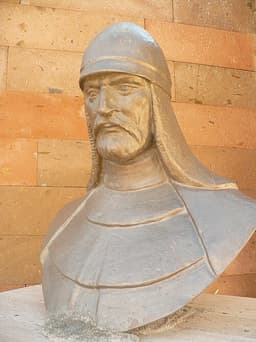
Alp Tigin
Emperor · Medieval
50.5Total
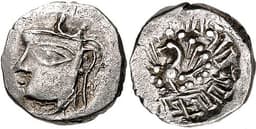
Harsha
Emperor · Medieval
61.0Total
Basic Information
Born
911
590
Died
963
647
Era
Medieval
Medieval
Nationality
Ghaznavid Empire
India
Occupation
Emperor
Emperor
Civilization
Middle Eastern
Indian
Score Comparison
Military (10%)
55.0
61.7
Political (20%)
33.6
45.0
Influence (20%)
56.4
68.0
Legacy (20%)
49.2
58.0
Leadership (15%)
50.7
66.0
Strategy (15%)
60.0
66.3
TOTAL
50.5
61.0
Alp Tigin — Complete Timeline
961 AD
Rebellion against the SamanidsPolitical Action◆ Major
Alp Tigin rebelled against the Samanid ruler Mansur I after being passed over for a governorship. He marched from Nishapur to Ghazni, defeating Samanid forces along the way, and established his own rule in eastern Afghanistan.
Impact: regional
963 AD
Consolidation of GhazniPolitical Action
Alp Tigin fortified Ghazni and organized a military state based on slave soldiers (ghilman). He established a stable administration that attracted scholars and merchants, turning Ghazni into a major regional power center.
Impact: regionalconstructive
Harsha — Complete Timeline
606 AD
Accession to the Throne of ThanesarPolitical Action
Harsha succeeded his father Prabhakaravardhana as ruler of Thanesar (in present-day Haryana). He was 16 years old and soon faced the challenge of avenging his brother-in-law's death and expanding his kingdom.
ThanesarSuccessionHarsha
Impact: regional
612 AD
Conquest of KannaujWar◆ Major
Harsha captured the city of Kannauj after defeating the Maukhari ruler Grahavarman's enemies. He made Kannauj his capital and established the Vardhana dynasty's control over the Gangetic plain, becoming the dominant power in northern India.
KannaujVardhana DynastyNorthern India
Impact: regional
620 AD
Campaigns in Eastern IndiaWar◆ Major
Harsha led military campaigns into Bengal and Odisha, defeating the Shashanka king of Gauda. He extended his empire eastward to the Bay of Bengal, though his control over these regions was not permanent.
BengalOdishaShashanka
Impact: regional
630 AD
Conflict with the Chalukya King Pulakeshin IIWar◆ Major
Harsha attempted to expand southward but was defeated by the Chalukya king Pulakeshin II on the banks of the Narmada River. This battle halted Harsha's southern expansion and established the Narmada as the boundary between the two empires.
ChalukyaPulakeshin IINarmada
Impact: regional
640 AD
Patronage of Buddhism and the Nalanda UniversityCultural◆ Major
Harsha was a patron of Buddhism and supported the Nalanda University, a major center of Buddhist learning. He convened a grand Buddhist council at Kannauj attended by monks from across Asia, and built monasteries and stupas.
BuddhismNalandaCouncil of Kannauj
Impact: regionalconstructive
643 AD
Visit of the Chinese Pilgrim XuanzangCultural
The Chinese Buddhist monk Xuanzang visited Harsha's court and spent time in the empire. Xuanzang's detailed accounts describe Harsha's administration, military, and religious tolerance, providing a key historical source for the period.
XuanzangChinese PilgrimBuddhism
Impact: regionalconstructive
Expert Analysis
Alp Tigin vs Harsha
### The Emperor and the Slave: Two Paths to Power in Medieval Asia
In the year 630, on the banks of the Narmada River, two men who had never met decided the fate of a subcontinent. One was Harsha, the Buddhist emperor of northern India, a man of royal birth who had ascended his father’s throne at sixteen and spent two decades building an empire through war and diplomacy. The other was Pulakeshin II, the Chalukya king of the Deccan. When Harsha’s armies tried to cross the river, they were driven back in a defeat that would mark the southern limit of his ambition. A thousand miles to the northwest, around the same time, a Turkic slave commander named Alp Tigin was serving his Samanid masters in Central Asia, his future still unwritten. One man inherited a kingdom; the other would have to steal one. Their stories, separated by three centuries and a world of culture, reveal how character and circumstance forge entirely different kinds of rulers.
### Origins
Harsha was born in 590 into the Pushyabhuti dynasty of Thanesar, a small kingdom in what is now Haryana. His father, Prabhakaravardhana, was a warrior-king who fought the Huns and expanded his domain. Harsha’s mother, Yasomati, was a devout Buddhist. The boy grew up in a court of Sanskrit poets and Brahmin priests, surrounded by the epics of the Mahabharata and the rituals of Hindu kingship. But his world shattered when his father died in 605, followed by his elder brother Rajyavardhana, murdered by the Gauda king Shashanka. At sixteen, Harsha was thrust onto the throne not as a conqueror but as a survivor, tasked with avenging his brother and holding a fragile kingdom together.
Alp Tigin was born in 911, probably in the steppes of Central Asia, into a Turkic tribe that had been swept into the orbit of the Samanid Empire. His name means “Great Prince” in Turkic, but he was no prince. He was a slave—specifically, a *ghulam*, a military slave purchased as a boy and trained for war. The Samanids, like many Islamic dynasties, relied on these Turkic slaves as soldiers and administrators, trusting them precisely because they had no local loyalties. Alp Tigin rose through the ranks of the Samanid army, a man whose only inheritance was his own ambition and his sword.
### Rise to Power
Harsha’s path to power was a matter of duty and vengeance. In 606, he was crowned at Thanesar, but his real rise began in 612, when he captured the city of Kannauj after defeating the enemies of the Maukhari ruler Grahavarman. Kannauj, the ancient capital of the Gupta Empire, was the jewel of the Ganges plain. By making it his capital, Harsha declared himself the heir to the imperial tradition. He spent the next decade campaigning: in 620, he marched into Bengal and Odisha, crushing the Gauda king Shashanka and avenging his brother. By 630, he ruled a swath of territory from the Punjab to the Bay of Bengal.
Alp Tigin’s rise was a rebellion. In 961, after decades of loyal service, he expected to be appointed governor of Khorasan. Instead, the Samanid ruler Mansur I gave the post to a rival. Alp Tigin, now in his fifties, refused to accept the slight. He marched from Nishapur with his army of Turkic slave soldiers—the *ghilman*—and rebelled. Defeated in battle, he fled southeast to the remote fortress city of Ghazni, in present-day Afghanistan. There, in 963, he consolidated his power, fortifying the city and organizing a military state built entirely around his slave soldiers. He was not a king by blood; he was a king by will.
### Leadership & Governance
Harsha ruled as a traditional Indian emperor. His leadership score of 85.8 reflects a man who governed through persuasion and patronage as much as force. He convened grand assemblies of Buddhist monks at Kannauj, supported the Nalanda University as a center of learning, and welcomed the Chinese pilgrim Xuanzang in 643. Xuanzang’s writings describe a court of dazzling wealth and ritual, where Harsha personally debated theology with monks and Brahmins. But Harsha was also a warrior: his military score of 57.1 is modest, but his strategy score of 57.8 shows a cautious commander who knew when to stop. After his defeat by Pulakeshin II in 630, he never again tried to cross the Narmada. He consolidated what he had, ruling through a network of tributary kings.
Alp Tigin’s rule was leaner and harder. His military score of 48.6 and strategy score of 51.1 suggest a commander more skilled in survival than conquest. He did not build universities or debate theology. Instead, he built a fortress and an army. His governance was a machine for war: slave soldiers who owed everything to him, a treasury fed by plunder, and a state that existed to expand or die. His political score of 50.7 reflects the limits of a usurper’s rule—he controlled Ghazni and little else, but he controlled it absolutely.
### Triumph & Tragedy
Harsha’s greatest triumph was the assembly at Kannauj in 643, where he hosted Xuanzang and thousands of monks in a great Buddhist council. It was a moment of cultural unity, a display of power that transcended war. His tragedy was the defeat at the Narmada in 630, which shattered his dream of a pan-Indian empire. He died in 647, his empire already fraying, and within decades it collapsed under the weight of its own tributaries.
Alp Tigin’s triumph was simply surviving. A slave who became a king, he founded a dynasty that would, under his successor Mahmud of Ghazni, become one of the most feared military powers in Asia. His tragedy was that he did not live to see it. He died in 963, just two years after taking Ghazni, his empire no more than a mountain fortress and a band of loyal soldiers.
### Character & Destiny
Harsha was a man of his time—a Buddhist king in a Hindu world, a patron of literature in an age of war. His character was shaped by duty: to his family, his faith, and his empire. He was cautious, diplomatic, and generous, but also limited by the very traditions he upheld. Alp Tigin was a man outside time—a Turkic slave in a Persian court, a soldier who became a king by sheer force of will. He was ruthless, pragmatic, and solitary, a product of the brutal world of Central Asian slave armies. Harsha’s destiny was to preserve; Alp Tigin’s was to begin.
### Legacy
Harsha is remembered as a patron of Buddhism and a unifier of northern India, but his empire did not outlast him. His legacy is cultural: the accounts of Xuanzang, the ruins of Nalanda, the memory of a king who tried to rule with both sword and scripture. Alp Tigin’s legacy is political: the Ghaznavid dynasty he founded would dominate the region for two centuries, bridging the worlds of India, Persia, and Central Asia. One man left behind a story; the other left behind a state.
### Conclusion
Standing on the banks of the Narmada in 630, Harsha saw his limits. He turned back, and his empire survived another seventeen years. Alp Tigin, in the dust of Ghazni in 963, saw only the horizon. A slave who became a king, he understood that power is not inherited—it is taken. Two men, two worlds, one truth: history belongs not to the righteous, but to those who know when to stop, and those who never do.
Rankings
🥇
HarshaLeader
Mil: 61.7Pol: 45.0Inf: 68.0
61.0
🥈
Alp Tigin
Mil: 55.0Pol: 33.6Inf: 56.4
50.5
+10.5 behind
How This Comparison Works
Algorithm
Each figure is scored on 6 dimensions (0—100 scale) based on structured historical data: Military (10%), Political (20%), Influence (20%), Legacy (20%), Leadership (15%), Strategy (15%). The weighted total produces the final ranking.
Data Sources
Scores are computed from structured sub-indicators in the database. Scale factors adjust for era (Ancient ×0.85, Modern ×1.0) and civilization size (Eastern ×1.05, Other ×0.80) to account for differences in population and military scale.
Maximum 3 Figures
Comparisons are limited to 2—3 figures to ensure readability and statistical meaningfulness.
Error Margins
±5 points per dimension — Sub-scores are derived from historical records with inherent uncertainty. Two figures within 5 points on a dimension should be considered roughly equivalent in that area.
Total Score Accuracy
±3 points overall — The weighted combination of 6 dimensions produces a total score with approximately ±3 points of uncertainty. Differences of less than 3 points are not statistically significant— the figures are effectively tied.
Known Limitations
- Historical records are incomplete and uneven across civilizations
- Figures from oral-tradition societies may be underrepresented
- Occupation labels can misclassify multi-role figures
- Scores measure capability and impact, not moral character
- Quantitative scoring is a comparison tool, not absolute truth
Capability Radar
Military (10%) — Battles & Warfare
Battles
45
65
Win Rate
50
70
Expansion
50
70
Political (20%) — Governance & Reform
Reform
20
60
Diplomacy
30
70
Economy
20
65
Influence (20%) — Cultural & Global Reach
Cultural
30
65
Global
30
50
Legacy (20%) — Historical Impact
Historical
45
60
Longevity
40
55
Leadership (15%) — Power & Stability
Tenure
25
75
Stability
25
60
Strategy (15%) — Tactics & Innovation
Strategy
45
65
Tactics
40
60
Reform
30
50
Similar Comparisons
Comments & Discussion
Chronicler98086/16/2026
Harsha was a paper tiger bleeding legitimacy from birth. Alp Tigin clawed his way up from nothing, killing Samanid governors with his own hands. One inherited a throne; the other built one on blood and battle steel. The Narmada defeat proved Harsha’s weakness—a true ruler doesn’t get humiliated by a southern king. Give me the slave who conquers over the prince who crumbles.