Loading...
Alp Tigin vs Gyeongjong of Goryeo
Alp Tigin leads by 3.4 pts · 2 figures compared
…
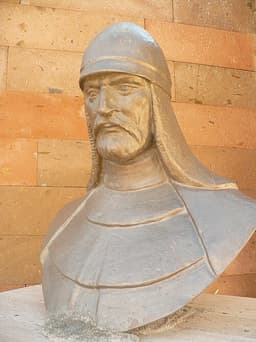
Alp Tigin
Emperor · Medieval
50.5Total
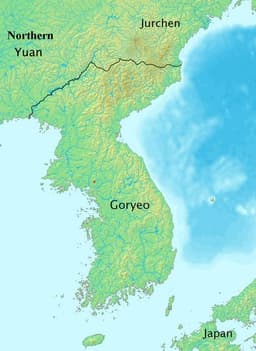
Gyeongjong of Goryeo
Emperor · Medieval
47.1Total
Basic Information
Born
911
955
Died
963
981
Era
Medieval
Medieval
Nationality
Ghaznavid Empire
Korea
Occupation
Emperor
Emperor
Civilization
Middle Eastern
Eastern
Score Comparison
Military (10%)
55.0
20.0
Political (20%)
33.6
53.8
Influence (20%)
56.4
53.3
Legacy (20%)
49.2
47.5
Leadership (15%)
50.7
48.8
Strategy (15%)
60.0
45.0
TOTAL
50.5
47.1
Alp Tigin — Complete Timeline
961 AD
Rebellion against the SamanidsPolitical Action◆ Major
Alp Tigin rebelled against the Samanid ruler Mansur I after being passed over for a governorship. He marched from Nishapur to Ghazni, defeating Samanid forces along the way, and established his own rule in eastern Afghanistan.
Impact: regional
963 AD
Consolidation of GhazniPolitical Action
Alp Tigin fortified Ghazni and organized a military state based on slave soldiers (ghilman). He established a stable administration that attracted scholars and merchants, turning Ghazni into a major regional power center.
Impact: regionalconstructive
Gyeongjong of Goryeo — Complete Timeline
976 AD
Institution of the Jeonsigwa Land SystemReform◆ Major
King Gyeongjong established the jeonsigwa, a land distribution system that allocated state-owned farmland to government officials based on their rank. This reform aimed to secure royal revenue and control over land, while providing a stable income for the bureaucracy.
Impact: nationalconstructive
Expert Analysis
Gyeongjong of Goryeo vs Alp Tigin
### The Slave-King and the Scholar-King: Two Paths to Power in a Turbulent Century
In the year 961, two men stood at the precipice of power, yet their worlds could not have been more different. One, a Turkic slave commander named Alp Tigin, was leading a rebellion against his Samanid overlords in the dusty plains of Nishapur, his heart burning with the sting of a denied governorship. The other, a boy of six named Gyeongjong, was being groomed in the serene, Confucian court of Goryeo, his destiny sealed by bloodline and the weight of a thousand years of Korean tradition. One would carve a kingdom from the chaos of a collapsing empire, ruling through the loyalty of slave-soldiers and the sword. The other would inherit a throne, and with it, the task of building a stable realm through ink and edict. Their stories, unfolding within the same medieval century, ask a fundamental question: what drives a man to greatness—ambition or duty, the spear or the scroll?
### Origins
Alp Tigin was born in 911 into a world where power was a fluid, brutal currency. As a Turkic slave in the Samanid Empire, his life was defined by the *ghilman* system, a military machine that turned captured boys into elite warriors, loyal only to their masters. He rose through sheer martial prowess, but his path was one of constant precariousness. When the Samanid ruler Mansur I passed him over for the governorship of Khorasan in 961, the slight was not just an insult—it was a threat to his very existence. In that moment, Alp Tigin understood that in his world, a man could only rely on himself.
Gyeongjong, born in 955, inherited a different kind of burden. He was the fourth monarch of Goryeo, a dynasty that had unified the Korean peninsula just decades earlier. His father, King Gwangjong, had been a reformer who purged the old aristocracy and freed slaves, but his reign was also marked by paranoia and bloodshed. Gyeongjong grew up in the shadow of this legacy, a quiet boy who studied Confucian classics and learned that true power came not from the sword, but from the careful administration of land and law. His world was one of civil servants, not slave commanders.
### Rise to Power
Alp Tigin’s rise was a gamble. After his rebellion, he marched his loyal *ghilman* not toward the Samanid heartland, but eastward, to the remote fortress-city of Ghazni in modern-day Afghanistan. There, in 963, he consolidated his power, fortifying the city and organizing a military state entirely dependent on his personal army of slave-soldiers. It was a raw, pragmatic solution: loyalty bought through patronage and fear, not by birthright. He never claimed the title of emperor—he was a rebellious governor who carved out a domain. His power was a fragile thing, built on the edge of a sword.
Gyeongjong’s path was the opposite. He ascended the throne in 975 at the age of twenty, after his father’s death, with no rebellion, no coup, no bloodshed. His rule was a mandate from heaven, legitimized by Confucian ritual and the support of a bureaucratic elite. His challenge was not to seize power, but to wield it wisely in a court still recovering from his father’s purges.
### Leadership & Governance
Alp Tigin ruled Ghazni like a warlord. He surrounded himself with a council of fellow Turkic commanders and relied on the *ghilman* as the backbone of his state. There were no grand reforms, no land distribution systems—just the constant need to pay his soldiers and fend off rivals. His governance was military and personal: every decision was a calculation of survival. He was a brilliant tactician, but his vision was limited to the walls of his fortress.
Gyeongjong, in contrast, proved to be a visionary administrator. In 976, just a year into his reign, he instituted the *jeonsigwa* land system, a revolutionary reform that allocated state-owned farmland based on official rank. This stabilized state finances, reduced the power of regional aristocrats, and created a loyal bureaucracy. It was a quiet, bloodless revolution—a masterstroke of political wisdom that would shape Korean governance for centuries. Where Alp Tigin built walls, Gyeongjong built institutions.
### Triumph & Tragedy
Alp Tigin’s greatest triumph was the survival of his fledgling state. He died in 963, only two years after his rebellion, but he had laid the foundation for what would become the Ghaznavid Empire—a dynasty that, under his more famous successor Mahmud of Ghazni, would raid deep into India and become a major Islamic power. His tragedy was that he never saw it. He died a rebel, not a king, his legacy uncertain.
Gyeongjong’s triumph was the *jeonsigwa* system, a policy that brought order to a chaotic kingdom. His tragedy was his early death in 981, at just twenty-six years old. He had no time to see his reforms fully mature, and his successor, King Seongjong, would build upon his work. Gyeongjong passed away quietly, leaving behind a blueprint, not an empire.
### Character & Destiny
Alp Tigin was a creature of his environment: ambitious, ruthless, and pragmatic. He understood that in a world of shifting loyalties, a man’s fate was shaped by his own actions. His destiny was to be a founder, but a flawed one—a man who could carve a kingdom but not fully govern it. Gyeongjong, by contrast, was a product of the Confucian ideal: a ruler who saw his role as a steward, not a conqueror. His destiny was to be a reformer, not a warrior. Their personalities dictated their fates: Alp Tigin’s fire burned bright and fast; Gyeongjong’s light was steady, but brief.
### Legacy
Alp Tigin’s legacy is the Ghaznavid Empire, a military state that would dominate Central Asia and northern India for nearly two centuries. He is remembered as a symbol of the “slave-king” archetype—a man who rose from nothing to found a dynasty. Yet his personal achievements are often overshadowed by his successors. Gyeongjong’s legacy is quieter but more profound. The *jeonsigwa* system became the cornerstone of Goryeo’s land administration, influencing Korean governance for generations. He is remembered as a scholar-king, a man who used the pen to shape a nation.
### Conclusion
Standing at the edge of history, we see two paths to power in a turbulent century. One was forged in the heat of battle, the other in the quiet of a court. Alp Tigin’s story is a testament to the raw will of a man who refused to accept his fate; Gyeongjong’s is a reminder that true power often lies not in the sword, but in the laws and systems that outlast any single ruler. Both were founders in their own way, but they built different worlds. And perhaps that is the deepest lesson: history does not favor one path over another—it simply records the choices we make, and the worlds we leave behind.
Rankings
🥇
Alp TiginLeader
Mil: 55.0Pol: 33.6Inf: 56.4
50.5
🥈
Gyeongjong of Goryeo
Mil: 20.0Pol: 53.8Inf: 53.3
47.1
+3.4 behind
How This Comparison Works
Algorithm
Each figure is scored on 6 dimensions (0—100 scale) based on structured historical data: Military (10%), Political (20%), Influence (20%), Legacy (20%), Leadership (15%), Strategy (15%). The weighted total produces the final ranking.
Data Sources
Scores are computed from structured sub-indicators in the database. Scale factors adjust for era (Ancient ×0.85, Modern ×1.0) and civilization size (Eastern ×1.05, Other ×0.80) to account for differences in population and military scale.
Maximum 3 Figures
Comparisons are limited to 2—3 figures to ensure readability and statistical meaningfulness.
Error Margins
±5 points per dimension — Sub-scores are derived from historical records with inherent uncertainty. Two figures within 5 points on a dimension should be considered roughly equivalent in that area.
Total Score Accuracy
±3 points overall — The weighted combination of 6 dimensions produces a total score with approximately ±3 points of uncertainty. Differences of less than 3 points are not statistically significant— the figures are effectively tied.
Known Limitations
- Historical records are incomplete and uneven across civilizations
- Figures from oral-tradition societies may be underrepresented
- Occupation labels can misclassify multi-role figures
- Scores measure capability and impact, not moral character
- Quantitative scoring is a comparison tool, not absolute truth
Capability Radar
Military (10%) — Battles & Warfare
Battles
45
5
Win Rate
50
5
Expansion
50
5
Political (20%) — Governance & Reform
Reform
20
70
Diplomacy
30
40
Economy
20
65
Influence (20%) — Cultural & Global Reach
Cultural
30
30
Global
30
20
Legacy (20%) — Historical Impact
Historical
45
45
Longevity
40
40
Leadership (15%) — Power & Stability
Tenure
25
55
Stability
25
50
Strategy (15%) — Tactics & Innovation
Strategy
45
5
Tactics
40
5
Reform
30
5
Similar Comparisons
Comments & Discussion
SLAVE-KING'S SHADOW6/16/2026
Alp Tigin gets too much credit as a founder. He was a failed governor who got passed over, threw a tantrum, and fled east with loyalist slave-soldiers. That's not ambition—that's survival instinct wrapped in sword-rattling. Meanwhile, Gyeongjong at age six inherited a functioning Confucian state and still managed to stabilize land reforms. One acted from desperation, the other from duty. Give me the scholar-king who didn't need rebellion to prove his worth.
大刀阔斧评史6/16/2026
把阿尔普特勤捧成英雄简直可笑。他不过是萨曼王朝的雇佣兵头子,晋升失败就带兵叛逃,占了个边陲小城自立。这叫什么王国?叫强盗据点更合适。而高丽景宗六岁登基,面对豪强割据,硬是推行田柴科制度削弱世族。一个靠刀剑苟活,一个用制度治国,高下立判。更何况伽色尼王朝后来也靠波斯文官系统才站稳,野蛮终究要向文明低头。
DATA SKEPTIC6/16/2026
Everyone romanticizes the "slave-to-king" narrative, but let's look at scale. Alp Tigin's Ghaznavid state at its peak maybe controlled 500,000 square kilometers. Gyeongjong's Goryeo was over 220,000 km²—and he inherited it at age six without collapsing. Alp Tigin didn't even see his dynasty's greatest expansion; that was his slave-successor Sabuktigin. So who really built something sustainable? The kid who kept a kingdom stable through land reforms, or the mercenary who founded a dynasty that im
史记纠偏人6/16/2026
那些吹捧阿尔普特勤是中世纪成功学典范的,怕不是忘了历史语境。伽色尼王朝从976年沙布特金继位才算真正崛起,之前的阿尔普特勤就是个逃亡军阀,占伽兹尼城苟且偷生七年就死了。他连自己的继任者都不是儿子,而是另一个奴隶出身的将军。高丽景宗则不同,他即位时面对的是太祖留下的百废待兴,光宗改革后的权力真空,他硬是靠科举选拔文官、限制寺院经济,为成宗时代的高丽黄金期铺平了路。奴隶靠刀得天下,君主靠制度守天下,这才是本质区别。
EMPIRE BUILDER'S EYE6/16/2026
You're all missing the structural point. Alp Tigin's rebellion created the Ghaznavid template: a militarized, slave-soldier state that later conquered Punjab and crushed the Hindu Shahi. Gyeongjong? He fiddled with land registers while his kingdom remained a tributary