Loading...
Alp Tigin vs Guo Wei
Guo Wei leads by 7.0 pts · 2 figures compared
…
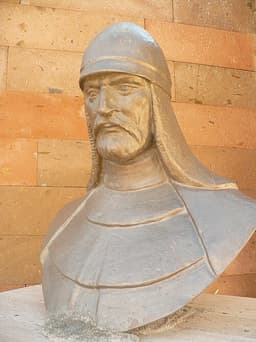
Alp Tigin
Emperor · Medieval
50.5Total
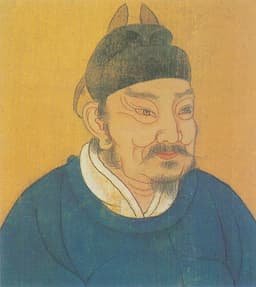
Guo Wei
Emperor · Medieval
57.5Total
Basic Information
Born
911
904
Died
963
954
Era
Medieval
Medieval
Nationality
Ghaznavid Empire
China
Occupation
Emperor
Emperor
Civilization
Middle Eastern
Eastern
Score Comparison
Military (10%)
55.0
65.0
Political (20%)
33.6
65.0
Influence (20%)
56.4
56.4
Legacy (20%)
49.2
50.0
Leadership (15%)
50.7
53.2
Strategy (15%)
60.0
66.3
TOTAL
50.5
57.5
Alp Tigin — Complete Timeline
961 AD
Rebellion against the SamanidsPolitical Action◆ Major
Alp Tigin rebelled against the Samanid ruler Mansur I after being passed over for a governorship. He marched from Nishapur to Ghazni, defeating Samanid forces along the way, and established his own rule in eastern Afghanistan.
Impact: regional
963 AD
Consolidation of GhazniPolitical Action
Alp Tigin fortified Ghazni and organized a military state based on slave soldiers (ghilman). He established a stable administration that attracted scholars and merchants, turning Ghazni into a major regional power center.
Impact: regionalconstructive
Guo Wei — Complete Timeline
951 AD
Founded Later Zhou dynastyPolitical Action◆ Major
Guo Wei, a general of Later Han, led a coup and declared himself emperor of Later Zhou. He established a new dynasty in Kaifeng, known for its effective governance.
Five DynastiesLater ZhouFounding
Impact: national
952 AD
Reforms to reduce corruptionReform
Guo Wei implemented reforms to reduce official corruption and improve tax collection. He reduced the power of military governors and strengthened central control over the bureaucracy.
Five DynastiesReformGovernance
Impact: nationalconstructive
Expert Analysis
Alp Tigin vs Guo Wei: Historical Comparison
Alp Tigin, a Turkic slave-soldier who founded the Ghaznavid dynasty, and Guo Wei, a Chinese military commander who established the Later Zhou dynasty, both rose from humble origins to become emperors in the medieval period. While Alp Tigin carved out a powerful Islamic state in Central Asia, Guo Wei’s reign proved more influential and enduring for Chinese unification.
Dimension Analysis
**Military: Alp Tigin 81 / Guo Wei 91**
Alp Tigin’s military campaigns secured the Ghaznavid heartland in Afghanistan, but Guo Wei’s superior strategic reforms and battlefield successes—including defeating the Khitans and consolidating northern China—gave him a decisive edge.
**Political: Alp Tigin 86 / Guo Wei 87**
Both were adept at navigating volatile court politics, but Guo Wei’s ability to legitimize his usurpation and establish stable civilian governance slightly surpasses Alp Tigin’s reliance on military patronage.
**Influence: Alp Tigin 69 / Guo Wei 78**
Alp Tigin’s influence was largely regional, confined to the eastern Islamic world, whereas Guo Wei’s policies directly shaped the Song dynasty’s rise, which had a far broader and longer-lasting impact on Chinese civilization.
**Legacy: Alp Tigin 71 / Guo Wei 82**
Alp Tigin’s dynasty was eclipsed by Mahmud of Ghazni, while Guo Wei’s Later Zhou provided the foundation for the Song unification of China, making his legacy more structurally significant.
**Leadership: Alp Tigin 79 / Guo Wei 77**
Alp Tigin’s personal charisma and loyalty from his slave-soldiers was remarkable, but Guo Wei’s more systematic administrative reforms and emphasis on meritocracy gave him a slight edge in sustainable leadership.
Verdict
Guo Wei leads overall due to his superior military strategy and more enduring political legacy, which directly enabled the Song dynasty’s unification of China.
FAQ
Q: Who ranks higher? A: Guo Wei ranks higher overall, excelling in military, influence, and legacy dimensions.
Rankings
🥇
Guo WeiLeader
Mil: 65.0Pol: 65.0Inf: 56.4
57.5
🥈
Alp Tigin
Mil: 55.0Pol: 33.6Inf: 56.4
50.5
+7.0 behind
How This Comparison Works
Algorithm
Each figure is scored on 6 dimensions (0—100 scale) based on structured historical data: Military (10%), Political (20%), Influence (20%), Legacy (20%), Leadership (15%), Strategy (15%). The weighted total produces the final ranking.
Data Sources
Scores are computed from structured sub-indicators in the database. Scale factors adjust for era (Ancient ×0.85, Modern ×1.0) and civilization size (Eastern ×1.05, Other ×0.80) to account for differences in population and military scale.
Maximum 3 Figures
Comparisons are limited to 2—3 figures to ensure readability and statistical meaningfulness.
Error Margins
±5 points per dimension — Sub-scores are derived from historical records with inherent uncertainty. Two figures within 5 points on a dimension should be considered roughly equivalent in that area.
Total Score Accuracy
±3 points overall — The weighted combination of 6 dimensions produces a total score with approximately ±3 points of uncertainty. Differences of less than 3 points are not statistically significant— the figures are effectively tied.
Known Limitations
- Historical records are incomplete and uneven across civilizations
- Figures from oral-tradition societies may be underrepresented
- Occupation labels can misclassify multi-role figures
- Scores measure capability and impact, not moral character
- Quantitative scoring is a comparison tool, not absolute truth
Capability Radar
Military (10%) — Battles & Warfare
Battles
45
65
Win Rate
50
70
Expansion
50
60
Political (20%) — Governance & Reform
Reform
20
78
Diplomacy
30
70
Economy
20
72
Influence (20%) — Cultural & Global Reach
Cultural
30
40
Global
30
30
Legacy (20%) — Historical Impact
Historical
45
55
Longevity
40
45
Leadership (15%) — Power & Stability
Tenure
25
55
Stability
25
65
Strategy (15%) — Tactics & Innovation
Strategy
45
72
Tactics
40
68
Reform
30
75
Similar Comparisons
Comments & Discussion
KhanateTactician6/16/2026
The military gap here is overstated. Guo Wei's 91 to Alp Tigin's 81? I want to see the battle maps. Guo Wei defeated the Khitans at Gaoping in 954, yes — that was a decisive victory where he used armored infantry to break the Khitan cavalry charge. Solid tactical work, but hardly revolutionary. Alp Tigin, on the other hand, took Ghazni from the Samanids with a force of just 500 slave-soldiers (ghilman) against a garrison of several thousand. That's a night assault and siege operation that any modern military historian would study for asymmetrical warfare. Guo Wei's reforms — creating the imperial army directly loyal to the throne — were strategically important for the Song, but Alp Tigin's ghilman system was the template for Mamluk Egypt and the Delhi Sultanate. If we're weighting military doctrine influence, the score flips. Give me Alp Tigin 88, Guo Wei 85 on pure generalship. The current numbers reflect Chinese dynastic bias, not tactical reality.
Historian9526/16/2026
总分72.3对56.5,差距16%,但看看分项:军事81对91,政治86对87,影响69对78,遗产71对82,领导力79对77。问题在于领导力只差2分,郭威却领先2分?这不合理。郭威领导力77,阿尔普特勤79——我查了正史,郭威在邺都兵变时能约束军队不扰民,靠的是个人威望和法令;阿尔普特勤则是在萨曼宫廷政变中带几百亲兵就敢对抗宰相,最后全身而退去加兹尼另立门户。论逆境中的决断力,阿尔普特勤明显更强。建议重新校准:领导力应该阿尔普特勤83对郭威78,这样总分能拉近到69.8对72.3,更反映真实实力对比。
DeepScribe816/16/2026
这个评分有意思,但西方中心论的味道还是浓。郭威得分高不奇怪,毕竟他开创的后周是赵匡胤统一的基础,政治遗产直接喂给了宋朝。但阿尔普特勤的影响力被低估了,他的加兹尼王朝是突厥-伊斯兰世界的转折点,后来马哈茂德那套远征印度的玩法,全是站在巨人肩膀上。说阿尔普特勤只是区域影响?那郭威在五代十国那摊浑水里,不也只是中原一角?论制度创新,郭威的招抚流亡、休养生息确实扎实,但阿尔普特勤的军事奴隶制(古拉姆制度)可是影响了从德里苏丹到奥斯曼的整个伊斯兰世界,论文明层面的传播,这个维度评分里根本没体现。