Loading...
Alp Tigin vs Ferdinand I of Leon
Ferdinand I of Leon leads by 8.7 pts · 2 figures compared
…
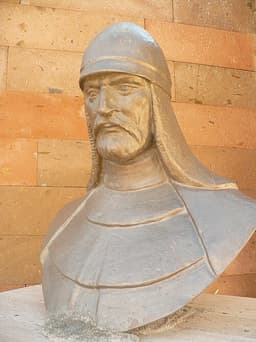
Alp Tigin
Emperor · Medieval
50.5Total
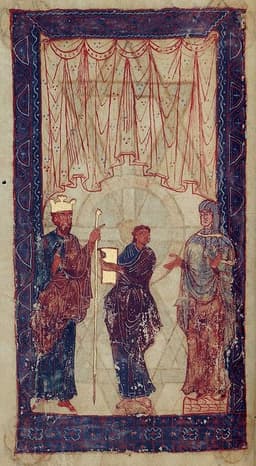
Ferdinand I of Leon
Emperor · Medieval
59.2Total
Basic Information
Born
911
1015
Died
963
1065
Era
Medieval
Medieval
Nationality
Ghaznavid Empire
Leon
Occupation
Emperor
Emperor
Civilization
Middle Eastern
Western
Score Comparison
Military (10%)
55.0
70.0
Political (20%)
33.6
68.0
Influence (20%)
56.4
56.4
Legacy (20%)
49.2
49.2
Leadership (15%)
50.7
66.0
Strategy (15%)
60.0
57.5
TOTAL
50.5
59.2
Alp Tigin — Complete Timeline
961 AD
Rebellion against the SamanidsPolitical Action◆ Major
Alp Tigin rebelled against the Samanid ruler Mansur I after being passed over for a governorship. He marched from Nishapur to Ghazni, defeating Samanid forces along the way, and established his own rule in eastern Afghanistan.
Impact: regional
963 AD
Consolidation of GhazniPolitical Action
Alp Tigin fortified Ghazni and organized a military state based on slave soldiers (ghilman). He established a stable administration that attracted scholars and merchants, turning Ghazni into a major regional power center.
Impact: regionalconstructive
Ferdinand I of Leon — Complete Timeline
1029 AD
Inheritance of the County of CastilePolitical Action◆ Major
Ferdinand I inherited the County of Castile from his father Sancho III of Navarre. He later expanded his territory through conquest and marriage, laying the foundation for the Kingdom of Castile.
Impact: regionalconstructive
1037 AD
Conquest of LeónWar◆ Major
Ferdinand I defeated and killed King Bermudo III of Le
Impact: regional
1056 AD
First Emperor of SpainPolitical Action◆ Major
Ferdinand I was crowned 'Imperator totius Hispaniae' (Emperor of all Spain) in 1056, claiming suzerainty over all Christian and Muslim rulers in Iberia. This title reflected his military dominance and political ambition.
Impact: regional
1065 AD
Division of the kingdomPolitical Action◆ Major
Upon his death, Ferdinand I divided his kingdom among his sons: Sancho II received Castile, Alfonso VI received Le
Impact: regionaldestructive
Expert Analysis
Ferdinand I of Leon vs Alp Tigin
### The Slave Who Became a Sultan, and the King Who Crowned Himself Emperor
History remembers conquerors in peculiar ways. One man rose from the shackles of a slave market to carve out a dynasty, yet his name remains obscure. Another inherited a crown, expanded a kingdom, and claimed an imperial title, but his life’s work crumbled within a generation. Alp Tigin, a Turkic slave commander, and Ferdinand I of León, a Christian king, both lived in the same tumultuous medieval centuries, yet they charted opposite arcs of power. What drove a man with nothing to build a state from scratch, while a man with everything saw his legacy shattered by his own hand?
### Origins
Alp Tigin was born in 911 into a world where a man’s worth was measured in silver and steel. Captured and sold as a slave, he entered the service of the Samanid Empire, a Persianate dynasty in Central Asia. Here, the *ghilman* system turned foreign slaves into elite soldiers—men who owed absolute loyalty to their masters, not to blood or tribe. Alp Tigin’s rise was a testament to raw ability: he became a commander, a governor, a man who could march armies. His world was one of shifting loyalties, where a sword could win a throne.
Ferdinand I, born in 1015, inherited a different inheritance: legitimacy. He was the son of Sancho III of Navarre, a king who had forged a fragile union of Christian kingdoms in northern Iberia. Ferdinand grew up not in a slave barracks but in a royal court, surrounded by bishops and chroniclers who traced his lineage back to Visigothic kings. His world was one of bloodlines, oaths, and the sacred duty of the Reconquista—the centuries-long struggle to reclaim land from the Moors. Where Alp Tigin had to seize respect, Ferdinand was born into it.
### Rise to Power
For Alp Tigin, power came through rebellion. In 961, the Samanid ruler Mansur I passed him over for a key governorship. Alp Tigin did not accept this slight. He marched his army from Nishapur, defying his master, and fled eastward to the remote fortress city of Ghazni—in modern-day Afghanistan. There, in 963, he consolidated his rule. He did not claim a throne by divine right; he built a military state from scratch, relying on a loyal corps of slave soldiers. His rise was a gamble, a desperate bid for survival that became a foundation.
Ferdinand I’s ascent was smoother, but no less deadly. In 1029, he inherited the County of Castile from his father. Then, in 1037, he faced King Bermudo III of León at the Battle of Tamarón. The clash was brutal; Bermudo was slain. Ferdinand promptly claimed León, marrying his son into the defeated royal line to seal the conquest. His path was one of dynastic chess—marriages, battles, and inheritances that expanded his domain without the chaos Alp Tigin endured.
### Leadership & Governance
Alp Tigin ruled as a warlord-king. His Ghazni was a fortress, a garrison state where the army was the state. He organized his *ghilman* into a disciplined force, granting them land and status in exchange for absolute loyalty. His governance was pragmatic, not ideological: he collected tribute, suppressed rivals, and kept his soldiers fed. There was no grand vision of empire, only the cold calculus of survival in a fractured region.
Ferdinand I ruled as a medieval emperor. In 1056, he was crowned *Imperator totius Hispaniae*—Emperor of all Spain—claiming suzerainty over every Christian kingdom and even Muslim taifas. He waged campaigns against the Moors, exacting tribute and expanding his territory. His leadership blended military might with political wisdom: he married his children into rival dynasties, forged alliances, and used the Church to sanctify his rule. He was a builder of institutions, not just a commander.
### Triumph & Tragedy
Alp Tigin’s triumph was survival itself. He took a barren outpost and made it the seed of the Ghaznavid Empire, which would later stretch from the Caspian to the Indus. His tragedy was that he did not live to see it. He died in 963, leaving a state that was still fragile, dependent on his personal authority.
Ferdinand I’s triumph was his coronation—a moment when a king of León dared to claim the mantle of Roman emperors. His tragedy came in 1065, on his deathbed. Following the old Visigothic custom, he divided his kingdom among his three sons: Sancho II received Castile, Alfonso VI received León, and García received Galicia. Within years, the brothers were at war. Ferdinand’s empire, built on blood and oaths, shattered into fratricidal chaos.
### Character & Destiny
Alp Tigin was a man of action, not reflection. His personality was forged in the crucible of slavery: ruthless, adaptive, and suspicious. He trusted only his soldiers, and even then, only conditionally. This made him a brilliant survivor but a poor visionary. He could build a state, but not a stable succession.
Ferdinand I was a man of ambition and order. He believed in law, lineage, and the sanctity of his crown. Yet this same faith in tradition led him to divide his realm—a fatal error. His character was shaped by the belief that blood would hold what conquest had won. It did not. His destiny was to create a legacy that his own sons would destroy.
### Legacy
Alp Tigin’s legacy is the Ghaznavid dynasty, which his son and grandson would transform into a great empire. Today, he is remembered as a founder, a figure who proved that a slave could become a sultan. His story echoes through the history of Turkic and Islamic states.
Ferdinand I is remembered as a king who nearly united Christian Spain, but whose division of his kingdom set the stage for centuries of conflict. His name lives in the chronicles of the Reconquista, but his empire was ephemeral. He is a cautionary tale: a man who had everything and lost it by giving it away.
### Conclusion
Alp Tigin and Ferdinand I stand as mirrors to each other. One rose from nothing and built something lasting; the other inherited everything and saw it crumble. Their stories remind us that power is not a matter of birth or title, but of decisions made in the crucible of history. A slave’s gamble and a king’s trust—both shaped the world, but only one left a dynasty that endured. In the end, perhaps the greatest lesson is this: the men who build empires often come from the dust, while those born to crowns must learn to hold them tight.
Rankings
🥇
Ferdinand I of LeonLeader
Mil: 70.0Pol: 68.0Inf: 56.4
59.2
🥈
Alp Tigin
Mil: 55.0Pol: 33.6Inf: 56.4
50.5
+8.7 behind
How This Comparison Works
Algorithm
Each figure is scored on 6 dimensions (0—100 scale) based on structured historical data: Military (10%), Political (20%), Influence (20%), Legacy (20%), Leadership (15%), Strategy (15%). The weighted total produces the final ranking.
Data Sources
Scores are computed from structured sub-indicators in the database. Scale factors adjust for era (Ancient ×0.85, Modern ×1.0) and civilization size (Eastern ×1.05, Other ×0.80) to account for differences in population and military scale.
Maximum 3 Figures
Comparisons are limited to 2—3 figures to ensure readability and statistical meaningfulness.
Error Margins
±5 points per dimension — Sub-scores are derived from historical records with inherent uncertainty. Two figures within 5 points on a dimension should be considered roughly equivalent in that area.
Total Score Accuracy
±3 points overall — The weighted combination of 6 dimensions produces a total score with approximately ±3 points of uncertainty. Differences of less than 3 points are not statistically significant— the figures are effectively tied.
Known Limitations
- Historical records are incomplete and uneven across civilizations
- Figures from oral-tradition societies may be underrepresented
- Occupation labels can misclassify multi-role figures
- Scores measure capability and impact, not moral character
- Quantitative scoring is a comparison tool, not absolute truth
Capability Radar
Military (10%) — Battles & Warfare
Battles
45
55
Win Rate
50
60
Expansion
50
60
Political (20%) — Governance & Reform
Reform
20
50
Diplomacy
30
55
Economy
20
45
Influence (20%) — Cultural & Global Reach
Cultural
30
40
Global
30
30
Legacy (20%) — Historical Impact
Historical
45
45
Longevity
40
40
Leadership (15%) — Power & Stability
Tenure
25
65
Stability
25
50
Strategy (15%) — Tactics & Innovation
Strategy
45
55
Tactics
40
50
Reform
30
40
Similar Comparisons
Comments & Discussion
Legionnaire_Lament6/16/2026
Ferdinand I is a perfect example of why "legacy" is a joke. Sure, he took León and called himself emperor, but within a generation his sons were at each other's throats, carving up the kingdom like a Sunday roast. Meanwhile, Alp Tigin turned a slave's life into a dynasty that actually stuck around. One man built from nothing, the other inherited everything and still managed to screw it up.
沙丘刀客6/16/2026
阿尔普特斤从奴隶市场起步,靠刀剑打天下,这比费迪南德一世那种靠爹妈给的王冠硬充皇帝有意思多了。中世纪的历史就该这样——谁能打谁说了算,不是谁投胎技术好。费迪南德拿个"皇帝"头衔就飘了,结果儿子们分家,西班牙的基督教王国几十年没缓过来。
Data_Skeptic_Mike6/16/2026
The comparison ignores sample size entirely. You're cherry-picking one slave-rise story versus one royal-flop story. For every Alp Tigin, there's a dozen slaves who died forgotten in the barracks. For every Ferdinand who screws up legacy, there's a Henry II or a Charlemagne. This analysis is basically a clickbait title built on two anecdotes, not a pattern. Needs real data on ghilman vs. hereditary success rates.
武举铁笔6/16/2026
费迪南一世最大的问题是他那套"分封治家"的政治幼稚病。莱昂、卡斯蒂利亚、加里西亚,一人一块地,结果三个儿子打了十四年内战。反观阿尔普特斤,靠奴隶军起家,建立加兹尼王朝后立刻集权,传位给养子而非亲生子,这才是政治头脑——血缘靠不住,能力才是铁饭碗。