Loading...
Alp Tigin vs Emperor Yang of Sui
Emperor Yang of Sui leads by 9.6 pts · 2 figures compared
…
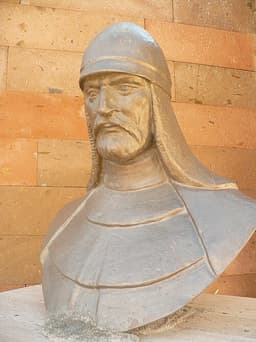
Alp Tigin
Emperor · Medieval
50.5Total
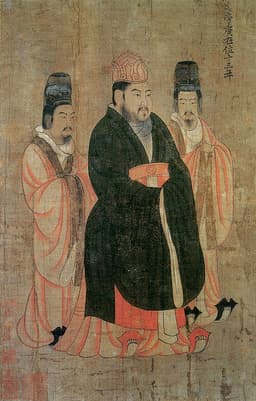
Emperor Yang of Sui
Emperor · Medieval
60.1Total
Basic Information
Born
911
569
Died
963
618
Era
Medieval
Medieval
Nationality
Ghaznavid Empire
China
Occupation
Emperor
Emperor
Civilization
Middle Eastern
Eastern
Score Comparison
Military (10%)
55.0
52.5
Political (20%)
33.6
45.0
Influence (20%)
56.4
65.0
Legacy (20%)
49.2
72.0
Leadership (15%)
50.7
58.8
Strategy (15%)
60.0
50.0
TOTAL
50.5
60.1
Alp Tigin — Complete Timeline
961 AD
Rebellion against the SamanidsPolitical Action◆ Major
Alp Tigin rebelled against the Samanid ruler Mansur I after being passed over for a governorship. He marched from Nishapur to Ghazni, defeating Samanid forces along the way, and established his own rule in eastern Afghanistan.
Impact: regional
963 AD
Consolidation of GhazniPolitical Action
Alp Tigin fortified Ghazni and organized a military state based on slave soldiers (ghilman). He established a stable administration that attracted scholars and merchants, turning Ghazni into a major regional power center.
Impact: regionalconstructive
Emperor Yang of Sui — Complete Timeline
605 AD
Construction of the Grand CanalCultural
Emperor Yang ordered the construction of the Grand Canal, linking the Yellow River and Yangtze River basins. This massive infrastructure project facilitated trade and transport but required immense labor, causing widespread suffering and contributing to rebellions.
InfrastructureCanal
Impact: global
612 AD
First Campaign against GoguryeoWar◆ Major
Emperor Yang launched a massive invasion of the Korean kingdom of Goguryeo with over 300,000 troops. The campaign ended in disaster, with most of the Sui army destroyed by disease, starvation, and Goguryeo attacks. This defeat severely weakened the Sui dynasty.
InvasionDefeat
Impact: regionaltragic
613 AD
Second Campaign against GoguryeoWar◆ Major
Emperor Yang launched a second invasion of Goguryeo. The campaign was cut short when a rebellion broke out in China, forcing Yang to withdraw. This further drained the dynasty's resources and morale.
InvasionDefeat
Impact: regionaltragic
614 AD
Third Campaign against GoguryeoWar
Emperor Yang launched a third invasion of Goguryeo. Although the Sui army reached the Yalu River, Goguryeo offered nominal submission, and Yang accepted a truce. This campaign further exhausted the Sui treasury and military.
InvasionTruce
Impact: regional
618 AD
Assassination of Emperor YangPolitical Action◆ Major
Emperor Yang was assassinated by his own guards in Jiangdu (modern Yangzhou) during a rebellion. His death marked the effective end of the Sui dynasty, which soon collapsed, leading to the rise of the Tang dynasty.
AssassinationDynasty Collapse
Impact: regionaltragic
Expert Analysis
Alp Tigin vs Emperor Yang of Sui
# The Canal and the Sword
On a spring morning in 605, Emperor Yang of Sui stood on the bank of a newly dug waterway, watching tens of thousands of laborers toil under the sun. He envisioned ships laden with grain sailing from the fertile south to his northern capitals, binding his empire together with water and stone. Two centuries later, on the dusty plains of what is now eastern Afghanistan, Alp Tigin, a Turkic slave commander, gazed at the fortress walls of Ghazni and saw something different: a stronghold from which he could carve his own kingdom. One man dreamed of connecting worlds; the other of securing his own. Their ambitions would shape the fates of dynasties, yet their paths could not have diverged more sharply.
Origins
Emperor Yang of Sui was born in 569 into the imperial family of a reunified China. His father, Emperor Wen, had ended centuries of division by conquering the southern Chen dynasty, and Yang grew up steeped in the Confucian ideals of benevolent rule—and the brutal realities of court politics. He was a prince of privilege, educated in poetry, ritual, and statecraft, but also a man who witnessed assassination and intrigue as a matter of course. His world was one of grand visions: the Yellow River, the Yangtze, the Great Wall, all symbols of a civilization that saw itself as the center of the universe.
Alp Tigin, born in 911, emerged from a radically different world. He was a Turkic slave, likely captured as a child from the steppes of Central Asia, and sold into the service of the Samanid Empire. In the Islamic world of the tenth century, slave soldiers—ghilman—could rise to extraordinary heights. Unlike Yang, who inherited his throne, Alp Tigin had to earn every scrap of power through loyalty, cunning, and military skill. His universe was not the orderly bureaucracy of China but the shifting loyalties of Persianate courts, where a commander’s life depended on the favor of a master who might change his mind at any moment.
Rise to Power
Emperor Yang ascended to the throne in 604, following his father’s sudden death—rumored to be at Yang’s own instigation. His path was one of inheritance, but he sought to surpass his father’s achievements. Within a year, he ordered the construction of the Grand Canal, a monumental project linking the Yellow River and Yangtze River basins. This was not merely infrastructure; it was a statement of imperial will, a way to project Sui power across a vast territory.
Alp Tigin’s rise was far more precarious. In 961, after years of loyal service to the Samanids, he was passed over for the governorship of Khurasan. Enraged, he rebelled against the Samanid ruler Mansur I, marching from Nishapur with a band of followers. Defeated in open battle, he retreated eastward, eventually seizing the fortress city of Ghazni in 963. There, he consolidated his power, organizing a military state built entirely around slave soldiers. Where Yang inherited an empire, Alp Tigin forged one from exile and desperation.
Leadership & Governance
Emperor Yang governed with the ambition of a builder and the impatience of a tyrant. The Grand Canal, completed in 605, was an engineering marvel that would influence Chinese trade for centuries. He also rebuilt the Great Wall, expanded the imperial examination system, and patronized Buddhism. Yet his vision came at a staggering human cost: millions of laborers died during the canal’s construction, and his relentless demands for tribute and service drained the treasury. He was a reformer who could not see the suffering his reforms caused.
Alp Tigin’s governance was more pragmatic and brutal. In Ghazni, he created a stable administration based on the ghilman system—slave soldiers who were loyal to him alone, not to tribal or familial ties. This allowed him to maintain order in a volatile region, but his state was small and defensive. He was no builder of canals or patron of culture; his legacy was survival and consolidation. His political wisdom lay in recognizing his limits, a lesson Emperor Yang never learned.
Triumph & Tragedy
Emperor Yang’s greatest triumph was the Grand Canal, a waterway that would outlast his dynasty and become the backbone of Chinese commerce for over a thousand years. But his tragedy was equally monumental: between 612 and 614, he launched three catastrophic campaigns against the Korean kingdom of Goguryeo. The first campaign in 612 involved over 300,000 troops, yet ended in disaster when the Sui army was ambushed and annihilated at the Salsu River. The second campaign in 613 was cut short by a domestic rebellion, and the third in 614 achieved only a nominal submission from Goguryeo. These wars bled the empire dry, sparking revolts across China.
Alp Tigin’s triumph was more modest but more secure: he founded the Ghaznavid dynasty, which would later expand into a vast empire under his successors, most famously Mahmud of Ghazni. His tragedy was that he did not live to see it. He died in 963, just months after consolidating Ghazni, leaving his fledgling state to his son-in-law. His greatest failure was not a spectacular defeat but the uncertainty of succession—a problem he never fully solved.
Character & Destiny
Emperor Yang was a man of immense ambition and fragile ego. He craved legacy, believing that history would remember him as a second Qin Shihuang, the unifier of China. But where the First Emperor had built with ruthless efficiency, Yang built with reckless haste. His character drove him to ignore warnings, dismiss dissent, and push his people to the breaking point. As the historian Sima Guang would later write, “He exhausted the strength of the empire for his own glory.” In 618, his own guards assassinated him in Jiangdu, and the Sui dynasty collapsed within a year.
Alp Tigin was the opposite: a survivor who understood that power required patience. He did not seek to conquer the world but to secure a foothold in it. His character was shaped by the slave market, where trust was a luxury and betrayal a constant threat. He ruled not with grand visions but with cold calculation. His destiny was to be a founder, not a builder—the seed of a dynasty that would flourish after his death.
Legacy
Emperor Yang’s legacy is deeply ambiguous. The Grand Canal stands as a testament to his vision, but his name is synonymous with tyranny and overreach. In Chinese history, he is often compared to the last emperor of Qin—a brilliant architect of ruin. His total score of 68.0 reflects this mixed judgment: high influence and leadership, but low strategy and military effectiveness.
Alp Tigin’s legacy is more straightforward. He is remembered as the founder of the Ghaznavid dynasty, a state that would dominate Central Asia for nearly two centuries. His score of 56.5 is modest, but his influence score of 71.6 hints at the ripple effects of his rebellion. He proved that a slave could become a king, and his ghilman system would be copied by rulers across the Islamic world.
Conclusion
Two men, two worlds. Emperor Yang tried to bind an empire with water and blood, only to drown in his own ambition. Alp Tigin built a fortress in the mountains and trusted in the loyalty of slaves. One left a canal that still flows; the other left a dynasty that would conquer Delhi. Their stories remind us that history judges not by the scale of dreams but by the wisdom of their execution. In the end, Yang’s grand vision collapsed under its own weight, while Alp Tigin’s small, hard-won kingdom became the foundation of an empire. Perhaps the greatest lesson is this: it is not enough to see the future—you must also survive the present.
Rankings
🥇
Emperor Yang of SuiLeader
Mil: 52.5Pol: 45.0Inf: 65.0
60.1
🥈
Alp Tigin
Mil: 55.0Pol: 33.6Inf: 56.4
50.5
+9.6 behind
How This Comparison Works
Algorithm
Each figure is scored on 6 dimensions (0—100 scale) based on structured historical data: Military (10%), Political (20%), Influence (20%), Legacy (20%), Leadership (15%), Strategy (15%). The weighted total produces the final ranking.
Data Sources
Scores are computed from structured sub-indicators in the database. Scale factors adjust for era (Ancient ×0.85, Modern ×1.0) and civilization size (Eastern ×1.05, Other ×0.80) to account for differences in population and military scale.
Maximum 3 Figures
Comparisons are limited to 2—3 figures to ensure readability and statistical meaningfulness.
Error Margins
±5 points per dimension — Sub-scores are derived from historical records with inherent uncertainty. Two figures within 5 points on a dimension should be considered roughly equivalent in that area.
Total Score Accuracy
±3 points overall — The weighted combination of 6 dimensions produces a total score with approximately ±3 points of uncertainty. Differences of less than 3 points are not statistically significant— the figures are effectively tied.
Known Limitations
- Historical records are incomplete and uneven across civilizations
- Figures from oral-tradition societies may be underrepresented
- Occupation labels can misclassify multi-role figures
- Scores measure capability and impact, not moral character
- Quantitative scoring is a comparison tool, not absolute truth
Capability Radar
Military (10%) — Battles & Warfare
Battles
45
65
Win Rate
50
30
Expansion
50
70
Political (20%) — Governance & Reform
Reform
20
85
Diplomacy
30
40
Economy
20
70
Influence (20%) — Cultural & Global Reach
Cultural
30
75
Global
30
65
Legacy (20%) — Historical Impact
Historical
45
80
Longevity
40
70
Leadership (15%) — Power & Stability
Tenure
25
55
Stability
25
20
Strategy (15%) — Tactics & Innovation
Strategy
45
60
Tactics
40
55
Reform
30
50
Similar Comparisons
Comments & Discussion
BROADAXE ORATOR6/16/2026
Sure, Emperor Yang built canals, but the man was a logistical suicide bomber. Flood of labor? Bondage? I get it, grand projects need bodies. But Yang conscripted 5 million people to dig his Grand Canal. That's not ambition; that's necromancy, using living men as fuel for a 1,200-mile funeral pyre. Alp Tigin at least took a single fortress with a personal retinue. One man wasted an empire's blood; the other earned his throne street by street. Victory: the slave.|
运河考古学家6/16/2026
说杨广是个统一的建筑师?别逗了。他修运河用血铺路,征发五百万民夫,死了两三百万。江南粮食运到洛阳有何用?还不是为了他南巡看琼花、坐龙舟的奢华排场。阿尔普特勤不一样,一个抓来的突厥奴隶,从底层拼到中亚堡垒之王。他抢加兹尼的城墙时,几万人流血换一个真实王国。杨广写诗好,治国烂;特勤不会写诗,但会让对手写墓碑。高下立判。