Loading...
Alp Tigin vs Emperor Taizu of Song
Emperor Taizu of Song leads by 21.4 pts · 2 figures compared
…
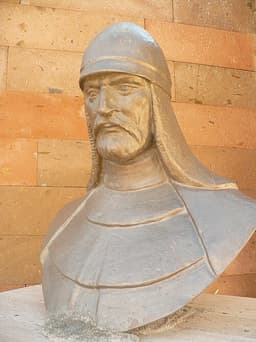
Alp Tigin
Emperor · Medieval
50.5Total
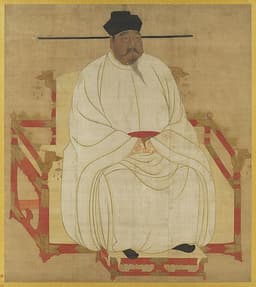
Emperor Taizu of Song
Emperor · Medieval
71.9Total
Basic Information
Born
911
927
Died
963
976
Era
Medieval
Medieval
Nationality
Ghaznavid Empire
China
Occupation
Emperor
Emperor
Civilization
Middle Eastern
Eastern
Score Comparison
Military (10%)
55.0
80.0
Political (20%)
33.6
78.0
Influence (20%)
56.4
68.0
Legacy (20%)
49.2
65.0
Leadership (15%)
50.7
78.0
Strategy (15%)
60.0
72.0
TOTAL
50.5
71.9
Alp Tigin — Complete Timeline
961 AD
Rebellion against the SamanidsPolitical Action◆ Major
Alp Tigin rebelled against the Samanid ruler Mansur I after being passed over for a governorship. He marched from Nishapur to Ghazni, defeating Samanid forces along the way, and established his own rule in eastern Afghanistan.
Impact: regional
963 AD
Consolidation of GhazniPolitical Action
Alp Tigin fortified Ghazni and organized a military state based on slave soldiers (ghilman). He established a stable administration that attracted scholars and merchants, turning Ghazni into a major regional power center.
Impact: regionalconstructive
Emperor Taizu of Song — Complete Timeline
960 AD
Chenqiao MutinyPolitical Action
Zhao Kuangyin, a general of the Later Zhou dynasty, was proclaimed emperor by his troops at Chenqiao. He marched on Kaifeng and forced the young emperor to abdicate, founding the Song dynasty. This coup established a new ruling house without major bloodshed.
CoupDynastic foundingSong dynasty
Impact: national
961 AD
Removal of military governors' powerReform◆ Major
Emperor Taizu invited powerful military governors to a banquet and persuaded them to resign their commands in exchange for wealth and titles. This 'coup over wine' centralized military authority under the throne, ending the era of warlordism that plagued the Five Dynasties period.
Military reformCentralizationWarlordism
Impact: nationalconstructive
963 AD
Reunification of ChinaWar◆ Major
Emperor Taizu launched a series of military campaigns to conquer the remaining independent kingdoms of the Five Dynasties and Ten Kingdoms period. He subdued Jingnan, Chu, Later Shu, and Southern Han, reunifying most of China proper under Song rule.
ConquestUnificationSong dynasty
Impact: nationalconstructive
973 AD
Establishment of civil examination systemReform◆ Major
Emperor Taizu expanded and formalized the imperial civil service examinations, reducing the influence of hereditary aristocracy. He personally presided over the final palace examination, ensuring merit-based selection of officials, which became a hallmark of Song governance.
Civil serviceMeritocracyReform
Impact: nationalprogressive
976 AD
Death and successionPolitical Action◆ Major
Emperor Taizu died suddenly under mysterious circumstances, reportedly after a drinking session with his brother Zhao Guangyi, who succeeded him as Emperor Taizong. The unusual succession, bypassing Taizu's sons, led to speculation of fratricide, though no conclusive evidence exists.
SuccessionMysterySong dynasty
Impact: nationaltragic
Expert Analysis
Alp Tigin vs Emperor Taizu of Song
### The Emperor and the Slave: Two Founders, Two Fates
On a moonlit night in 963, two men who had never met, ruling worlds apart, each faced a defining moment. In the Afghan city of Ghazni, Alp Tigin, a Turkic slave who had clawed his way to power, died after fortifying a small kingdom that would, under his successors, become a fearsome empire. That same year, in Kaifeng, Zhao Kuangyin, the Emperor Taizu of Song, was in the midst of reunifying a fractured China, his armies marching south to absorb the last independent kingdoms of the Five Dynasties. Both were founders. Both were warriors. But their paths to power, their styles of rule, and the worlds they built could not have been more different. One founded a dynasty that would rule for over three centuries, a golden age of culture and commerce. The other founded a dynasty that would, within a generation, be eclipsed by its own slave soldiers. The difference was not luck. It was a question of vision—and of what a ruler chooses to trust.
### Origins
Zhao Kuangyin was born in 927 into a family of minor military officials in northern China, a land ravaged by the constant warfare of the Five Dynasties and Ten Kingdoms period. His father was a commander in the Later Tang army, and Zhao grew up in the barracks, learning the arts of war and the brutal realities of a world where loyalty was fleeting and a general could become emperor overnight. The chaos of his era taught him a single, indelible lesson: a state built on military power alone is a house of cards.
Alp Tigin, born in 911, had a different origin. He was a Turkic slave, likely captured in the steppes and sold into the service of the Samanid Empire, the last great Persianate dynasty in Central Asia. From the start, his world was one of absolute dependence. A slave could rise only through the patronage of a master, and his power was never his own—it was a loan from the sovereign. In the Samanid court, Turkic slave soldiers (ghilman) formed the military backbone, but they were also a perennial source of instability, their loyalty bought with booty and land. Alp Tigin’s entire life was a struggle to turn that borrowed power into something permanent.
### Rise to Power
Zhao’s rise was a masterpiece of timing and theater. In 960, as a general of the Later Zhou, he was ordered north to repel a Khitan invasion. At Chenqiao, a station outside Kaifeng, his troops mutinied, draping a yellow imperial robe over his shoulders and proclaiming him emperor. The story is almost too neat, and historians suspect Zhao orchestrated the whole affair. But what matters is what he did next. He did not sack the capital. He did not massacre the previous imperial clan. Instead, he marched back to Kaifeng, accepted the abdication of the child emperor, and promised to protect the Zhou royal family. He then issued a set of strict orders: no looting, no killing of civilians, no harm to officials. The transition was bloodless. It was a coup that looked like a coronation.
Alp Tigin’s rise was messier. In 961, he was the Samanid governor of a province when the new ruler, Mansur I, passed him over for a more prestigious post. Alp Tigin rebelled, marching his army from Nishapur toward the east. He was defeated in open battle and forced to flee, but he did not disappear. He retreated to the remote fortress of Ghazni, in what is now eastern Afghanistan, and simply refused to leave. He bribed the local garrison, slaughtered those who resisted, and set himself up as an independent warlord. There was no yellow robe, no bloodless transition. There was only a slave who had taken what he could hold.
### Leadership & Governance
Here the two men diverge completely. Zhao Kuangyin’s genius was not as a general—his military scores, while respectable, were not his strongest suit—but as a political architect. In 961, he invited the most powerful military governors of the realm to a banquet. Over wine, he spoke of his own sleepless nights, fearing that one day their own troops might drape a yellow robe over *their* shoulders. The governors, understanding the threat, resigned their commands in exchange for wealth and titles. Zhao then centralized the army, placing the best troops under imperial control and rotating commanders to prevent them from building personal loyalties. He expanded the civil examination system in 973, opening government service to talent rather than birth. His vision was clear: the sword must be sheathed, and the pen must rule.
Alp Tigin governed in the opposite direction. At Ghazni, he built a military state. His power rested entirely on his corps of Turkic slave soldiers, the ghilman, whom he trained and paid from the spoils of raids. He did not build a bureaucracy. He did not establish a civil service. He did not try to integrate his rule with the Persian nobility of the region. He was a warlord in a fortress, and his state was a machine for war. His leadership score of 47.0 reflects a man who could command loyalty through fear and reward, but who never built institutions that could outlast him.
### Triumph & Tragedy
Zhao’s greatest triumph was the reunification of China. Between 963 and 976, his armies conquered the kingdoms of Jingnan, Later Shu, Southern Han, and Southern Tang, bringing most of the Chinese heartland under a single rule for the first time in decades. His tragedy came in 976, when he died suddenly after a drinking session with his brother Zhao Guangyi. The circumstances remain mysterious—was it illness, poison, or assassination? The question has haunted Chinese history. But the tragedy was not his death; it was that his vision of civil rule was only half-complete. The Song would go on to become a cultural and economic giant, but its military weakness would leave it vulnerable to northern invaders.
Alp Tigin’s triumph was survival. He took a small, remote city and turned it into a base that would, under his slave-successor Sabuktigin and his grandson Mahmud of Ghazni, become a formidable empire. His tragedy was that he did not live to see it. He died in 963, his state still fragile, his dynasty uncertain. And there is a deeper irony: the very system he built—rule through slave soldiers—would eventually consume his own descendants. Within a century, the Ghaznavids would be overthrown by their own Turkic slaves.
### Character & Destiny
Zhao Kuangyin was a man of caution and calculation. He understood that power was not about strength alone, but about legitimacy. He did not want to be just another general who seized the throne; he wanted to be a founder. He protected the Zhou royal family, he promoted scholars, he wept at the death of a loyal minister. His leadership score of 86.9 reflects a ruler who inspired trust, not just fear. He trusted institutions more than men.
Alp Tigin was a man of ambition and desperation. He was a slave who had to fight for everything, and he never forgot it. He trusted only his soldiers, because they were the only thing that had ever worked for him. He did not build a state; he built a camp. His leadership score of 47.0 reflects a ruler who could command but not govern. He was a survivor, not a statesman.
### Legacy
Zhao Kuangyin is remembered as one of China’s great emperors. The Song Dynasty he founded lasted until 1279, a period of unprecedented economic growth, technological innovation, and cultural achievement. His decision to curb military power and promote civil administration shaped China for centuries, for both good and ill. He is the emperor who traded the sword for the brush, and in doing so, created a civilization that valued stability over conquest.
Alp Tigin is a footnote. The Ghaznavid Empire he founded would become famous under Mahmud, but Mahmud’s glory was built on Alp Tigin’s foundation. And yet, that foundation was flawed. The Ghaznavids would be remembered as a dynasty of slave soldiers who could not escape their own origin. Alp Tigin’s legacy is a warning: a state built on a single man’s will, and on the loyalty of bought men, is a state that will not last.
### Conclusion
In the end, the difference between Zhao Kuangyin and Alp Tigin is not a matter of talent. Both were capable, both were ambitious, both were ruthless when necessary. The difference is in what they chose to build. Zhao built a system that could survive him. Alp Tigin built a machine that depended on him. One trusted institutions; the other trusted only soldiers. One founded a dynasty that defined an era; the other founded a dynasty that was defined by its era. The lesson is as old as history itself: the greatest rulers are not those who seize power, but those who know what to do with it after they have it.
Rankings
🥇
Emperor Taizu of SongLeader
Mil: 80.0Pol: 78.0Inf: 68.0
71.9
🥈
Alp Tigin
Mil: 55.0Pol: 33.6Inf: 56.4
50.5
+21.4 behind
How This Comparison Works
Algorithm
Each figure is scored on 6 dimensions (0—100 scale) based on structured historical data: Military (10%), Political (20%), Influence (20%), Legacy (20%), Leadership (15%), Strategy (15%). The weighted total produces the final ranking.
Data Sources
Scores are computed from structured sub-indicators in the database. Scale factors adjust for era (Ancient ×0.85, Modern ×1.0) and civilization size (Eastern ×1.05, Other ×0.80) to account for differences in population and military scale.
Maximum 3 Figures
Comparisons are limited to 2—3 figures to ensure readability and statistical meaningfulness.
Error Margins
±5 points per dimension — Sub-scores are derived from historical records with inherent uncertainty. Two figures within 5 points on a dimension should be considered roughly equivalent in that area.
Total Score Accuracy
±3 points overall — The weighted combination of 6 dimensions produces a total score with approximately ±3 points of uncertainty. Differences of less than 3 points are not statistically significant— the figures are effectively tied.
Known Limitations
- Historical records are incomplete and uneven across civilizations
- Figures from oral-tradition societies may be underrepresented
- Occupation labels can misclassify multi-role figures
- Scores measure capability and impact, not moral character
- Quantitative scoring is a comparison tool, not absolute truth
Capability Radar
Military (10%) — Battles & Warfare
Battles
45
75
Win Rate
50
80
Expansion
50
75
Political (20%) — Governance & Reform
Reform
20
95
Diplomacy
30
80
Economy
20
85
Influence (20%) — Cultural & Global Reach
Cultural
30
75
Global
30
70
Legacy (20%) — Historical Impact
Historical
45
85
Longevity
40
80
Leadership (15%) — Power & Stability
Tenure
25
70
Stability
25
90
Strategy (15%) — Tactics & Innovation
Strategy
45
85
Tactics
40
70
Reform
30
95
Similar Comparisons
Comments & Discussion
海东青骑6/16/2026
“拿一个奴隶出身的突厥军阀跟赵匡胤比,本身就是降维打击。赵匡胤杯酒释兵权,那是用政治智慧化解了五代十国‘兵强马壮者为天子’的死循环;而阿尔普特勤呢?他死后不到三十年,伽色尼王朝就被自己的马穆鲁克裹挟成战争机器,最后连个像样的继承人都没留下。文人治国不浪漫,但比铁血忠诚管用。”
铁板考据6/16/2026
“数据不会说谎:赵匡胤登基时,后周人口约三千万,他死时宋朝人口直逼五千万,增长率甩开伽色尼三条街。阿尔普特勤的‘帝国’依赖战利品经济,恒河平原抢一次爽一次,但抢完就崩。宋太祖搞屯田、修水利、废私铸,这些脏活累活才是王朝寿命的基石。别跟我扯什么奴隶将军的传奇,数字不会骗人。”
黄袍加身6/16/2026
“军史圈吹赵匡胤‘不杀功臣’吹过了头——他调离了石守信、高怀德,但自己弟弟赵光义上位后杀得还少吗?阿尔普特勤没那么多
Chronicler87086/16/2026
"Classics scholars love the 'civil over military' narrative for Song, but let’s be real—Taizu’s real trick was economic. He pumped silver into trade routes, not just armies, while Alp Tigin’s Ghazni looted India for quick cash. Song lasted 300 years because Zhao built a tax base; Ghazni evaporated because it had none. The slave-soldier system isn’t the culprit—unsustainable extraction is."
Chronicler85566/16/2026
"Let’s stop romanticizing Zhao’s 'benevolence.' He killed his own generals’ sons to secure the throne. Alp Tigin, at least, never pretended to be a philosopher-king—he was a warlord who knew the sword’s limits. Song’s civil service exam turned China into a bureaucracy that couldn’t defend itself; Ghazni’s ghulams at least died in battle. Taizu’s legacy is lasting peace through emasculation. Pick your poison."
Chronicler15436/16/2026
"Alp Tigin was a tactical genius who carved a state from chaos, but his dynasty imploded under its own slave-soldiers—exactly what Zhao Kuangyin foresaw when he centralized power in Kaifeng. Taizu’s ‘cup of poisoned wine’ banquet dissolved military threats without a bloodbath; Alp Tigin’s Ghaznavids trusted their Turkic ghulams until those same slaves toppled them. Vision wins every time."