Loading...
Alp Tigin vs Emperor Sujin
Emperor Sujin leads by 1.1 pts · 2 figures compared
…
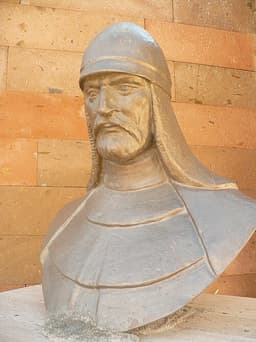
Alp Tigin
Emperor · Medieval
50.5Total
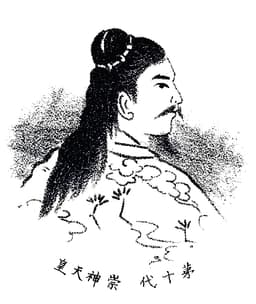
Emperor Sujin
Emperor · Ancient
51.6Total
Basic Information
Born
911
-148
Died
963
-30
Era
Medieval
Ancient
Nationality
Ghaznavid Empire
Japan
Occupation
Emperor
Emperor
Civilization
Middle Eastern
Eastern
Score Comparison
Military (10%)
55.0
50.0
Political (20%)
33.6
68.0
Influence (20%)
56.4
47.1
Legacy (20%)
49.2
43.3
Leadership (15%)
50.7
72.0
Strategy (15%)
60.0
30.3
TOTAL
50.5
51.6
Alp Tigin — Complete Timeline
961 AD
Rebellion against the SamanidsPolitical Action◆ Major
Alp Tigin rebelled against the Samanid ruler Mansur I after being passed over for a governorship. He marched from Nishapur to Ghazni, defeating Samanid forces along the way, and established his own rule in eastern Afghanistan.
Impact: regional
963 AD
Consolidation of GhazniPolitical Action
Alp Tigin fortified Ghazni and organized a military state based on slave soldiers (ghilman). He established a stable administration that attracted scholars and merchants, turning Ghazni into a major regional power center.
Impact: regionalconstructive
Emperor Sujin — Complete Timeline
100 BC
Organized the Yamato StateReform◆ Major
Emperor Sujin is recorded in the Nihon Shoki as having organized the Yamato state, establishing administrative structures and military garrisons. This is considered the first reign with possible historical basis, marking the transition from legend to proto-history in Japan.
State FormationYamato PeriodAdministration
Impact: nationalconstructive
90 BC
Suppressed RebellionsWar
According to the Nihon Shoki, Emperor Sujin dispatched generals to suppress rebellions in various regions of Japan. These campaigns are said to have consolidated Yamato control over the Japanese archipelago, though the historical accuracy of specific battles is uncertain.
Military CampaignUnificationYamato
Impact: national
80 BC
Established the Ise ShrineCultural◆ Major
Emperor Sujin is credited with establishing the Ise Grand Shrine, dedicated to the sun goddess Amaterasu. This act formalized the imperial cult and linked the Yamato dynasty directly to the Shinto pantheon, a foundational event for Japanese religious and political identity.
ShintoImperial CultReligion
Impact: nationalconstructive
Expert Analysis
Emperor Sujin vs Alp Tigin
# The Slave King and the Sun Emperor
In the year 963, a Turkic slave commander lay dying in the fortress city of Ghazni, his life's work—a kingdom carved from rebellion—still fragile. Half a world away and a thousand years earlier, a Japanese emperor had already consolidated a dynasty that would claim unbroken descent from the sun goddess for two millennia. Alp Tigin and Emperor Sujin never met, never knew of each other's existence, yet their stories frame a fundamental question of power: Is leadership born of blood or forged in fire?
Origins
Alp Tigin entered history as property. Born in 911, he was a Turkic slave purchased for the Samanid court, a common fate for steppe warriors who would become the backbone of Islamic armies. His world was one of fluid hierarchies, where a man could rise from bondage to command armies—if he had the wit, the strength, and the ruthlessness. The Samanid Empire, centered in Transoxiana, was a Persianate state that relied on Turkic slave soldiers (ghilman) precisely because they had no local loyalties. Alp Tigin was a weapon, and he learned to wield himself.
Emperor Sujin, by contrast, was born into divinity. The Nihon Shoki, Japan's eighth-century chronicle, places his birth around 148 BCE, though his existence remains shadowed by myth. He was the tenth emperor of the Yamato court, a lineage claiming descent from Amaterasu, the sun goddess. His Japan was a patchwork of clan territories, where the emperor's authority was more ritual than real—a priest-king presiding over rice harvests and ancestor worship, not a commander of armies.
Rise to Power
Alp Tigin's ascent was a study in calculated ambition. By 961, he had risen to become the commander of the Samanid army, a position of immense influence. But when the Samanid ruler Mansur I ascended the throne, Alp Tigin was passed over for the governorship of Khorasan—a slight that could not be borne. He marched from Nishapur at the head of his loyal ghilman, not as a rebel against the empire, but as a man demanding his due. When Mansur's forces defeated him, Alp Tigin retreated eastward to the remote fortress of Ghazni, a frontier outpost in what is now Afghanistan. There, in 963, he consolidated his power, organizing a military state built entirely around his slave soldiers. He had no dynasty to claim, no divine mandate—only the loyalty of men he had trained and the walls he had fortified.
Sujin's rise was quieter, more mysterious. According to the Nihon Shoki, he inherited a throne that was largely ceremonial. But around 100 BCE, he began to organize the Yamato state, imposing administrative structures on the fractious clans. He dispatched generals to suppress rebellions in the provinces, using a combination of military force and marriage alliances. His power was not seized but slowly asserted, weaving the emperor's authority into the fabric of clan society.
Leadership & Governance
Alp Tigin ruled as a military chieftain. His Ghazni was a garrison state, where the ghilman were both army and administration. He minted coins, collected taxes, and maintained order through the iron discipline of his slave soldiers. His political wisdom was pragmatic: he knew that his power rested on the loyalty of men who had no homeland but the army. He never claimed kingship outright, ruling instead as a governor in rebellion, a fiction that preserved legitimacy.
Sujin governed through ritual and religion. His greatest act was the establishment of the Ise Grand Shrine around 80 BCE, dedicated to Amaterasu. This was not mere piety—it was statecraft. By centralizing the worship of the sun goddess, Sujin made the Yamato court the spiritual heart of Japan. The shrine became a symbol of unity, a sacred center that bound the clans to the imperial line. His leadership score of 86.6 reflects this priestly authority, far higher than Alp Tigin's 47.0.
Triumph & Tragedy
Alp Tigin's triumph was survival itself. He took a remote fortress and built a state that would, under his successors, become the Ghaznavid Empire—a power that would sweep into India and rival the great Islamic dynasties. But his tragedy was personal: he died in 963, barely two years after his rebellion, leaving his fragile kingdom to his slave-general Sabuktigin. He never saw the empire his foundation would become.
Sujin's triumph was institutional. He transformed the Yamato court from a ritual office into a governing body, laying the groundwork for the imperial system that persists in Japan to this day. His tragedy is that we know so little of him. The Nihon Shoki's accounts are a blend of history and myth, and historians debate whether Sujin was a real person or a composite figure. His legacy is real, but his life is a ghost.
Character & Destiny
Alp Tigin's character was shaped by the precariousness of his position. He was a man who had nothing and built everything, but he could never forget that his power was borrowed. The slave-commander's paranoia is visible in his reliance on ghilman—men with no local ties, no families, no loyalties but to him. He trusted no one, and that distrust was his strength and his limitation.
Sujin's character is harder to read, but the pattern of his actions suggests a patient, ritualistic mind. He did not conquer; he consolidated. He did not command; he consecrated. His divinity was not a boast but a tool, and he used it with the careful precision of a priest.
Legacy
Alp Tigin's legacy is the Ghaznavid Empire, which would reach its zenith under Mahmud of Ghazni, a grandson of Sabuktigin. The dynasty he founded would patronize Persian culture, launch campaigns into India, and become a model of the "slave dynasty"—a pattern repeated across the Islamic world. His legacy score of 62.1 reflects this indirect but profound influence.
Sujin's legacy is the Japanese imperial line itself. The Ise Shrine he established still stands, its rebuilding every twenty years a testament to continuity. His administrative reforms, however shadowy, set the pattern for Yamato rule. His legacy score of 62.2 is nearly identical to Alp Tigin's, but it is a legacy of stability, not conquest.
Conclusion
Alp Tigin and Sujin represent two poles of leadership: the self-made and the inherited, the warrior and the priest. The slave commander built a kingdom from rebellion and died uncertain of its future; the emperor built a dynasty from ritual and lives on in its unbroken chain. One's power was earned through steel, the other through ceremony. Yet both understood the same truth: that authority, however gained, must be institutionalized to survive. Alp Tigin's ghilman became the Ghaznavid army; Sujin's shrine became the Yamato state. In the end, the slave and the sun emperor both built foundations that outlasted them—proof that leadership is not about where you start, but what you leave behind.
Rankings
🥇
Emperor SujinLeader
Mil: 50.0Pol: 68.0Inf: 47.1
51.6
🥈
Alp Tigin
Mil: 55.0Pol: 33.6Inf: 56.4
50.5
+1.1 behind
How This Comparison Works
Algorithm
Each figure is scored on 6 dimensions (0—100 scale) based on structured historical data: Military (10%), Political (20%), Influence (20%), Legacy (20%), Leadership (15%), Strategy (15%). The weighted total produces the final ranking.
Data Sources
Scores are computed from structured sub-indicators in the database. Scale factors adjust for era (Ancient ×0.85, Modern ×1.0) and civilization size (Eastern ×1.05, Other ×0.80) to account for differences in population and military scale.
Maximum 3 Figures
Comparisons are limited to 2—3 figures to ensure readability and statistical meaningfulness.
Error Margins
±5 points per dimension — Sub-scores are derived from historical records with inherent uncertainty. Two figures within 5 points on a dimension should be considered roughly equivalent in that area.
Total Score Accuracy
±3 points overall — The weighted combination of 6 dimensions produces a total score with approximately ±3 points of uncertainty. Differences of less than 3 points are not statistically significant— the figures are effectively tied.
Known Limitations
- Historical records are incomplete and uneven across civilizations
- Figures from oral-tradition societies may be underrepresented
- Occupation labels can misclassify multi-role figures
- Scores measure capability and impact, not moral character
- Quantitative scoring is a comparison tool, not absolute truth
Capability Radar
Military (10%) — Battles & Warfare
Battles
45
10
Win Rate
50
10
Expansion
50
20
Political (20%) — Governance & Reform
Reform
20
50
Diplomacy
30
30
Economy
20
30
Influence (20%) — Cultural & Global Reach
Cultural
30
30
Global
30
10
Legacy (20%) — Historical Impact
Historical
45
40
Longevity
40
30
Leadership (15%) — Power & Stability
Tenure
25
40
Stability
25
40
Strategy (15%) — Tactics & Innovation
Strategy
45
10
Tactics
40
10
Reform
30
20
Similar Comparisons
Comments & Discussion
MILSPEC_GHILMAN6/16/2026
Alp Tigin proves that competence beats blood. This man was literally property who clawed his way to power through pure military skill. Sujin? Born into a cushy priest-king gig because his great-to-the-100th-grandma shagged a sun goddess. Show me one battle Sujin personally won. Alp Tigin took on the entire Samanid bureaucracy, built an army from scratch, and founded a dynasty that lasted centuries. Bloodlines are for people too weak to earn their place.
数据猎人6/16/2026
拿两个相隔千年、毫无交集的统治者硬比,这分析本身就有问题。阿尔普特勤的史料再少也有阿拉伯编年史和钱币学证据支撑,而崇神天皇的存在全靠《日本书纪》这一本8世纪的神话集。连考古学都无法确认大和朝廷在公元前2世纪有多大势力。这不是历史比较,是小说人物和数据不完整的历史人物尬聊。要我说,先拿出崇神天皇的真实文物再谈统治。
GLADIOLUS_HOUR6/16/2026
Here's the real military take: Alp Tigin understood that power projection requires a mobile base and loyal shock troops. Ghazni sat right on the trade routes to India, giving him both plunder and strategic depth. Sujin's Yamato court didn't have a standing army—it relied on clan levies and ritual authority. That's not a military system, that's a prayer circle. One leader conquered through steel and horse archers; the other through genealogy and myth. I know which general I'd rather follow.
神话考古人6/16/2026
崇神天皇的"四道将军"传说其实暗藏了军事扩张的真实内核——派遣大彦命、武渟川别等人征服四方,这分明是早期王权通过武力统一本土的过程。只不过日本用神话语言包装了这段血腥史,而阿尔普特勤的时代已有伊斯兰史学记录。两者都在用刀剑铸造国家,区别只是崇神的后代学会了用神道教洗白暴力。别把东方君主的包装当本质,血与火才是永恒的语言。
ANVIL_KINGDOM6/16/2026
Stop romanticizing the slave-to-emperor story as meritocratic. Alp Tigin rebelled because his faction lost a succession struggle—he wasn't some noble striver, just a power broker who took his army and carved out a fief when he couldn't control the center. Sujin also likely staged a coup, centralizing the Yamato court by crushing rival clans. Both were warlords. The only difference is that one got to write his own mythology, and the other's story was written by Persian bureaucrats who called him