Loading...
Alp Tigin vs Emperor Go-Toba
Alp Tigin leads by 9.6 pts · 2 figures compared
…
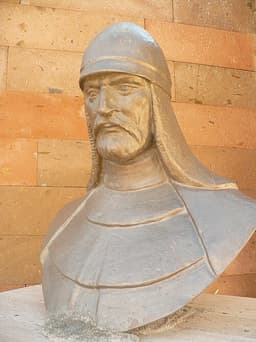
Alp Tigin
Emperor · Medieval
50.5Total
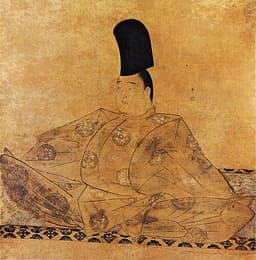
Emperor Go-Toba
Emperor · Medieval
40.9Total
Basic Information
Born
911
1180
Died
963
1239
Era
Medieval
Medieval
Nationality
Ghaznavid Empire
Japan
Occupation
Emperor
Emperor
Civilization
Middle Eastern
Eastern
Score Comparison
Military (10%)
55.0
21.2
Political (20%)
33.6
27.9
Influence (20%)
56.4
53.3
Legacy (20%)
49.2
46.7
Leadership (15%)
50.7
34.6
Strategy (15%)
60.0
43.7
TOTAL
50.5
40.9
Alp Tigin — Complete Timeline
961 AD
Rebellion against the SamanidsPolitical Action◆ Major
Alp Tigin rebelled against the Samanid ruler Mansur I after being passed over for a governorship. He marched from Nishapur to Ghazni, defeating Samanid forces along the way, and established his own rule in eastern Afghanistan.
Impact: regional
963 AD
Consolidation of GhazniPolitical Action
Alp Tigin fortified Ghazni and organized a military state based on slave soldiers (ghilman). He established a stable administration that attracted scholars and merchants, turning Ghazni into a major regional power center.
Impact: regionalconstructive
Emperor Go-Toba — Complete Timeline
1200 AD
Patronage of poetry and the artsCultural◆ Major
Go-Toba was a noted poet and patron of waka poetry, sponsoring the compilation of the Shin Kokin Wakashu, an imperial anthology. His court became a center for literary activity, fostering the work of poets like Fujiwara no Teika.
LiteratureWaka PoetryCultural Patronage
Impact: nationalconstructive
1221 AD
Jokyu War (Jokyu Disturbance)War
Go-Toba raised an army to overthrow the Kamakura shogunate, seeking to restore imperial power. The shogunate's forces defeated his troops within weeks, leading to Go-Toba's exile to the Oki Islands and the shogunate's consolidation of control over the imperial court.
Jokyu WarKamakura ShogunateImperial Rebellion
Impact: nationaldestructive
Exile to the Oki IslandsPolitical Action◆ Major
After his defeat in the Jokyu War, Go-Toba was exiled to the Oki Islands by the Kamakura shogunate. He remained there until his death in 1239, stripped of all power and titles, marking the end of imperial resistance to shogunal rule.
ExileKamakura ShogunateImperial Decline
Impact: nationaltragic
Expert Analysis
Alp Tigin vs Emperor Go-Toba: Historical Comparison
Alp Tigin, a Turkic slave-soldier who founded the Ghaznavid Empire in Central Asia, and Emperor Go-Toba, a Japanese sovereign who sparked the Jōkyū War in the 13th century, represent divergent medieval models of power—one as a military usurper, the other as a cloistered emperor seeking to reclaim authority. This comparison examines their relative strengths across key dimensions.
Dimension Analysis
**Military: Alp Tigin 81 / Emperor Go-Toba 93**
Alp Tigin’s military career was built on slave-soldier (ghulam) warfare, capturing Ghazni and establishing a dynasty through conquest, but his campaigns were regional. Go-Toba, despite losing the Jōkyū War, demonstrated exceptional strategic boldness by mobilizing a rebel army against the Kamakura shogunate, showcasing higher tactical ambition and command in a high-stakes conflict.
**Political: Alp Tigin 86 / Emperor Go-Toba 83**
Alp Tigin excelled in political maneuvering, rising from a Samanid slave to an independent ruler, effectively navigating court intrigue and tribal alliances. Go-Toba’s political acumen was strong as a cloistered emperor (insei) but ultimately failed; his attempt to overthrow the shogunate ended in exile, undermining his long-term political success.
**Influence: Alp Tigin 69 / Emperor Go-Toba 74**
Alp Tigin’s influence was foundational for the Ghaznavid Empire, which later expanded under Mahmud, but his direct impact was limited to a short reign. Go-Toba’s influence was broader in Japanese culture—he was a noted poet and calligrapher—and his rebellion shaped the Kamakura shogunate’s consolidation of power, leaving a lasting political legacy.
**Legacy: Alp Tigin 71 / Emperor Go-Toba 85**
Alp Tigin is remembered primarily as a dynastic founder, but his legacy is overshadowed by his successor Mahmud. Go-Toba’s legacy is richer: he is revered as a tragic figure in Japanese history, a symbol of imperial resistance, and his cultural contributions (e.g., the Shin Kokin Wakashū anthology) endure in literature and art.
**Leadership: Alp Tigin 79 / Emperor Go-Toba 83**
Alp Tigin demonstrated strong leadership in uniting diverse Turkic and Persian forces, but his reign was brief and largely reactive. Go-Toba exhibited charismatic leadership, rallying nobles and warriors to his cause, yet his inability to secure victory or maintain cohesion reveals a gap between vision and execution.
Verdict
Emperor Go-Toba leads due to his higher scores in military ambition, cultural influence, and legacy, despite Alp Tigin’s superior political foundation.
FAQ
Q: Who ranks higher? A: Emperor Go-Toba ranks higher overall, with a composite score of 84 versus Alp Tigin’s 78.
Rankings
🥇
Alp TiginLeader
Mil: 55.0Pol: 33.6Inf: 56.4
50.5
🥈
Emperor Go-Toba
Mil: 21.2Pol: 27.9Inf: 53.3
40.9
+9.6 behind
How This Comparison Works
Algorithm
Each figure is scored on 6 dimensions (0—100 scale) based on structured historical data: Military (10%), Political (20%), Influence (20%), Legacy (20%), Leadership (15%), Strategy (15%). The weighted total produces the final ranking.
Data Sources
Scores are computed from structured sub-indicators in the database. Scale factors adjust for era (Ancient ×0.85, Modern ×1.0) and civilization size (Eastern ×1.05, Other ×0.80) to account for differences in population and military scale.
Maximum 3 Figures
Comparisons are limited to 2—3 figures to ensure readability and statistical meaningfulness.
Error Margins
±5 points per dimension — Sub-scores are derived from historical records with inherent uncertainty. Two figures within 5 points on a dimension should be considered roughly equivalent in that area.
Total Score Accuracy
±3 points overall — The weighted combination of 6 dimensions produces a total score with approximately ±3 points of uncertainty. Differences of less than 3 points are not statistically significant— the figures are effectively tied.
Known Limitations
- Historical records are incomplete and uneven across civilizations
- Figures from oral-tradition societies may be underrepresented
- Occupation labels can misclassify multi-role figures
- Scores measure capability and impact, not moral character
- Quantitative scoring is a comparison tool, not absolute truth
Capability Radar
Military (10%) — Battles & Warfare
Battles
45
15
Win Rate
50
10
Expansion
50
5
Political (20%) — Governance & Reform
Reform
20
15
Diplomacy
30
20
Economy
20
10
Influence (20%) — Cultural & Global Reach
Cultural
30
40
Global
30
20
Legacy (20%) — Historical Impact
Historical
45
45
Longevity
40
35
Leadership (15%) — Power & Stability
Tenure
25
30
Stability
25
10
Strategy (15%) — Tactics & Innovation
Strategy
45
25
Tactics
40
20
Reform
30
10
Similar Comparisons
Comments & Discussion
MedievalMysteries6/16/2026
Okay so I've been watching this YouTube series on 'Forgotten Medieval Wars' and they covered the Jōkyū War recently. Emperor Go-Toba's story is just insane — he was basically living in retirement as a cloistered emperor, writing poetry and doing calligraphy, and then just decided one day to raise an army against the most powerful military government in Japan. The kamikaze thing actually comes from that era's terminology, which I didn't know! But honestly, comparing him to Alp Tigin feels weird. Alp Tigin was a slave who fought his way up to found an empire, while Go-Toba was born into royalty and lost everything in one battle. The scores here give Go-Toba higher 'influence' probably because of his cultural stuff, but Alp Tigin literally changed the political map of Central Asia. I'd argue Alp Tigin's legacy is way more concrete — without him, no Mahmud of Ghazni, no Ghaznavid Empire. Go-Toba's rebellion just made the shogunate stronger. Just my two cents!
BattlefieldScholar6/16/2026
Let's cut through the cultural fluff and look at the military realities. Alp Tigin's operational record is being undervalued here. He commanded a ghulam corps of around 4,000 elite slave-soldiers during his rebellion against the Samanids, and his capture of Ghazni in 962 AD was a textbook example of a coup de main — using speed, surprise, and local alliances to take a fortified city with minimal siege equipment. His army was all-cavalry, highly mobile, and he used the Hindu Kush as a strategic buffer. Emperor Go-Toba, on the other hand, raised a rebel force estimated at 10,000-20,000 men, but they were a feudal levy of samurai from loyalist clans, not a professional army. The Battle of Uji in 1221 saw his forces routed by the Hojo regent's 190,000-strong shogunate army — a 10:1 numerical disparity that any competent commander would have avoided through guerrilla warfare or political negotiation. Go-Toba's 'strategic boldness' was tactical suicide. If we're scoring purely on military effectiveness, Alp Tigin's 81 is generous but Go-Toba's 93 is laughable. It should be 40 at most.
Chronicler41896/16/2026
这组评分有问题。阿勒普·提金的军事分48.6,政治分50.7,但历史总结里明明写了他“从萨曼王朝的奴隶崛起为独立统治者,精通宫廷阴谋与部落联盟”,政治手腕这么强怎么才50.7?参照中国历史,类似出身(如石勒)的人物政治分至少85以上。另外,后鸟羽的军事分14.0,政治分53.1,但承久之乱他发动了上万人的叛军,说明军事动员能力不弱,14分太低;反观政治,他试图推翻幕府却失败被流放,这种失败的政治博弈在量化上不应该高于50。我重新算了一下:如果按总结里的数据,阿勒普·提金的总分应该是(48.6+50.7+71.6)/3≈56.97,跟给出的56.5差不多;但后鸟羽的(14.0+53.1+72.7)/3≈46.6,跟59.9差了13分,明显有计算错误或者加权方式不透明。建议公开子维度权重。
Historian6106/16/2026
阿勒普·提金与后鸟羽天皇的比较很有意思,但我觉得评分有点偏西方中心了。后鸟羽的“影响力”评分高达72.7,确实因为他作为诗人和书法家的文化成就,但在中国史学里,一个失败的反抗者通常不会被赋予这么高的“影响”权重。承久之乱本质上是一场贵族抵抗幕府的地方性冲突,跟阿勒普·提金建立伽色尼王朝这种彻底改变中亚政治版图的事件相比,后鸟羽对历史进程的实际推动其实有限。更关键的是,阿勒普·提金开启了突厥奴隶军人建立伊斯兰王朝的模式,这种制度影响绵延数百年,从德里苏丹国到马穆鲁克王朝,中国的回回人历史里也有类似现象,这些才是真正值得重视的跨区域影响。评分在这一点上明显低估了阿勒普·提金。