Loading...
Alp Tigin vs Dantidurga
Dantidurga leads by 8.2 pts · 2 figures compared
…
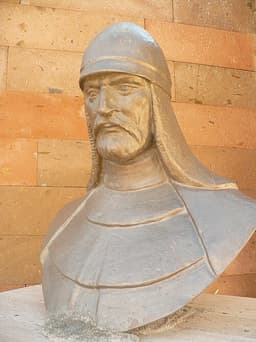
Alp Tigin
Emperor · Medieval
50.5Total
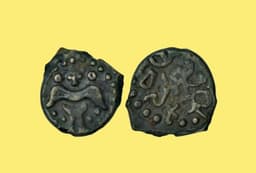
Dantidurga
Emperor · Medieval
58.7Total
Basic Information
Born
911
735
Died
963
756
Era
Medieval
Medieval
Nationality
Ghaznavid Empire
India
Occupation
Emperor
Emperor
Civilization
Middle Eastern
Indian
Score Comparison
Military (10%)
55.0
67.5
Political (20%)
33.6
68.0
Influence (20%)
56.4
56.4
Legacy (20%)
49.2
50.0
Leadership (15%)
50.7
65.7
Strategy (15%)
60.0
52.5
TOTAL
50.5
58.7
Alp Tigin — Complete Timeline
961 AD
Rebellion against the SamanidsPolitical Action◆ Major
Alp Tigin rebelled against the Samanid ruler Mansur I after being passed over for a governorship. He marched from Nishapur to Ghazni, defeating Samanid forces along the way, and established his own rule in eastern Afghanistan.
Impact: regional
963 AD
Consolidation of GhazniPolitical Action
Alp Tigin fortified Ghazni and organized a military state based on slave soldiers (ghilman). He established a stable administration that attracted scholars and merchants, turning Ghazni into a major regional power center.
Impact: regionalconstructive
Dantidurga — Complete Timeline
753 AD
Founding of the Rashtrakuta DynastyPolitical Action
Dantidurga overthrew his overlord, the Chalukya king Kirtivarman II, in a coup. He established the Rashtrakuta dynasty as the dominant power in the Deccan, with Manyakheta as his capital. This marked the beginning of a new imperial era.
Impact: regionalconstructive
754 AD
Performance of the Hiranyagarbha RitualCultural
Dantidurga performed the Hiranyagarbha (golden womb) ritual, a Vedic ceremony that symbolically rebirthed him as a Kshatriya. This legitimized his rule by claiming a higher caste status, as the Rashtrakutas were originally of humble origin.
Impact: nationalconstructive
755 AD
Conquest of MalwaWar◆ Major
Dantidurga led a military campaign into Malwa, defeating the Gurjara-Pratihara ruler Nagabhata I. He annexed the region, expanding Rashtrakuta territory northward. This victory established Rashtrakuta influence in central India.
Impact: regionaldestructive
Expert Analysis
Alp Tigin vs Dantidurga
### The Slave Who Built an Empire and the King Who Was Reborn
In the year 963, a former slave lay dying in the fortress city of Ghazni, a place he had carved out of the chaos of a disintegrating Persian empire. Half a world away and two centuries earlier, in 753, a chieftain in the Deccan plateau of India performed a ritual that claimed to remake his very soul, rebirthing him as a warrior-king. Alp Tigin and Dantidurga never met, never fought, and never knew of each other’s existence. Yet both are remembered as founders of dynasties that would shape the medieval world—the Ghaznavids and the Rashtrakutas. Their parallel journeys from obscurity to power, and the radically different paths they took, reveal the deepest forces that drive history: the interplay of ambition, legitimacy, and the cultures that define what it means to rule.
### Origins
Alp Tigin was born a Turkic slave, likely in the steppes of Central Asia, around 911. In the fragmented world of the Samanid Empire, military slavery was not a mark of shame but a ladder to power. Slave soldiers—*ghilman*—were prized for their loyalty, for they had no local ties to rival the throne. Alp Tigin rose through the ranks of this system, becoming a commander in the Samanid army, a man whose sword was his only pedigree. His world was one of shifting alliances, where a general could become a king if he dared.
Dantidurga, by contrast, was born into a noble family of the Rashtrakuta clan around 735. The Rashtrakutas were feudatories of the mighty Chalukyas of Badami, a dynasty that had ruled the Deccan for over a century. Dantidurga’s heritage was ambiguous: his family claimed descent from the legendary Satyaki, a warrior of the Mahabharata, but they were also known as landowners and tax collectors. In a society rigidly stratified by caste, this ambiguity was a vulnerability. To rule, he would need more than military might—he would need divine sanction.
### Rise to Power
Alp Tigin’s rise was a story of rebellion and opportunity. In 961, the Samanid ruler Mansur I died, and Alp Tigin expected to be appointed governor of Khorasan, a key province. Instead, the new ruler passed him over. Enraged, Alp Tigin marched his army from Nishapur, defying the Samanid throne. He did not aim to conquer the entire empire—that was beyond his reach. Instead, he seized the remote fortress of Ghazni, in what is now eastern Afghanistan, and declared himself independent. It was a gambit born of pragmatism: a slave commander, denied his due, took what he could hold.
Dantidurga’s path was more subtle. For years, he served the Chalukya king Kirtivarman II, paying tribute and commanding troops. But in 753, he saw his moment. The Chalukya empire was weakening, and Dantidurga struck. In a carefully planned coup, he overthrew his overlord and declared himself the ruler of the Deccan. Yet he knew that military conquest alone would not secure his throne. In 754, he performed the Hiranyagarbha—the “golden womb” ritual. A massive golden vessel was constructed, and Dantidurga was symbolically reborn from it as a Kshatriya, a warrior of the highest caste. This was not mere theater; it was a political masterstroke. By rewriting his lineage, he made his rule legitimate in the eyes of his Hindu subjects.
### Leadership & Governance
Alp Tigin governed Ghazni as a military stronghold. He fortified the city and organized a state built entirely on the *ghilman* system—slave soldiers who owed him absolute loyalty. His administration was simple: the army was the state, and the state was the army. He did not seek to build a vast bureaucracy or win the hearts of the conquered. His power rested on the sword, and he knew it. His military score of 48.6 and political score of 50.7 reflect a man who was competent but not brilliant—a survivor, not a visionary.
Dantidurga’s governance was more ambitious. After conquering Malwa in 755, defeating the Gurjara-Pratihara ruler Nagabhata I, he did not simply loot and leave. He annexed the region, integrating it into a growing empire. He patronized Brahmin priests and performed Vedic rituals, wrapping his rule in the sacred language of dharma. His military score of 57.7 and political score of 52.3 suggest a leader who understood that conquest must be followed by consolidation. He was building not just a kingdom, but a civilization.
### Triumph & Tragedy
Alp Tigin’s greatest triumph was survival. He held Ghazni against Samanid counterattacks and died in 963, having established a dynasty that would later, under Mahmud of Ghazni, become a terror to northern India. But his tragedy was the limits of his vision. He founded a state, but not a nation. The Ghaznavids remained a military machine, forever dependent on fresh slaves and fresh plunder.
Dantidurga’s triumph was the Hiranyagarbha ritual, which transformed him from a rebel into a king. His tragedy came early: he died in 756, just three years after founding his dynasty. He left behind a nascent empire that his successors would expand, but he never saw its full glory. His legacy was potential, not fulfillment.
### Character & Destiny
Alp Tigin was a pragmatist, shaped by the brutal logic of the slave market. He saw power as something to be seized and held by force. His decisions were cold, calculating, and devoid of sentiment. Dantidurga was a strategist who understood that power must be cloaked in legitimacy. He did not just conquer—he convinced. His character was that of a gambler who knew the odds and played them perfectly.
Their destinies were written by their worlds. Alp Tigin’s Islamic world accepted a slave-king if he was strong enough to hold the throne. Dantidurga’s Hindu world demanded that a king be reborn in the womb of a golden cow. One built an empire of soldiers; the other, an empire of souls.
### Legacy
Alp Tigin is remembered as the founder of the Ghaznavid dynasty, but his true legacy is the model of the slave-soldier king that would echo through Islamic history—from the Mamluks to the Ottomans. Dantidurga is revered as the founder of the Rashtrakuta dynasty, which would rule the Deccan for over two centuries and produce masterpieces like the Kailasa temple at Ellora.
### Conclusion
Standing at the edge of their stories, we see two men who faced the same question: how does a nobody become a king? Alp Tigin answered with steel, Dantidurga with gold. One built a fortress, the other a temple. Both succeeded, but their different fates remind us that power is never just about the sword. It is also about the story you tell—and the world that is willing to believe it.
Rankings
🥇
DantidurgaLeader
Mil: 67.5Pol: 68.0Inf: 56.4
58.7
🥈
Alp Tigin
Mil: 55.0Pol: 33.6Inf: 56.4
50.5
+8.2 behind
How This Comparison Works
Algorithm
Each figure is scored on 6 dimensions (0—100 scale) based on structured historical data: Military (10%), Political (20%), Influence (20%), Legacy (20%), Leadership (15%), Strategy (15%). The weighted total produces the final ranking.
Data Sources
Scores are computed from structured sub-indicators in the database. Scale factors adjust for era (Ancient ×0.85, Modern ×1.0) and civilization size (Eastern ×1.05, Other ×0.80) to account for differences in population and military scale.
Maximum 3 Figures
Comparisons are limited to 2—3 figures to ensure readability and statistical meaningfulness.
Error Margins
±5 points per dimension — Sub-scores are derived from historical records with inherent uncertainty. Two figures within 5 points on a dimension should be considered roughly equivalent in that area.
Total Score Accuracy
±3 points overall — The weighted combination of 6 dimensions produces a total score with approximately ±3 points of uncertainty. Differences of less than 3 points are not statistically significant— the figures are effectively tied.
Known Limitations
- Historical records are incomplete and uneven across civilizations
- Figures from oral-tradition societies may be underrepresented
- Occupation labels can misclassify multi-role figures
- Scores measure capability and impact, not moral character
- Quantitative scoring is a comparison tool, not absolute truth
Capability Radar
Military (10%) — Battles & Warfare
Battles
45
60
Win Rate
50
65
Expansion
50
65
Political (20%) — Governance & Reform
Reform
20
45
Diplomacy
30
55
Economy
20
50
Influence (20%) — Cultural & Global Reach
Cultural
30
40
Global
30
30
Legacy (20%) — Historical Impact
Historical
45
55
Longevity
40
50
Leadership (15%) — Power & Stability
Tenure
25
40
Stability
25
45
Strategy (15%) — Tactics & Innovation
Strategy
45
60
Tactics
40
55
Reform
30
40
Similar Comparisons
Comments & Discussion
No comments yet. Be the first to share your thoughts!