Loading...
Alp Tigin vs Charles IV of Bohemia
Charles IV of Bohemia leads by 11.1 pts · 2 figures compared
…
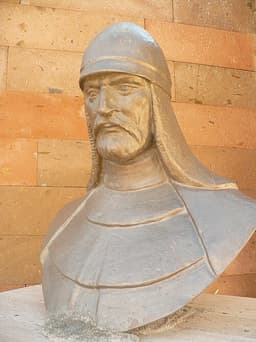
Alp Tigin
Emperor · Medieval
50.5Total
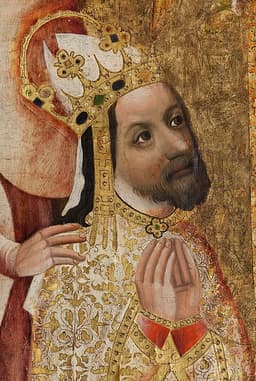
Charles IV of Bohemia
Emperor · Medieval
61.6Total
Basic Information
Born
911
1316
Died
963
1378
Era
Medieval
Medieval
Nationality
Ghaznavid Empire
Bohemia
Occupation
Emperor
Emperor
Civilization
Middle Eastern
Western
Score Comparison
Military (10%)
55.0
46.7
Political (20%)
33.6
78.0
Influence (20%)
56.4
65.0
Legacy (20%)
49.2
55.0
Leadership (15%)
50.7
78.0
Strategy (15%)
60.0
35.0
TOTAL
50.5
61.6
Alp Tigin — Complete Timeline
961 AD
Rebellion against the SamanidsPolitical Action◆ Major
Alp Tigin rebelled against the Samanid ruler Mansur I after being passed over for a governorship. He marched from Nishapur to Ghazni, defeating Samanid forces along the way, and established his own rule in eastern Afghanistan.
Impact: regional
963 AD
Consolidation of GhazniPolitical Action
Alp Tigin fortified Ghazni and organized a military state based on slave soldiers (ghilman). He established a stable administration that attracted scholars and merchants, turning Ghazni into a major regional power center.
Impact: regionalconstructive
Charles IV of Bohemia — Complete Timeline
1348 AD
Foundation of Charles UniversityCultural◆ Major
Charles IV founded Charles University in Prague, the first university in Central Europe. The institution became a center of learning and culture, attracting scholars from across Europe and fostering the development of Czech intellectual life.
EducationUniversityCultural Center
Impact: regionalconstructive
1355 AD
Coronation as Holy Roman EmperorPolitical Action◆ Major
Charles IV was crowned Holy Roman Emperor in Rome by Pope Innocent VI. This coronation solidified his authority over the empire and allowed him to implement reforms that strengthened imperial governance.
CoronationImperial AuthorityPapal Relations
Impact: global
1356 AD
Golden Bull of 1356Reform
Charles IV issued the Golden Bull, a constitutional document that regulated the election of the Holy Roman Emperor. It established the seven prince-electors and defined their privileges, stabilizing the empire's political structure for centuries.
ConstitutionHoly Roman EmpireElectoral System
Impact: globalconstructive
1357 AD
Construction of Charles BridgeCultural◆ Major
Charles IV commissioned the construction of the Charles Bridge in Prague, a stone bridge connecting the Old Town with the Lesser Quarter. The bridge became a vital trade route and a symbol of Prague's architectural heritage.
ArchitectureInfrastructurePrague
constructive
Expert Analysis
Origins
Alp Tigin (born c. 900s) was a Turkic slave soldier in the Samanid Empire. Of unknown parentage, he rose through the ranks of the Samanid military, which relied heavily on Turkic ghilman (slave soldiers). His early life is obscure, but he received military training and demonstrated skill in the Samanid campaigns. Charles IV (born 1316 in Prague) was the son of John of Luxembourg, King of Bohemia, and Elizabeth of Bohemia. He was educated in French court and later in Italy, studying under the future Pope Clement VI. His noble birth gave him access to political and cultural networks that Alp Tigin lacked.
Rise to Power
Alp Tigin’s rise came through rebellion. In 961, after the death of Samanid Emir Abdul Malik I, Alp Tigin was passed over for the governorship of Khorasan. He marched from Nishapur to Ghazni, defeating Samanid forces and establishing an independent base. By 962, he controlled Ghazni and founded the Ghaznavid dynasty, though he remained nominally under Samanid suzerainty. Charles IV’s rise was more diplomatic. He was elected King of Germany in 1346, but his power was contested. He secured the throne through alliances and the support of the Pope. In 1355, he was crowned Holy Roman Emperor. His key turning point was the 1356 Golden Bull, which formalized the election process and reduced papal influence.
Leadership & Governance
Alp Tigin governed Ghazni as a military state. He relied on his ghilman army, rewarding loyalty with land grants. His administration was pragmatic, focusing on stability and military readiness. He scored 50.7 in leadership, reflecting his effective command but narrow scope. Charles IV, scoring 78.0 in leadership, was a consensus-builder. He issued the Golden Bull, a constitutional document that stabilized the empire by defining the seven prince-electors. He also founded Charles University (1348) and commissioned the Charles Bridge (1357). His governance emphasized law, culture, and infrastructure, contrasting with Alp Tigin’s military focus.
Triumph & Tragedy
Alp Tigin’s greatest success was founding the Ghaznavid dynasty, which later expanded under Sabuktigin and Mahmud. His failure was his limited conquests; he died in 963, leaving a fragile state. Charles IV’s triumphs include the Golden Bull, which remained in effect until 1806, and the cultural flourishing of Prague. His tragedy was his inability to secure a strong succession; his son Wenceslaus IV was deposed, and the empire faced fragmentation. Alp Tigin scored 55.0 in military, while Charles scored 46.7, reflecting their different strengths.
Character & Destiny
Alp Tigin was ambitious and ruthless, typical of a slave soldier who seized power. His decision to rebel was risky but calculated. Charles IV was pragmatic and scholarly, known as the “Father of Bohemia.” He prioritized stability and education. His character suited the complex politics of the Holy Roman Empire. Alp Tigin’s destiny was to create a dynasty that would peak under Mahmud; Charles’s was to shape Central European governance for centuries.
Legacy
Alp Tigin’s legacy is the Ghaznavid Empire, which spread Islam into India. His model of slave soldiers influenced later Turkic dynasties. Charles IV’s legacy is more tangible: Charles University, Charles Bridge, and the Golden Bull. His cultural and legal contributions outlasted his dynasty. Alp Tigin scores 49.2 in legacy; Charles scores 55.0. Charles’s institutions endure, while Alp Tigin’s empire dissolved.
Conclusion
Charles IV of Bohemia had greater impact. His total score of 61.6 surpasses Alp Tigin’s 50.5 by 11.1 points. Charles’s political and leadership scores (78.0 each) dwarf Alp Tigin’s (33.6 and 50.7). While Alp Tigin founded a dynasty, Charles’s reforms shaped European governance and culture for centuries. The Golden Bull and Charles University are lasting legacies; Alp Tigin’s Ghaznavids are a footnote in Indian history. Thus, Charles IV is the more significant figure.
Rankings
🥇
Charles IV of BohemiaLeader
Mil: 46.7Pol: 78.0Inf: 65.0
61.6
🥈
Alp Tigin
Mil: 55.0Pol: 33.6Inf: 56.4
50.5
+11.1 behind
How This Comparison Works
Algorithm
Each figure is scored on 6 dimensions (0—100 scale) based on structured historical data: Military (10%), Political (20%), Influence (20%), Legacy (20%), Leadership (15%), Strategy (15%). The weighted total produces the final ranking.
Data Sources
Scores are computed from structured sub-indicators in the database. Scale factors adjust for era (Ancient ×0.85, Modern ×1.0) and civilization size (Eastern ×1.05, Other ×0.80) to account for differences in population and military scale.
Maximum 3 Figures
Comparisons are limited to 2—3 figures to ensure readability and statistical meaningfulness.
Error Margins
±5 points per dimension — Sub-scores are derived from historical records with inherent uncertainty. Two figures within 5 points on a dimension should be considered roughly equivalent in that area.
Total Score Accuracy
±3 points overall — The weighted combination of 6 dimensions produces a total score with approximately ±3 points of uncertainty. Differences of less than 3 points are not statistically significant— the figures are effectively tied.
Known Limitations
- Historical records are incomplete and uneven across civilizations
- Figures from oral-tradition societies may be underrepresented
- Occupation labels can misclassify multi-role figures
- Scores measure capability and impact, not moral character
- Quantitative scoring is a comparison tool, not absolute truth
Capability Radar
Military (10%) — Battles & Warfare
Battles
45
30
Win Rate
50
40
Expansion
50
25
Political (20%) — Governance & Reform
Reform
20
80
Diplomacy
30
85
Economy
20
80
Influence (20%) — Cultural & Global Reach
Cultural
30
80
Global
30
60
Legacy (20%) — Historical Impact
Historical
45
75
Longevity
40
70
Leadership (15%) — Power & Stability
Tenure
25
85
Stability
25
75
Strategy (15%) — Tactics & Innovation
Strategy
45
45
Tactics
40
35
Reform
30
20
Similar Comparisons
Comments & Discussion
No comments yet. Be the first to share your thoughts!