Loading...
Alp Tigin vs Baybars
Baybars leads by 13.3 pts · 2 figures compared
…
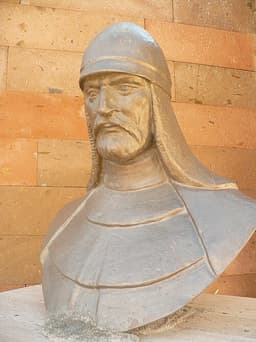
Alp Tigin
Emperor · Medieval
50.5Total
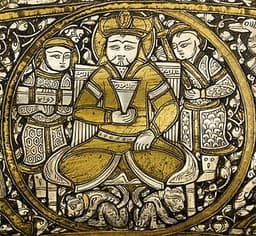
Baybars
Emperor · Medieval
63.8Total
Basic Information
Born
911
1223
Died
963
1277
Era
Medieval
Medieval
Nationality
Ghaznavid Empire
Egypt
Occupation
Emperor
Emperor
Civilization
Middle Eastern
Middle Eastern
Score Comparison
Military (10%)
55.0
85.0
Political (20%)
33.6
70.0
Influence (20%)
56.4
55.0
Legacy (20%)
49.2
52.0
Leadership (15%)
50.7
72.0
Strategy (15%)
60.0
72.0
TOTAL
50.5
63.8
Alp Tigin — Complete Timeline
961 AD
Rebellion against the SamanidsPolitical Action◆ Major
Alp Tigin rebelled against the Samanid ruler Mansur I after being passed over for a governorship. He marched from Nishapur to Ghazni, defeating Samanid forces along the way, and established his own rule in eastern Afghanistan.
Impact: regional
963 AD
Consolidation of GhazniPolitical Action
Alp Tigin fortified Ghazni and organized a military state based on slave soldiers (ghilman). He established a stable administration that attracted scholars and merchants, turning Ghazni into a major regional power center.
Impact: regionalconstructive
Baybars — Complete Timeline
1260 AD
Battle of Ain Jalut (1260)War◆ Major
Baybars served as a key commander under Qutuz at the Battle of Ain Jalut. He led the vanguard and played a crucial role in the Mamluk victory over the Mongols. This battle established his reputation as a military leader.
Mongol InvasionBattleMamluk Victory
Impact: globalconstructive
Accession as Sultan (1260)Political Action◆ Major
After assassinating Qutuz, Baybars proclaimed himself Sultan of Egypt. He was accepted by the Mamluk commanders and the Abbasid Caliph. His reign began a period of Mamluk dominance in the Middle East, lasting for decades.
SuccessionMamluk SultanateAssassination
Impact: regional
1265 AD
Campaigns against the Crusader States (1260s-1270s)War◆ Major
Baybars launched a series of campaigns against the remaining Crusader states in the Levant. He captured key fortresses including Arsuf (1265), Safed (1266), Jaffa (1268), and Antioch (1268). These victories reduced Crusader territory to a few coastal enclaves.
Crusader WarsConquestMamluk Expansion
Impact: regionaldestructive
1277 AD
Defeat of the Mongols at Elbistan (1277)War◆ Major
Baybars defeated a Mongol army at the Battle of Elbistan in Anatolia. He invaded the Seljuk Sultanate of Rum, which was under Mongol suzerainty. Although a tactical victory, Baybars could not hold Anatolia and returned to Syria.
Mongol WarsBattleAnatolia
Impact: regionalconstructive
Death of Baybars (1277)Other◆ Major
Baybars died in Damascus, possibly from poisoning or illness. His death was kept secret for a time to prevent unrest. He was succeeded by his son Al-Said Barakah. Baybars' reign is considered the peak of the early Mamluk Sultanate.
DeathSuccessionMamluk Sultanate
Impact: regionaltragic
Expert Analysis
Alp Tigin vs Baybars
# The Slave Who Would Be King: Alp Tigin and Baybars
In the year 961, a disgruntled Turkic slave commander named Alp Tigin marched his army from Nishapur, his heart burning with the sting of a denied governorship. He was a man who had been bought and sold, yet dared to defy the Samanid Empire that owned him. Just three centuries later, in 1260, another slave commander, Baybars, stood over the corpse of Sultan Qutuz, the man he had just helped defeat the Mongols at Ain Jalut. One rebel failed to build a lasting empire; the other became the greatest sultan of the Mamluk age. Why did these two men, both born into servitude and wielding the same brutal ambition, chart such different courses through history? The answer lies not in their shared origins, but in the worlds they inherited and the choices they made within them.
Origins
Alp Tigin entered the world in 911, a time when the Abbasid Caliphate was crumbling and the Samanid Empire in Persia was a rising power. He was a Turkic slave, likely captured as a child and trained in the *ghilman* system—military slaves who were the backbone of Islamic armies. His world was one of shifting loyalties and fragile dynasties, where a slave could rise to command armies but remained a pawn in the games of princes. The Samanid court was a place of Persianate culture and bureaucratic order, but also of petty rivalries and weak rulers. Alp Tigin’s upbringing was forged in the barracks, not the palace, teaching him the art of war but little of the subtle craft of governance.
Baybars, born in 1223, emerged into a far more violent world. The Mongol Empire, under Genghis Khan and his successors, was sweeping across Asia, annihilating cities and dynasties. A Kipchak Turk from the Crimean steppes, Baybars was captured by Mongols, sold as a slave, and ended up in Syria. His formative years were shaped by the collapse of the old order—the Abbasid Caliphate fell to the Mongols in 1258, and the Crusader states still clung to the Levantine coast. Baybars learned not only swordsmanship but also the cold calculus of survival in an age of apocalypse. His era demanded more than a warrior; it required a strategist who could navigate a world of Mongols, Crusaders, and rival Muslim powers.
Rise to Power
Alp Tigin’s path to power was a rebellion born of wounded pride. After serving the Samanids loyally for years, he expected the governorship of Khurasan. When Mansur I passed him over, Alp Tigin did not negotiate—he marched. In 961, he seized Ghazni, a fortress city in what is now Afghanistan, and declared himself independent. His rise was a blunt instrument: a slave commander who used his military following to carve out a personal domain. But he lacked a broader vision or a political base beyond his own slave soldiers. He died in 963, his state a fragile enclave.
Baybars’ ascent was more deliberate and deadly. He first made his name as a commander under Sultan Qutuz, leading the vanguard at the Battle of Ain Jalut in 1260, where the Mamluks shattered the Mongol myth of invincibility. But Baybars saw his opportunity not on the battlefield but in the tent afterward. He assassinated Qutuz, likely with his own hands, and proclaimed himself sultan. Unlike Alp Tigin’s rash rebellion, Baybars’ coup was calculated. He had already secured the loyalty of the Mamluk commanders, and he knew that his military prestige—won at Ain Jalut—would shield him from challenge. He did not just seize power; he earned it, then took it.
Leadership & Governance
Alp Tigin ruled Ghazni as a military chieftain. He fortified the city, organized a state around his *ghilman*, and maintained a stable administration—but only just. His leadership was that of a tribal war leader, not a statesman. He had no diplomatic strategy, no economic reforms, no vision beyond survival. His scores reflect this: a middling political mind (50.7) and a leadership rating (47.0) that suggests a commander who could inspire loyalty but not build institutions. His Ghaznavid dynasty would later flourish under Mahmud of Ghazni, but that was his successor’s genius, not his own.
Baybars was a master of both war and statecraft. His military score (67.8) and strategy (71.6) are high, but his political acumen (75.7) and leadership (80.2) are exceptional. He did not merely fight the Mongols; he outmaneuvered them. After Ain Jalut, he spent years methodically destroying the Crusader states, capturing key fortresses like Arsuf and Krak des Chevaliers in the 1260s and 1270s. He also invaded the Seljuk Sultanate of Rum, defeating the Mongols again at Elbistan in 1277. But Baybars was no mere conqueror. He reformed the Mamluk state, establishing a postal system, strengthening the economy, and forging alliances with the Golden Horde. He understood that a slave-soldier state needed legitimacy, so he installed a puppet Abbasid caliph in Cairo, giving his rule religious authority. Alp Tigin fought for a throne; Baybars built an empire.
Triumph & Tragedy
Alp Tigin’s greatest moment was his consolidation of Ghazni—a small triumph that proved ephemeral. His tragedy was that he died too soon, his ambition unfulfilled. He left a state that could have collapsed but instead grew under his successors. His failure was not defeat but limitation: he could not transcend his origins.
Baybars’ triumph was the defense of the Islamic world against the Mongols. At Ain Jalut, he helped save not just Egypt but the entire Muslim civilization. His campaigns against the Crusaders were a holy war that erased the last major Frankish footholds in the Levant. Yet his tragedy was a lonely death in 1277, possibly poisoned, in Damascus. His death was kept secret for weeks to prevent unrest, a sign of how indispensable he had become. He died with his work unfinished—the Mongols were still a threat, and his dynasty would soon falter.
Character & Destiny
Alp Tigin was a man of limited vision. He was brave, resentful, and ambitious, but he saw power as a personal prize, not a historical mission. He was a product of a fragmented world where a slave could become a local king but rarely a world-changer. His destiny was to be a footnote, a founder whose dynasty outshone him.
Baybars was cold, calculating, and relentless. He had seen the Mongols destroy his homeland and the Crusaders exploit Muslim weakness. His character was forged in fire, and he understood that survival required not just strength but cunning. He was a master of betrayal—he killed Qutuz, yet he also knew when to show mercy. His destiny was to be a savior, a man who stood between the Mongol horde and annihilation. Where Alp Tigin rebelled for a governorship, Baybars seized a sultanate to save a civilization.
Legacy
Alp Tigin is remembered primarily as the founder of the Ghaznavid dynasty, which under Mahmud of Ghazni became a major power. But his personal legacy is faint—a name in chronicles, a footnote in the rise of Turkic slave dynasties. His total score of 56.5 reflects a minor figure.
Baybars is a legend. His legacy score of 69.3 and influence of 72.3 speak to his enduring fame. He is celebrated in Arab and Muslim history as the sultan who smashed the Mongols and the Crusaders. His name adorns streets, schools, and stories. He is the archetype of the Mamluk ideal: a slave who became a king and defended the faith. His life inspired tales of chivalry and statecraft, and his shadow looms over the medieval Middle East.
Conclusion
Standing in the ruins of Ghazni, one might imagine Alp Tigin staring at the mountains, wondering if his rebellion would ever be remembered. Three centuries later, Baybars rode into Damascus, a city he had saved, knowing his name would echo. The difference between them is not talent or courage—both had plenty. It is the scale of the stage. Alp Tigin lived in a world of fragmented emirates, where a slave’s ambition could carve a niche. Baybars lived in a world of empires clashing, where a slave’s ambition could reshape history. One built a fortress; the other built a legacy. In the end, it is not the slave who becomes king that matters—it is what the king does with his crown.
Rankings
🥇
BaybarsLeader
Mil: 85.0Pol: 70.0Inf: 55.0
63.8
🥈
Alp Tigin
Mil: 55.0Pol: 33.6Inf: 56.4
50.5
+13.3 behind
How This Comparison Works
Algorithm
Each figure is scored on 6 dimensions (0—100 scale) based on structured historical data: Military (10%), Political (20%), Influence (20%), Legacy (20%), Leadership (15%), Strategy (15%). The weighted total produces the final ranking.
Data Sources
Scores are computed from structured sub-indicators in the database. Scale factors adjust for era (Ancient ×0.85, Modern ×1.0) and civilization size (Eastern ×1.05, Other ×0.80) to account for differences in population and military scale.
Maximum 3 Figures
Comparisons are limited to 2—3 figures to ensure readability and statistical meaningfulness.
Error Margins
±5 points per dimension — Sub-scores are derived from historical records with inherent uncertainty. Two figures within 5 points on a dimension should be considered roughly equivalent in that area.
Total Score Accuracy
±3 points overall — The weighted combination of 6 dimensions produces a total score with approximately ±3 points of uncertainty. Differences of less than 3 points are not statistically significant— the figures are effectively tied.
Known Limitations
- Historical records are incomplete and uneven across civilizations
- Figures from oral-tradition societies may be underrepresented
- Occupation labels can misclassify multi-role figures
- Scores measure capability and impact, not moral character
- Quantitative scoring is a comparison tool, not absolute truth
Capability Radar
Military (10%) — Battles & Warfare
Battles
45
85
Win Rate
50
90
Expansion
50
80
Political (20%) — Governance & Reform
Reform
20
80
Diplomacy
30
78
Economy
20
72
Influence (20%) — Cultural & Global Reach
Cultural
30
65
Global
30
65
Legacy (20%) — Historical Impact
Historical
45
75
Longevity
40
60
Leadership (15%) — Power & Stability
Tenure
25
75
Stability
25
70
Strategy (15%) — Tactics & Innovation
Strategy
45
85
Tactics
40
88
Reform
30
82
Similar Comparisons
Comments & Discussion
SAMANID ANCHORMAN6/16/2026
Let's be real: Alp Tigin was just a provincial rebel with delusions of grandeur. He carved out Ghazna, sure, but his state crumbled almost immediately after him because he never solved the Mamluk succession curse—strangled by its own military logic. Baybars, meanwhile, inherited an established power structure, the surviving Abbasid Caliphate's legitimacy, and the Herculean task of saving Islam from the Mongols. It's not a fair comparison; Baybars had better stage directions, a proven script, and
铁血账本客6/16/2026
别跟我扯什么“奴隶出身殊途同归”的煽情叙事。你查过阿勒普·提金和拜巴尔斯的起家成本吗?前者靠的是在萨曼王朝内乱的缝隙里赌博,赌赢了占个破城,赌输了全家死光;后者在阿音扎鲁特赢了蒙古人之后,直接砍了苏丹篡位,这是“选择”?这是纯粹的实力碾压与时机精准收割。历史不会跟失败者讲温情,阿勒普·提金的“帝国”连个像样的税基都没留下,而拜巴尔斯搞了一次解放叙利亚的宏大财政改革。拿硬币两面说事,简直是侮辱了经济学。| 数据不会说谎:拜巴尔斯统治时的马穆鲁克王朝军费开支占GDP的40%以上,远超提金时代不到15%的糜烂财政。这就是创业和守财的区别。
JADE HELMET6/16/2026
What these Mamluk success stories always gloss over is the cultural backdrop. Alp Tigin's Ghaznavids eventually became Persianized bureaucrats, forgetting their Turkic roots. Baybars? He deliberately kept the Mamluk elite separate, importing fresh Circassian and Kipchak slaves every generation to maintain a warrior caste untouched by local corruption. That's not just "ambition" or "timing"—it's a coherent political philosophy. Alp Tigin tried to integrate into Persianate systems and got swallowe
草原哲人6/16/2026
别被那些西方史家的“两个奴隶将军”的标题骗了。阿勒普·提金败就败在他太像“传统英雄”——单枪匹马打天下,身边没几个靠谱的副手,死后儿子就被灭了。