Loading...
Alp Tigin vs Axayacatl
Axayacatl leads by 6.2 pts · 2 figures compared
…
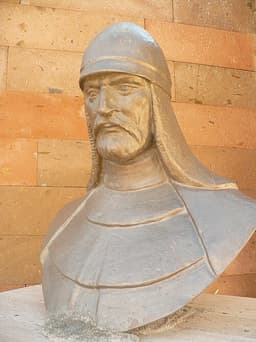
Alp Tigin
Emperor · Medieval
50.5Total
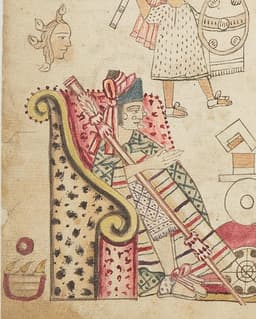
Axayacatl
Emperor · Medieval
56.7Total
Basic Information
Born
911
1449
Died
963
1481
Era
Medieval
Medieval
Nationality
Ghaznavid Empire
Aztec Empire
Occupation
Emperor
Emperor
Civilization
Middle Eastern
Western
Score Comparison
Military (10%)
55.0
70.0
Political (20%)
33.6
54.7
Influence (20%)
56.4
56.4
Legacy (20%)
49.2
47.5
Leadership (15%)
50.7
65.0
Strategy (15%)
60.0
57.5
TOTAL
50.5
56.7
Alp Tigin — Complete Timeline
961 AD
Rebellion against the SamanidsPolitical Action◆ Major
Alp Tigin rebelled against the Samanid ruler Mansur I after being passed over for a governorship. He marched from Nishapur to Ghazni, defeating Samanid forces along the way, and established his own rule in eastern Afghanistan.
Impact: regional
963 AD
Consolidation of GhazniPolitical Action
Alp Tigin fortified Ghazni and organized a military state based on slave soldiers (ghilman). He established a stable administration that attracted scholars and merchants, turning Ghazni into a major regional power center.
Impact: regionalconstructive
Axayacatl — Complete Timeline
1469 AD
Coronation as Tlatoani of TenochtitlanPolitical Action◆ Major
Axayacatl succeeded his grandfather Moctezuma I as the sixth tlatoani of Tenochtitlan. His coronation campaign against the Matlatzinca was successful, capturing many prisoners for sacrifice and establishing his military credentials.
Impact: national
1473 AD
Conquest of TlatelolcoWar◆ Major
Axayacatl led Tenochtitlan forces against the neighboring city-state of Tlatelolco, which had rebelled against Aztec dominance. The war ended with the defeat of Tlatelolco and the death of its tlatoani Moquihuix, incorporating Tlatelolco into Tenochtitlan.
Impact: regionaldestructive
1478 AD
Campaign against the Tarascan EmpireWar◆ Major
Axayacatl led a large Aztec army into the Tarascan Empire (Pur
Impact: regionaldestructive
1481 AD
Construction of the Great Temple of TenochtitlanCultural◆ Major
Axayacatl oversaw the expansion of the Templo Mayor in Tenochtitlan, dedicating a new phase of construction. The temple was the religious center of the Aztec Empire, and this expansion included new sculptures and offerings.
Impact: nationalconstructive
Death of AxayacatlOther
Axayacatl died after a short illness, possibly from a disease or complications from wounds. His death led to the succession of his brother Tizoc, whose weak reign contrasted with Axayacatl's earlier successes.
Impact: national
Expert Analysis
Alp Tigin vs Axayacatl
# The Slave King and the Eagle Warrior
In the year 963, two rulers died on opposite sides of the world, their fates sealed by choices they could not have imagined. One was a Turkic slave who had clawed his way to power through rebellion and iron discipline, founding a dynasty that would stretch from the Caspian to the Indus. The other was an Aztec emperor who had conquered his own city-state and expanded a temple to the gods, only to be humbled by an empire he could not defeat. Alp Tigin and Axayacatl never knew of each other’s existence, yet their lives—separated by continents, cultures, and centuries—illuminate a profound truth about power: that the same ambition can lead to triumph or tragedy, depending on the world in which it is unleashed.
Origins
Alp Tigin was born into slavery in 911, somewhere in the steppes of Central Asia, where Turkic boys were routinely captured and sold to the courts of Persia. His world was one of rigid hierarchy and violent mobility—a slave could become a general, but only if he proved more ruthless than his rivals. The Samanid Empire, which ruled much of Persia and Central Asia, relied on these Turkic slave soldiers, or *ghilman*, to staff its armies and administration. Alp Tigin rose through this system, learning that loyalty was a currency and betrayal a tool.
Axayacatl, born in 1449, was the grandson of an emperor. He grew up in Tenochtitlan, the island city of canals and pyramids that awed Spanish conquistadors decades later. The Aztec world was one of ritual war and cosmic obligation: the gods demanded blood, and the emperor was their chief priest. For a prince of the blood, the path to power was clear—prove yourself in battle, capture enemies for sacrifice, and expand the empire’s tribute networks. Where Alp Tigin had to seize his chance from nothing, Axayacatl inherited a throne already warm.
Rise to Power
Alp Tigin’s ascent was a masterclass in calculated rebellion. By 961, he had served the Samanids as governor of Nishapur, a wealthy city in eastern Persia. But when the Samanid ruler Mansur I passed him over for a coveted governorship, Alp Tigin did not accept the slight. He marched his army out of Nishapur, defying the sultan’s authority, and retreated eastward to the remote fortress city of Ghazni, in what is now Afghanistan. There, in 963, he consolidated his power by fortifying the city and organizing a military state built entirely around his *ghilman*—slave soldiers whose loyalty was to him alone. It was a gamble: he had no legitimacy, no royal blood, only the swords of his men.
Axayacatl’s rise was smoother but no less dramatic. In 1469, at the age of twenty, he was crowned the sixth *tlatoani* of Tenochtitlan, succeeding his grandfather Moctezuma I. The coronation campaign—a ritual war to secure captives for sacrifice—was his first test. He passed it, and his early reign was marked by ambition. In 1473, he led his forces against the neighboring city-state of Tlatelolco, which had rebelled against Aztec domination. The conquest was swift and brutal: Tlatelolco’s markets were looted, its temple desecrated, and its ruler killed. Axayacatl had proven he could strike hard and fast.
Leadership & Governance
The two rulers governed worlds apart, yet both understood that power rested on military might. Alp Tigin’s Ghazni was a garrison state, a fortress where every institution served the army. He relied on the *ghilman* system—enslaved Turkic boys trained from youth to be soldiers, their loyalty purchased through rigorous discipline and rewards. This was not a kingdom of subjects; it was a war machine. His rule was pragmatic, focused on survival and expansion, with little room for cultural or religious projects. He had no temples to build, only walls to raise.
Axayacatl governed an empire of cities and tribute. The Aztec state was a complex network of conquered provinces, each required to send goods, warriors, and sacrificial victims to Tenochtitlan. Axayacatl’s greatest cultural achievement was the expansion of the Templo Mayor, the great pyramid at the heart of Tenochtitlan, which he dedicated in 1481. The temple was a statement: the gods were pleased, the empire was stable, and the emperor was their chosen servant. Yet his political wisdom was tested by the limits of Aztec power. The empire was not a centralized state but a loose hegemony, and rebellion was always simmering.
Triumph & Tragedy
Axayacatl’s triumph was the conquest of Tlatelolco in 1473, a victory that secured Tenochtitlan’s dominance over the Valley of Mexico. His tragedy came five years later, in 1478, when he led a massive Aztec army—perhaps 24,000 men—into the Tarascan Empire to the west. The Tarascans were a rival power with advanced bronze weapons and a disciplined army. The battle was a disaster. The Aztecs were routed, thousands killed, and Axayacatl himself barely escaped. It was the worst defeat in Aztec history to that point, a humiliation that haunted him until his death.
Alp Tigin’s triumph was simpler: he survived. He turned a rebellion into a dynasty. By the time he died in 963, Ghazni was a secure base, and his successors—starting with his son Ishaq—would build the Ghaznavid Empire into a major power. But his tragedy was that he never lived to see it. He died of natural causes, perhaps from a wound or illness, just as his state was beginning to flourish. He was a founder who never reaped the harvest.
Character & Destiny
Alp Tigin was a man of iron will. His rebellion was a calculated risk, born from a lifetime of navigating a world where trust was weakness. He built his state on the loyalty of slaves because he knew that free men could betray him. His personality was shaped by the brutal logic of the steppe and the court: advance or be destroyed. Axayacatl, by contrast, was a warrior-priest, raised in a culture that valued ritual courage over strategic patience. His defeat by the Tarascans was not just a military failure—it was a cosmic one, a sign that the gods had turned against him. He died shortly after, in 1481, possibly from a disease or complications from wounds, his reign cut short at just thirty-two years.
Legacy
Alp Tigin’s legacy is the Ghaznavid Empire, which under his grandson Mahmud of Ghazni would become a superpower, conquering vast swaths of India and Persia. Today, he is remembered as a founder, a slave who became a king—a symbol of the fluid social mobility of the medieval Islamic world. His scores in military and political leadership are modest, but his influence and legacy are high: he created a template for slave-soldier dynasties that would shape the Middle East for centuries.
Axayacatl’s legacy is more tragic. He is remembered as the father of Montezuma II, the emperor who faced Hernán Cortés. His conquest of Tlatelolco and expansion of the Templo Mayor are celebrated in Mexican history, but his defeat by the Tarascans foreshadowed the fragility of the Aztec Empire. His military score is high, his leadership strong, but his strategic weakness—a score of just 45.7—reveals the fatal flaw that would doom his descendants. He built a temple to the gods, but he could not build an army that could withstand a foreign enemy.
Conclusion
What drove these two men to such different outcomes? The answer lies not in their characters but in their worlds. Alp Tigin operated in a system where power was fluid, where a slave could become a king if he was ruthless enough. Axayacatl ruled a world of rigid ritual, where defeat was not just a loss but a cosmic failure. One built a dynasty that would last centuries; the other built a temple that would be destroyed by strangers. History remembers both, but for different reasons: Alp Tigin as a founder, Axayacatl as a warning. In the end, the slave king’s greatest advantage was not his sword but his freedom to fail and try again—a freedom the eagle warrior never had.
Rankings
🥇
AxayacatlLeader
Mil: 70.0Pol: 54.7Inf: 56.4
56.7
🥈
Alp Tigin
Mil: 55.0Pol: 33.6Inf: 56.4
50.5
+6.2 behind
How This Comparison Works
Algorithm
Each figure is scored on 6 dimensions (0—100 scale) based on structured historical data: Military (10%), Political (20%), Influence (20%), Legacy (20%), Leadership (15%), Strategy (15%). The weighted total produces the final ranking.
Data Sources
Scores are computed from structured sub-indicators in the database. Scale factors adjust for era (Ancient ×0.85, Modern ×1.0) and civilization size (Eastern ×1.05, Other ×0.80) to account for differences in population and military scale.
Maximum 3 Figures
Comparisons are limited to 2—3 figures to ensure readability and statistical meaningfulness.
Error Margins
±5 points per dimension — Sub-scores are derived from historical records with inherent uncertainty. Two figures within 5 points on a dimension should be considered roughly equivalent in that area.
Total Score Accuracy
±3 points overall — The weighted combination of 6 dimensions produces a total score with approximately ±3 points of uncertainty. Differences of less than 3 points are not statistically significant— the figures are effectively tied.
Known Limitations
- Historical records are incomplete and uneven across civilizations
- Figures from oral-tradition societies may be underrepresented
- Occupation labels can misclassify multi-role figures
- Scores measure capability and impact, not moral character
- Quantitative scoring is a comparison tool, not absolute truth
Capability Radar
Military (10%) — Battles & Warfare
Battles
45
55
Win Rate
50
60
Expansion
50
60
Political (20%) — Governance & Reform
Reform
20
45
Diplomacy
30
50
Economy
20
45
Influence (20%) — Cultural & Global Reach
Cultural
30
40
Global
30
30
Legacy (20%) — Historical Impact
Historical
45
45
Longevity
40
40
Leadership (15%) — Power & Stability
Tenure
25
50
Stability
25
50
Strategy (15%) — Tactics & Innovation
Strategy
45
55
Tactics
40
50
Reform
30
40
Similar Comparisons
Comments & Discussion
KHAN OF THE STEPPE6/16/2026
Alp Tigin wasn’t just a slave-turned-king—he was the ultimate proof that military meritocracy works better than bloodline. His Ghaznavid dynasty crushed the Samanids and paved the way into India. Axayacatl? He lost to the Tarascans and died humiliated after a flood. Give me the Turkic grit over Aztec pageantry any day.
鹰眼考古师6/16/2026
说阿尔普·泰金是奴隶逆袭?他屠杀自己恩主萨曼王朝时可没手软。阿哈亚卡特尔至少砍下特诺奇蒂特兰第三大神庙的台阶,扩建了太阳石。一个靠背叛上位,一个用血祭维稳——拿两者比权力真相?不如说历史爱给屠夫贴金。
BATTLEFIELD LOGICIAN6/16/2026
Data point: Alp Tigin commanded around 2,000 Turkic slave soldiers to carve out Ghazni. Axayacatl mobilized tens of thousands to lose to the Purépecha. One built a durable state, the other cracked under imperial overreach. Outcome speaks louder than lineage.
冷眼史评人6/16/2026
泰金弄死恩主夺城,阿哈亚卡特尔到死追认祖父的十三个孩子。奴隶靠刀剑赢天下,皇帝靠血缘混饭吃——别跟我扯悲剧共鸣。一个该被骂白眼狼,一个该被笑无能孙,非要升华到“权力真相”?历史不是鸡汤店。
SALTED CHRONICLER6/16/2026
Alp Tigin’s rebellion was cold calculus; Axayacatl’s was reckless dogma. The Turk bought loyalty with plunder for his ghulams, the Aztec bled provinces dry for gods. I’d rather serve a pragmatist than a priest-king. Efficiency wins empires.
血统打假员6/16/2026
阿哈亚卡特尔吹自己征服,实则在塔拉辛战争中被活捉羞辱,死后都城还闹水灾。阿尔普·泰金?他让伽色尼成了伊斯兰学术明珠,连菲尔多西都来献诗。提鞋都不配,怎么并列的?别被“平行人生”忽悠了,这配对像拿陨石比鸡蛋——都是石头,但一个在天上。