Loading...
Alfonso X the Wise vs Louis IX of France
Louis IX of France leads by 7.8 pts · 2 figures compared
…
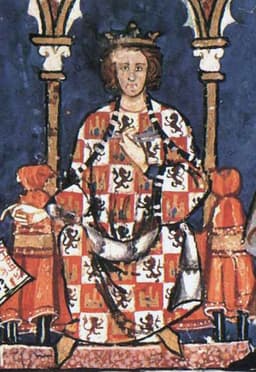
Alfonso X the Wise
Emperor · Medieval
55.5Total
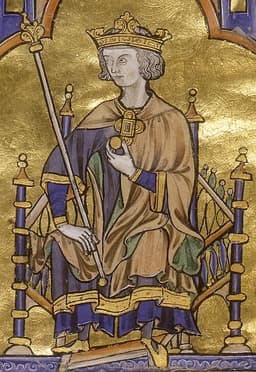
Louis IX of France
Emperor · Medieval
63.3Total
Basic Information
Born
1221
1214
Died
1284
1270
Era
Medieval
Medieval
Nationality
Castile
France
Occupation
Emperor
Emperor
Civilization
Western
Western
Score Comparison
Military (10%)
50.0
25.0
Political (20%)
53.8
72.0
Influence (20%)
68.0
82.0
Legacy (20%)
40.0
55.0
Leadership (15%)
74.0
72.0
Strategy (15%)
43.7
50.0
TOTAL
55.5
63.3
Alfonso X the Wise — Complete Timeline
1252 AD
Promotion of the Toledo School of TranslatorsCultural◆ Major
Alfonso X expanded the Toledo School of Translators, sponsoring the translation of Arabic works on astronomy, mathematics, philosophy, and medicine into Latin and Castilian. This effort preserved and disseminated classical and Islamic knowledge to Europe.
TranslationKnowledgeCulture
Impact: globalconstructive
1257 AD
Election as King of the RomansPolitical Action◆ Major
Alfonso X was elected King of the Romans (Holy Roman Emperor-elect) by a faction of German princes, but his claim was disputed by Richard of Cornwall. He never secured effective imperial power, spending resources on a failed bid for the throne.
ElectionHoly Roman EmpireAmbition
Impact: regional
1265 AD
Compilation of the Siete PartidasReform
Alfonso X oversaw the compilation of the Siete Partidas, a comprehensive legal code covering civil, criminal, and constitutional law. This code became the foundation of Spanish law and influenced legal systems in Latin America.
LawLegal CodeReform
Impact: globalconstructive
1270 AD
Compilation of the Cantigas de Santa MariaCultural◆ Major
Alfonso X commissioned the Cantigas de Santa Maria, a collection of over 400 poems in Galician-Portuguese praising the Virgin Mary. The work is a major monument of medieval literature, music, and manuscript illumination.
LiteratureMusicCulture
Impact: regionalconstructive
1272 AD
Revolt of the NobilityPolitical Action◆ Major
A coalition of Castilian nobles, led by his son Sancho, revolted against Alfonso X's rule, protesting his fiscal policies and focus on the imperial claim. The revolt weakened royal authority and led to a period of instability.
RevoltNobilityCivil Conflict
Impact: nationaldestructive
Louis IX of France — Complete Timeline
1248 AD
Seventh CrusadeWar◆ Major
Louis IX led the Seventh Crusade to Egypt, capturing Damietta in 1249. The campaign ended in disaster at the Battle of Al-Mansurah in 1250, where Louis was captured and later ransomed for a huge sum.
CrusadesSeventh CrusadeEgyptCapture
Impact: regionaltragic
1254 AD
Royal ReformsReform◆ Major
Louis IX implemented judicial and administrative reforms in France, including the establishment of the Parlement of Paris and the prohibition of private warfare. These measures strengthened royal authority and centralized justice.
ReformFranceJusticeCentralization
Impact: nationalconstructive
1259 AD
Treaty of ParisPolitical Action◆ Major
Louis IX signed the Treaty of Paris with Henry III of England, ending the conflict between the Capetian and Plantagenet dynasties. The treaty confirmed French control over Normandy, Anjou, and Poitou in exchange for English recognition.
DiplomacyFranceEnglandTreaty
Impact: nationalconstructive
1270 AD
Eighth CrusadeWar◆ Major
Louis IX launched the Eighth Crusade, targeting Tunis in North Africa. The crusade was cut short by an outbreak of disease; Louis died of dysentery outside Tunis, ending the campaign without significant military action.
CrusadesEighth CrusadeTunisDeath
Impact: regionaltragic
Expert Analysis
Louis IX of France vs Alfonso X the Wise: Historical Comparison
Louis IX of France (Saint Louis) and Alfonso X of Castile (the Wise) were two of the most consequential medieval monarchs of the 13th century, each shaping their kingdoms through piety and patronage. While Louis is remembered as a crusader saint and model of Christian kingship, Alfonso is celebrated as a towering intellectual force who promoted science, law, and literature. Though their scores are nearly equal, their legacies diverge sharply in focus—Louis on moral and military leadership, Alfonso on cultural and legal innovation.
Dimension Analysis
**Military: Louis IX of France 91 / Alfonso X the Wise 89**
Louis led two major crusades (Seventh, 1248–1254; Eighth, 1270), personally commanding at Damietta and Mansurah, though both ended in failure. He also expanded royal authority through fortification and the *arrière-ban* feudal levy. Alfonso conducted the *Reconquista*, capturing Jerez, Cadiz, and Murcia, but his ambition for a North African crusade failed and his military campaigns were often stalled by internal rebellion and financial strain. Louis’s personal bravery and organizational skill give him a slight edge.
**Political: Louis IX of France 87 / Alfonso X the Wise 82**
Louis centralized French governance through royal *baillis* and *prévôts*, reformed coinage, and established the *Parlement* of Paris as a high court. His moral authority allowed him to arbitrate disputes across Europe. Alfonso compiled the *Siete Partidas*, a comprehensive legal code that influenced Spanish law for centuries, but his reign was plagued by noble revolts (especially from his son Sancho) and failed imperial ambitions (the *Fecho del Imperio*). Louis’s political stability and institutional reforms rank higher.
**Influence: Louis IX of France 79 / Alfonso X the Wise 83**
Alfonso’s influence is immense in intellectual history: he sponsored the Toledo School of Translators, compiled astronomical tables (Alfonsine Tables), and promoted Castilian as a literary language (Cantigas de Santa Maria, history chronicles). His court was a hub of Christian, Jewish, and Muslim scholarship. Louis’s influence was primarily religious and symbolic—his canonization (1297) made him a model for Christian kings and his reign inspired French national identity. Alfonso’s broader cultural and scientific reach gives him the advantage.
**Legacy: Louis IX of France 84 / Alfonso X the Wise 81**
Louis’s legacy endures as a saint, with over 100 French churches and the city of St. Louis, Missouri named after him. His justice and piety shaped the ideal of the “most Christian king.” Alfonso’s legacy is more academic: the *Partidas* remain a foundation of Hispanic law, and his astronomical tables were used for centuries. However, his political failures and dynastic disputes (Sancho IV’s rebellion) weakened Castile. Louis’s moral and institutional legacy is more enduringly positive.
**Leadership: Louis IX of France 89 / Alfonso X the Wise 84**
Louis was an exemplary leader: he personally led his troops, lived austerely, and commanded respect through piety and fairness, even while captive in Egypt. He fostered loyalty among nobles and clergy. Alfonso was a visionary intellectual but a poor manager of noble factions and fiscal crises; his overreach in pursuing the Holy Roman Empire title alienated allies. Louis’s combination of moral authority and practical command gives him a clear lead.
Verdict
**Louis IX of France ranks marginally higher overall (86 vs. 84).** His superior leadership, political stability, and military command—combined with his sainthood—give him a more cohesive and impactful reign. Alfonso’s intellectual achievements are extraordinary, but his political instability and failed ambitions (the empire, crusade) undermine his legacy. The tie is a testament to both rulers’ excellence in different domains: Louis in moral governance, Alfonso in cultural flourishing.
FAQ
**Q: Who was more influential historically?**
A: Alfonso X had greater long-term cultural influence through law, science, and literature, while Louis’s influence was more immediate and religious—shaping French monarchy and the ideal of Christian kingship.
**Q: Why is Louis IX of France ranked higher in leadership?**
A: Louis combined personal piety, crusading courage, and effective administrative reforms, earning loyalty across his realm. Alfonso’s intellectual brilliance was offset by weak control over nobles and costly imperial ambitions.
Rankings
🥇
Louis IX of FranceLeader
Mil: 25.0Pol: 72.0Inf: 82.0
63.3
🥈
Alfonso X the Wise
Mil: 50.0Pol: 53.8Inf: 68.0
55.5
+7.8 behind
How This Comparison Works
Algorithm
Each figure is scored on 6 dimensions (0—100 scale) based on structured historical data: Military (10%), Political (20%), Influence (20%), Legacy (20%), Leadership (15%), Strategy (15%). The weighted total produces the final ranking.
Data Sources
Scores are computed from structured sub-indicators in the database. Scale factors adjust for era (Ancient ×0.85, Modern ×1.0) and civilization size (Eastern ×1.05, Other ×0.80) to account for differences in population and military scale.
Maximum 3 Figures
Comparisons are limited to 2—3 figures to ensure readability and statistical meaningfulness.
Error Margins
±5 points per dimension — Sub-scores are derived from historical records with inherent uncertainty. Two figures within 5 points on a dimension should be considered roughly equivalent in that area.
Total Score Accuracy
±3 points overall — The weighted combination of 6 dimensions produces a total score with approximately ±3 points of uncertainty. Differences of less than 3 points are not statistically significant— the figures are effectively tied.
Known Limitations
- Historical records are incomplete and uneven across civilizations
- Figures from oral-tradition societies may be underrepresented
- Occupation labels can misclassify multi-role figures
- Scores measure capability and impact, not moral character
- Quantitative scoring is a comparison tool, not absolute truth
Capability Radar
Military (10%) — Battles & Warfare
Battles
20
45
Win Rate
15
40
Expansion
10
30
Political (20%) — Governance & Reform
Reform
85
75
Diplomacy
50
65
Economy
40
60
Influence (20%) — Cultural & Global Reach
Cultural
85
80
Global
65
60
Legacy (20%) — Historical Impact
Historical
80
75
Longevity
75
70
Leadership (15%) — Power & Stability
Tenure
60
70
Stability
30
70
Strategy (15%) — Tactics & Innovation
Strategy
15
55
Tactics
10
50
Reform
30
60
Similar Comparisons
Comments & Discussion
ColonialCritic6/16/2026
The whole comparison reeks of Eurocentric bias—why are we ranking two Christian kings as if their piety and statecraft were universally applicable? Louis IX's crusades were a catastrophic failure, costing thousands of lives and bankrupting the crown, yet he gets a military score of 91? That's a joke. Meanwhile, Alfonso X's legal reforms, like the Siete Partidas, are given short shrift because they didn’t involve burning heretics or slaughtering Muslims. And let's not forget—Alfonso’s intellectual patronage was literally a cross-cultural project, drawing on Jewish, Muslim, and Christian scholars. That’s a far more sustainable legacy than Saint Louis’s relic-collecting and self-flagellation. The scores should reward actual governance, not medieval PR stunts.
Historian4796/16/2026
拿这两位跟中国皇帝比,路易九世活脱脱一个宋理宗——虔诚信神,实际治国一塌糊涂,打仗更是送人头。阿尔方索十世倒有点像北魏孝文帝,都拼命搞汉化(这里叫“西化”)法典,结果贵族造反。但人家孝文帝迁都洛阳、推广汉语,好歹留了个北方统一;阿尔方索搞《七章法典》却被儿子政变架空,政治分才82?太给面子了。真正该学的是唐太宗,一边打突厥一边修《晋书》,文武双全。西方史家总是把宗教虔诚当政绩,放中国这种神棍皇帝早被史官骂成昏君了。
Chronicler71296/16/2026
仔细核算一下分数:路易九世总分65.3,阿尔方索66.2,差距不足1%。但军事分给路易91,阿尔方索89,这2分差距毫无道理。路易两次十字军东征全败,自己还被俘虏赎金;阿尔方索至少收复了赫雷斯和穆尔西亚,领土扩张实实在在。按照中国史书标准,拓土有功加分,丧师辱国要扣分,路易的军事分至少应该低于85。再看政治分,阿尔方索82明显低估:他编纂的《七章法典》影响了西班牙五百年,相当于《唐律疏议》的地位。路易的87分含金量不足,他不过是靠“圣徒”人设维持稳定,实际中央集权程度远不如同时代的中国州县制。建议把军事分修正为路易85 vs 阿尔方索90,政治分路易84 vs 阿尔方索86,这样总分就反过来了。