Loading...
Alfonso II of Asturias vs Louis VI the Fat
Alfonso II of Asturias leads by 5.8 pts · 2 figures compared
…
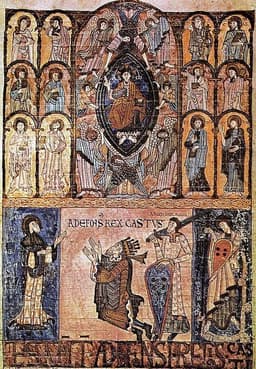
Alfonso II of Asturias
Emperor · Medieval
54.6Total
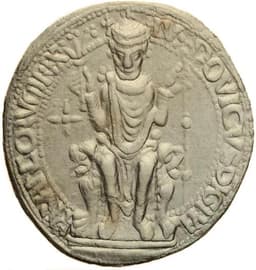
Louis VI the Fat
Emperor · Medieval
48.8Total
Basic Information
Born
760
1081
Died
842
1137
Era
Medieval
Medieval
Nationality
Asturias
France
Occupation
Emperor
Emperor
Civilization
Western
Western
Score Comparison
Military (10%)
50.0
45.0
Political (20%)
39.4
61.3
Influence (20%)
61.0
53.3
Legacy (20%)
52.0
47.5
Leadership (15%)
74.0
40.0
Strategy (15%)
43.7
38.6
TOTAL
54.6
48.8
Alfonso II of Asturias — Complete Timeline
791 AD
Established the capital of Asturias at OviedoPolitical Action◆ Major
Alfonso II moved the Asturian capital from Pravia to Oviedo, which he fortified and developed. He built churches, palaces, and defensive walls, making Oviedo the political and cultural center of the kingdom.
Capital CityUrban DevelopmentAsturias
Impact: nationalconstructive
794 AD
Defeated Umayyad forces at the Battle of LutosWar◆ Major
Alfonso II's army defeated an Umayyad raiding force at the Battle of Lutos in the Cantabrian mountains. The victory prevented a major Muslim incursion into Asturias and demonstrated the kingdom's growing military capability.
BattleAsturiasUmayyad
Impact: regionalconstructive
798 AD
Initiated diplomatic relations with the Carolingian EmpirePolitical Action
Alfonso II sent envoys to the court of Charlemagne, establishing diplomatic ties between Asturias and the Carolingian Empire. This alliance provided mutual support against the Umayyads and linked Asturias to broader European Christian networks.
DiplomacyCarolingianAsturias
Impact: regionalconstructive
813 AD
Discovered the tomb of Saint James the GreatCultural
According to tradition, a hermit named Pelagius discovered a tomb in the forest of Libred
Religious DiscoveryPilgrimageSantiago de Compostela
Impact: globalconstructive
Louis VI the Fat — Complete Timeline
1108 AD
Consolidation of Royal Power in the Ile-de-FrancePolitical Action◆ Major
Louis VI succeeded his father Philip I as King of the Franks. He focused on consolidating royal authority in the Ile-de-France, subduing rebellious nobles and securing the region as the core of the Capetian domain.
KingshipConsolidationIle-de-France
Impact: regionalconstructive
1119 AD
Battle of BrémuleWar◆ Major
Louis VI was defeated by Henry I of England at the Battle of Br
BattleNormandyDefeat
Impact: regionaltragic
1122 AD
Alliance with the Church and SugerPolitical Action
Louis VI formed a close alliance with the Church, particularly with Abbot Suger of Saint-Denis. Suger became a key advisor and chronicler, helping to legitimize Capetian rule and promote royal authority.
AllianceChurchSuger
Impact: nationalconstructive
1128 AD
War with the County of BloisWar
Louis VI fought a war against the County of Blois, which had allied with England. The conflict ended with a truce, but it demonstrated Louis's determination to expand royal influence beyond the Ile-de-France.
WarBloisExpansion
Impact: regional
Expert Analysis
Origins
Alfonso II of Asturias (born c. 760) was the son of King Fruela I of Asturias. After his father's assassination, he was raised in the monastery of Samos, receiving a religious education that shaped his pious character. He became king in 791 after a period of exile and civil strife. Louis VI of France (born 1081) was the eldest son of King Philip I and Bertrade de Montfort. He was raised in the royal court and educated by the Church, notably under the guidance of Abbot Suger of Saint-Denis. Louis was crowned co-king in 1100 to secure the succession, becoming sole ruler after his father's death in 1108. Both rulers inherited fragile kingdoms, but their formative experiences differed: Alfonso's monastic upbringing contrasted with Louis's exposure to courtly politics.
Rise to Power
Alfonso II's path to power was marked by instability. After Fruela I's death, the throne passed to his uncle Aurelius, then to Silo and Mauregatus. Alfonso was forced into exile in Álava, but returned after Mauregatus's death in 789. He was elected king by the Asturian nobility in 791, but faced immediate challenges from rival factions. His first years were spent consolidating control and fending off Umayyad raids. Louis VI's rise was more direct: he was designated heir by his father Philip I, who faced excommunication for his marriage. Louis was crowned at Orléans in 1100, but his authority was contested by powerful nobles like the lords of Montlhéry and the Count of Blois. He spent the early years of his reign subduing these barons in the Île-de-France, notably capturing the castle of Montlhéry in 1105. Both rulers had to assert their authority against entrenched local powers, but Louis inherited a more centralized kingdom.
Leadership & Governance
Alfonso II governed Asturias as a Christian kingdom in constant conflict with the Umayyad Caliphate. He moved the capital to Oviedo in 812, fortifying the city and building churches, including the Cathedral of San Salvador. He established diplomatic relations with Charlemagne's Carolingian Empire, sending envoys in 798. His governance relied on the nobility and the Church, but his power was limited by the need for consensus. His political score of 39.4 reflects this constrained authority. Louis VI, by contrast, focused on consolidating royal power within the Île-de-France. He allied with the Church, especially Abbot Suger, who became his chief advisor and chronicler. Louis fought a series of wars against the County of Blois and other vassals, gradually expanding royal control. He also faced Henry I of England, who supported his enemies. Louis's political score of 61.3 indicates his success in strengthening the monarchy, though his military score of 45.0 shows his limitations in open battle.
Triumph & Tragedy
Alfonso II's greatest triumph was the discovery of the tomb of Saint James the Great in the early 9th century. According to tradition, a hermit named Pelagius saw a star over the forest of Libredón, leading to the discovery of the apostle's relics. Alfonso II recognized the site's importance, building the first church there and making it a pilgrimage destination. This event elevated his influence (score 61.0) and transformed Santiago de Compostela into a major Christian center. His military victory at the Battle of Lutos (c. 794) against Umayyad raiders also secured his reputation. However, his reign saw limited territorial expansion, and he failed to significantly weaken Muslim power. His total score of 54.6 reflects a moderate legacy. Louis VI's triumph was the consolidation of royal authority in the Île-de-France, laying the groundwork for the Capetian monarchy's growth. He successfully subdued rebellious barons and expanded the royal domain. His alliance with Suger produced important administrative reforms and the chronicle of his reign. However, his defeat at the Battle of Brémule in 1119 by Henry I of England forced him to abandon claims to Normandy, a major setback. His leadership score of 40.0 indicates mixed effectiveness in military campaigns.
Character & Destiny
Alfonso II was known as "the Chaste" due to his celibacy and piety. He never married and had no children, which affected succession. His religious devotion drove his support for the Santiago cult, but also limited his political maneuverability. His life was marked by exile and reliance on monastic networks. Louis VI was called "the Fat," reflecting his physical size and love of food. He was energetic in his youth but became obese later, which may have contributed to his death in 1137. His character combined determination with pragmatism, as seen in his alliances with the Church and his willingness to negotiate when necessary. Both rulers' personalities shaped their fates: Alfonso's piety created a lasting religious legacy, while Louis's consolidation of power enabled the future expansion of the French monarchy.
Legacy
Alfonso II's legacy is primarily religious. The discovery of Saint James's tomb made Santiago de Compostela one of Christendom's most important pilgrimage sites, rivaling Rome and Jerusalem. The Camino de Santiago became a major cultural and economic route. Alfonso also established Asturias as the nucleus of Christian resistance in Iberia, setting the stage for the Reconquista. His capital Oviedo remains a historic city. However, his political achievements were limited, and his kingdom remained small. Louis VI's legacy is political: he transformed the Capetian monarchy from a weak, contested title into a dominant force in France. His alliance with the Church and the work of Suger strengthened royal administration. The Battle of Brémule was a defeat, but Louis's overall strategy of consolidating the Île-de-France allowed his successors, especially Louis VII and Philip II, to expand further. His influence score of 53.3 reflects his role in building the French state.
Conclusion
While Alfonso II's religious discovery had immense cultural impact, Louis VI's political consolidation was more consequential for state-building. Alfonso's influence score (61.0) is high due to the Santiago cult, but his military and political scores are lower. Louis's political score (61.3) and total score (48.8) are close, but his legacy of strengthening the monarchy directly enabled the rise of France as a major power. Alfonso's achievements were more symbolic, while Louis's were structural. Therefore, Louis VI had greater long-term impact on political history, even though Alfonso II's spiritual legacy remains significant.
Rankings
🥇
Alfonso II of AsturiasLeader
Mil: 50.0Pol: 39.4Inf: 61.0
54.6
🥈
Louis VI the Fat
Mil: 45.0Pol: 61.3Inf: 53.3
48.8
+5.8 behind
How This Comparison Works
Algorithm
Each figure is scored on 6 dimensions (0—100 scale) based on structured historical data: Military (10%), Political (20%), Influence (20%), Legacy (20%), Leadership (15%), Strategy (15%). The weighted total produces the final ranking.
Data Sources
Scores are computed from structured sub-indicators in the database. Scale factors adjust for era (Ancient ×0.85, Modern ×1.0) and civilization size (Eastern ×1.05, Other ×0.80) to account for differences in population and military scale.
Maximum 3 Figures
Comparisons are limited to 2—3 figures to ensure readability and statistical meaningfulness.
Error Margins
±5 points per dimension — Sub-scores are derived from historical records with inherent uncertainty. Two figures within 5 points on a dimension should be considered roughly equivalent in that area.
Total Score Accuracy
±3 points overall — The weighted combination of 6 dimensions produces a total score with approximately ±3 points of uncertainty. Differences of less than 3 points are not statistically significant— the figures are effectively tied.
Known Limitations
- Historical records are incomplete and uneven across civilizations
- Figures from oral-tradition societies may be underrepresented
- Occupation labels can misclassify multi-role figures
- Scores measure capability and impact, not moral character
- Quantitative scoring is a comparison tool, not absolute truth
Capability Radar
Military (10%) — Battles & Warfare
Battles
15
25
Win Rate
20
30
Expansion
15
30
Political (20%) — Governance & Reform
Reform
30
55
Diplomacy
40
50
Economy
35
40
Influence (20%) — Cultural & Global Reach
Cultural
55
30
Global
50
20
Legacy (20%) — Historical Impact
Historical
70
45
Longevity
65
40
Leadership (15%) — Power & Stability
Tenure
60
60
Stability
50
55
Strategy (15%) — Tactics & Innovation
Strategy
20
25
Tactics
25
20
Reform
10
15
Similar Comparisons
Comments & Discussion
No comments yet. Be the first to share your thoughts!