Loading...
Alfonso II of Asturias vs Le Loi
Le Loi leads by 13.6 pts · 2 figures compared
…
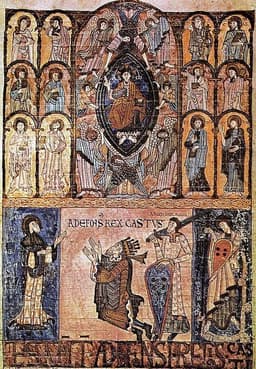
Alfonso II of Asturias
Emperor · Medieval
54.6Total
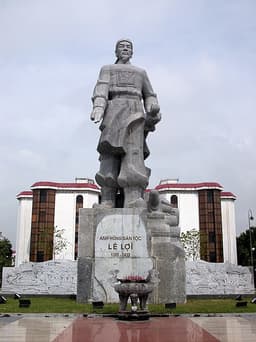
Le Loi
Emperor · Medieval
68.2Total
Basic Information
Born
760
1385
Died
842
1433
Era
Medieval
Medieval
Nationality
Asturias
Vietnam
Occupation
Emperor
Emperor
Civilization
Western
Eastern
Score Comparison
Military (10%)
50.0
74.7
Political (20%)
39.4
60.0
Influence (20%)
61.0
68.0
Legacy (20%)
52.0
68.0
Leadership (15%)
74.0
72.0
Strategy (15%)
43.7
69.1
TOTAL
54.6
68.2
Alfonso II of Asturias — Complete Timeline
791 AD
Established the capital of Asturias at OviedoPolitical Action◆ Major
Alfonso II moved the Asturian capital from Pravia to Oviedo, which he fortified and developed. He built churches, palaces, and defensive walls, making Oviedo the political and cultural center of the kingdom.
Capital CityUrban DevelopmentAsturias
Impact: nationalconstructive
794 AD
Defeated Umayyad forces at the Battle of LutosWar◆ Major
Alfonso II's army defeated an Umayyad raiding force at the Battle of Lutos in the Cantabrian mountains. The victory prevented a major Muslim incursion into Asturias and demonstrated the kingdom's growing military capability.
BattleAsturiasUmayyad
Impact: regionalconstructive
798 AD
Initiated diplomatic relations with the Carolingian EmpirePolitical Action
Alfonso II sent envoys to the court of Charlemagne, establishing diplomatic ties between Asturias and the Carolingian Empire. This alliance provided mutual support against the Umayyads and linked Asturias to broader European Christian networks.
DiplomacyCarolingianAsturias
Impact: regionalconstructive
813 AD
Discovered the tomb of Saint James the GreatCultural
According to tradition, a hermit named Pelagius discovered a tomb in the forest of Libred
Religious DiscoveryPilgrimageSantiago de Compostela
Impact: globalconstructive
Le Loi — Complete Timeline
1418 AD
Lam Son Uprising BeginsWar
Le Loi launched the Lam Son uprising against Ming Chinese occupation of Dai Viet. He gathered a small force in the Lam Son region of Thanh Hoa province, beginning a decade-long guerrilla war.
Ming OccupationVietnamese IndependenceGuerrilla War
Impact: national
1426 AD
Siege of Dong QuanWar◆ Major
Le Loi's forces besieged the Ming-held citadel of Dong Quan (Hanoi). The siege cut off Ming supply lines and forced the Chinese to negotiate, leading to the eventual withdrawal of Ming forces.
SiegeMing OccupationDai Viet
Impact: national
1427 AD
Battle of Chi Lang PassWar◆ Major
Le Loi's forces ambushed and defeated a large Ming relief army at Chi Lang Pass. This decisive victory forced the Ming court to recognize Dai Viet's independence and withdraw its remaining troops.
BattleMing OccupationIndependence
Impact: regional
1428 AD
Founding of the Later Le DynastyPolitical Action
Le Loi ascended the throne as Emperor Le Thai To, founding the Later Le dynasty. He established a new capital at Dong Kinh (Hanoi) and implemented policies to rebuild the war-torn country.
Later Le DynastyVietnamese HistoryReconstruction
Impact: regionalconstructive
Expert Analysis
Origins
Alfonso II of Asturias (c. 760–842) was born into the Asturian royal family, son of King Fruela I. His early life was marked by instability: after his father's assassination, he was raised in the monastery of Samos. He later lived at the court of his relative, King Silo, and faced exile under King Mauregatus. His upbringing in a Christian kingdom under constant threat from the Umayyad Caliphate shaped his religious and defensive priorities.
Le Loi (1385–1433), born Le Khoi, was a wealthy landowner in the Lam Son region of Thanh Hoa province, Dai Viet (modern Vietnam). His family had a tradition of military service. He was educated in Confucian classics and developed leadership skills managing his estates. The Ming Chinese occupation of Dai Viet (1407–1427) radicalized him; he abandoned his comfortable life to lead resistance.
Rise to Power
Alfonso II became king in 791 after the death of King Bermudo I, who abdicated in his favor. He immediately faced a major Umayyad invasion but suffered a defeat at the Battle of the Burbia River. However, he recovered and won the Battle of Lutos (794), where he defeated a large Umayyad raiding force. He consolidated power by moving the capital to Oviedo (c. 791–810), which he fortified and developed into a royal center. He also established diplomatic ties with Charlemagne (c. 795), securing an alliance against the Umayyads.
Le Loi's rise began with the Lam Son Uprising in 1418. Initially, his forces were small and suffered defeats. He retreated to the mountains, adopting guerrilla tactics. In 1424, he captured the strategic region of Nghe An. His turning point came in 1426 when he besieged the Ming-held citadel of Dong Quan (Hanoi). In 1427, his forces ambushed and destroyed a Ming relief army at Chi Lang Pass, forcing the Ming court to negotiate. Le Loi accepted the Ming withdrawal and in 1428 proclaimed himself Emperor Le Thai To, founding the Later Le dynasty.
Leadership & Governance
Alfonso II governed as a theocratic monarch, emphasizing Christian unity. He built churches, promoted the cult of Saint James, and ordered the construction of the Cathedral of San Salvador in Oviedo. His administration focused on defense: he organized a system of fortresses and maintained a standing army. He also issued laws that reinforced royal authority, but his political score of 39.4 reflects limited administrative innovation. His leadership score of 74.0 indicates effectiveness in mobilizing his people against external threats.
Le Loi's governance was more comprehensive. He implemented land reforms, redistributing land to peasants and soldiers. He established a centralized bureaucracy based on Confucian principles, created a legal code, and promoted education. He moved the capital to Dong Kinh (Hanoi) and built infrastructure. His political score of 60.0 and leadership score of 72.0 reflect his ability to build a lasting state. His military score of 74.7 and strategy score of 69.1 highlight his tactical brilliance.
Triumph & Tragedy
Alfonso II's greatest triumph was the discovery of the tomb of Saint James (c. 813), which transformed Asturias into a pilgrimage center and laid the foundation for the Reconquista. He also successfully defended his kingdom from Umayyad raids. His failures include a lack of territorial expansion; his kingdom remained confined to the northern mountains. He also failed to secure a lasting dynasty—he had no children, leading to succession disputes after his death.
Le Loi's triumph was expelling the Ming and restoring Vietnamese independence. He founded a dynasty that lasted over 350 years. His tragedy was the harsh treatment of collaborators and a brief reign (1428–1433) that left some reforms incomplete. He also faced rebellions from former allies, such as Tran Nguyen Han, whom he executed.
Character & Destiny
Alfonso II was known as "the Chaste" for his piety and celibacy. He was cautious and defensive, prioritizing survival over expansion. His character fit his destiny: he solidified Asturian identity through religion but failed to build a larger realm. Historians note his role as a consolidator rather than a conqueror.
Le Loi was pragmatic and patient. He used guerrilla warfare, deception, and diplomacy. His character of perseverance and strategic patience led to victory against a larger empire. He was also ruthless when necessary, executing rivals. His destiny was to become a national hero, revered as a liberator.
Legacy
Alfonso II's legacy is the discovery of Saint James' tomb, which made Santiago de Compostela a major pilgrimage site and spurred the Reconquista. He also established Oviedo as the cultural and political center of Asturias. However, his kingdom did not expand significantly. His influence score of 61.0 and legacy score of 52.0 reflect his impact on Christian Spain.
Le Loi's legacy is immense in Vietnam. He is celebrated as a national hero who ended Chinese domination. The Later Le dynasty he founded lasted until 1789. His administrative and land reforms shaped Vietnamese society. His influence score of 68.0 and legacy score of 68.0 underscore his enduring impact.
Conclusion
Le Loi had greater impact. His expulsion of the Ming and founding of a long-lasting dynasty fundamentally changed Vietnam's history. Alfonso II's contributions were important but more localized. The score gap of 13.6 points (Le Loi 68.2 vs Alfonso II 54.6) accurately reflects this. While Alfonso II's religious legacy influenced Europe, Le Loi's political and military achievements directly shaped a nation's independence and development.
Rankings
🥇
Le LoiLeader
Mil: 74.7Pol: 60.0Inf: 68.0
68.2
🥈
Alfonso II of Asturias
Mil: 50.0Pol: 39.4Inf: 61.0
54.6
+13.6 behind
How This Comparison Works
Algorithm
Each figure is scored on 6 dimensions (0—100 scale) based on structured historical data: Military (10%), Political (20%), Influence (20%), Legacy (20%), Leadership (15%), Strategy (15%). The weighted total produces the final ranking.
Data Sources
Scores are computed from structured sub-indicators in the database. Scale factors adjust for era (Ancient ×0.85, Modern ×1.0) and civilization size (Eastern ×1.05, Other ×0.80) to account for differences in population and military scale.
Maximum 3 Figures
Comparisons are limited to 2—3 figures to ensure readability and statistical meaningfulness.
Error Margins
±5 points per dimension — Sub-scores are derived from historical records with inherent uncertainty. Two figures within 5 points on a dimension should be considered roughly equivalent in that area.
Total Score Accuracy
±3 points overall — The weighted combination of 6 dimensions produces a total score with approximately ±3 points of uncertainty. Differences of less than 3 points are not statistically significant— the figures are effectively tied.
Known Limitations
- Historical records are incomplete and uneven across civilizations
- Figures from oral-tradition societies may be underrepresented
- Occupation labels can misclassify multi-role figures
- Scores measure capability and impact, not moral character
- Quantitative scoring is a comparison tool, not absolute truth
Capability Radar
Military (10%) — Battles & Warfare
Battles
15
75
Win Rate
20
80
Expansion
15
65
Political (20%) — Governance & Reform
Reform
30
70
Diplomacy
40
75
Economy
35
65
Influence (20%) — Cultural & Global Reach
Cultural
55
80
Global
50
55
Legacy (20%) — Historical Impact
Historical
70
85
Longevity
65
75
Leadership (15%) — Power & Stability
Tenure
60
60
Stability
50
70
Strategy (15%) — Tactics & Innovation
Strategy
20
82
Tactics
25
78
Reform
10
70
Similar Comparisons
Comments & Discussion
No comments yet. Be the first to share your thoughts!