Loading...
Alfonso II of Asturias vs Napoleon Bonaparte
Napoleon Bonaparte leads by 16.3 pts · 2 figures compared
…
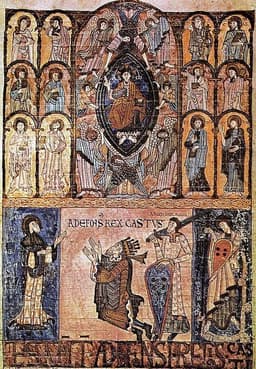
Alfonso II of Asturias
Emperor · Medieval
54.6Total

Napoleon Bonaparte
General · Modern
70.9Total
Basic Information
Born
760
1769
Died
842
1821
Era
Medieval
Modern
Nationality
Asturias
France
Occupation
Emperor
General
Civilization
Western
Western
Score Comparison
Military (10%)
50.0
94.0
Political (20%)
39.4
72.0
Influence (20%)
61.0
40.0
Legacy (20%)
52.0
80.0
Leadership (15%)
74.0
78.0
Strategy (15%)
43.7
90.0
TOTAL
54.6
70.9
Alfonso II of Asturias — Complete Timeline
791 AD
Established the capital of Asturias at OviedoPolitical Action◆ Major
Alfonso II moved the Asturian capital from Pravia to Oviedo, which he fortified and developed. He built churches, palaces, and defensive walls, making Oviedo the political and cultural center of the kingdom.
Capital CityUrban DevelopmentAsturias
Impact: nationalconstructive
794 AD
Defeated Umayyad forces at the Battle of LutosWar◆ Major
Alfonso II's army defeated an Umayyad raiding force at the Battle of Lutos in the Cantabrian mountains. The victory prevented a major Muslim incursion into Asturias and demonstrated the kingdom's growing military capability.
BattleAsturiasUmayyad
Impact: regionalconstructive
798 AD
Initiated diplomatic relations with the Carolingian EmpirePolitical Action
Alfonso II sent envoys to the court of Charlemagne, establishing diplomatic ties between Asturias and the Carolingian Empire. This alliance provided mutual support against the Umayyads and linked Asturias to broader European Christian networks.
DiplomacyCarolingianAsturias
Impact: regionalconstructive
813 AD
Discovered the tomb of Saint James the GreatCultural
According to tradition, a hermit named Pelagius discovered a tomb in the forest of Libred
Religious DiscoveryPilgrimageSantiago de Compostela
Impact: globalconstructive
Napoleon Bonaparte — Complete Timeline
1799 AD
Coup of 18 BrumaireOther◆ Major
Napoleon Bonaparte, with support from his brother Lucien and key political figures, overthrew the Directory in a bloodless coup. He established the Consulate with himself as First Consul, effectively becoming the ruler of France. This event ended the French Revolution's most unstable period.
French RevolutionCoupRise to Power
Impact: regional
1804 AD
Promulgation of the Napoleonic CodeOther◆ Major
Napoleon enacted the Civil Code of the French, known as the Napoleonic Code, a comprehensive set of laws that replaced the fragmented feudal legal systems. The code established legal equality, protected property rights, and secularized law. It became the basis for legal systems in many European and world countries.
Legal ReformNapoleonic CodeCivil Law
Impact: globalconstructive
1805 AD
Battle of AusterlitzWar◆ Major
Napoleon's Grande Arm
Napoleonic WarsBattleDecisive Victory
Impact: global
1812 AD
Invasion of RussiaWar◆ Major
Napoleon led the Grande Arm
Napoleonic WarsInvasionDisaster
Impact: globaldestructive
1815 AD
Battle of WaterlooWar◆ Major
Napoleon's French army was defeated by the combined forces of the Duke of Wellington's Anglo-Allied army and Gebhard Leberecht von Bl
Napoleonic WarsBattleFinal Defeat
Impact: globaldestructive
Expert Analysis
alfonso-ii-of-asturias-vs-napoleon-bonaparte
### The Emperor and the King: Two Paths to Power in a Fractured World
In the summer of 1815, a man in a gray greatcoat watched his world collapse on a muddy field in Belgium. At Waterloo, Napoleon Bonaparte’s legions broke against the iron squares of Wellington and the Prussians, ending an era of conquest that had reshaped Europe. A thousand years earlier, another ruler faced a very different kind of defeat. In the mountains of northern Spain, King Alfonso II of Asturias watched Umayyad armies sweep across the plains below, knowing he could never meet them in open battle. He would win not by crushing his enemies, but by outlasting them. These two men—separated by a millennium, by geography, by the very nature of power—both claimed the mantle of empire. Yet one built a legend that still burns, while the other built a kingdom that still stands. Their stories reveal something profound about how leaders are shaped by their times—and how their times are shaped by them.
### Origins
Napoleon Bonaparte was born on the island of Corsica in 1769, a year after the French bought the island from Genoa. His family were minor nobles, proud and poor, speaking Italian more than French. He was a foreigner in his own country, a fact that stoked a lifelong hunger for recognition. The French Revolution, which erupted when he was twenty, shattered the old order and opened doors that birth alone could never have unlocked. For a man of talent and ambition, it was a world without ceilings.
Alfonso II of Asturias was born into a very different world—a Christian kingdom clinging to the northern edge of the Iberian Peninsula, surrounded by the expanding Umayyad Caliphate. His father, King Fruela I, was assassinated when Alfonso was a child, and his uncle seized the throne. For years, Alfonso lived as a refugee in the court of his relatives in the Basque country. He learned to wait, to endure, to build alliances in the shadows. When he finally became king in 791, at the age of thirty-one, he was a man shaped by exile and survival, not by conquest.
### Rise to Power
Napoleon’s rise was a series of explosions. At twenty-four, he drove the British out of Toulon with a brilliant artillery plan. At twenty-six, he crushed a royalist uprising in Paris with a “whiff of grapeshot.” At twenty-seven, he took command of the French army in Italy and, in a single year, destroyed four Austrian armies, forcing the Habsburgs to sue for peace. Each victory was a stepping stone, each campaign a masterpiece of speed and deception. By 1804, he was Emperor of the French, crowned in Notre Dame with his own hands.
Alfonso’s rise was a slow, patient accretion of power. He became king not by conquering Paris, but by moving his capital from Pravia to Oviedo, a small settlement he fortified and transformed into a royal seat. He built churches, a palace, and a network of roads. He sent envoys to Charlemagne’s court in 798, establishing diplomatic ties that gave Asturias a place on the map of Europe. His victories were defensive—the Battle of Lutos in 794, where his army ambushed an Umayyad raiding force in the Cantabrian mountains, preventing a deeper incursion. He did not seek to conquer; he sought to survive, and to build a kingdom that could survive him.
### Leadership & Governance
Napoleon governed as he fought: with relentless energy and total control. He centralized the French state, created the Bank of France, and reformed the legal system with the Napoleonic Code—a body of law that still shapes civil law in much of the world. He appointed prefects to run every department, ensuring that Paris’s will reached every village. He was a master of propaganda, using the press, art, and monuments to burnish his legend. Yet his rule was also autocratic. He suppressed dissent, censored newspapers, and treated conquered territories as sources of men and money. His genius was in organization; his flaw was in believing that organization could solve everything.
Alfonso ruled as a medieval Christian king, his authority rooted in the Church and the nobility. He moved the capital to Oviedo and built the Cathedral of San Salvador, a symbol of his kingdom’s identity. His greatest political achievement was the discovery of the tomb of Saint James the Great at Compostela in 813—a moment that, whether planned or providential, transformed Asturias into a center of pilgrimage. The Camino de Santiago, which grew from this discovery, would bring wealth, prestige, and European connections to his kingdom. Alfonso understood that in a world of faith, spiritual power was as real as military power.
### Triumph & Tragedy
Napoleon’s greatest triumph was the Battle of Austerlitz in 1805, where he destroyed the combined armies of Russia and Austria, forcing the Holy Roman Empire to dissolve. His greatest tragedy was the invasion of Russia in 1812, where he lost half a million men to winter, disease, and guerrilla attacks. He never recovered. Exiled to Elba, he escaped, ruled for a hundred days, and was finally defeated at Waterloo. He died in exile on Saint Helena, far from the Europe he had once commanded.
Alfonso’s greatest triumph was survival itself. He reigned for fifty-one years, longer than any other Asturian king. He saw his kingdom grow stronger, more stable, more Christian. His tragedy was that he had no heir. Known as “the Chaste,” he never married, and the succession passed to his nephew, Ramiro I. The kingdom he built would eventually become the Kingdom of León, and later the core of a united Spain. But he died knowing that his line would not continue.
### Character & Destiny
Napoleon was driven by an insatiable ambition. “Impossible is a word to be found only in the dictionary of fools,” he once said. He believed that will could shape reality, and for a time, it did. But his character also contained the seeds of his fall: arrogance, impatience, a refusal to compromise. He could not stop, and so he could not last.
Alfonso was driven by something else: endurance. He was a man of faith, of patience, of long-term thinking. He did not seek glory; he sought stability. He understood that in a world of shifting powers, the kingdom that outlasts its enemies is the one that wins. His character was shaped by exile, by waiting, by learning to build when you cannot destroy.
### Legacy
Napoleon’s legacy is global. The Napoleonic Code, the modern nation-state, the concept of meritocracy—these are his fingerprints on the world. He is remembered as a military genius, a tyrant, a reformer, a conqueror. His name is synonymous with ambition and tragedy.
Alfonso’s legacy is narrower but deeper. The Camino de Santiago, which he helped launch, still draws pilgrims from around the world. The Kingdom of Asturias, which he fortified and expanded, became the cradle of the Reconquista—the centuries-long struggle that would eventually drive the Moors from Spain. He is remembered not as a conqueror, but as a founder.
### Conclusion
Standing at the end of their stories, one cannot help but reflect on the strange mathematics of history. Napoleon, with his 94 in military genius and his 93 in strategy, conquered an empire that vanished within a decade of his death. Alfonso, with his modest 30 in military and his 59 in strategy, built a kingdom that would last for centuries. The difference is not in their scores, but in their eras—and in their understanding of what power truly is. Napoleon believed power was the ability to crush your enemies. Alfonso understood that power was the ability to outlast them. In the end, the man who could not be defeated was beaten by time itself. The man who could not conquer built something that endured. Perhaps the greatest lesson of history is that the leaders who change the world are not always the ones who shout the loudest. Sometimes, they are the ones who build the walls, plant the seeds, and wait.
Rankings
🥇
Napoleon BonaparteLeader
Mil: 94.0Pol: 72.0Inf: 40.0
70.9
🥈
Alfonso II of Asturias
Mil: 50.0Pol: 39.4Inf: 61.0
54.6
+16.3 behind
How This Comparison Works
Algorithm
Each figure is scored on 6 dimensions (0—100 scale) based on structured historical data: Military (10%), Political (20%), Influence (20%), Legacy (20%), Leadership (15%), Strategy (15%). The weighted total produces the final ranking.
Data Sources
Scores are computed from structured sub-indicators in the database. Scale factors adjust for era (Ancient ×0.85, Modern ×1.0) and civilization size (Eastern ×1.05, Other ×0.80) to account for differences in population and military scale.
Maximum 3 Figures
Comparisons are limited to 2—3 figures to ensure readability and statistical meaningfulness.
Error Margins
±5 points per dimension — Sub-scores are derived from historical records with inherent uncertainty. Two figures within 5 points on a dimension should be considered roughly equivalent in that area.
Total Score Accuracy
±3 points overall — The weighted combination of 6 dimensions produces a total score with approximately ±3 points of uncertainty. Differences of less than 3 points are not statistically significant— the figures are effectively tied.
Known Limitations
- Historical records are incomplete and uneven across civilizations
- Figures from oral-tradition societies may be underrepresented
- Occupation labels can misclassify multi-role figures
- Scores measure capability and impact, not moral character
- Quantitative scoring is a comparison tool, not absolute truth
Capability Radar
Military (10%) — Battles & Warfare
Battles
15
95
Win Rate
20
90
Expansion
15
95
Political (20%) — Governance & Reform
Reform
30
95
Diplomacy
40
80
Economy
35
85
Influence (20%) — Cultural & Global Reach
Cultural
55
85
Global
50
90
Legacy (20%) — Historical Impact
Historical
70
95
Longevity
65
90
Leadership (15%) — Power & Stability
Tenure
60
85
Stability
50
70
Strategy (15%) — Tactics & Innovation
Strategy
20
95
Tactics
25
98
Reform
10
92
Similar Comparisons
Comments & Discussion
GeneralLafayette6/17/2026
Military historian here: People love to romanticize Napoleon’s tactical genius, but Waterloo was a strategic disaster of his own making. His failure to coordinate with Grouchy shows he couldn’t adapt when his original plan collapsed. Alfonso II, by contrast, mastered guerrilla warfare in the Cantabrian mountains—he knew he’d never beat the Umayyads in open battle. That’s not cowardice, it’s military pragmatism. Napoleon’s ego wrote checks his army couldn’t cash. Alfonso’s humility built a legacy